


In just about any metal finishing or treatment operation, the parts are usually first conditioned in an all-important cleaning step.
 Stephen Rudy CEFThis process removes a variety of soils from the substrate surface. They include various oils, grease, and shop dirt. These now-unwanted agents are typically the result of their use in the manufacturing process (e.g., casting, stamping, extruding, forming). The finisher now must remove these materials as a first step in the desired finishing cycle. The first step is to remove these soils during cleaning. This can be accomplished by immersion, spray, mass finishing, or by other less common means. This article focuses on immersion tank-soak cleaning.
Notable developments in recent years include methods of cleaning using carbon dioxide (usually dry ice as pellets) and cryogenics, usually employed where precise cleaning is critical. Recent developments include mildly alkaline soak cleaners developed using biologically active microorganisms. These agents digest oily soils, converting the organic molecules that comprise them into innocuous substances such as carbon dioxide and water.
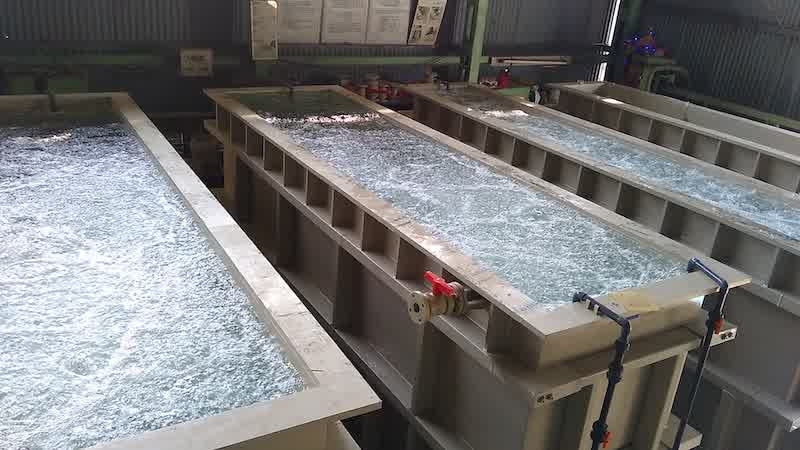
Soak cleaning is typically accomplished using the familiar aqueous method. Sometimes the aqueous soak can be preceded by or replaced with an organic solvent (fluorinated or nonhalogenated complex organic moieties). Let us focus on the most popular, water-based, aqueous soak cleaning method.
The accepted procedure is to use a concentrated blend, liquid, or powder-based product. Components may include surfactants, wetting agents, alkaline builders, conditioners for water hardness, and glycol-type solvents.
Oily soils are “held” or encapsulated in a surfactant “cell”. This is emulsification cleaning. When the reserve cleaner blend becomes saturated with the emulsified oils, its ability to provide adequate surface cleanliness rapidly decreases. Maintenance or booster additions of the cleaner concentrate restore some degree of cleaning efficiency. However, this is a finite control process: as the cleaner bath ages, it eventually requires replacement with fresh makeup. Most serviceable soak cleaners of this type, emulsifying, may hold 5 to 10% of oils during their working service life.
Soak cleaning also works by displacing oily soils and grease, unlike emulsification. In displacement-type soak cleaner concentrates, the types and ratios of surfactants and wetting agents usually differ from those in emulsifying soak cleaners. The alkalinity may also differ. In the displacing soak cleaner bath, the detergency system displaces oily soils from the substrate. These oils, usually less dense than water, tend to float to the surface. Continuous removal of these displaced soils by filtration, belt skimmers, or coalescers keeps the working cleaner bath much less oil-contaminated. This benefit can significantly increase the working cleaner bath life.
Is Displacement Cleaning The Right Choice?
By monitoring the soak cleaner tank and downline tanks, these practical observations should be considered:
- The current cleaner has insufficient emulsification capacity and a relatively short service life.
- If it’s a barrel plating line, displacement cleaning is optimum since the incoming parts are typically heavily soiled.
- Oils and grease are dragging down the line (contamination of other process baths).
- Poor cleaning suggests it’s time for a change.
- Oily and discolored barrels.Polypropylene barrels and oils have a strong affinity for each other.
- Excessive downtime and consumption of related cleaner products.
- Finishing rejects are due to insufficient cleaning in the surface preparation cycle.
- Excessive oils and grease are affecting the waste treatment process.
Displacement cleaning positively impacts all of the above considerations, provided a displacement cleaner is appropriate for the intended application. Oil removal support via overflow dams, side tanks, and use of previously described equipment is important.
Some critical “outside” factors that have driven continued improvements to soak cleaning include: the Clean Water Act; F006 sludge regulations; OSHA safety requirements; wastewater effluent regulations; and replacing hazardous solvents (health risks and atmospheric ozone depletion).
The finisher may also acknowledge process-related factors, such as:
- A wider variety of oils used in stamping, forming, lubricating, and rust proofing that require complete removal.
- Supplement standard cleaning titration analysis with other helpful tests.These include measuring oil separation in the lab, tracking cleaner bath specific-gravity trends, and measuring oily-soil deposition on specifically cleaned coupons.
- Keeping associated operating costs in line or within budget.
- Keep cleaning-related rejects to a minimum.
Improvements made to soak cleaner concentrates help to meet these demands. They include:
- Incorporating more biodegradable constituents such as surfactants and wetting agents
- Improved interaction with oil removal equipment for oil release.
- Rapid oil displacement at operating temperatures, unlike previous methods that required cooling the solution.
- Application of oil splitting agents, where the cleaner can be batch treated and reused
- Improvedcompatibility with sophisticated oil removal equipment, especially ultrafiltration,
- Elimination of hard chelates,
- Improved rinsing characteristics.
Handling of Waste Oils
Contaminants from soak cleaning can quickly multiply in volume as waste. Shipping them as regulated waste does not have to be the norm. Reputable recyclers offer industrial uses for waste oils. Recyclers will assay the oils to determine compatibility for blending into various oil-based products. Another option is blending oily wastes with #2 fuel oil to burn in the shop’s boiler. This is evaluated with the reputable boiler supplier or their certified agents.
Double The Temperature To Double Soak Cleaning Effectiveness
How many times have we heard that statement? Ever wonder how this good old advice relates to effective cleaning? There is a relationship between the cleaner bath temperature and its surface tension. Wetting agents and surfactants lower the solution's surface tension. This improves wetting, allowing penetration into soils, thereby facilitating their removal from the substrate. Specific surfactants, added individually or in combination, determine the application and cleaning effectiveness. Small concentrations of surfactants dramatically reduce the solution surface tension. Larger doses of surfactants will, at best, only minimally reduce the surface tension. The surface tension in working cleaners may range from 20 to 35 dyne/cm. By comparison, the surface tension of water is approximately 72 dyne/cm.
Many years ago, substantial theoretical studies, supported by experimental work, confirmed a relationship between solution temperature and surface tension. This relationship is almost linear when considering long temperature ranges. This confirmed that surface tension decreases as temperature rises. Increasing the cleaner's temperature improves wettability and penetration into soils.
For the purists who need a technical explanation, here it is. Increasing temperature causes the free-surface energy to pull molecules inward from the solution surface into the interior. This is counteracted by the opposing tendency of thermal agitation, pushing the molecules outward through the surface into the vapor phase. Let’s keep it simple. Having established a fixed time and the optimum cleaner chemistry, maintain solution heat within the recommended range for best results.
Stephen F. Rudy, CEF, is president of Chem Analytic and has written extensively about the finishing industry. Visit www.chemanalytic.com or call him at 917-604-5001.