

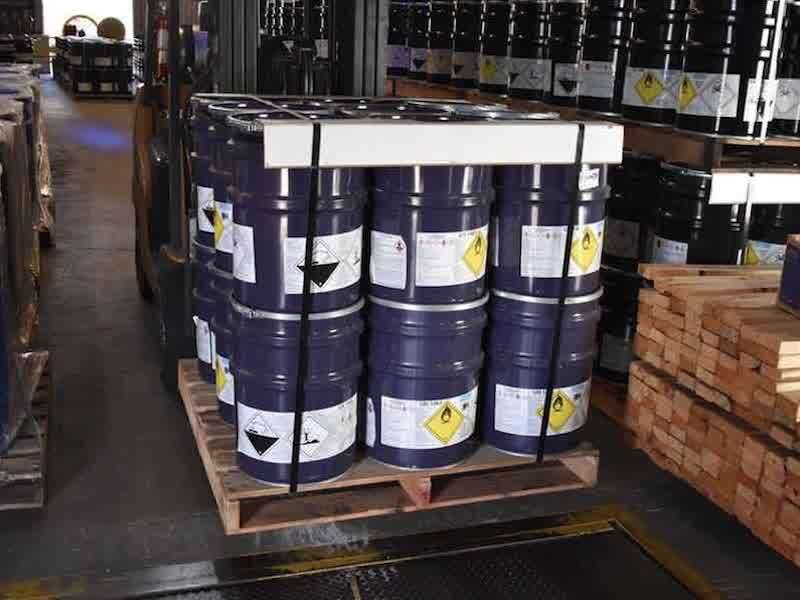
To be completely honest with you, I have no clue what the federal government is trying to do by hiking the price of imported hexavalent chromium material by almost 40%.
Truth be told, over the last several years, I have had hardly any idea of what they are trying to do, but the recent announcement by the U.S. Department of Commerce, in its preliminary affirmative ruling in an antidumping investigation, seems bewildering.
There is no question that two foreign companies — India's Vishnu Chemicals and Turkey's Türkiye Şişe ve Cam Fabrikaları A.Ş — have been selling the materials used to make hexavalent chromium to U.S. distributors at far lower prices than it is being sold at elsewhere in the world.
The feds say Vishnu Chemicals was selling its chromium trioxide at 14.44% below global rates, and Türkiye Şişe ve Cam Fabrikaları A.Ş. was selling to the U.S. at 40.88% below normal value.
That's certainly a dumping case, as the DoC has said, and it says the victim is American Chrome & Chemical, which filed the claim with the agency last year.
But here is where things seem to have gone awry. According to Commerce Department data, ACC is the only manufacturer of chromium trioxide in the U.S.
"We are the only chrome chemical producer in the Americas," the company says on its website.
ACC operates five production facilities in the U.S. I'm sure their production costs are much higher here in the U.S. than those overseas, if only because it is so much harder to operate a business — let alone a mining business — in this country with all the regulations, legal costs, and higher wages that must be paid than their counterparts in Europe and Asia.
I am not a Harvard-trained lawyer, but I would surmise that a company that is the only provider of a product in a given country — in this case, chromium trioxide — would appear to me to have a monopoly in the industry, where it could set its own price.
And that is where Vishnu Chemicals and Türkiye Şişe ve Cam Fabrikaları A.Ş come in. I'm sure that to some degree, they are lowering prices to try to drive ACC out of business, but by instituting these 40% price hikes, who does this hurt in the long run? Yes, the customers who need hexavalent chromium include wood treaters, tanners, and the surface finishing industry.
If this federal government truly doesn't want to harm the manufacturing sector that it so direly needs to keep the country safe and secure, then hiking prices by 40% probably isn't the best way to do it.
Of course, this entire situation is made even harder by the fact that ACC is owned by Yildirim Group, which is based in Turkey as well, which means that the finishing industry — a vital cog in the manufacturing cycle — is a bit at the whim of those companies located halfway around the world in Turkey.
In the end, maybe the prices are permanently raised, and U.S. finishers end up paying what they should have been paying from the beginning. But when the slogan is "America First," the feds certainly aren't making it any easier for U.S. job shop owners who need to compete with Mexico and Asia on bids.
Oh, and there is this tidbit from the Dept of Commerce: during the six-month open comment period on the antidumping investigation, the agency says no one from a finishing industry trade group bothered to provide any comment or input on how this price increase would affect the industry. That seems to be a trend, and a costly one at that.
 Tim Pennington is Editor-in-Chief of Finishing and Coating, and has covered the industry since 2010. He has traveled extensively throughout North America visiting shops and production facilities, and meeting those who work in the industry. Tim began his career in the newspaper industry, then wound itself between the sports field with the PGA Tour and marketing and communications firms, and finally back into the publishing world in the finishing and coating sector. If you want to reach Tim, just go