

Of all the components in the manufacturing ecosystem — fabricating, finishing, and assembling — which one always seems least attractive in the public eye?
If you guessed the finishing and coating industry, you are probably spot on. Of course, those in the metal finishing, electroplating, anodizing, powder coating, and painting industry may not realize that, or they may have a more biased view.
Yet when regulatory enforcement and environmental violations percolate to the top of the mainstream news cycle, it’s hard to argue that finishing and coating operations don’t often get a black eye in public perception.
In truth, finishing and coating is where most innovation in the last 30 years has taken place, as manufacturers demand products and materials that last longer, resist corrosion more, and are less harmful to the environment during that part of the manufacturing process.
It’s a topic that a seasoned industry veteran, Dan Zinman from Miles Chemical in Los Angeles, tackles in a column he has written for us this month titled “Functionally Speaking: A Bright Future for Surface Finishing is in Our Hands.”
“If the work we provide is that essential, why do the public, regulators, and localities so often take an aggressive stance against the shops that do it?” Zinman writes. “Why the hearings, the “not in my backyard,” the assumption that finishing is a problem to be contained rather than a capability manufacturing cannot fly without?”
The change needs to start with the shops and facilities themselves, with owners who want the industry to grow by first having others—manufacturers, regulators, and the public who live and work around these facilities—see how that innovation and technology affects them in their personal and professional lives.
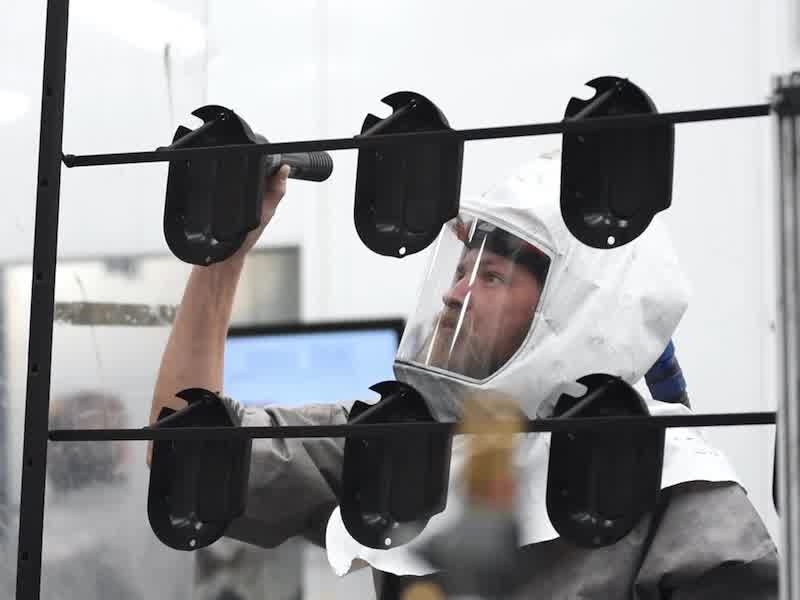
His answer is succinct and also spot on: “Maybe it’s because we keep inviting them into the wrong room,” Zinman writes. He argues that the surface finishing industry shows off tanks, chemistry, and byproducts—airborne exposure, wastewater—and never shows the products that are magically transformed into innovative products that wouldn’t stand a chance without surface-finishing technology, such as satellites, airframes, and medical implants.
Dan’s call is for the surface finishing industry to change perception by changing how we see our own industry, and to celebrate the innovation and technology that goes into finishing parts.
Many communications and marketing executives agree that changing the public perception of an industry starts with how we see ourselves.
Only when the industry starts to push the innovation and technology that finishers and coaters supply to the manufacturing sector will we see a chance to change perception.
“What we’ve got to get better at is communicating the amazing opportunity that manufacturing represents today for all levels of the org,” says Otto Hektor, a managing director at MX, a B2B Agency. “This isn’t dirty old shops anymore. This is, in many regards, pristine halls of innovation.”
Dan’s plea is something that I have heard and seen many trade associations try to do in refocusing the spotlight, but often the effort falls short. It is usually supplier-driven, and for that component of the industry, it is not as significant.
The change needs to start with the shops and facilities themselves, with owners who want the industry to grow by first having others—manufacturers, regulators, and the public who live and work around these facilities—see how that innovation and technology affects them in their personal and professional lives.
Only then will the surface finishing industry be seen as what it truly is: the leader in U.S. manufacturing.
 Tim Pennington is Editor-in-Chief of Finishing and Coating, and has covered the industry since 2010. He has traveled extensively throughout North America visiting shops and production facilities, and meeting those who work in the industry. Tim began his career in the newspaper industry, then wound itself between the sports field with the PGA Tour and marketing and communications firms, and finally back into the publishing world in the finishing and coating sector. If you want to reach Tim, just go