

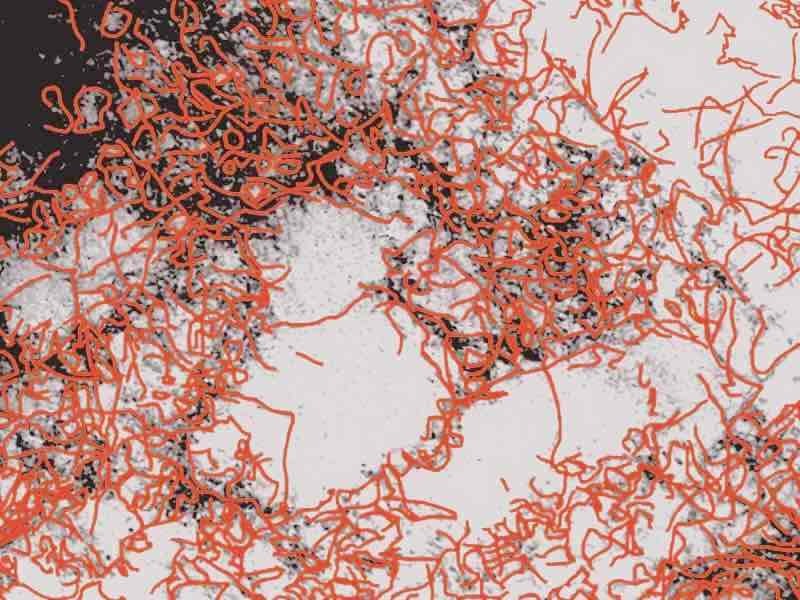
This study fabricated two joint types, rolled Cu/sintered Cu/rolled Cu and electroplated Cu/sintered Cu/electroplated Cu, referred to as the rolled and electroplated Cu joints, respectively.
The microstructures, interconnection mechanisms, and shear performance of the joints were investigated, and effects of the substrate crystallographic and microstructural characteristics on these properties were clarified. The grain size of electroplated Cu substrate (i.e., electroplated Cu layer) was considerably smaller than that of rolled Cu substrate. The grain boundaries (GBs) in the electroplated Cu substrate were wider, providing more GB diffusion pathways for Cu atoms. During sintering, the wider GBs, higher GB density, and higher initial dislocation density of the electroplated Cu substrate affected the recrystallization of the sintered Cu layer. These features facilitated the high diffusion of Cu atoms along the GBs and dislocations from the electroplated Cu substrate into the sintered Cu layer, supplying abundant Cu atoms for recrystallization nucleation and refining sintered Cu grains.
Meanwhile, in the rolled Cu joint, the sintered Cu layer tended to eliminate pores primarily via grain coalescence because of limited atom supply. Further, the rolled Cu substrate retained large grains and exhibited weak recrystallization and high dislocation density, with the subgrains not promptly eliminated. After sintering, the electroplated Cu substrate exhibited strong recrystallization, extensive subgrain elimination, and a low dislocation density. The shear strength of the electroplated Cu joint was markedly higher. These results indicate that electroplated Cu provides a simple and practical route to improve the reliability of sintered Cu joints in power devices.
1. Introduction
As representative third-generation semiconductors, SiC and GaN show obvious advantages over other Si-based materials. Their wider bandgaps as well as higher electron saturation velocities, thermal conductivities, and switching speeds make them superior for high-temperature, high-voltage, and high-frequency applications [1,2]. The high-temperature service conditions of third-generation power electronic devices necessitate die-attach materials that can withstand prolonged exposure to elevated temperatures. Conventional Sn-based solders have become unsuitable because of their low melting points [3] and the formation of brittle intermetallic compounds during soldering [4]. Although nano-Ag can be sintered into robust joints at temperatures considerably below the melting point of Ag, its high cost and severe electromigration issues limit its large-scale use in commercial products [5]. Consequently, sintered Cu has received extensive attention as a potential alternative to sintered Ag due to its high melting point, high thermal conductivity, and low cost [6,7].
In the electronics industry, copper foils for printed circuit boards are typically produced via rolling or electroplating [8]. To simplify experimentation, previous studies on Cu sintering have predominantly used rolled Cu sheets as substrates to fabricate Cu/sintered Cu joints. For example, Wang et al. [9] prepared rolled Cu/sintered Cu/rolled Cu joints using 150-nm Cu particles sintered at 250 °C for 1 h, achieving a shear strength of 33 MPa. Yuan et al. [10] sintered 100-nm Cu particles at 250 °C for 5 min to obtain rolled Cu/sintered Cu/rolled Cu joints with a shear strength of 55.06 MPa. Song et al. [11] sintered 300-nm Cu particles at 280 °C for 10 min to fabricate rolled Cu/sintered Cu/DBC joints with a shear strength of 60 MPa. Thus far, studies on electroplated Cu/sintered Cu joints are extremely scarce, and the bonding performance and mechanisms of sintered Cu on electroplated Cu substrates remain unclear.
In this study, electroplated Cu substrates were fabricated by electroplating a Cu layer onto the surface of rolled Cu substrates. Pressure-assisted sintering in nitrogen was employed to fabricate sintered Cu joints on rolled and electroplated Cu substrates. The microstructure, bonding mechanism, and shear performance of the two types of joints, along with the microstructures of the two types of substrates before sintering, were analyzed. Further, the effect of the electroplated Cu layer on the shear strength and microstructural evolution of the sintered Cu joint was elucidated.
2. Materials and methods
First, the surface oxide layer on a rolled Cu sheet (Shanghai Muhong Metal Materials Co., Ltd., China) was removed using multiple sandpapers with grits of up to 5000. Then, the surface was cleaned with ethanol. Subsequently, copper-foil tape was applied to the rolled Cu sheet to form an electrical contact. Rolled Cu (cathode) and a Cu target (anode) were immersed in a Cu electroplating bath (Guangdong Bigely Technology Co., Ltd., China) under magnetic stirring. Last, electroplating was performed for 30 min at a current density of 4 A/dm2, and electroplated Cu substrates were obtained by electroplating a Cu layer onto rolled Cu substrates. After plating, the electroplated Cu substrates were washed with deionized water and ethanol.
Sub-micron Cu particles (Jiangsu Boqian New Materials Co., Ltd., China) with an average size of 0.321 μm (Fig. 1(a) and (b)) were used to prepare Cu paste using ethylene glycol as the solvent [12]. The Cu paste was deposited onto an electroplated Cu substrate (35 × 35 × 2 mm), which was preheated in a nitrogen atmosphere at 120 °C for 2 min. Subsequently, an electroplated Cu dummy chip (4 × 4 × 1 mm) was placed. Pressure-assisted sintering was performed at 250 °C and 20 MPa for 10 min [13] in a nitrogen atmosphere using an industrial standard sintering machine (Sinterstar Mini, Boschman, Netherlands) to obtain electroplated Cu/sintered Cu/electroplated Cu joints (hereafter referred to as electroplated Cu joints). For comparison, the rolled Cu/sintered Cu/rolled Cu joints (hereafter referred to as rolled Cu joints) were prepared using the same procedure, except that no electroplated Cu layers were applied to the surface of rolled Cu substrates.

Fig. 1. Cu particles and shear test: (a) SEM image of Cu particles, (b) statistic of the particle size of Cu particles, and (c) schematic of sintered Cu joint under shear load.
The shear strength was measured using a micromechanical shear–stress tester (MFM-1200, TRY-Precision Technology, China; Fig. 1(c)). The shear test height and speed were set to 200 μm and 150 μm/s, respectively, in accordance with the MIL-STD 883 standard. Transmission electron microscopy (TEM) (Talos F200X, Thermo Fisher Scientific, USA) was used to characterize the microstructures of the two types of substrates before sintering. Energy-dispersive X-ray spectroscopy (EDS), scanning electron microscopy (SEM; QUANTA 250, FEI, USA), and electron backscatter diffraction (EBSD; Verios 5 UC + Symmetry, USA) were used to characterize the microstructures, crystallographic features, and shear fracture surfaces of the two types of sintered Cu joints. After EBSD scanning, the results were analyzed using the Tango application of Oxford Instruments Channel 5 software. The surface roughness of the two types of Cu substrates was measured using atomic force microscopy (AFM, Dimension Icon, Bruker, USA).
3. Results and discussion
3.1. Microstructure differences between rolled Cu and electroplated Cu substrates
The average thickness of the electroplated Cu layer was 12.59 μm. In previous reports, Zuo et al. [14] investigated the effect of substrate surface roughness on the bonding strength of sintered Cu joints. They found that mechanical interlocking could only form and enhance joint strength when the surface roughness was greater than the particle diameter and was closely matched. No significant increase in bonding strength was observed for substrates with other surface roughness values. In this study, the surface roughness of rolled Cu substrates and electroplated Cu substrates were 52.06 nm and 49.71 nm, respectively, as shown in Fig. 2. The difference between these values was very limited, and both values were smaller than the sub-micron Cu particle diameter, indicating that effective mechanical interlocking might not have been formed during the sintering process. Therefore, the impact of different substrate surface roughness types on the bonding strength may be limited.

Fig. 2. Surface morphology and roughness of (a) rolled Cu substrate and (b) electroplated Cu substrate measured using AFM.
The TEM analysis results revealed considerable difference in the number of dislocation line, i.e., the red lines in Fig. 3, between the rolled Cu and electroplated Cu substrates before sintering. The dislocation densities (ρ) of the substrates were calculated as follows [15]:
p = nl/lA = n/A (1)
where l denotes the length of each dislocation line and n represents the number of dislocation lines observed within area A. The numbers of dislocation lines for the rolled Cu and the electroplated Cu substrates were 60 and 697, respectively. Dislocation density was defined as the number of dislocation lines in a unit area. For the observed area was 1.01 × 10⁻¹² m2, the dislocation densities of the rolled Cu and electroplated Cu substrates were 5.93 × 10¹³ and 6.89 × 10¹⁴ m−2, respectively, and the latter is consistent with a previously reported value for electroplated Cu (3.9–9.7 × 10¹⁴ m−2) [16]. As crystal defects, dislocations provide a pathway for atomic diffusion, resulting in a higher atomic diffusion rate than the bulk diffusion rate [[17], [18], [19]]. The dislocation density of electroplated Cu was considerably higher than that of rolled Cu, and higher dislocation densities promoted larger diffusion of Cu atoms.

Fig. 3. Dislocation line distributions before sintering of different substrates, as characterized by TEM: (a) rolled Cu and (b) electroplated Cu.
Fig. 4 shows the TEM images of the grain boundaries (GBs) in the two types of substrates prior to sintering. Based on the standard card (JCPDS No. 04–0836), an interplanar spacing of 0.209 nm indicated that the lattice fringes in rolled and electroplated Cu corresponded to the Cu (111) planes. In the fast Fourier transform patterns, the indexed reflections in region A of rolled Cu were primarily associated with the (0, −2, −2), (1, −1, −1), (200), and (111) planes observed along the [0, −1, 1] zone axis (Fig. 4(a)). For electroplated Cu, the indexed reflections in region B were primarily associated with the (−1, 1, 3), (002), (1, −1, 1), and (1, −1, −1) planes observed along the [110] zone axis (Fig. 4(b)). From the locally magnified images, the GB widths were measured to be 0.502 nm for rolled Cu (Fig. 4(c)) and 0.675 nm for electroplated Cu (Fig. 4(d)), demonstrating that the GBs in electroplated Cu were 34.46 % wider than those in rolled Cu.

Fig. 4. TEM images of GBs in substrates: (a) rolled Cu, (b) electroplated Cu, (c) magnified area of (a), and (d) magnified area of (b).
3.2. Microstructure differences between the rolled Cu and electroplated Cu joints
Fig. 5 shows the SEM images of the two sintered Cu joints. Both joints appeared well bonded at low magnification, exhibiting uniform microstructures without large voids or defects (Fig. 5(a1) and (b1)). At high magnification, the interface between rolled Cu and sintered Cu was observed to be distinct (Fig. 5(a2)) whereas the interface between electroplated Cu and sintered Cu was not distinct (Fig. 5(b2)), indicating strong metallurgical bonding. The EDS mapping of the electroplated Cu joint (Fig. 5(c)–(e)) revealed an extremely low oxygen content, further demonstrating robust bonding.

Fig. 5. SEM images and EDS analysis of sintered Cu joints: (a) rolled Cu joint, (b) electroplated Cu joint, (c) Cu distribution in EDS of (b1), (d) O distribution in EDS of (b1), and (e) EDS depth profile.
The EBSD inverse pole figure (IPF) maps showed that the joint interface between rolled Cu and sintered Cu was distinct and straight (Fig. 6(a)). In contrast, the interface between electroplated Cu and sintered Cu was indistinct and grains exhibited intergrowth across the interface (Fig. 6 (b)). The crystallographic orientations of both joints were random. The average grain sizes (equivalent circular diameters) of the rolled Cu and electroplated Cu substrates were 4.33 and 0.42 μm, respectively. Within the rolled Cu and electroplated Cu joints, the average grain sizes of sintered Cu were 0.338 and 0.289 μm, respectively (Fig. 6(c) and (d)). The grain size of sintered Cu in the electroplated Cu joint was finer than the rolled Cu joint.

Fig. 6. IPF maps and grain size (equivalent circular diameter) distributions of sintered Cu layer in different joints: (a) rolled Cu joint, (b) electroplated Cu joint, (c) the grain size distribution statistics of the sintered Cu layers in (a), and (d) the grain size distribution statistics of the sintered Cu layers in (b).
At temperatures below two-thirds of the melting point of Cu, GB diffusion becomes the dominant diffusion mechanism [20]. First, because the activation energy for diffusion is lower at GBs than within grains, atoms diffuse more readily along GBs. The smaller the grain size, the higher the GB density, resulting in a greater atomic diffusion flux. The rolled Cu substrate had a low dislocation density; thus, few Cu atoms diffused along dislocations during sintering. In contrast, the electroplated Cu substrate had a higher dislocation density, enabling more Cu atoms to diffuse along the dislocations. In addition, the GBs in the electroplated Cu substrate were wider than those in the rolled Cu substrate. Thus, the larger GB width provided more free volume for atomic transport along GBs between the sintered Cu layer and substrate during sintering, resulting in a higher atomic GB diffusion flux in electroplated Cu than in rolled Cu. These attributes resulted in a greater atomic diffusion flux during sintering in the electroplated Cu joint; thus, atoms in the sintered Cu layer and electroplated Cu substrate diffused more readily than those in the rolled Cu joint. Consequently, a larger bonded area formed between the sintered Cu layer and electroplated Cu surface, along with a deeper interdiffusion zone within the electroplated Cu substrate. The larger bonded area and deeper interdiffusion zone promoted robust metallurgical bonding of the joint.
Fig. 7 shows the GB maps at the interfaces of the two sintered Cu joints, along with the misorientation angle distributions across the bonding interfaces. Low-angle GBs (LAGBs) are defined as boundaries with a misorientation <15°. High-angle GBs (HAGBs) are defined as boundaries with a misorientation between 15° and 65°. Σ3 boundaries are twin boundaries (TBs) with a misorientation of 60° [21]. Compared to the electroplated Cu substrate, a significantly denser distribution of LAGB, see the blue lines in Fig. 7(a), was found in the rolled Cu substrate near the joint interface, implying a high energy at the interface [22]. Whereas, a significantly denser distribution of HAGB, as shown in Fig. 7(b), was exhibited in the electroplated Cu substrate, indicating a much lower energy at the interface. Crack propagation requires energy consumption, and high-density HAGBs can markedly enhance joint toughness because more strain energy is required [23,24]. Thus, the electroplated Cu joint has a higher toughness. Generally, the TB formation in electroplated Cu occurred in the self-annealing process [25]. Because twin boundaries have lower interfacial energy than other GB types and can store more dislocations [26], the prevalence of twin boundaries at the electroplated Cu substrate and the sintered Cu layer interface is beneficial for enhancing the bonding strength.

Fig. 7. GB maps: (a) rolled Cu joint and (b) electroplated Cu joint.
3.3. Dynamic recrystallization (DRX) characteristics and mechanism
Following a previous study on sintered nano-Ag [27], grains with average intragranular misorientation angles of <1°, 1°–7.5°, and >7.5° are classified as recrystallized grains (blue), substructure grains (yellow), and deformed grains (red), respectively (Fig. 8(a) and (b)). Pressure-assisted low-temperature sintering involves DRX in the sintered Cu layer and substrate. During sintering, dislocations in the sintered Cu layer multiply, forming cellular structures via dislocation tangling, and the boundaries of the cellular structures planarize to form subgrain boundaries. As sintering proceeds, the newly formed subgrains rotate, and the subgrain boundaries evolve into LAGBs, passing through the grains (indicated by the white circles in Fig. 7(a) and (b)). Subsequently, these LAGBs relax and transform into HAGBs to reduce the stored energy, thereby segmenting the original grains. Therefore, the above analysis indicates that the sintered Cu layers of the two types of joints exhibit continuous DRX (CDRX) characteristics. Moreover, for the rolled Cu substrate, numerous LAGBs accumulate at the interface (blue lines, Fig. 7(a)), consistent with CDRX characteristics and similar to the observations of Kim et al. [28]. For the electroplated Cu substrate, in addition to the CDRX characteristics of LAGBs passing through the grains, a “necklace” of fine recrystallized grains surrounding larger grains is observed (indicated by the green arrows in Fig. 7(b)), indicating discontinuous DRX (DDRX). During sintering, abundant dislocations are introduced by applying pressure, and these dislocations accumulate around defects such as twin boundaries, HAGBs, and pores [27]. Upon reaching the critical energy for GB bulging nucleation with increasing temperature, DDRX nuclei protrude from boundaries with subsequent dislocation annihilation.

Fig. 8. EBSD analysis: distributions of recrystallized grains in (a) rolled Cu joint and (b) electroplated Cu joint, and KAM maps of (c) rolled Cu joint and (d) electroplated Cu joint.
The DRX rate () can be calculated using the equation proposed by Roucoules et al. [29,30] as follows:
S = [q1(0.1 + S)q2(1 – S)p2]/d (2)
where q1 and q2 denote the material constants, S represents the DRX volume fraction, and d represents the grain size. The DRX rate is positively and negatively correlated with ρ and d, respectively. Kernel average misorientation (KAM) maps provide an indirect indication of regions with concentrated dislocations (Fig. 8(c) and (d)). Subgrains comprise dislocations in various configurations; as recrystallization evolves, subgrains are consumed, thereby reducing the dislocation density. Because of its large grain size and the consequent low level of recrystallization, the rolled Cu substrate retains numerous substructure grains (Fig. 8(a)), with substantial dislocation pile-ups near the GBs (Fig. 8(c)). In contrast, the electroplated Cu substrate, with its smaller grain size, offers a higher GB density and abundant nucleation sites. This results in a high recrystallized fraction (up to 86.6 %), the elimination of subgrains, and a pronounced reduction in the dislocation density, thereby forming a joint with a low-dislocation-density microstructure (Fig. 8(d)).
In this study, identical sintered Cu paste and sintering conditions were employed; however, different grain sizes in the sintered Cu layers were observed in the two types of joints. The sintered Cu grains in the rolled Cu joint are 16.96 % larger than those in the electroplated Cu joint. Therefore, attention was focused on the influence of the rolled Cu and electroplated Cu substrates on the interconnection mechanism. Estrin et al. [31,32] proposed a dislocation density-based model for DRX-induced grain refinement, which qualitatively establishes an inverse relationship between the grain size d and the square root of the total dislocation density ρtot:
d = 1/[(ptol)1/2] (3)
The combined analysis of Eqs. (2), (3) indicates that the high initial dislocation density (Fig. 3(b)) increases the DRX rate in the electroplated Cu substrate, resulting in a higher degree of DRX. Consequently, during sintering, recrystallization is more readily achieved on the electroplated Cu substrate (Fig. 8(b)), thereby refining the grains. As positive feedback, the HAGBs formed after grain refinement provide additional channels for the GB diffusion of atoms within the electroplated Cu substrate. In contrast, the rolled Cu substrate exhibits a lower initial dislocation density (Fig. 3(a)), which limits its ability to form HAGBs via recrystallization to assist atomic diffusion.
Previous studies, including in situ TEM observations during the continuous heating of Cu nanoparticles [33] and quasi in situ observations of the pressure-less sintering of nano-Cu on rolled Cu [34], have reported that sintered Cu grains tend to coalesce and grow. However, in the present study, the sintered Cu grain size is smaller than the initial particle size in the electroplated Cu joint. The electroplated Cu substrate is dense, with a high Cu atomic concentration, whereas the sintered Cu layer contains pores and thus exhibits a lower Cu atomic concentration. According to Fick's second law [35]:
apo/at = a/ax[D(ap/ax)] (4)
where ρ0 denotes the mass concentration of the diffusing species, t represents time, x represents the diffusion direction, and D represents the diffusion coefficient. In general, the Cu atoms in the higher-density substrate diffuse into the lower-density sintered layer. The electroplated Cu substrate exhibits a high GB density and dislocation density, providing numerous diffusion pathways. Moreover, its GBs are relatively wide, providing abundant space for GB diffusion. The atoms in the electroplated Cu substrate tend to diffuse along the GBs and dislocations into the sintered Cu layer during sintering. This provides an external supply of Cu atoms to the sintered Cu layer, promotes recrystallization nucleation and growth, and enables the densification of the sintered Cu layer via a recrystallization process that incorporates extrinsic atoms. In contrast, the rolled Cu substrate has a lower GB density and dislocation density, providing fewer diffusion pathways. The GBs in the rolled Cu substrate are narrower, providing less space for GB diffusion and considerably fewer atoms to the sintered Cu layer. Thus, the densification of the rolled Cu joint proceeds predominantly via grain coalescence within the sintered Cu layer. Consequently, the considerable difference in the diffusion amount of Cu atoms leads to distinct densification mechanisms in the sintered Cu layer, resulting in different final grain sizes in the layer. In general, the sintered layer of the electroplated Cu substrate exhibits a more obvious recrystallization nucleation and growth phenomenon, thereby resulting in refinement. According to the Hall–Petch (fine-grain strengthening) relationship, the bonding strength of the electroplated Cu joint will be enhanced.
3.4. Shear experiment
Fig. 9 shows the shear test results for the rolled Cu and electroplated Cu joints. The average shear strengths of the rolled Cu and electroplated Cu joints are 83.89 and 132.97 MPa, respectively. The electroplated Cu layer considerably enhances the shear strength of the joint, resulting in a 58.5 % increase compared with the joint without electroplating. The considerable difference in the shear strength of the two types of joints can be attributed to the following factors.

Fig. 9. Shear test results.
First, before shear deformation, the electroplated Cu joint develops a larger bonded area between the sintered Cu layer and the electroplated Cu surface compared with the rolled Cu joint. It also exhibits a deeper diffusion zone within the electroplated Cu substrate. The rolled Cu joint contains high-density LAGBs at the substrate/sintered Cu interface. The associated high energy facilitates crack propagation during shear deformation; thus, the rolled Cu joint exhibits low bonding strength. In contrast, the electroplated Cu joint has high-density HAGBs at the substrate/sintered Cu interface, which requires more energy for crack propagation. In particular, the electroplated Cu joint has more twin boundaries. Under the action of external forces, the strain hardening caused by twin boundaries maintains greater plastic strain. In addition, the grain size of sintered Cu in the electroplated Cu joint is finer than that in the rolled Cu joint due to differing Cu atom diffusion from the substrates and its resultant effect on recrystallization behavior. This fine-grain strengthening also contributes to the higher joint strength. In summary, the difference in bonding strength between the two joints stems from their respective atomic diffusion, GB characteristics, and grain size.
Low-magnification SEM images reveal that the macroscopic differences between the two types of sintered Cu joints are not significant, as illustrated in Fig. 10 (a1) and (b1). Two types of sintered Cu joints failed through a path alternating between the interface and the sintered Cu layer. The crack might initiate at one side of the interface, propagated into the sintered Cu layer, and then rapidly extended to the opposite side. This fracture path often occurs with strong bonding joint [36]. Under shear force, uniformly formed dimpled structures were observed by using high-magnification SEM images, see Fig. 10 (a2) and (b2), indicating the two types of joints exhibited ductile fractures. The fracture surface of the rolled Cu joint was relatively flat. Before shearing, the microstructure of the rolled Cu joint displayed a comparatively planar interface between the rolled Cu substrate and sintered Cu layer with clear pores, as shown in Fig. 5(a2) in the previous section, resulting in a comparatively planar fracture surface. In contrast, the electroplated Cu joint exhibits a more stereoscopic fracture morphology, because that the interface between the electroplated Cu substrate and sintered Cu layer in the electroplated Cu joint is indistinct, pores are rarely formed, and grains exhibit mutual growth across the interface, as mentioned in Section 3.2.

Fig. 10. Fracture morphologies: (a) rolled Cu joint and (b) electroplated Cu joint.
4. Conclusion
In this study, rolled and electroplated Cu joints were fabricated. Shear testing and related characterizations were performed, from which the following conclusions were drawn.
(1) Compared with rolled Cu, electroplated Cu exhibited a higher initial dislocation density, wider GB, and a higher GB density; these features increased the atomic diffusion flux from the Cu substrate during sintering. Because of the higher atomic diffusion flux, the electroplated Cu joint developed a larger bonded area between the sintered Cu layer and electroplated Cu substrate surface and a deeper diffusion zone within the electroplated Cu substrate.
(2) After sintering, numerous LAGBs were present at the rolled Cu substrate; high-density LAGBs implied a high crack energy at the joint interface. The electroplated Cu joint exhibited a high level of recrystallization, considerably eliminating dislocations and producing high-density HAGBs at the electroplated Cu substrate/sintered Cu interface.
(3) In the rolled Cu and electroplated Cu joints, recrystallized grains in the sintered Cu layer formed primarily via CDRX. Similarly, recrystallized grains within the rolled Cu substrate formed primarily via CDRX, whereas those within the electroplated Cu substrate formed via CDRX and DDRX.
(4) As sintering progressed, Cu atoms diffused from the higher-density Cu substrate into the lower-density sintered Cu layer. The large atomic diffusion flux from the electroplated Cu substrate supplied abundant external Cu atoms for nucleation and growth during recrystallization within the sintered Cu layer, increasing the degree of recrystallization and refining the grains in the sintered Cu layer. Because of the low atomic diffusion flux from the rolled Cu substrate, densification in the rolled Cu joint proceeded predominantly via the coalescence of sintered Cu grains.
(5) The shear strength of the electroplated Cu joint was considerably higher than that of the rolled Cu joint. The crack might initiate at one side of the interface, propagated into the sintered Cu layer, and then rapidly extended to the opposite side. The two joints exhibited ductile fracture characteristics. The fractography of the rolled Cu joint revealed a flat fracture surface. In contrast, the electroplated Cu exhibited a pronounced stereoscopic morphology.
Jian Huang, Bi Wang, Jingjie Yuan, Miao Cai, and Hongbo Qin are with Key Laboratory of Microelectronic Packaging and Assembly Technology of Guangxi Department of Education, School of Mechanical & Electrical Engineering, Guilin University of Electronic Technology, Guilin, 541004, China. Xinke Wu and Haidong Yan are with the College of Electrical Engineering, Zhejiang University, Hangzhou, 310027, China. Qi Feng is with the Guangxi Transportation Science and Technology Group Co., Ltd., Nanning, 530007, China
Data statement: Data will be made available on request.
Author contributions: Jian Huang: Writing – original draft, Methodology, Data curation. Bi Wang: Writing – original draft. Jingjie Yuan: Software. Xinke Wu: Resources. Haidong Yan: Software, Resources. Qi Feng: Investigation. Miao Cai: Investigation. Hongbo Qin: Writing – review & editing, Writing – original draft, Resources, Funding acquisition.
Declaration of generative AI and AI-assisted technologies in the writing process: Generative AI and AI-assisted technologies were not used in the writing process.
Declaration of competing interest: The authors declare that they have no known competing financial interests or personal relationships that could have appeared to influence the work reported in this paper.
Acknowledgements: This work was supported by the Guangxi Science and Technology Program, China (No. GUIKEAB24010102); the Guangxi Science and Technology Program, China (No. GUIKEAD25069012); the National Natural Science Foundation of China, China [grant number 52065015]; and the Innovation Project of GUET Graduate Education, China [grant number 2025YCXS008].
References
[1] Z.Z. Dong, H.D. Yan, Y.X. Fan, X.K. Wu, J.M. Zhang A 3-D integrated power module of GaN HEMTs based on silver sintering processes IEEE Trans Power Electron, 39 (3) (2023), pp. 2932-2937, 10.1109/TPEL.2023.3339759
[2] F.Z. Hou, Z.X. Sun, M.Y. Su, J.J. Fan, X.G. You, J. Li Review of die-attach materials for SiC high-temperature packaging IEEE Trans Power Electron, 39 (10) (2024), pp. 13471-13486, 10.1109/TPEL.2024.3417529
[3] T.F. Chen, K.S. Siow Comparing the mechanical and thermal-electrical properties of sintered copper (Cu) and sintered silver (Ag) joints J Alloys Compd, 866 (2021), Article 158783, 10.1016/j.jallcom.2021.158783
[4] R.Y. Tian, C.J. Hang, Y.H. Tian, J.K. Xu Brittle fracture of Sn-37Pb solder joints induced by enhanced intermetallic compound growth under extreme temperature changes J Mater Process Technol, 268 (2019), pp. 1-9, 10.1016/j.jmatprotec.2019.01.006
[5] Y.J. Wang, D. Xu, H.D. Yan, C.F. Li, C.T. Chen, W.L. Li Low-temperature copper sinter-joining technology for power electronics packaging: a review J Mater Process Technol, 332 (2024), Article 118526, 10.1016/j.jmatprotec.2024.118526
[6] D.F. Dai, J.C. Li, J. Qian, Z.P. Wang, K. Zheng, J.B. Yu, et al. The formation of Cu-Cu joints by low temperature sintering Cu NPs with copper formate layer and its oxidation enhancement Mater Lett, 339 (2023), Article 134087, 10.1016/j.matlet.2023.134087
[7] H.J. Cao, J.J. Yuan, X. Wu, T.X. Li, L. Wang, J. Suhr, et al. Micron-and nano-sized copper sintering pastes: materials, processes, and applications Mater Des (2025), Article 114291, 10.1016/j.matdes.2025.114291
[8] L.L. Lu, H.T. Liu, Z.D. Wang, Q.Q. Lu, Y.J. Zhou, F. Zhou, et al. Advances in electrolytic copper foils: fabrication, microstructure, and mechanical properties Rare Met, 44 (2) (2025), pp. 757-792, 10.1007/s12598-024-02965-6
[9] H. Wang, P.H. Chen, C.H. Kung, P.K. Chang Enhancement of Cu-to-Cu bonding property by residual stress in Cu substrate Mater Char, 214 (2024), Article 114107, 10.1016/j.matchar.2024.114107
[10] Y.L. Yuan, M.H. Zhang, J.J. Li, Z.Q. Liu Rapid Cu–Cu bonding by pressure-sintering of anti-oxidized Cu nanoparticle pastes under ambient atmosphere J Mater Sci Mater Electron, 34 (23) (2023), p. 1675, 10.1007/s10854-023-11095-1
[11] J. Son, D.Y. Yu, Y.C. Kim, D.J. Byun, J. Bang Effect of bimodal Cu paste on interfacial properties and mechanical strength of sintered joints J Electron Mater, 51 (12) (2022), pp. 7326-7336, 10.1007/s11664-022-09770-w
[12] H.Q. Lai, J. Wen, G.N. Yang, C.Q. Cui Mixed Cu nanoparticles and Cu microparticles with promising low-temperature and low-pressure sintering properties and inoxidizability for microelectronic packaging applications 22nd international conference on electronic packaging technology (ICEPT), IEEE (2021), pp. 1-4, 10.1109/ICEPT52650.2021.9568089
[13] J.B. Xin, Y. Gao, C.H. Zhang, L. Yang, S.S. Liu, K. Li, et al. High performance Cu sintering joint for power devices enabled by in-situ generation of Cu particles with multi-level hierarchical structures J Mater Process Technol, 329 (2024), Article 118435, 10.1016/j.jmatprotec.2024.118435
[14] Y. Zuo, J. Shen, J.C. Xie, L. Xiang Influence of Cu micro/nano-particles mixture and surface roughness on the shear strength of Cu-Cu joints J Mater Process Technol, 257 (2018), pp. 250-256, 10.1016/j.jmatprotec.2018.03.005
[15] G.X. Hu, X. Cai, Y.H. Rong Fundamentals of materials science (3rd. ed.), Shanghai Jiao Tong University Press (2006)
[16] G.L. Yang, T.L. Shi, L. Chang, H.J. Zhu, Y.N. Li, D.Y. Tong, et al. A strategy for regulating the residual stress of electroplated Cu film based on customized grain characteristics Mater Chem Phys (2025), Article 131304, 10.1016/j.matchemphys.2025.131304
[17] Y.W. Byeon, J.P. Ahn, J.C. Lee Diffusion along dislocations mitigates self‐limiting Na diffusion in crystalline Sn Small, 16 (52) (2020), Article 2004868, 10.1002/smll.202004868
[18] M. Legros, G. Dehm, E. Arzt, T. Balk Observation of giant diffusivity along dislocation cores Science, 319 (5870) (2008), pp. 1646-1649, 10.1126/science.1151771
[19] R.W. Xie, S. Lu, W. Li, Y.Z. Tian, L. Vitos Dissociated dislocation-mediated carbon transport and diffusion in austenitic iron Acta Mater, 191 (2020), pp. 43-50, 10.1016/j.actamat.2020.03.042
[20] D.B. Butrymowicz, J.R. Manning, M.E. Read Diffusion in copper and copper alloys. Part I. Volume and surface self-diffusion in copper J Phys Chem Ref Data, 2 (3) (1973), pp. 643-655, 10.1063/1.3253129
[21] D. Hu, C. Qian, X. Liu, X. Liu, L.M. Du, Z.C. Sun, X.J. Fan, et al. High temperature viscoplastic deformation behavior of sintered nanocopper paste used in power electronics packaging: insights from constitutive and multi-scale modelling J Mater Res Technol, 26 (2023), pp. 3183-3200, 10.1016/j.jmrt.2023.08.086
[22] X. Ji, Y.Q. Mao, P.J. Wang, C.G. Li, W.N. Zhang, Z.Y. Liu Effect of grain boundary evolution on the microstructure and cryogenic impact toughness of high alloy austenitic stainless steel Mater Today Commun, 45 (2025), Article 112310, 10.1016/j.mtcomm.2025.112310
[23] T. Xu, Y.H. Shi, Z.X. Jiang, B. Liu, J.T. Zhan, Z.S. Wang An extraordinary improvement in cryogenic toughness of K-TIG welded 9Ni steel joint assisted by alternating axial magnetic field J Mater Res Technol, 25 (2023), pp. 3071-3077, 10.1016/j.jmrt.2023.06.154
[24] Y.H. Zhao, J.F. Bingert, Y.T. Zhu, X.Z. Liao, R.Z. Valiev, z Horita, et al. Tougher ultrafine grain Cu via high-angle grain boundaries and low dislocation density Appl Phys Lett, 92 (8) (2008), 10.1063/1.2870014
[25] J.Y. Huang, D.P. Tran, K.P. Lee, K.P. Lee, Y.Q. Lin, E. Kuo, et al. Fabrication and properties of high thermal stability nanocrystalline Cu for low temperature Cu–Cu bonding J Mater Res Technol, 35 (2025), pp. 7120-7129, 10.1016/j.jmrt.2025.03.072
[26] L. Lu, X. Chen, X. Huang, K. Lu Revealing the maximum strength in nanotwinned copper Science, 323 (5914) (2009), pp. 607-610, 10.1126/science.1167641
[27] C. Gu, X. Hu, X.Y. Yan, W. Chen, J.W. Chen, K. Lu, et al. Interconnection mechanism and strengthening behavior of nano-silver sintered joints for silicon carbide power module packaging: a combined EBSD and nanoindentation study J Mater Res Technol, 38 (2025), pp. 619-636, 10.1016/j.jmrt.2025.07.135
[28] Y. Kim, H.Y. Yu, D. Kim Oxidation-free cold copper sinter joining in air using corrosion blocking process Appl Surf Sci, 688 (2025), Article 162410, 10.1016/j.apsusc.2025.162410
[29] C. Roucoules, M. Pietrzyk, P.D. Hodgson Analysis of work hardening and recrystallization during the hot working of steel using a statistically based internal variable model Mater Sci Eng, A, 339 (1–2) (2003), pp. 1-9, 10.1016/S0921-5093(02)00120-X
[30] K. Wang, G. Liu, J. Zhao, K. Huang, L.L. Wang Experimental and modelling study of an approach to enhance gas bulging formability of TA15 titanium alloy tube based on dynamic recrystallization J Mater Process Technol, 259 (2018), pp. 387-396, 10.1016/j.jmatprotec.2018.05.002
[31] W. An, Q.L. Xiong, C.Z. Liu, Z.H. Li, J. Wang, S.L. Yao Grain refinement and its effect of polycrystalline metals during high strain rate deformation: crystal plasticity modeling J Mater Sci Technol, 229 (2025), pp. 125-146, 10.1016/j.jmst.2024.12.030
[32] Y. Estrin, L.S. Tóth, A. Molinari, Y. Bréchet A dislocation-based model for all hardening stages in large strain deformation Acta Mater, 46 (15) (1998), pp. 5509-5522, 10.1016/S1359-6454(98)00196-7
[33] J.X. Liu, W.S. Lv, Y. Mou, C. Chen, Y. Kang Coalescence behavior of Cu nanoparticles during sintering: based on atomic scale to macro scale J Mater Res Technol, 27 (2023), pp. 2490-2507, 10.1016/j.jmrt.2023.10.080
[34] Y. Zuo, C. Zhao, A. Robador, M. Wickham, S.H. Mannan Quasi-in-situ observation of the grain growth and grain boundary movement in sintered Cu nanoparticle interconnects Acta Mater, 236 (2022), Article 118135, 10.1016/j.actamat.2022.118135
[35] A.D. Pelton, T.H. Etsell Analytical solution of Fick's second law when the diffusion coefficient varies directly as concentration Acta Metall, 20 (11) (1972), pp. 1269-1274, 10.1016/0001-6160(72)90057-0
[36] X. Liu, S.Z. Li, J.J. Fan, J. Jiang, Y. Liu, H. Ye, et al. Microstructural evolution, fracture behavior and bonding mechanisms study of copper sintering on bare DBC substrate for SiC power electronics packaging J Mater Res Technol, 19 (2022), pp. 1407-1421, 10.1016/j.jmrt.2022.05.122