


In my last article, Is Your Chemistry Correct?, I discussed the chemistry within your organization and the attention it deserves.
 Larry DietzThis month, I want to build on that thought with a question every leader should ask: Are you connected to your team—or do you think you are?
In manufacturing, business moves fast. Production schedules change, customer requirements vary, and the team works through procedures, standards, inspections, and documentation every day. With that much activity, it is easy to assume everyone understands what needs to happen.
You may know exactly what you expect. You may have explained it before. You may even have a procedure that spells it out. But does your team understand that expectation the same way you do? Can they apply it consistently when you are not standing beside them?
Connection is measured by shared understanding and consistent action.
Experience Needs a Way to Reach the Next Team Member
Many manufacturing operations have experienced team members who know the business inside and out. They understand the equipment, recognize problems, and remember customer requirements. Their knowledge is valuable, and their experience deserves respect.
The challenge comes when too much of that knowledge stays in their heads.
Your team needs to understand what to do, why it matters, and what to do when something falls outside the normal process. That is how documentation becomes useful communication.
As businesses experience turnover, new additions, retirements, and growth, the team changes. A process that seems obvious to someone with 20 years of experience may be completely unfamiliar to someone who started three weeks ago.
“Everybody knows that” becomes a dangerous assumption when not everyone has the same training or experience.
What your experienced team knows must become something your next team member can learn.
Ask yourself: If a key team member were unavailable tomorrow, could someone else find, understand, and follow the information needed to do the work correctly? If the answer is no, you have identified a connection that needs attention.
Does Your Documentation Communicate?
 Having documentation is one thing. Having documentation that helps the team perform the work is another.
A procedure may be accurate but difficult to follow. Instructions may describe an older method. Different versions may circulate in different work areas. Sometimes, the written procedure says one thing while an experienced team member teaches something else.
Which message is the new team member supposed to trust? Take a procedure to the work area and review it with the person who uses it. Ask them to explain the steps in their own words and show you how they follow them. Listen for unclear language, missing information, and differences between the document and the actual work.
That conversation can tell you much more than asking, “Did you read the procedure?” A procedure has to work in the team member’s hands, not just exist in a binder.
Your team needs to understand what to do, why it matters, and what to do when something falls outside the normal process. That is how documentation becomes useful communication.
Repeatable and Consistent Work Builds the Connection
Two words I consistently emphasize are “repeatable” and “consistent.”
Your team needs to hear clear expectations repeatedly and see leaders apply them consistently. Establish high standards for communication, quality, and safety. Then demonstrate through your own actions that those standards matter.
If a requirement matters on Monday, it needs to matter on Friday. If one shift must follow a procedure, the other shifts need the same expectation. When production becomes busy, the team still needs to know that quality and safety requirements remain in place.
Walking the floor creates the opportunity to connect. Listening and following through make that connection count.
Your standards should not change with the shift, the supervisor, or the pressure of the day. When expectations depend on who is giving the direction, the team has to guess which standard applies. That uncertainty weakens the connection.
Consistency does not mean a process can never improve. When a method changes, explain why, update the documentation, train the affected team members, and confirm their understanding. The change itself should follow a consistent process.
You Cannot Stay Connected From Your Office
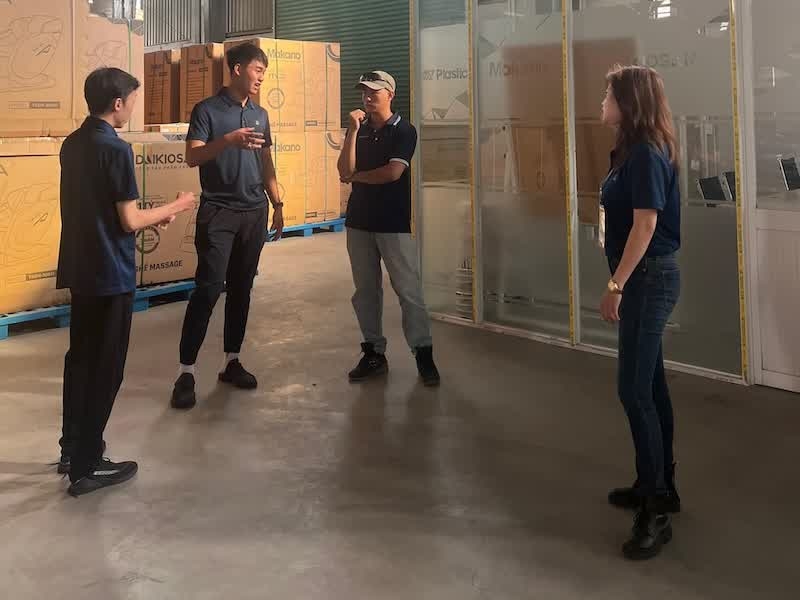 One of the worst things a leader can do is sit in the office, avoid walking the floor, and assume everything is going well because nobody has brought in a problem.
You need to see the work and talk with the team doing it. Walk the floor with a purpose beyond checking production totals. Learn how team members approach their jobs. Ask what slows them down, where instructions are unclear, and what information they need from you.
Make time for individual conversations. Some team members will speak openly in a group. Others will explain what they are struggling with only when you take the time to ask them one on one.
Useful questions include:
- What part of this job is hardest to get right consistently?
- Do these instructions match the work you actually do?
- Where do you receive different directions from different people?
- What happens when you are unsure of the next step?
- What could I explain or support better?
Then listen—and follow through. If the team repeatedly raises concerns and nothing happens, asking more questions will not strengthen the connection.
Walking the floor creates the opportunity to connect. Listening and following through make that connection count.
Understanding is the Test
What you intended to communicate, what the document says, and what the team member understands should lead to the same action. Until you confirm that, the connection is incomplete.
That takes more than one meeting, one training session, or one conversation after a mistake. It takes regular contact, clear instructions, practice, feedback, and follow-up. The goal is for team members to understand what good performance looks like, why it matters, and how to repeat it. They should also know where to turn when they need help.
You want the work to be repeatable and consistent in a way that meets the needs of your business—and makes sense to the team responsible for delivering it.
So, are you connected or not? Before you answer, walk the floor. Have the conversation. Open the procedure. Ask someone to show you how they understand the work.
If your message is clear to you but unclear to your team, your communication still has work to do. Let’s take the next step toward clearer communication, stronger connections, and repeatable results.
Larry Dietz owns Next Step Consulting & Business Solutions and brings over 45 years of leadership in manufacturing and metal finishing. Over more than four decades, he has led multi-line operations, guiding expansions, ERP modernization, and quality systems that earned 11 consecutive industry Top Shop awards. Known for building strong cultures grounded in clear expectations and visible management, Larry focuses on practical systems that improve communication, accountability, and results. Through Next Step, he partners with owners and leadership teams to turn day-to-day chaos into simple execution rhythms that stick. Learn more at www.nownextstep.com.