

When it comes to introducing new technology into the world of parts cleaning and finishing, Jason Marshall says he hears the same message from end users.
 Jason Marshall“‘Let somebody else go first’ is what I always hear,” says Marshall, the Laboratory Director at the Toxics Use Reduction Institute (TURI) at UMass Lowell, which is spearheading a program to improve the vapor degreasing process to be more environmentally friendly.
For decades, trichloroethylene (TCE) has been the backbone of high-performance vapor degreasing. It has also been one of the most vexing environmental and worker-safety challenges for U.S. manufacturers.
With bans advancing and exemptions under legal review, the pressure is mounting for metal finishers and precision manufacturers to transition away from halogenated solvents toward safer cleaning technologies.
TURI’s Cleaning Laboratory Leading the Research
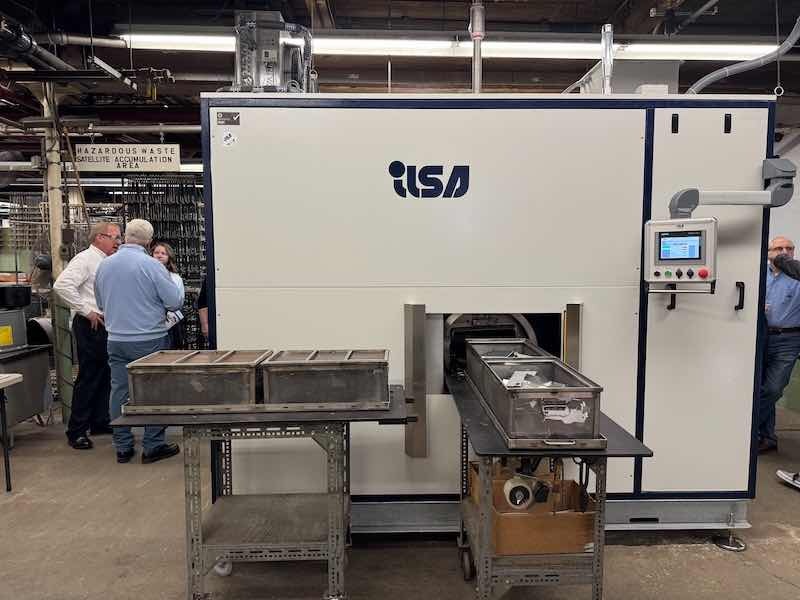
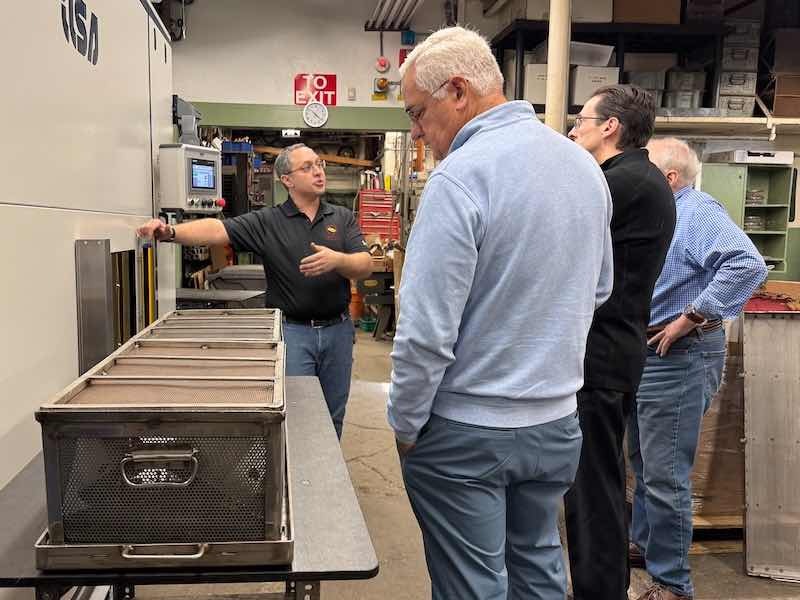 TURI hosted a hands-on technology demonstration at New Method Plating in Worcester, MA, showcasing the facility’s new vacuum vapor degreasing system.In Massachusetts—and increasingly across the country—the organization leading much of that transition is TURI. Their Cleaning Laboratory, founded in 1993, has long served as an R&D and validation center for companies that lack in-house testing capabilities.
Now, with a new Vacuum Degreasing Hub and a growing portfolio of case studies, TURI is emerging as one of the nation’s most important resources for manufacturers searching for a reliable, scalable alternative to TCE.
That work culminates in a major milestone on December 3, when TURI hosted a hands-on technology demonstration at New Method Plating in Worcester, MA, showcasing the facility’s new vacuum vapor degreasing system.
It was a real-world success story that is already delivering safer chemistry, improved cleaning performance, and unexpected cost savings.
A Real-World Demonstration: New Method Plating Goes First
 The vacuum system also monitors chamber conditions and automatically extends cycles if it detects that parts are not yet fully clean or dry—something “smart” TCE systems never did.Marshall, TURI’s long-time laboratory director, says they have struggled with the finishing industry’s hesitance to be the inaugural adopter of vacuum vapor degreasing with modified alcohol solvents.
New Method Plating—an established, space-constrained metal finishing shop—ultimately stepped into that role.
Their aging TCE-degreasing equipment was at the end of its life, forcing a choice: invest in another halogenated system or pursue a safer alternative. They had already conducted significant research on their own, Marshall says, but turned to TURI for bench-scale solvent-compatibility testing, technical assistance, and financial support.
TURI’s testing validated that modified alcohols would effectively clean New Method’s wide variety of metals and unpredictable incoming soils. With grant funding helping offset the capital cost, the shop selected a vacuum degreasing unit manufactured by Ilsa—one of the only suppliers able to modify the equipment footprint to fit the constraints of New Method’s older building.
They even customized the drum to allow New Method to keep using their existing part baskets. The first six months have been striking.
“In six months of operation, they’ve had zero cleaning rejections,” Marshall says. “That is versus roughly 15% re-cleans with their old TCE system.”
The vacuum system also monitors chamber conditions and automatically extends cycles if it detects that parts are not yet fully clean or dry—something “smart” TCE systems never did.
Cycle times, surprisingly, remained nearly identical: 9–12 minutes, matching their historical 10-minute TCE process. The shop is seeing significant electricity savings due to the reduced energy demand of modern vacuum equipment.
A New Hub for Safer Degreasing Technology
While TURI’s Cleaning Lab has supported industry for more than 30 years, the newly funded Vacuum Degreasing Hub represents a significant expansion. The institute secured EPA funding in late 2023 after a lengthy administrative review and ordered its own vacuum degreaser — a smaller version of the New Method system — now due to arrive in early 2026.
In the meantime, TURI’s team has built a benchtop vacuum testing system, enabling them to:
- Validate cleaning performance on real customer soils
- Screen modified alcohols, hydrocarbons, and custom solvent blends
- Conduct proof-of-concept work before full-scale trials
- Explore novel solvent ideas for niche applications
This is critical for manufacturers who simply cannot run multivariable R&D in-house.
“We’re telling companies, ‘It’s coming; don’t wait until the last minute and get stuck with whatever is still available. Act now while you can test options and choose the best one—not just the first one you can get your hands on.”
“These companies already have full-time jobs: they need to get parts out the door,” Marshall says. “They don’t have time to test 12 different chemistries offline. That’s why our lab was created, to be their R&D arm.”
The Vacuum Degreasing Hub will support companies in Massachusetts, Rhode Island, Connecticut, and New Hampshire, with all services fully subsidized by EPA funding.
The TCE Ban: Why Manufacturers Can’t Wait
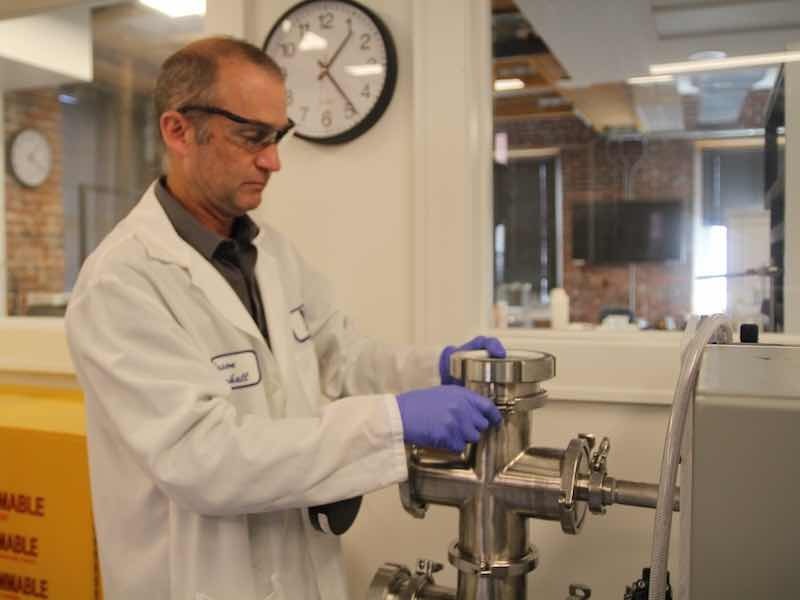 TURI's Jason Marshall working in the Vacuum Degreasing Hub.According to TURI’s policy experts, TCE is officially banned, but the key fight now centers on:
- Which industries receive exemptions?
- How long do those exemptions last?
- When countdown clocks formally begin.
- How will court challenges be resolved?
Some exempted sectors may have seven to 10 years to transition, but start dates remain subject to litigation. For others, the ban is already effectively in place.
This uncertainty is creating risk for manufacturers, especially those with aging equipment or complex cleaning needs.
“We’re telling companies, ‘It’s coming; don’t wait until the last minute and get stuck with whatever is still available,’” Marshall says. “Act now while you can test options and choose the best one—not just the first one you can get your hands on.”
Modified Alcohols vs. Hydrocarbons: A Cleaner, Safer Path
While many companies hoped for a “drop-in replacement” for TCE, aqueous cleaning systems often require significant process changes and are not universal. Modified alcohols, used in closed-loop vacuum degreasers, have emerged as the closest alternative to a universal solvent.
Their benefits include:
- Strong solvency for a wide range of oils.
- Fast drying under vacuum.
- Drastically reduced exposure risks.
- No atmospheric emissions.
- High cleaning consistency.
Meanwhile, hydrocarbons perform well on certain soils but require different machine gaskets than modified alcohols, meaning manufacturers must choose one chemistry or the other.
TURI is now working with equipment suppliers to explore universal gasket materials that could enable solvent switching without machine modifications.
In chemistry, only two major suppliers currently produce modified alcohol degreasing solvents—Safechem and Kyzen—and both are now collaborating with TURI’s hub.
Why Vacuum Degreasing Is the Gold Standard
Manufacturers have long recognized vapor degreasing as the top-tier cleaning method, but vacuum systems enhance it further:
- Immersion, ultrasonics, and rotation in the same chamber.
- Final rinse in distilled solvent for exceptional cleanliness.
- No oxygen, eliminating flashpoint concerns.
- Automatic monitoring to verify dryness and cleanliness.
- Reduction or elimination of rework.
Attendees were able to watch a full vacuum vapor degreasing cycle, examine parts cleaned with modified alcohols, discuss performance with operators who have used both TCE and vacuum systems.
European manufacturers—especially in automotive—have used similar systems for years, guided by strict standards such as VDA 19. In the U.S., however, the transition has been slower, and many shops still receive parts with unknown or changing oils.
Vacuum degreasing provides the robustness required for these variables.
A Model Ready for Replication Nationwide
TURI has already partnered with Minnesota, Washington, and Kansas to train state agencies in replicating the “collect samples/test at TURI / implement locally” model.
As the TCE ban ripples across the country, this model may become the most scalable approach for helping manufacturers transition intelligently and efficiently.
The event at New Method Plating was designed for one purpose: to let skeptical or uncertain companies see the technology in action, on real parts, with real results.
Attendees were able to watch a full vacuum vapor degreasing cycle, examine parts cleaned with modified alcohols, discuss performance with operators who have used both TCE and vacuum systems, hear about energy savings, workflow changes, and ROI, and finally learn about TURI’s free testing, assistance, and upcoming pilot equipment.
It was the first demonstration of its kind in the region, and likely the first in the nation, backed by a university-based technical institute with more than three decades of cleaning R&D experience.
Visit https://www.turi.org.