



As finishers continue searching for ways to improve efficiency, reduce downtime, and increase throughput, one piece of equipment is drawing renewed attention on plating lines: the rectifier.
 For decades, rectifiers have quietly served as the heartbeat of electroplating operations, converting AC electrical power into the DC needed to drive plating processes. But while plating chemistry and automation systems have steadily evolved, rectifier technology itself has undergone a major transformation in recent years — one that many shops are now embracing to stay competitive.
American Plating Power Vice President of Sales Steve Smith says today’s electroplating customers are increasingly demanding more efficient, compact, and intelligent power systems that can improve process quality while lowering operating costs.
“The market is increasingly asking for innovation,” Smith said. “Efficiency and energy costs are increasingly a big concern. Customers have always asked for innovation, and now they’re really pushing for systems that help them improve productivity and reduce operating costs.”
For American Plating Power, that demand has fueled significant investment in next-generation switch-mode rectifier technology, advanced controls, and integrated support services.
The company, based in Fort Myers, Florida, has spent more than two decades supplying rectifiers and power systems for metal finishing operations throughout North America and beyond.
“High ripple can cause delamination or bad adhesion to the substrate,” Smith said. “It can cause a wavy line effect in chrome and other types of plating. It can have a lot of really negative outcomes.”
“American Plating Power has been in business for about 23 years,” Smith said. “We have the distinction of offering the widest variety of rectifier products in the industry for metal finishing and other industries.”
But as Smith explained, the company’s focus extends well beyond simply selling equipment.
“What sets us apart is our aftermarket support,” he said. “We stock spare parts, we have an excellent field service group, and we service all makes and models of rectifiers as well.”
The Shift from SCR to Switch-Mode Technology
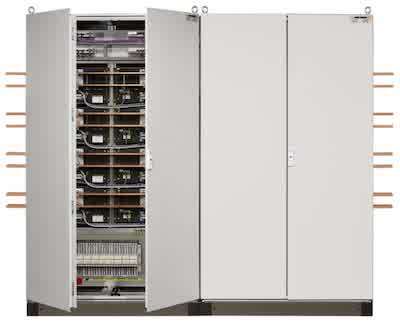 Switchmode Power Supplies (MS-Series) feature constant voltage and current control with easy, quick installation and maintenancePerhaps the biggest change in rectifier technology over the past few decades has been the growing adoption of switch-mode rectifiers in place of traditional SCR systems.
For years, silicon-controlled rectifier (SCR) technology dominated plating operations. Those systems earned a reputation for durability and reliability, but they also had significant limitations in efficiency, size, and output quality.
“The core technology — kind of the old-school technology for rectifiers for metal finishing — has been SCR rectifiers,” Smith explained. “They’re large, bulky, and quite durable, and they’re relatively simple devices, but they have some disadvantages from a performance standpoint.”
Switch-mode rectifiers, by comparison, are substantially smaller, lighter, and more efficient. More importantly, they deliver cleaner DC output with significantly reduced electrical ripple.
That improvement can directly affect plating quality.
“Switch modes produce a pure DC output — more of a flat line rather than what’s referred to as ripple,” Smith said. “SCRs, depending on how you’re utilizing them, can have a ripple effect significant enough to adversely affect the process.”
In electroplating, excessive ripple can lead to a range of production problems, including poor adhesion, delamination, and cosmetic inconsistencies in plated finishes.
“High ripple can cause delamination or bad adhesion to the substrate,” Smith said. “It can cause a wavy line effect in chrome and other types of plating. It can have a lot of really negative outcomes.”
By reducing those inconsistencies, switch-mode technology helps plating shops improve process stability while reducing scrap and rework.
For manufacturers operating in high-specification sectors such as aerospace, automotive, medical, and defense, those improvements can be especially valuable.
Efficiency Becomes a Priority
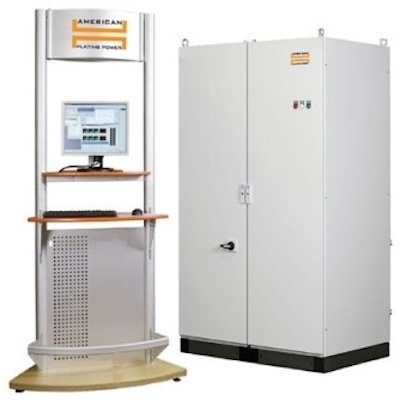 Reverse pulse power supplies.Energy consumption is another major factor driving the transition toward newer rectifier systems.
In most plating facilities, rectifiers are among the largest consumers of electrical power on the production floor. As utility costs continue rising, many finishers are reevaluating older systems that may still function but operate far less efficiently than modern alternatives.
“Rectifiers are your biggest energy user on a plating line,” Smith said. “Older rectifiers tend to be very inefficient.”
Switch-mode systems can improve efficiency by several percentage points over older SCR technology, helping shops reduce long-term operational costs.
“Higher efficiency than SCR by several percentage points means lower electric costs and lower energy costs,” Smith said. “So you get a lower cost of operation.”
Those gains become even more significant in large-scale plating operations running high-amperage systems around the clock.
APP has continued to push efficiency improvements further by using silicon carbide technology in its newest systems. Smith says they currently have the largest single module available anywhere at 2,000 amps.
That modular architecture allows multiple units to be stacked together to achieve extremely high current output levels in a much smaller footprint than traditional systems require.
“We can use five of those to create a 10,000 amp output,” Smith said. “That’s really unheard of and revolutionary in the industry.”
Historically, a 10,000-amp rectifier required a massive floor-mounted cabinet occupying significant production space.
“A 10,000 amp rectifier used to be a 5- or 6-foot-square footprint requirement,” Smith explained. “We can do that now with switch mode in a space about two-by-two feet square.”
For facilities attempting to maximize production capacity inside existing buildings, that reduction in footprint can create meaningful operational advantages.
“Switch modes are smaller, they’re lighter, they’re about 20% of the overall size of an SCR,” Smith said. “They take up less floor space and allow for more productive use of it.”
Helping Lean Manufacturing Operations
The evolution of rectifier design is also helping manufacturers adapt to a broader workforce and maintenance challenges facing the industry today.
Many plating shops now operate with leaner maintenance staff than they did years ago, making ease of service increasingly important.
“Companies are running leaner and leaner,” Smith said. “They used to have in-house maintenance that maybe understood rectifiers and how to repair them. That’s less and less the case today.”
Finding qualified electrical maintenance personnel has become difficult across many manufacturing sectors, especially for highly specialized equipment.
“With switch modes, you can basically remove a module, send it back for repair, replace it, and keep a spare module on the shelf,” Smith explained. “You can remove and replace a module in an hour or less.”
“Data logging’s another area that we’ve really made some big strides in,” Smith said. “You can go back and document the process, how long the process times were for a particular batch or run.”
That modular design can significantly reduce downtime compared with traditional systems that often require more extensive troubleshooting and repair procedures.
“It really reduces downtime and simplifies the whole maintenance and uptime process for the customer,” Smith said.
For production-oriented finishing operations, minimizing downtime is critical. Even short interruptions can create costly production bottlenecks and delivery delays.
As a result, many facilities are now evaluating equipment not simply on initial purchase price, but on long-term uptime, serviceability, and operational efficiency.
Smarter Controls and Data Integration
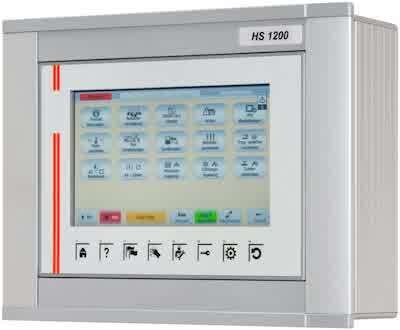 Each type of SCR or Switchmode rectifier can interface with any of the control solutions offered by American Plating Power.Another area seeing rapid advancement is control technology. As plating lines become increasingly automated, rectifiers are expected to integrate seamlessly with plant-wide control systems, data collection platforms, and process monitoring software.
APP has invested heavily in expanding those capabilities.
“We now have controls that can operate multiple rectifiers from a single control,” Smith said.
According to Smith, the company’s systems can manage anywhere from eight to more than 30 rectifiers through centralized software platforms.
That capability allows operators to streamline production management while improving process consistency throughout the line.
Data logging has also become an important requirement, particularly for highly regulated industries requiring extensive process documentation.
“Data logging’s another area that we’ve really made some big strides in,” Smith said. “You can go back and document the process, how long the process times were for a particular batch or run.”
Those capabilities are particularly valuable for shops operating under stringent aerospace and defense quality requirements.
“That’s especially helpful if you’re an NADCAP shop and you’re required to document those kinds of things,” Smith said.
Integration with major PLC platforms has also become increasingly important as manufacturers continue to expand their automation initiatives.
“We’ve done great work in improving our integration capabilities with Siemens or Allen-Bradley PLC platforms,” Smith said. “That whole world of control is something we spend a lot of time improving for our customers.”
The Importance of Technical Support
Despite the increasing sophistication of rectifier systems, many plating operators remain focused primarily on chemistry and process management rather than electrical engineering.
That makes supplier support especially important.
“Most platers are process people,” Smith said. “This is a pretty sophisticated electrical device.”
Smith describes the rectifier as the essential power source driving the electroplating process itself.
“It’s the heartbeat of electroplating,” he said. “It creates that energy that is the catalyst that causes everything to happen in the tank.”
Because of that complexity, many customers rely heavily on supplier expertise to help specify, install, maintain, and optimize their systems.
“Your average customer isn’t an expert in rectifiers,” Smith said. “That’s why you need a rectifier expert to help you through that.”
As rectifier systems become more digitally integrated and technologically advanced, that consultative role continues growing in importance.
Expanding into Immersion Heaters
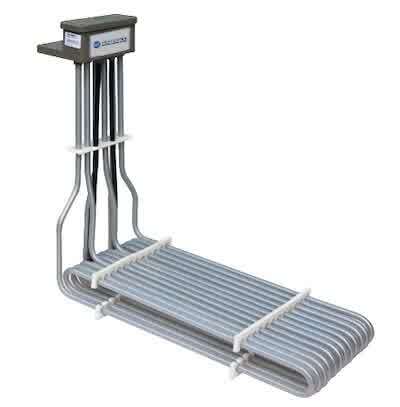 A Multi Element L Shaped PTFE Heater.In addition to rectifier technology, APP has also expanded its offerings through its sister company, HeaterTek.
HeaterTek manufactures electric immersion heaters, including stainless steel, titanium, and fluoropolymer heater systems used throughout plating and anodizing operations. According to Smith, rapid turnaround times and product availability are major differentiators for the company.
“We stock a variety of heaters for immediate availability,” he said. “If we have to build a heater, we strive to achieve a superior turnaround time and short lead time.”
The company also supplies thermal protection devices, liquid level controls, and associated safety systems designed for plating environments.
As manufacturers increasingly seek to simplify vendor relationships, the ability to source multiple critical plating-line components from a single supplier can offer additional convenience and support advantages.
“They’re two very significant, important key pieces of equipment for any plating line or anodized process,” Smith said. “We’re happy to provide an expanded offering to help our customers.”
Certification and Safety Advancements
Another significant development underway at both APP and HeaterTek involves third-party certification efforts. Smith said HeaterTek has already achieved important milestones in obtaining certifications for its product lines.
“We have UL on our temperature controls, and we have CSA US on our Teflon heaters,” he explained.
The company’s metal heaters are also currently undergoing UL certification review.
Meanwhile, APP is pursuing what Smith says could become an industry first for switch-mode rectifier systems sold into the U.S. market.
“We’re halfway through the process of getting our switch-mode rectifiers UL listed,” Smith said. “That would be a first for any company selling into the U.S.”
As safety standards and compliance requirements continue evolving throughout manufacturing, certifications are becoming increasingly important for both end users and OEM equipment providers.
Improving Electrical Contact Performance
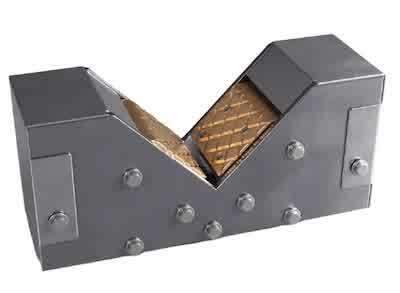 The system provides high electrical conductivity through the use of copper, enabling reliable and efficient power transmission.Beyond rectifiers and heaters, APP has also expanded into additional technologies designed to improve plating-line efficiency and reliability.
One example is the company’s partnership with the European manufacturer Linnhoff, which produces spring-loaded contact saddles and cleaning devices for plating lines. Electrical contact integrity remains a common challenge in plating environments due to corrosion, oxidation, and chemical buildup.
Poor contact can generate excess heat and inconsistent current flow, negatively affecting plating quality and energy efficiency.
“The chemicals in the environment cause oxidation or buildup and interfere with electrical contact,” Smith says. “The spring-loaded device keeps the electrical contact solid.”
Additional inline cleaning devices help continuously maintain those contact surfaces throughout production.
“Other devices can be installed online to help keep the surface clean, as well as those flight bars as they go through, to maintain good electrical contact,” he said.
For plating shops focused on maximizing efficiency, even relatively small improvements in electrical transfer performance can contribute to better process stability and lower operating costs.
Knowing When It’s Time to Upgrade
For many finishers, one of the biggest questions remains determining when older rectifier systems should finally be replaced.
According to Smith, several warning signs typically indicate that an upgrade may be justified.
“If they’re seeing rectifier-related process issues affecting either scrap rate or poor finishing quality, they should really consider upgrading,” he said. “If the downtime increases where you’re constantly having to shut things down to repair a rectifier, that certainly can become a real issue.”
Transformer failures are often a particularly strong indicator that replacement may be necessary.
“When you start losing transformers, that’s like totaling your car,” Smith explained. “At a certain point, it’s no longer economical to repair. They’re not inexpensive, but they certainly are worth the investment.”
Visit https://americanplatingpower.com and https://heatertek.com.