


For many finishers, electrical consumption is one of the largest expenses in a facility, and older rectifier systems can consume significantly more power while also taking up valuable production space.
Today’s switch-mode rectifiers and pulse reverse power supplies are changing that equation.
According to Renny Fritz, Business Development Manager for Hendor and plating electronic, modern rectifier systems are helping finishing operations reduce electrical costs, improve plating quality, minimize rejects, and gain tighter process control — all while using a much smaller footprint than traditional SCR technology.
“Switch-mode technology converts power more efficiently,” Fritz says. “More of the AC input power is used for the plating process, which yields less energy consumption and reduces electricity costs, which is huge today.”
For plating shops operating dozens of plating cells, those savings can add up quickly.
Fritz recently worked with a customer operating an automated hoist line with 20 plating cells that relied on older SCR rectifier technology.
“He wanted to upgrade, and we talked him into some switch modes,” Fritz says. “We were able to reduce the footprint, size the rectifiers more closely to his plating requirements, and reduce the overall energy consumption. The savings were roughly $15,000 per year just in energy consumption savings.”
For many finishing facilities, those savings alone can help justify modernization projects.
Rectifiers Remain the Heart of the Plating Line
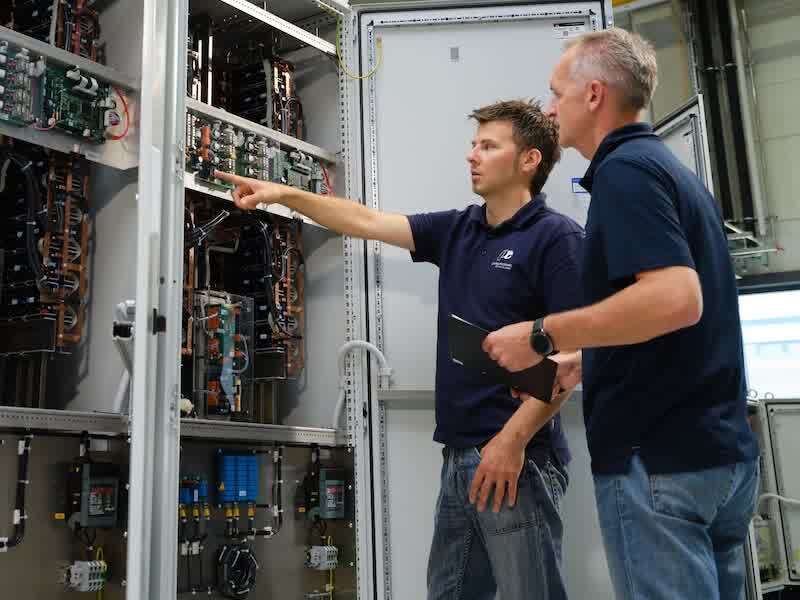 While plating shops often focus on upgrading hoists, pumps, automation systems, and chemical controls, rectifiers remain among the most critical components in any finishing operation. They provide the direct current required for electroplating and anodizing processes, making them essential to coating quality and production consistency.
“Rectifiers are a big chunk of the money of the system,” Fritz says. “Customers today want high-efficiency motors, highly efficient systems, and state-of-the-art equipment with energy-saving devices.”
Fritz represents two companies — Hendor and plating electronic — through Hendor PE, based in Greenville, South Carolina. While Hendor focuses on pumps and filtration systems, plating electronic specializes in industrial DC rectifiers and pulse reverse power supplies.
“For 51 years, plating electronic has offered industrial DC rectifiers and pulse reverse power supplies for the electroplating and surface finishing industry,” Fritz says.
Those applications include laboratory plating, general metal finishing, printed circuit boards, anodizing, e-coating, water treatment, electrolysis applications, and hydrogen production.
The company’s engineering and manufacturing operations are based in Germany, where plating electronic built its reputation around precise current control and advanced switch-mode technology.
“Since the beginning, 51 years ago, we’ve been doing switch-mode technology,” Fritz says. “So this is not new technology for us. We started with switch-mode technology.”
That long history has allowed the company to refine systems around one of the most important aspects of modern plating operations: precise process control.
Understanding the Three Main Rectifier Technologies
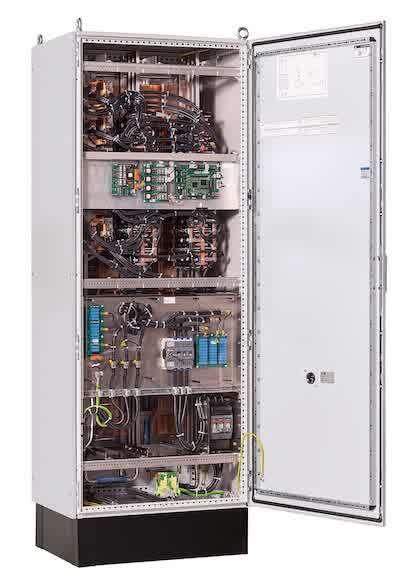 Fritz says plating shops today generally evaluate three main types of rectifier technologies:
- SCR rectifiers
- Switch-mode rectifiers
- Pulse and pulse reverse power supplies
Each serves different applications and process requirements. SCR (silicon-controlled rectifier) technology remains common in many older finishing operations and is often used for heavy-duty, high-current applications.
“SCR rectifiers are best for heavy-duty, high-current processes such as hydrogen production or plating applications where higher ripple or energy efficiency doesn’t matter,” Fritz explains.
However, SCR systems typically require much larger footprints and are less energy efficient than newer switch-mode systems.
“SCR technology is an older technology that requires a much larger footprint compared to switch-mode technologies,” Fritz says.
One major difference involves ripple — the amount of AC fluctuation remaining in the DC output.
“Low ripple means cleaner, pure DC that provides a more even plating distribution,” Fritz says. “High ripple can cause bad plating adhesion.”
Traditional SCR systems may operate with ripple levels between 2.5% and 5%, while switch-mode systems can achieve ripple below 1%.
That cleaner DC output can directly affect plating quality, reject rates, and process consistency.
“With switch-mode technology, you can monitor it with precise current and get it dead on,” Fritz says. “You’re not over-plating the product.”
Switch-Mode Rectifiers
Switch-mode technology has become increasingly attractive to electroplaters and anodizers because of its energy efficiency, compact design, and tighter current control.
“Switch-mode rectifiers are best for precision plating electronics or where energy efficiency and tight control are important,” Fritz says.
One of the biggest advantages is space savings.
“The benefits of a switch-mode rectifier are a much smaller footprint,” Fritz says. “Being that they have a smaller footprint, you can do modular designs up to 10,000 amps plus.”
That smaller footprint gives shops more flexibility in crowded facilities with limited floor space.
“Real estate in a plating organization is usually very tight,” Fritz says. “Especially job shops. They squeeze everything in.”
Modern switch-mode systems can also be installed remotely or grouped for centralized control of multiple plating cells.
“We offer standalone power systems,” Fritz says. “You can put them next to the plating process or in a remote area.”
Beyond space savings, switch-mode systems provide cleaner power output that can improve plating quality.
“Switch-mode ripple is less than 1%, providing a cleaner, pure DC output for more uniform plating on the substrate,” Fritz says. “Switching modes reduces part burning and plating roughness, resulting in fewer rejects.”
Energy efficiency is another major driver behind modernization projects.
“More of the AC input power is used for the plating process,” Fritz says. “That reduces electricity consumption.”
Older SCR technology often requires oversized systems because of higher energy losses and less stable current delivery.
“Switch-mode technology delivers more stable, cleaner current, which allows you to size the rectifier closer to the process requirements,” Fritz says. “So you’re not paying for more than you need.”
Water-Cooled Systems Improve Longevity
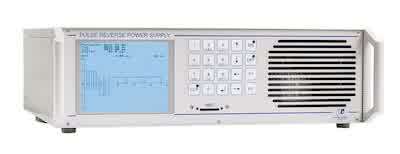 One growing trend Fritz sees is the use of water-cooled rectifiers rather than traditional air-cooled systems.
Plating environments are inherently corrosive because of acid fumes, moisture, and airborne contaminants. Older air-cooled rectifiers can pull those corrosive fumes directly into the equipment through cooling fans.
“The old technology SCRs would bring all those fumes inside and start deteriorating the rectifiers,” Fritz says.
Water-cooled systems help reduce that problem while also improving long-term reliability.
“The water-cooled ones, if you run them at the optimum temperature, they’ll last you a very long time,” Fritz says.
Fritz says some of the plating electronic systems installed decades ago are still operating today.
“We’ve got rectifiers from 51 years ago that are still running today,” he says.
Proper installation and maintenance remain essential.
“If you don’t take care of your car, it’s not going to last very long,” Fritz says. “If you take care of your rectifier, it’ll last you a long time.”
Before recommending systems, Fritz says the company spends significant time evaluating customer operating environments and installation conditions.
“We ask a lot of questions before we get into rectifiers because we want to help the customer so they have that longevity,” he says.
Protective barriers, ventilation systems, and proper equipment placement can all extend service life.
“I would suggest putting up some PVC walls and barriers to help protect them and get some ventilation in there,” Fritz says.
Smart Automation and Industry 4.0 Integration
Modern rectifiers are also becoming increasingly integrated with automation systems and digital controls.
According to Fritz, today’s finishing customers are demanding tighter process control, automation integration, remote monitoring, and Industry 4.0 connectivity.
“Customers today are moving toward higher energy efficiency, tighter process control, and smart digital features,” Fritz says. “This includes pulse capabilities, automation integration, remote monitoring, and Industry 4.0.”
Modern rectifier systems can control each plating cell individually rather than distributing current across an entire line using older bussing methods.
“Now you can control each plating cell individually based on plating thickness,” Fritz explains.
That level of control can be especially valuable for automated finishing lines.
“If you think of it as an automated line, you barcode the customer’s product as it goes in, and the recipe is already there,” Fritz says. “The amperage adjusts automatically to what it needs to be.”
Those automated recipes help prevent over-plating and improve process consistency.
“You’re not over-plating a product,” Fritz says.
Shops can also control amperage based on part count, plating recipes, or even barrel weight for barrel plating applications.
The result is more precise metal deposition, fewer rejects, reduced rework, and lower operating costs.
Pulse Reverse Technology Addresses Advanced PCB Demands
As printed circuit boards continue becoming smaller, denser, and more complex, pulse reverse power supplies are becoming increasingly important.
“Pulse and pulse reverse are excellent choices when a complex process is required,” Fritz says.
In pulse reverse systems, forward current performs the plating function while reverse current strips or cleans plating deposits to improve uniformity.
“Forward means the plating phase, and reverse means stripping and cleaning the plating deposits for more uniform plating,” Fritz explains.
That capability becomes especially critical in advanced PCB manufacturing.
“Boards are getting smaller and thicker,” Fritz says. “Thicker boards plus smaller holes make it very challenging for current and chemicals to reach the center of the substrate.”
Pulse reverse technology helps solve those issues by improving plating distribution inside complex geometries.
“This is when you need a reliable pulse reverse power supply with stable waveforms to achieve a more uniform copper plating deposit,” Fritz says.
Like the company’s standard switch-mode systems, plating electronics’ pulse reverse systems are designed around high efficiency and precise control.
“Our pulse reverse provides precise current control and very fast switching between forward and reverse,” Fritz says.
The systems are also designed for continuous industrial operation.
“Our pulse reversers are very reliable and designed for continuous operation,” he says.
Cost Savings Continue Driving Upgrades
For many plating and anodizing shops, modernization decisions ultimately come down to operational savings and return on investment.
Electricity costs continue rising in many regions, making energy-efficient equipment increasingly attractive.
“Water and electricity are some of the most expensive things shops spend money on,” Fritz says.
At the same time, shops are under growing pressure to improve quality, reduce scrap, minimize labor, and increase throughput.
Modern rectifiers can contribute to all of those goals simultaneously.
“They want state-of-the-art gear and all those energy-saving devices,” Fritz says. “I would be looking for calculations on what I could save if I were looking for a new machine today.”
As facilities continue to upgrade aging plating lines, rectifier technology is becoming a key focus area due to its impact on energy usage, process consistency, floor space, and automation capabilities.
For shops still operating decades-old SCR systems, Fritz believes the opportunity for improvement can be significant.
“It gives you the cost savings you’re looking for and the energy efficiency,” he says. “It saves real estate and gives you flexibility to mount these pretty much where you want in the facility.”
Visit https://hendor-pe.com.