


From Lab to Battlefield: NCP Coatings Brings Advanced CARC-L Technology to Military Vehicles

For companies serving the military coatings market, innovation often requires patience.

Glenn ArentGlenn ArentNew technologies can spend years moving through laboratory development, field evaluations, specification reviews, qualification testing, and military approval processes before they ever see widespread use.

That lengthy path to commercialization is exactly what NCP Coatings experienced in bringing its new CARC-L technology to market.

The Niles, Michigan-based coatings manufacturer recently introduced its CARC-L product line, a low solar-absorbing version of Chemical Agent Resistant Coating (CARC) designed to reduce heat buildup on military vehicles and equipment.

According to Glenn Arent, NCP Coatings’ Director of Defense Sales, the technology substantially reduces surface temperatures and interior compartment heat while letting applicators continue using the same equipment and processes they already rely on.

The result is a coating system that addresses a growing military need without creating new challenges for the contractors, depots, and OEMs responsible for applying it.

A Defense Coatings Legacy Dating Back to the 1940s
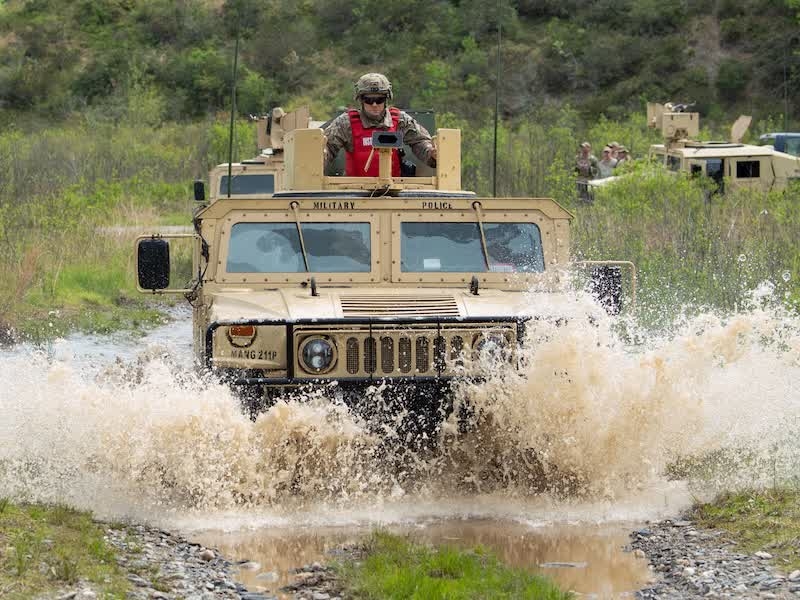
Air Force Tech. Sgt. Brandon Mercer participates in a combat vehicle operation field training exercise at Fort Devens, Mass., May 15, 2024. The training consisted of basic and tactical communication, convoy operations, mounted patrolling and night driving. Photo by Air Force Airman 1st Class Julia Ahaesy. The appearance of U.S. Department of War visual information does not imply or constitute DOW endorsement.Air Force Tech. Sgt. Brandon Mercer participates in a combat vehicle operation field training exercise at Fort Devens, Mass., May 15, 2024. Photo by Air Force Airman 1st Class Julia Ahaesy.NCP Coatings’ involvement in military coatings stretches back nearly as far as the company’s history.

Founded in 1948 as Niles Chemical Paint, the company originally supplied wheel enamels to Studebaker in nearby South Bend, Indiana. As Studebaker expanded into military vehicle production, NCP Coatings also entered the defense market.

“That’s really where we got our start with military coatings,” Arent explained.

What began as support for military vehicle manufacturing eventually evolved into one of the company’s primary business segments.

Today, NCP Coatings serves multiple industrial markets, including over-the-road trailers, heavy equipment, custom window and door manufacturers, forestry products, naval applications, aerospace, and military ground vehicles. The company manufactures a wide range of high-performance urethane, epoxy, alkyd, and specialty coating systems.

That broad industrial experience ultimately provided the foundation for CARC-L.

What Is CARC-L?
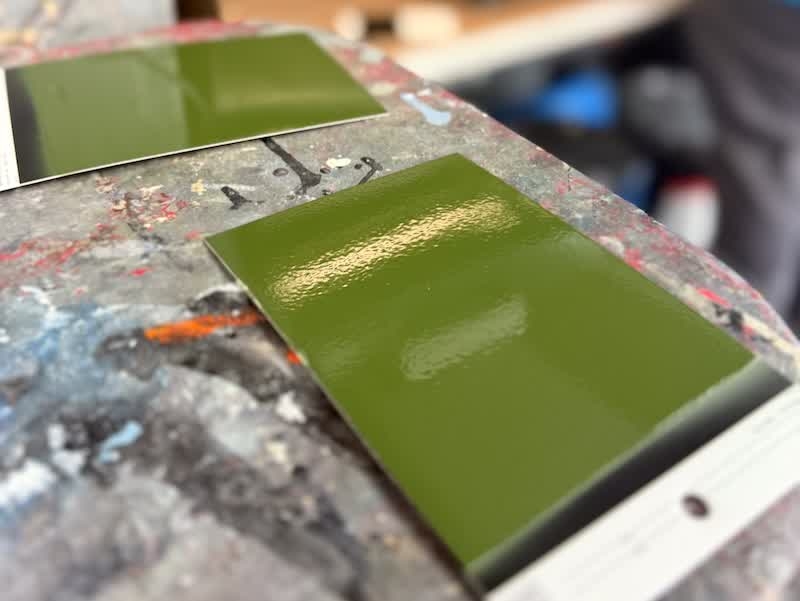
ncpc 14The “L” in CARC-L stands for Low Solar Absorbing. At its core, the technology reduces the amount of solar energy absorbed by coated surfaces. Less absorbed energy means lower surface temperatures, which in turn results in cooler interior temperatures for the equipment and personnel inside.

While the application may be new for many military vehicles, the underlying science is not.

Low solar-absorbing pigment technology has existed for years in architectural coatings. Manufacturers of vinyl siding, aluminum windows, custom doors, and other building products have used these pigments to reduce heat buildup caused by prolonged sun exposure.

In those applications, excessive solar loading can lead to warping, substrate distortion, cracking, and premature degradation.

“The technology itself has been around for quite a while,” Arent said.

“The benefit of it is that it lowers the solar loading on the equipment. It lowers the surface temperature of the equipment, and then obviously it lowers the internal compartment temperature for the troops within the equipment.”

NCP Coatings became familiar with the technology through its involvement in architectural coatings markets, particularly in the high-end door and window segment where solar heat management has long been a concern.

The military, however, presented a different opportunity.

Lessons Learned from the U.S. Navy
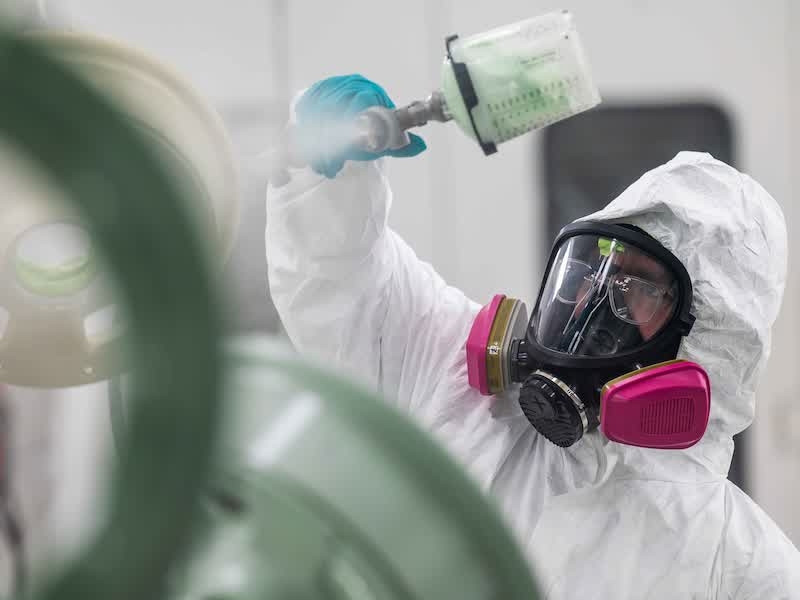
Air Force Senior Airman Jacob Berry paints the wheel of a T-38 Talon at Whiteman Air Force Base, Mo. Photo by Air Force Senior Airman Joshua HastingsAir Force Senior Airman Jacob Berry paints the wheel of a T-38 Talon at Whiteman Air Force Base, Mo. Photo by Air Force Senior Airman Joshua HastingsBefore low solar-absorbing coatings began appearing on military vehicles, the U.S. Navy had already recognized their benefits. According to Arent, naval applications were among the earliest military uses of low solar-absorbing pigment technology.

Ships operating for extended periods under direct sunlight can experience significant heat buildup in steel structures and enclosed compartments. By reducing solar loading on exterior surfaces, naval coatings employing low solar-absorbing pigments help control temperatures inside the vessel.

“The Navy has actually used the low solar-absorbing pigment technology for years,” Arent said.

The success of those applications eventually drew the attention of military researchers working on ground vehicle programs.

Organizations including DEVCOM Army Research Laboratory — along with Concurrent Technologies Corporation and its successor Enterprise Ventures Corporation — became involved in exploring how similar technology could be applied to military vehicles and equipment.

For soldiers operating inside armored vehicles, troop carriers, and support equipment, temperature control can directly affect comfort, endurance, and operational effectiveness.

That made low solar-absorbing coatings a promising area for development.

Lower Temperatures, Greater Comfort
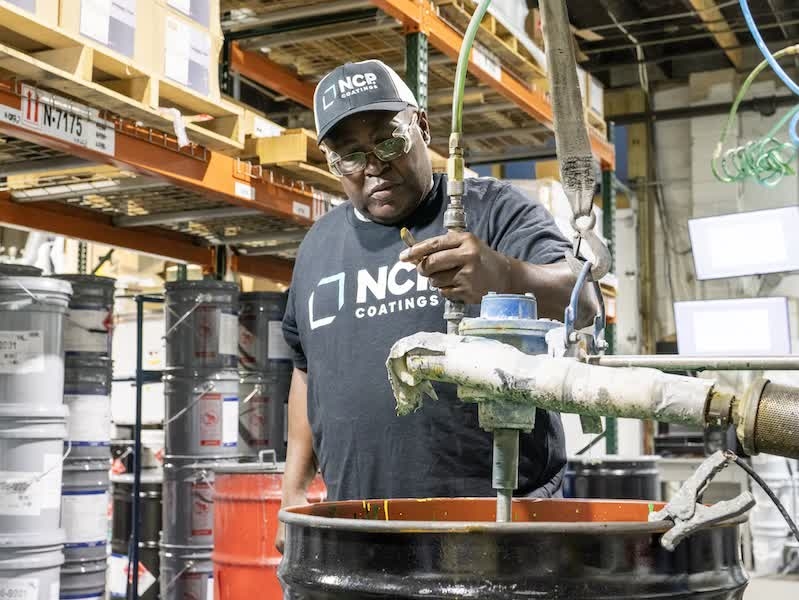
ncpc 8The primary benefit of NPC Coatings’ CARC-L product is straightforward: it keeps surfaces cooler.

“The benefit of it is that it lowers the solar loading on the equipment,” Arent says. “It lowers the surface temperature of the equipment, and then obviously it lowers the internal compartment temperature for the troops within the equipment.”

The reductions can be significant. According to Arent, lighter military camouflage colors formulated with the technology can achieve surface-temperature reductions of approximately 15 to 20 degrees Fahrenheit compared with traditional coatings.

The effects become even more dramatic with darker colors. When low solar-absorbing pigments are incorporated into black and other dark-colored military finishes, temperature reductions can reach 30 to 40 degrees Fahrenheit under certain conditions.

“The idea is that instead of the sunlight or the solar loading being absorbed into the pigment, you want it to be able to go in and come back out.”

For military personnel operating in desert environments, training grounds, or regions with prolonged solar exposure, those differences can have meaningful operational impacts.

The technology may also help reduce thermal stress on various equipment systems and components exposed to elevated temperatures.

Understanding the Science

CARC-L’s performance is tied closely to solar reflectance. Traditional pigments absorb a portion of the sun’s energy and convert it into heat. Low solar-absorbing pigments are engineered to reflect more of that energy rather than retaining it within the coating film.

“The idea is that instead of the sunlight or the solar loading being absorbed into the pigment, you want it to be able to go in and come back out,” Arent said.

Reflectance becomes even more effective when paired with properly selected primer systems.

“They’re going to want to see that piece of equipment out in the field for several years, not just several months.”

Lighter-colored primers can help reflect solar energy through the coating system, further reducing heat absorption.

The combination of specialized pigment technology and optimized coating design allows military equipment to maintain lower operating temperatures without sacrificing appearance or performance.

Commercializing a Military Technology
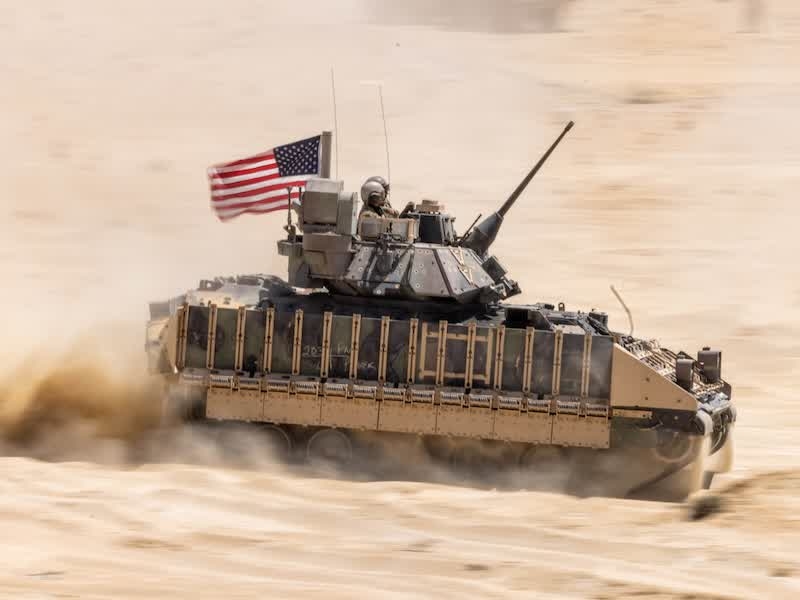
Soldiers conduct crew gunnery training in an M7A4 Bradley fighting vehicle during a combined-arms live-fire exercise at the Central Training Area near Camp Tapa, Estonia. Photo by Army Sgt. Myenn LaMotta.Soldiers conduct crew gunnery training in an M7A4 Bradley fighting vehicle during a combined-arms live-fire exercise at the Central Training Area near Camp Tapa, Estonia. Photo by Army Sgt. Myenn LaMotta.Transforming a promising idea into a qualified military product required years of work. Military coatings are among the most rigorously evaluated products in the coatings industry. Unlike many commercial technologies, laboratory success alone is not enough.

In fact, both the coating and the supplier must be qualified, and an applicator using an unqualified product or supplier can create compliance issues.

“It’s not for the faint of heart,” Arent said.

Development starts with conceptual testing and formulation work. From there, coatings undergo panel evaluations, laboratory performance testing, mock-up applications, and various environmental and durability assessments.

Once researchers demonstrate that the product performs as intended, real-world field trials begin, a phase that can last years. Military organizations need to verify that coatings perform not only under controlled test conditions but also in actual service environments.

“They’re going to want to see that piece of equipment out in the field for several years, not just several months,” Arent said.

“If you’re using traditional CARC systems, the CARC-L products are going to plug and play right into your everyday application.”

Following field validation, specification development and review begin. Draft specifications may circulate among military organizations, coating manufacturers, and end users before final requirements are established.

Only then can suppliers begin formal qualification testing. The entire process often takes three to six years from concept to commercialization.

That lengthy timeline helps explain why relatively few manufacturers pursue military coatings development and why successful products often represent years of investment before generating meaningful revenue.

Making Adoption Easier for Applicators
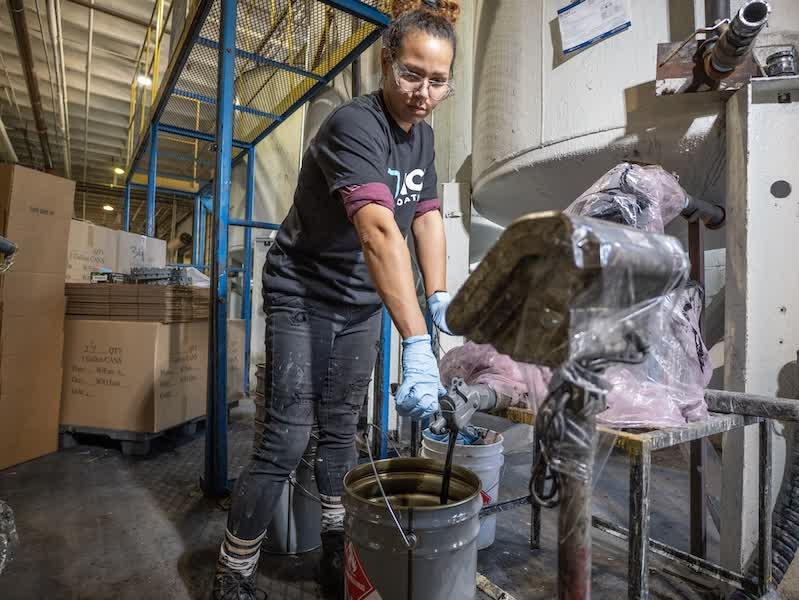
ncpc 9For coating applicators, one of CARC-L’s biggest advantages may have nothing to do with temperature reduction.

According to Arent, the product was deliberately formulated to fit existing military finishing operations. Many new coating technologies require changes to equipment, spray parameters, training, or application techniques. Those changes can slow adoption and increase implementation costs.

NCP Coatings wanted to avoid those obstacles.

“If you’re using traditional CARC systems, the CARC-L products are going to plug and play right into your everyday application,” Arent said.

Applicators can continue using the same spray equipment, procedures, and production methods they currently employ. Dry times remain familiar. Film build requirements remain familiar. Spray characteristics remain familiar.

“There is no learning curve from the applicator standpoint,” Arent said.

For military depots and contractors already qualified to apply CARC systems, that familiarity offers a significant advantage.

Multiple Application Options
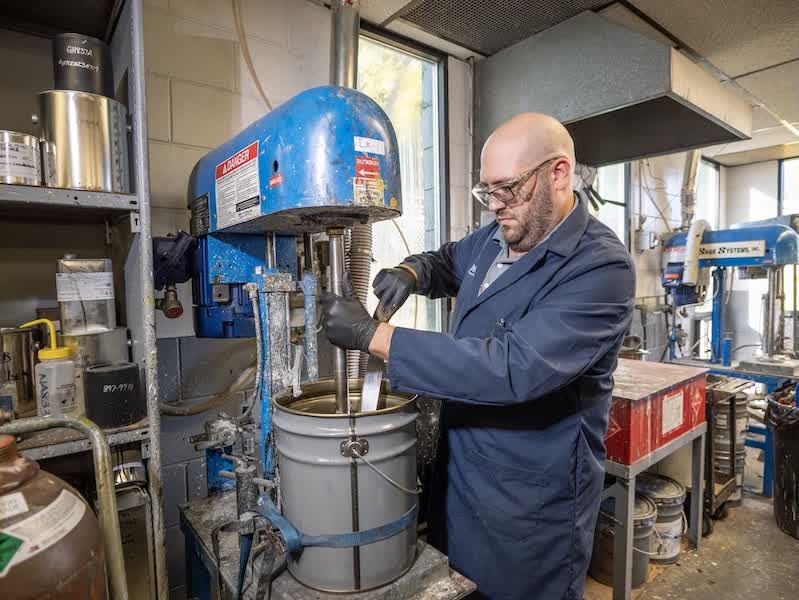
ncpc 10Another benefit for applicators is flexibility. The solvent-based CARC-L technology can be applied using virtually every major spray method commonly found in military finishing operations.

According to Arent, compatible application methods include conventional air spray, pressure-fed systems, HVLP equipment, air-assisted airless systems, airless spray systems, and electrostatic spray equipment.

That flexibility lets applicators adopt the coating in existing production environments rather than investing in specialized hardware. The coating also performs well in electrostatic systems when part geometry suits electrostatic application.

For facilities already applying traditional CARC coatings, operational changes are minimal.

The CARC-L product line represents only one aspect of NCP Coatings’ ongoing research and development efforts.

Arent noted that approximately 10% of the company’s workforce is devoted to R&D activities, a significant percentage for a manufacturer of its size.

Among the company’s current development priorities are alternatives to Oxsol-containing formulations, direct-to-metal technologies that eliminate primer steps, low-VOC water-reducible systems, and non-isocyanate coating technologies.

Those efforts reflect broader industry trends focused on environmental compliance, worker safety, and manufacturing efficiency.

NCP Coatings has since qualified a single-component, isocyanate-free polysiloxane aircraft coating to military aerospace specifications and continues development of high-gloss and clear-coat versions.

Waterborne technologies, for example, have evolved considerably over the past decade. Faster dry times, improved performance, and lower VOC content have made them more attractive across multiple industrial markets.

At the same time, manufacturers are searching for ways to simplify application while reducing opportunities for operator error.

“Everybody’s looking for higher throughput,” Arent said.

Beyond CARC: Aerospace and Naval Innovation
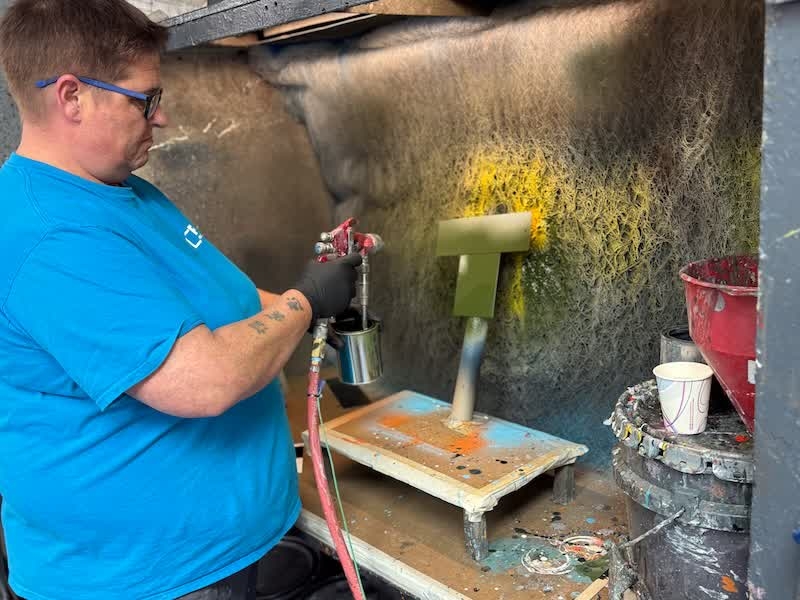
ncpc 17NCP Coatings’ military innovation efforts extend well beyond CARC-L. Working alongside Naval Research Laboratory, the company has developed several polysiloxane technologies designed to replace traditional urethane and epoxy systems in specific military applications.

One such technology is a single-component, non-isocyanate polysiloxane coating used within naval maintenance operations.

Because sailors can apply the coating without mixing two components or handling isocyanate catalysts, it offers both safety and ease-of-use advantages while maintaining high durability.

The company also developed a polysiloxane non-skid deck coating for naval vessels.

Traditional epoxy-based non-skid systems can suffer from ultraviolet degradation over time. According to Arent, the polysiloxane technology has demonstrated service life improvements of three to four times compared with traditional systems.

Those successes eventually attracted the attention of Naval Air Systems Command, which sought similar benefits for aerospace applications.

NCP Coatings has since qualified a single-component, isocyanate-free polysiloxane aircraft coating to military aerospace specifications and continues development of high-gloss and clear-coat versions.


Visit https://www.ncpcoatings.com.

Note: The appearance of U.S. Department of War visual information does not imply or constitute DOW endorsement.


From Lab to Battlefield: NCP Coatings Brings Advanced CARC-L Technology to Military Vehicles

From Lab to Battlefield: NCP Coatings Brings Advanced CARC-L Technology to Military Vehicles

From Lab to Battlefield: NCP Coatings Brings Advanced CARC-L Technology to Military Vehicles

For companies serving the military coatings market, innovation often requires patience.

Glenn ArentGlenn ArentNew technologies can spend years moving through laboratory development, field evaluations, specification reviews, qualification testing, and military approval processes before they ever see widespread use.

That lengthy path to commercialization is exactly what NCP Coatings experienced in bringing its new CARC-L technology to market.

The Niles, Michigan-based coatings manufacturer recently introduced its CARC-L product line, a low solar-absorbing version of Chemical Agent Resistant Coating (CARC) designed to reduce heat buildup on military vehicles and equipment.

According to Glenn Arent, NCP Coatings’ Director of Defense Sales, the technology substantially reduces surface temperatures and interior compartment heat while letting applicators continue using the same equipment and processes they already rely on.

The result is a coating system that addresses a growing military need without creating new challenges for the contractors, depots, and OEMs responsible for applying it.

A Defense Coatings Legacy Dating Back to the 1940s

Air Force Tech. Sgt. Brandon Mercer participates in a combat vehicle operation field training exercise at Fort Devens, Mass., May 15, 2024. The training consisted of basic and tactical communication, convoy operations, mounted patrolling and night driving. Photo by Air Force Airman 1st Class Julia Ahaesy. The appearance of U.S. Department of War visual information does not imply or constitute DOW endorsement.Air Force Tech. Sgt. Brandon Mercer participates in a combat vehicle operation field training exercise at Fort Devens, Mass., May 15, 2024. Photo by Air Force Airman 1st Class Julia Ahaesy.NCP Coatings’ involvement in military coatings stretches back nearly as far as the company’s history.

Founded in 1948 as Niles Chemical Paint, the company originally supplied wheel enamels to Studebaker in nearby South Bend, Indiana. As Studebaker expanded into military vehicle production, NCP Coatings also entered the defense market.

“That’s really where we got our start with military coatings,” Arent explained.

What began as support for military vehicle manufacturing eventually evolved into one of the company’s primary business segments.

Today, NCP Coatings serves multiple industrial markets, including over-the-road trailers, heavy equipment, custom window and door manufacturers, forestry products, naval applications, aerospace, and military ground vehicles. The company manufactures a wide range of high-performance urethane, epoxy, alkyd, and specialty coating systems.

That broad industrial experience ultimately provided the foundation for CARC-L.

What Is CARC-L?

ncpc 14The “L” in CARC-L stands for Low Solar Absorbing. At its core, the technology reduces the amount of solar energy absorbed by coated surfaces. Less absorbed energy means lower surface temperatures, which in turn results in cooler interior temperatures for the equipment and personnel inside.

While the application may be new for many military vehicles, the underlying science is not.

Low solar-absorbing pigment technology has existed for years in architectural coatings. Manufacturers of vinyl siding, aluminum windows, custom doors, and other building products have used these pigments to reduce heat buildup caused by prolonged sun exposure.

In those applications, excessive solar loading can lead to warping, substrate distortion, cracking, and premature degradation.

“The technology itself has been around for quite a while,” Arent said.

“The benefit of it is that it lowers the solar loading on the equipment. It lowers the surface temperature of the equipment, and then obviously it lowers the internal compartment temperature for the troops within the equipment.”

NCP Coatings became familiar with the technology through its involvement in architectural coatings markets, particularly in the high-end door and window segment where solar heat management has long been a concern.

The military, however, presented a different opportunity.

Lessons Learned from the U.S. Navy

Air Force Senior Airman Jacob Berry paints the wheel of a T-38 Talon at Whiteman Air Force Base, Mo. Photo by Air Force Senior Airman Joshua HastingsAir Force Senior Airman Jacob Berry paints the wheel of a T-38 Talon at Whiteman Air Force Base, Mo. Photo by Air Force Senior Airman Joshua HastingsBefore low solar-absorbing coatings began appearing on military vehicles, the U.S. Navy had already recognized their benefits. According to Arent, naval applications were among the earliest military uses of low solar-absorbing pigment technology.

Ships operating for extended periods under direct sunlight can experience significant heat buildup in steel structures and enclosed compartments. By reducing solar loading on exterior surfaces, naval coatings employing low solar-absorbing pigments help control temperatures inside the vessel.

“The Navy has actually used the low solar-absorbing pigment technology for years,” Arent said.

The success of those applications eventually drew the attention of military researchers working on ground vehicle programs.

Organizations including DEVCOM Army Research Laboratory — along with Concurrent Technologies Corporation and its successor Enterprise Ventures Corporation — became involved in exploring how similar technology could be applied to military vehicles and equipment.

For soldiers operating inside armored vehicles, troop carriers, and support equipment, temperature control can directly affect comfort, endurance, and operational effectiveness.

That made low solar-absorbing coatings a promising area for development.

Lower Temperatures, Greater Comfort

ncpc 8The primary benefit of NPC Coatings’ CARC-L product is straightforward: it keeps surfaces cooler.

“The benefit of it is that it lowers the solar loading on the equipment,” Arent says. “It lowers the surface temperature of the equipment, and then obviously it lowers the internal compartment temperature for the troops within the equipment.”

The reductions can be significant. According to Arent, lighter military camouflage colors formulated with the technology can achieve surface-temperature reductions of approximately 15 to 20 degrees Fahrenheit compared with traditional coatings.

The effects become even more dramatic with darker colors. When low solar-absorbing pigments are incorporated into black and other dark-colored military finishes, temperature reductions can reach 30 to 40 degrees Fahrenheit under certain conditions.

“The idea is that instead of the sunlight or the solar loading being absorbed into the pigment, you want it to be able to go in and come back out.”

For military personnel operating in desert environments, training grounds, or regions with prolonged solar exposure, those differences can have meaningful operational impacts.

The technology may also help reduce thermal stress on various equipment systems and components exposed to elevated temperatures.

Understanding the Science

CARC-L’s performance is tied closely to solar reflectance. Traditional pigments absorb a portion of the sun’s energy and convert it into heat. Low solar-absorbing pigments are engineered to reflect more of that energy rather than retaining it within the coating film.

“The idea is that instead of the sunlight or the solar loading being absorbed into the pigment, you want it to be able to go in and come back out,” Arent said.

Reflectance becomes even more effective when paired with properly selected primer systems.

“They’re going to want to see that piece of equipment out in the field for several years, not just several months.”

Lighter-colored primers can help reflect solar energy through the coating system, further reducing heat absorption.

The combination of specialized pigment technology and optimized coating design allows military equipment to maintain lower operating temperatures without sacrificing appearance or performance.

Commercializing a Military Technology

Soldiers conduct crew gunnery training in an M7A4 Bradley fighting vehicle during a combined-arms live-fire exercise at the Central Training Area near Camp Tapa, Estonia. Photo by Army Sgt. Myenn LaMotta.Soldiers conduct crew gunnery training in an M7A4 Bradley fighting vehicle during a combined-arms live-fire exercise at the Central Training Area near Camp Tapa, Estonia. Photo by Army Sgt. Myenn LaMotta.Transforming a promising idea into a qualified military product required years of work. Military coatings are among the most rigorously evaluated products in the coatings industry. Unlike many commercial technologies, laboratory success alone is not enough.

In fact, both the coating and the supplier must be qualified, and an applicator using an unqualified product or supplier can create compliance issues.

“It’s not for the faint of heart,” Arent said.

Development starts with conceptual testing and formulation work. From there, coatings undergo panel evaluations, laboratory performance testing, mock-up applications, and various environmental and durability assessments.

Once researchers demonstrate that the product performs as intended, real-world field trials begin, a phase that can last years. Military organizations need to verify that coatings perform not only under controlled test conditions but also in actual service environments.

“They’re going to want to see that piece of equipment out in the field for several years, not just several months,” Arent said.

“If you’re using traditional CARC systems, the CARC-L products are going to plug and play right into your everyday application.”

Following field validation, specification development and review begin. Draft specifications may circulate among military organizations, coating manufacturers, and end users before final requirements are established.

Only then can suppliers begin formal qualification testing. The entire process often takes three to six years from concept to commercialization.

That lengthy timeline helps explain why relatively few manufacturers pursue military coatings development and why successful products often represent years of investment before generating meaningful revenue.

Making Adoption Easier for Applicators

ncpc 9For coating applicators, one of CARC-L’s biggest advantages may have nothing to do with temperature reduction.

According to Arent, the product was deliberately formulated to fit existing military finishing operations. Many new coating technologies require changes to equipment, spray parameters, training, or application techniques. Those changes can slow adoption and increase implementation costs.

NCP Coatings wanted to avoid those obstacles.

“If you’re using traditional CARC systems, the CARC-L products are going to plug and play right into your everyday application,” Arent said.

Applicators can continue using the same spray equipment, procedures, and production methods they currently employ. Dry times remain familiar. Film build requirements remain familiar. Spray characteristics remain familiar.

“There is no learning curve from the applicator standpoint,” Arent said.

For military depots and contractors already qualified to apply CARC systems, that familiarity offers a significant advantage.

Multiple Application Options

ncpc 10Another benefit for applicators is flexibility. The solvent-based CARC-L technology can be applied using virtually every major spray method commonly found in military finishing operations.

According to Arent, compatible application methods include conventional air spray, pressure-fed systems, HVLP equipment, air-assisted airless systems, airless spray systems, and electrostatic spray equipment.

That flexibility lets applicators adopt the coating in existing production environments rather than investing in specialized hardware. The coating also performs well in electrostatic systems when part geometry suits electrostatic application.

For facilities already applying traditional CARC coatings, operational changes are minimal.

The CARC-L product line represents only one aspect of NCP Coatings’ ongoing research and development efforts.

Arent noted that approximately 10% of the company’s workforce is devoted to R&D activities, a significant percentage for a manufacturer of its size.

Among the company’s current development priorities are alternatives to Oxsol-containing formulations, direct-to-metal technologies that eliminate primer steps, low-VOC water-reducible systems, and non-isocyanate coating technologies.

Those efforts reflect broader industry trends focused on environmental compliance, worker safety, and manufacturing efficiency.

NCP Coatings has since qualified a single-component, isocyanate-free polysiloxane aircraft coating to military aerospace specifications and continues development of high-gloss and clear-coat versions.

Waterborne technologies, for example, have evolved considerably over the past decade. Faster dry times, improved performance, and lower VOC content have made them more attractive across multiple industrial markets.

At the same time, manufacturers are searching for ways to simplify application while reducing opportunities for operator error.

“Everybody’s looking for higher throughput,” Arent said.

Beyond CARC: Aerospace and Naval Innovation

ncpc 17NCP Coatings’ military innovation efforts extend well beyond CARC-L. Working alongside Naval Research Laboratory, the company has developed several polysiloxane technologies designed to replace traditional urethane and epoxy systems in specific military applications.

One such technology is a single-component, non-isocyanate polysiloxane coating used within naval maintenance operations.

Because sailors can apply the coating without mixing two components or handling isocyanate catalysts, it offers both safety and ease-of-use advantages while maintaining high durability.

The company also developed a polysiloxane non-skid deck coating for naval vessels.

Traditional epoxy-based non-skid systems can suffer from ultraviolet degradation over time. According to Arent, the polysiloxane technology has demonstrated service life improvements of three to four times compared with traditional systems.

Those successes eventually attracted the attention of Naval Air Systems Command, which sought similar benefits for aerospace applications.

NCP Coatings has since qualified a single-component, isocyanate-free polysiloxane aircraft coating to military aerospace specifications and continues development of high-gloss and clear-coat versions.


Visit https://www.ncpcoatings.com.

Note: The appearance of U.S. Department of War visual information does not imply or constitute DOW endorsement.