

For over 30 years, E&J Parts Cleaning Inc. has been a trusted name in contract cleaning in Connecticut, known for exceptional service, rapid turnaround, and a zero-defect policy.
Operating two facilities in Waterbury and Terryville, the company runs three shifts a day with 15 employees and processes more than a billion parts annually. Holding ISO 9001:2015 certification and ITAR registration, E&J specializes in cleaning stamped metal parts for the automotive, defense, and aerospace industries.
From battery cans and brass keys to blasting caps, fumigation cups, and sprinkler heads, the company takes on high-volume and complex jobs with a commitment to quality – handling 8,000 to 10,000 orders every year.
A Pivotal Moment: Rethinking Cleaning for the Future
Since its inception, E&J had relied on trichloroethylene (TRI) in open-top degreasers. John Clark, the company's Vice President, was aware that TRI was facing increasing regulatory scrutiny because of environmental and worker safety concerns. With restrictions on TRI emissions, waste disposal, and usage, he knew the company needed a safer, more sustainable alternative.
A turning point came in 2021 when Clark attended a trade show and began seriously considering a shift to precision cleaning. At the time, he was overseeing a high-volume EV battery job requiring ISO 16232 validation. The external testing process took up to eight weeks – by which time the customer had already produced another half a million parts – making process improvements difficult to track.
“You don’t get the same surface tension as a solvent. With the variety of oils and base materials we clean, aqueous simply wouldn’t work. And then there’s the cost factor – aqueous cleaning requires a lot more energy, plus it’s labor-intensive. Solvent was the only viable solution for us.”
Determined to gain better control, Clark decided to build a cleanroom at E&J’s facility, allowing for in-house testing and tighter process management.
“That’s when the realization hit,” Clark says. “If we were going to conduct high-level testing ourselves, we needed complete control over the cleaning process. That led us to explore automated vacuum degreasing with engineered modified alcohol solvents. We wanted to achieve a highly controlled environment with repeatable, high-performance cleaning.”
Why Dowclene 1621 Was the Right Choice
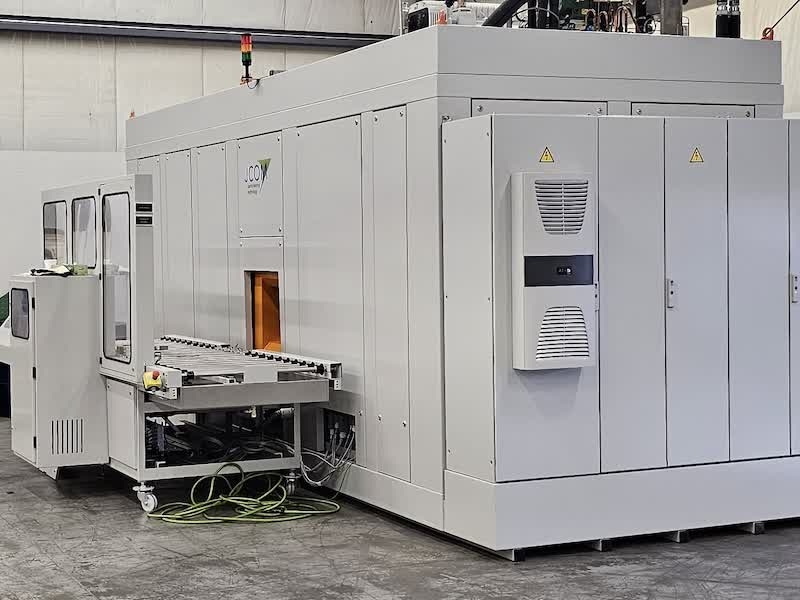 The closed vacuum degreaser from Karl Roll, used with the pre-stabilized solvent Dowclene 1621, delivers reliable and repeatable cleaning performance.E&J handles up to 40 different types of oils daily, from coolants to chlorinated and sulfurized oils. Finding the right cleaning solution meant selecting a machine-and-solvent combination that could handle this complexity while maintaining process stability. After extensive trial and research, the company invested in a closed vacuum degreaser from Karl Roll and filled it with Dowclene 1621.
Given the high volume of chlorinated oils in incoming parts, E&J required a pre-stabilized robust solvent. Dowclene 1621 met all the requirements. It is an engineered fluid based on modified alcohols and hydrocarbons, with an integrated stabilizer system. Because a tremendous amount of water enters the machine, Dowclene 1621's low water solubility means it releases water much better than a straight modified alcohol.
The solvent condition can also be reliably monitored using a test kit, enhancing overall process reliability. Where necessary, stabilizers can be added to prevent solvent acidification, which could otherwise lead to machine issues and downtime. Such practices of solvent monitoring, testing, and corrective measures would not be possible with completely non-polar, undefined standard hydrocarbons.
Aqueous cleaning was never a serious contender for Clark.
“You don’t get the same surface tension as a solvent,” he says. “With the variety of oils and base materials we clean, aqueous simply wouldn’t work. And then there’s the cost factor – aqueous cleaning requires a lot more energy, plus it’s labor-intensive. Solvent was the only viable solution for us.”
The Impact of the Upgrade: Consistent Results and Major Cost Savings
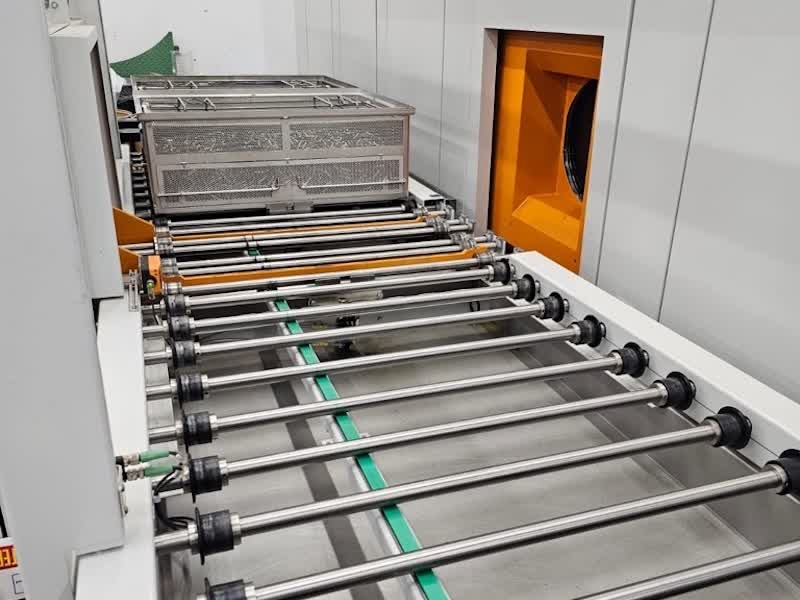
 Parts basket entering the vacuum degreaser system. The fully automated process ensures consistent, high-precision cleaning with minimal operator intervention.E&J made a bold investment to replace its open-top TRI degreaser at the Terryville facility, a decision backed by personal guarantees from ownership.
“Our houses were on the line,” Clark says.
But the investment quickly proved its value. Since implementing the vacuum degreaser in April 2024, E&J has seen a radical transformation in its operations.
“This vacuum technology changes everything. It changes the way we clean parts. It changes the way we dry parts. Most importantly, it changes the way we distill the solvent,” Clark said. “We’ve gone from a 75% to 80% distillation rate to the high 90%. So we’re reclaiming 95% of our solvent back in the machine.”
He says the cleaning power of the vacuum machine with Dowclene 1621 is comparable with TRI – maybe even better.
“We have these blasting caps, which are very difficult parts to clean, and the results we’re getting now are beyond what we had before,” Clark says. “As a note, we’re cleaning the parts as bulk material, which makes the cleaning process more difficult, especially when it comes to drying. With the new machine, we’re cleaning more of these parts in 1 hour than ever before. The old process would’ve taken much longer to get them this clean.”
Process consistency and repeatability are key to achieving precision cleaning.
“The Karl Roll machine continuously distills, supplying fresh solvent to the tanks while cycling back through vacuum drying and distillation,” Clark says. “When we run the distillation process, the tanks are as clear as water by the next morning. We can restore the solvent’s cleaning properties to their highest level. Despite our heavy usage, Dowclene 1621 consistently delivers the same high level of cleanliness.”
“We’re saving a significant amount of money through reduced solvent usage, increased reclamation, a streamlined waste stream, and higher operator efficiency.”
The new process has also led to substantial cost savings. Previously, solvent consumption accounted for a large share of running costs. Waste disposal was another major burden, costing several thousand dollars each month. Now, with the vacuum system virtually eliminating air emissions and continuously reclaiming used solvent, solvent costs have dropped by nearly 80%.
Additionally, the waste stream is so highly distilled that it contains only non-hazardous oils and a small amount of modified alcohol. Whereas TRI required costly hazardous waste disposal, Clark has now reduced annual disposal costs by an impressive 75%.
“Before, we had to send out hazardous waste monthly and conduct weekly waste storage inspections,” Clark says. “Now, we can hold onto waste as long as we need to, without regulatory headaches or excessive costs.”
A Streamlined, Safer, and More Automated Process
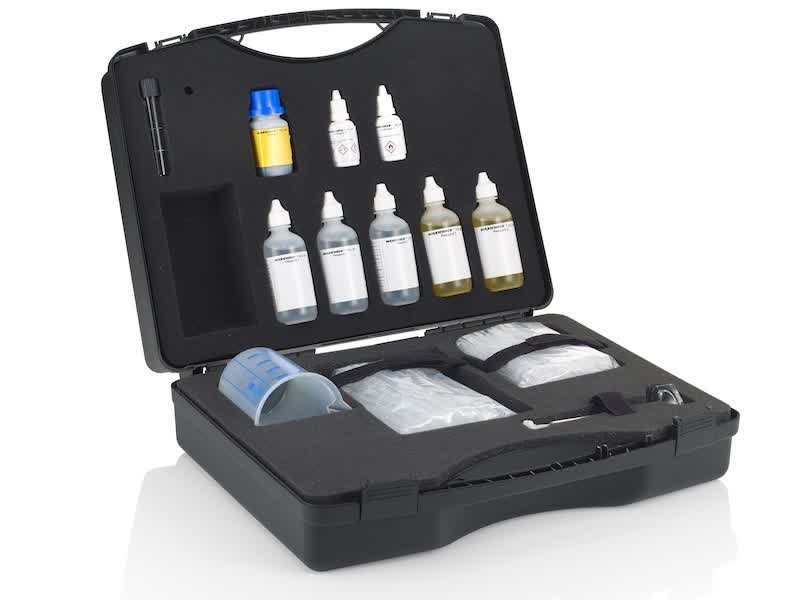 Maxicheck Test Kit for easy, on-site solvent condition monitoring.The benefits of the new system extend beyond cost savings and environmental compliance – it has also transformed efficiency and worker safety. Previously, the cleaning process was labor-intensive and required three to four operators. Now, the fully automated system allows a single operator to manage up to 40 loads, freeing up valuable labor for other tasks.
Automation has also eliminated the need to handle solvents directly.
“The operators love the new system,” Clark says. “Everything is programmable. We can adjust cleaning cycles, timing, and functionalities to match our needs. The machine loads, unloads, and distills automatically – there’s no more manual solvent removal or pumping into drums. It evacuates by itself.”
He says they are saving a significant amount of money through reduced solvent usage, increased reclamation, a streamlined waste stream, and higher operator efficiency.
“When we weigh these savings against the costs of TRI consumption, waste disposal, and environmental consultants, the investment essentially pays for itself,” Clark says.
One area Clark takes very seriously is rigorous solvent monitoring and maintenance. His team conducts weekly solvent tests using the Maxicheck Test Kit.
“We’re saving a significant amount of money through reduced solvent usage, increased reclamation, a streamlined waste stream, and higher operator efficiency,” Clark says about monitoring the solvent condition.
“A lot of the failures that I’ve seen with other companies are that they’re not keeping up with the maintenance, or the integrity of the solvent,” he says. “You can’t expect consistent cleanliness without keeping your solvent in top condition. It takes a little bit of work and effort, but it’s a fundamental part of the process.”
Positioning for the Future: A Commitment to Sustainability and Growth
As part of its vision to lead the industry in sustainable precision cleaning, the company has also built a cleanroom at its Terryville facility, invested in an automated materials microscope for cleanliness analysis, and implemented a paperless ERP system for greater efficiency.
With end-to-end precision cleaning capabilities and ISO 16232 cleanliness validation, E&J is now well positioned to expand into new, high-tech markets where stringent cleanliness standards are required.
Clark’s forward-thinking approach has strengthened E&J’s competitive position and set a benchmark for the industry. By embracing innovation, sustainability, and efficiency, the company has shown that growth, performance, and environmental responsibility can go hand in hand.
Visit www.safechem.com