

In industrial abrasive blasting, not all blasting operations are created equal.
 Brandon AckerBlasting a newly fabricated aerospace component fresh off the production line is fundamentally different from blasting a decades-old military vehicle, corroded steel structure, or heavily used industrial asset undergoing maintenance or refurbishment.
While both processes use similar equipment and abrasive technologies, objectives, challenges, contamination risks, and operational requirements can differ dramatically. Understanding the distinction between maintenance blasting and new production blasting is critical for manufacturers, defense contractors, aerospace suppliers, and industrial maintenance teams seeking to optimize quality, safety, efficiency, and long-term coating performance.
Two Different Missions
At its core, new production blasting is about preparation and consistency. The goal is typically to create a precise, repeatable surface profile on newly manufactured materials before painting, coating, bonding, or assembly. The substrate is generally clean, uniform, and free from years of operational wear. Maintenance blasting, by contrast, often focuses on restoration. Operators may be removing corrosion, failed coatings, oxidation, chemical contamination, marine buildup, or structural deterioration accumulated over years (or decades) of service. That distinction changes nearly everything about the blasting process.
New production blasting usually involves predictable substrates. Materials are often fresh steel, aluminum, titanium, composites, or machined parts with known specifications and limited contamination. Maintenance blasting introduces a much wider range of unknowns. Older equipment may contain:
- Multiple generations of coatings
- Rust and corrosion layers
- Oil or grease contamination
- Embedded salts or chemical residues
- Surface fatigue and pitting
- Weld repairs or structural inconsistencies
In aerospace and military environments, maintenance blasting may also involve delicate substrates where aggressive blasting could compromise structural integrity. As a result, maintenance blasting typically requires more operator judgment, more adaptable equipment configurations, and tighter inspection protocols.
Abrasive Selection Changes Significantly
In production blasting environments, abrasive selection usually optimizes for speed, repeatability, and the desired surface profile. Facilities often standardize on a narrow range of media because the materials being processed remain relatively consistent. Maintenance blasting is far less predictable. Operators may need to switch between aggressive abrasives for heavy corrosion removal and softer media for delicate restoration work. In some cases, multiple blasting stages may be required on the same component. For example:
- Steel grit or aluminum oxide may be used for severe corrosion removal
- Glass bead blasting may be required for sensitive aerospace components
- Plastic media blasting may be necessary when coating removal must occur without damaging the substrate underneath
- Specialty abrasives may be required when environmental regulations limit dust or waste generation
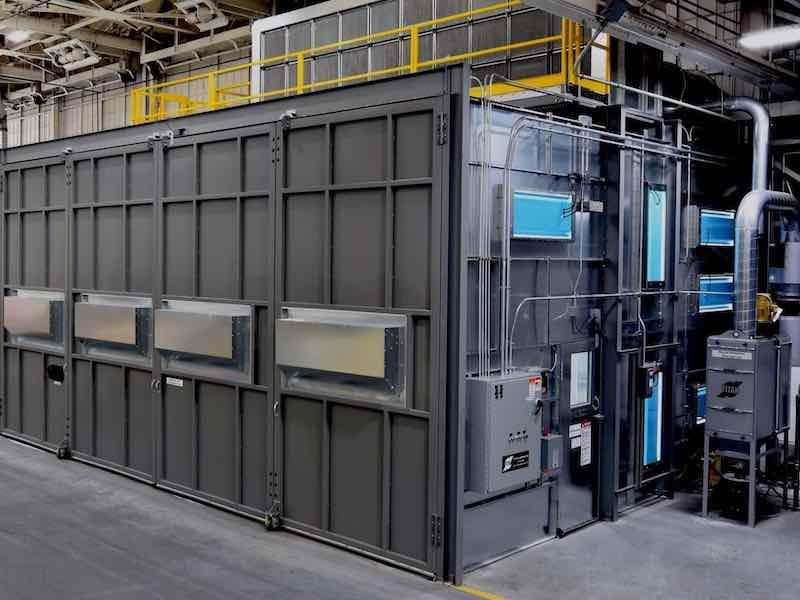
Blast room and blast booth systems used for maintenance operations often need greater flexibility to accommodate varying media types and changing operational demands.
One of the biggest differences between production and maintenance blasting is how they manage contamination. Newly manufactured components generally arrive relatively clean. Maintenance environments are another story entirely. Older equipment may contain hazardous coatings, lead-based paint, chemical residues, or contaminants accumulated through years of operation in marine, industrial, or military environments. During blasting, these materials become airborne particulates that must be carefully captured and filtered. This increases demand for dust collection systems, airflow management, media recovery systems, worker respiratory protection, and environmental containment.
In industries like aerospace and defense, contamination control is not simply a regulatory issue; it can directly affect downstream coating adhesion, fatigue resistance, and component reliability. For blast room manufacturers, this often means maintenance-focused systems require more advanced filtration and containment capabilities than production-only environments.
Larger and More Complex Structures
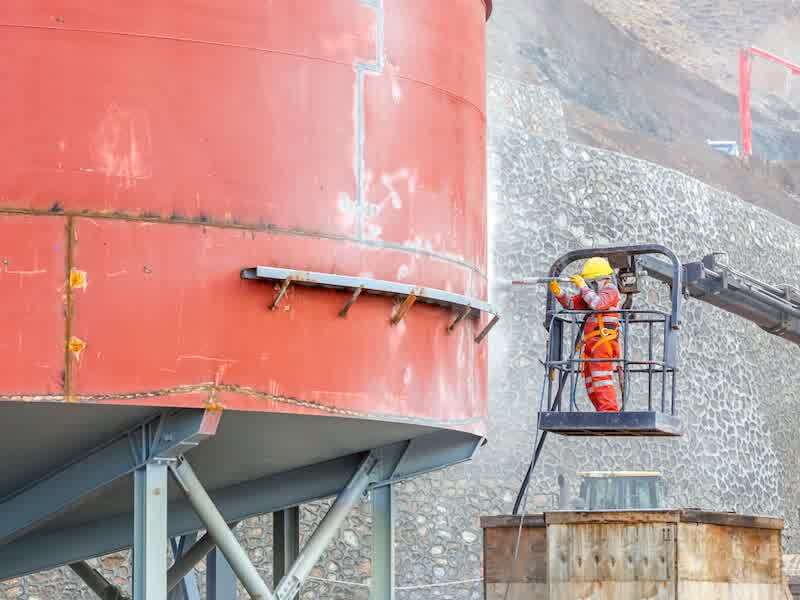 Production blasting frequently centers on standardized parts moving through controlled workflows. Components are often similar in size and shape, enabling facilities to optimize automation and throughput. Maintenance blasting can involve aircraft sections, military vehicles, ship components, structural steel, heavy industrial equipment, and large fabricated assemblies. These projects often require oversized blast rooms, specialized ventilation strategies, and highly adaptable material handling systems. The logistical complexity increases substantially when blasting operations must accommodate varying geometries, deteriorated surfaces, or partial disassembly conditions.
In production environments, blasting specifications are typically established early and repeated consistently. Operators know the required anchor profile, cleanliness standard, and coating preparation criteria before blasting begins. Maintenance blasting can introduce far more variability. Technicians may uncover hidden corrosion, substrate damage, cracks, or coating failures only after blasting begins. Surface conditions may evolve throughout the process, requiring real-time adjustments to blasting pressure, abrasive type, or repair procedures. Inspection standards can also become more stringent because maintenance blasting is often tied directly to asset life extension and operational safety. In aerospace applications especially, improper blasting procedures during maintenance can negatively affect fatigue performance or dimensional tolerances.
Production blasting generally operates within scheduled manufacturing timelines. Maintenance blasting, however, is frequently tied to operational downtime. When an aircraft, military asset, refinery component, or industrial system is out of service for maintenance, every hour matters. That creates intense pressure to accelerate blasting operations, minimize rework, improve media recovery efficiency, reduce cleanup time, and maintain consistent environmental conditions. As a result, maintenance-focused blast room systems often prioritize durability, rapid access, and operational flexibility.
Automation is becoming increasingly common in both production and maintenance blasting, but the applications differ. Production environments are ideal candidates for robotic blasting because parts are highly repeatable and process variables remain stable. Maintenance blasting is harder to automate fully because conditions vary widely between projects. However, semi-automated systems, robotic assistance, and advanced ventilation controls are increasingly helping maintenance operations improve consistency, reduce operator fatigue, and enhance safety in hazardous environments.
The Right Blast Environment Depends on the Application
Ultimately, the differences between maintenance blasting and new production blasting highlight an important reality: blasting environments must be designed around the operational mission. A blast room optimized for high-volume production may struggle with the variability and contamination challenges of maintenance restoration work. Likewise, a maintenance-oriented blast booth designed for oversized, heavily corroded assets may not provide the throughput efficiency required for repetitive production blasting.
For industries like aerospace, defense, manufacturing, and heavy industrial operations, understanding these differences is essential when evaluating abrasive blasting equipment, ventilation systems, media recovery technologies, and facility design. At the same time, both forms of blasting share the same fundamental purpose - surface preparation - the path to achieving that goal can look very different depending on whether the job involves building something new or restoring something old.
Brandon Acker is president of Titan Abrasive Systems, one of the leading designers and manufacturers of blast rooms, blast cabinets, and abrasive blasting equipment. Visit https://www.titanabrasive.com.