


Mass Finishing’s Hidden Advantage: Why Chemistry Matters as Much as Media
Mass finishing is one of the most widely used yet often overlooked processes in manufacturing.
Mass finishing is one of the most widely used yet often overlooked processes in manufacturing.

A useful mass finishing trial is not simply a test that produces a better-looking part.

It has been shown that the inexpensive chemically accelerated vibratory surface finishing (CAVSF) process can reduce the average surface roughness of helicopter gear teeth from the conventional 16 μ-in. (0.39 μm) down to approximately 2 μ-in. (0.05 μm).
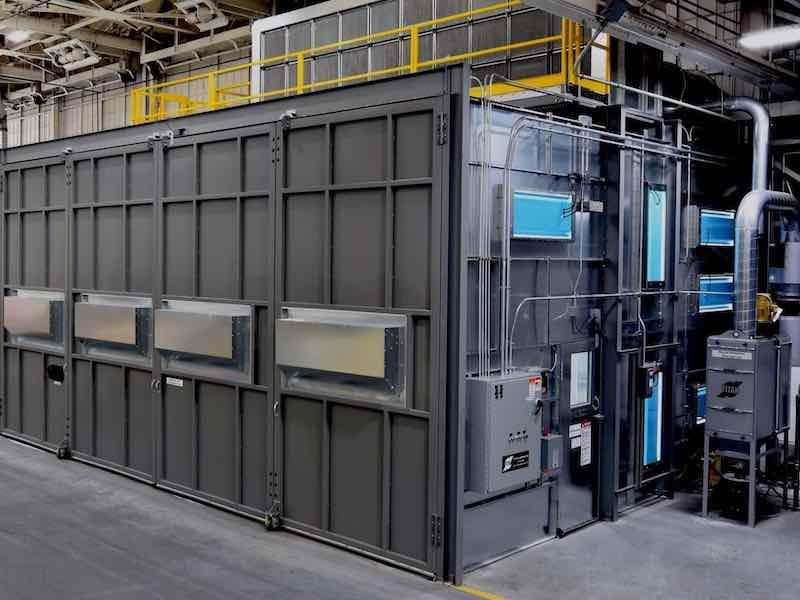
In industrial abrasive blasting, not all blasting operations are created equal.

Precision Finishing Inc., a provider of advanced mechanical surface finishing solutions based in Quakertown, Pennsylvania, has acquired vibratory finishing equipment manufacturer Royson through an asset purchase.
Stephen Ricci, PhD., CEO of 10X Engineered Materials talks about their upcoming webinar, "The Profitability Shift: From Labor Commodity to Finishing Expert."
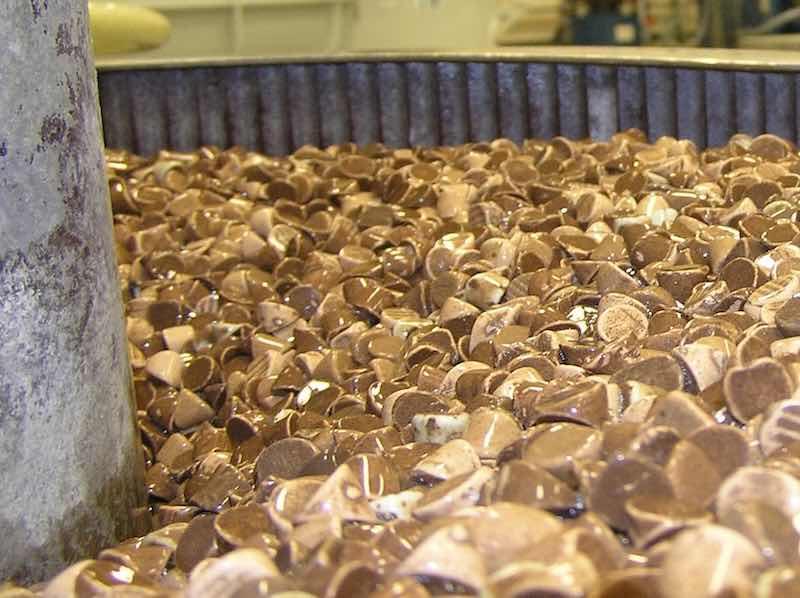
Despite conscientious attempts to equilibrate vibratory variables such as bowl amplitude, roll angle, media species, media volume, part loading, process liquid concentration and flow rate, what appear to be identically set-up vibratory bowls will nonetheless finish identical loads of parts in varying time cycles.
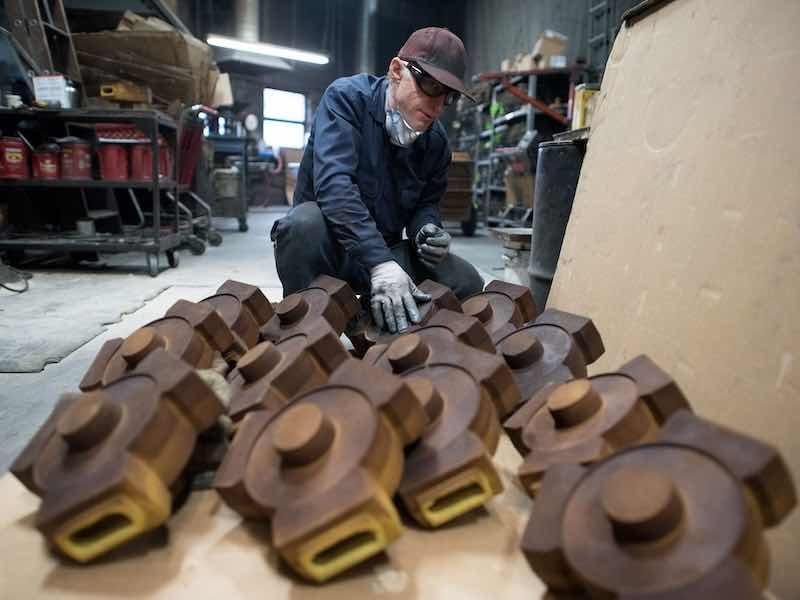
The U.S. Environmental Protection Agency announced a settlement with Smith Foundry to resolve alleged violations of the Clean Air Act at its iron foundry in Minneapolis, Minnesota.
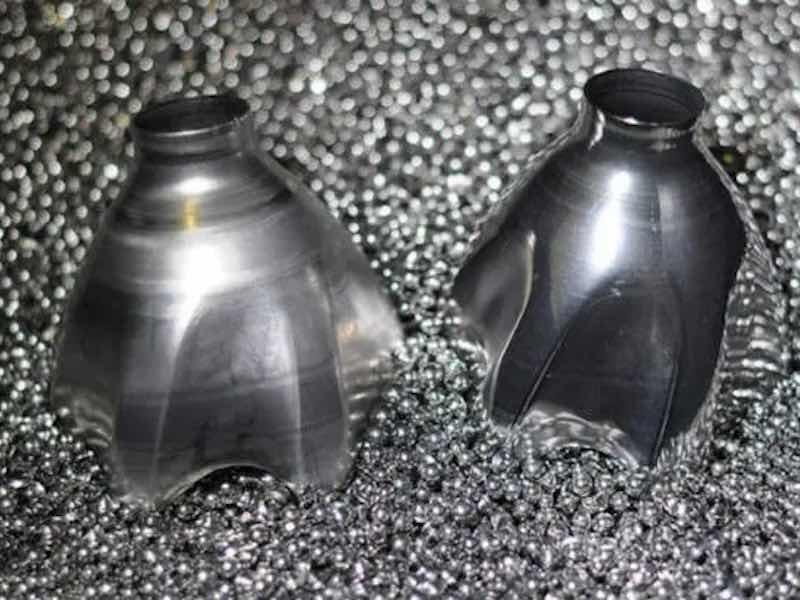
Burnishing is perhaps the most popular mass-finishing application, but there are several benefits which make it a “go to” operation.
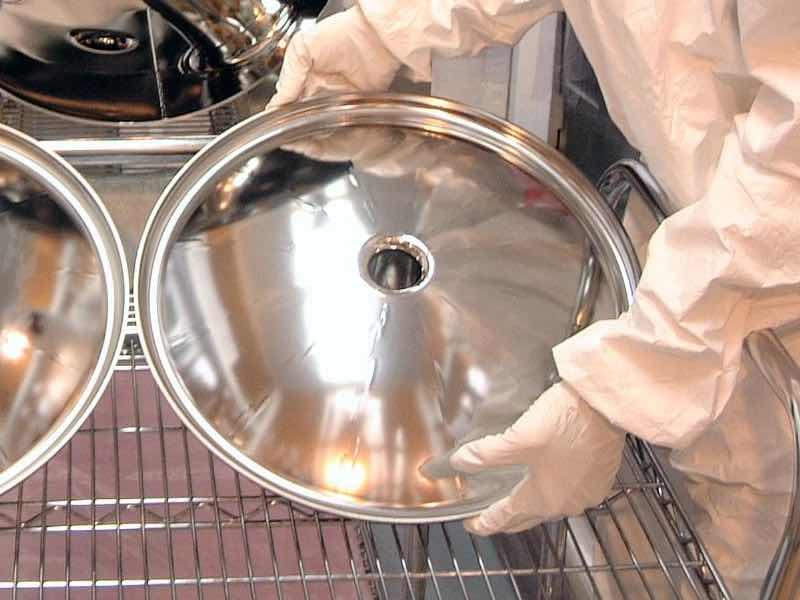
In contrast to plating or electrodeposition of coatings onto a substrate, an important surface finishing technology involves the removal of material from a substrate.
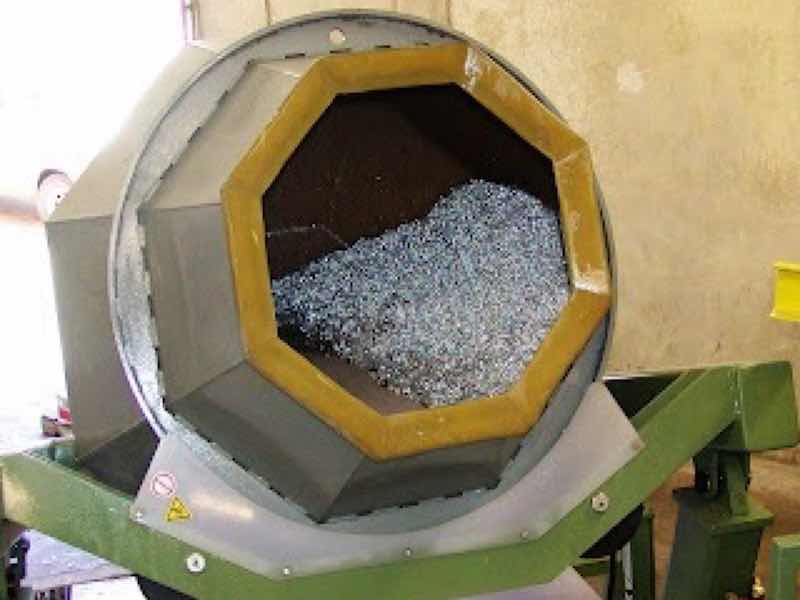
Mechanical plating is also referred to as peen plating and is essentially a tumbling process by which metallic specks of dust are deposited onto a metal substrate.