

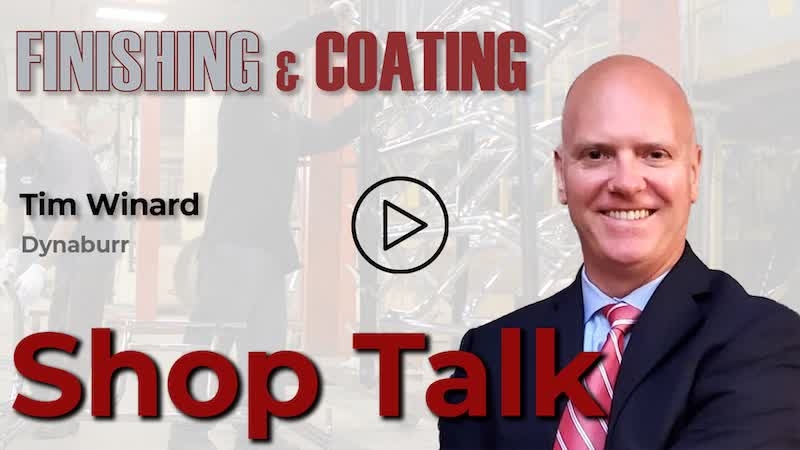

After 30 years in corporate life, Tim Winard wasn’t looking for a prestigious title.
 Tim WinardHe wasn’t dreaming of putting “President” on his business card. And he certainly wasn’t looking for an investment he could buy, hand off to someone else, and manage from a distance.
Winard wanted something different. He wanted a manufacturing business he could operate, improve, and build around a culture in which employees understood their importance to the organization.
Getting there would prove considerably harder than he expected.
Winard resigned from his corporate position in the spring of 2023 and began searching full-time for an existing company to acquire. Twenty-one months later, after reviewing about 400 businesses, conducting detailed financial analyses on roughly 35 to 40 of them, and making 10 to 15 offers, he finally found his company.
On Feb. 18, 2025, Winard closed on the acquisition of Dynaburr in Chicago, a mechanical plating and galvanizing company founded in 1968.
“Title doesn’t mean anything to me. Money is not what led me down this path. In much of corporate life, and this is true of independently owned businesses as well, company decision-making can often be dysfunctional.”
The transaction brought an outsider into the finishing industry. But it also brought decades of manufacturing, engineering, operations, and process-improvement experience into a company with longtime customers and employees, established expertise, and a tightly focused finishing specialty.
Looking back, Winard says buying a business wasn’t something he would recommend casually.
“The learning curve is steep,” Winard says. “The risks are real. At every step of the way there is a risk, and you may not recognize it as a risk.”
For him, however, the journey led to a business that seemed unusually well matched to what he wanted to do next.
Leaving Corporate Life
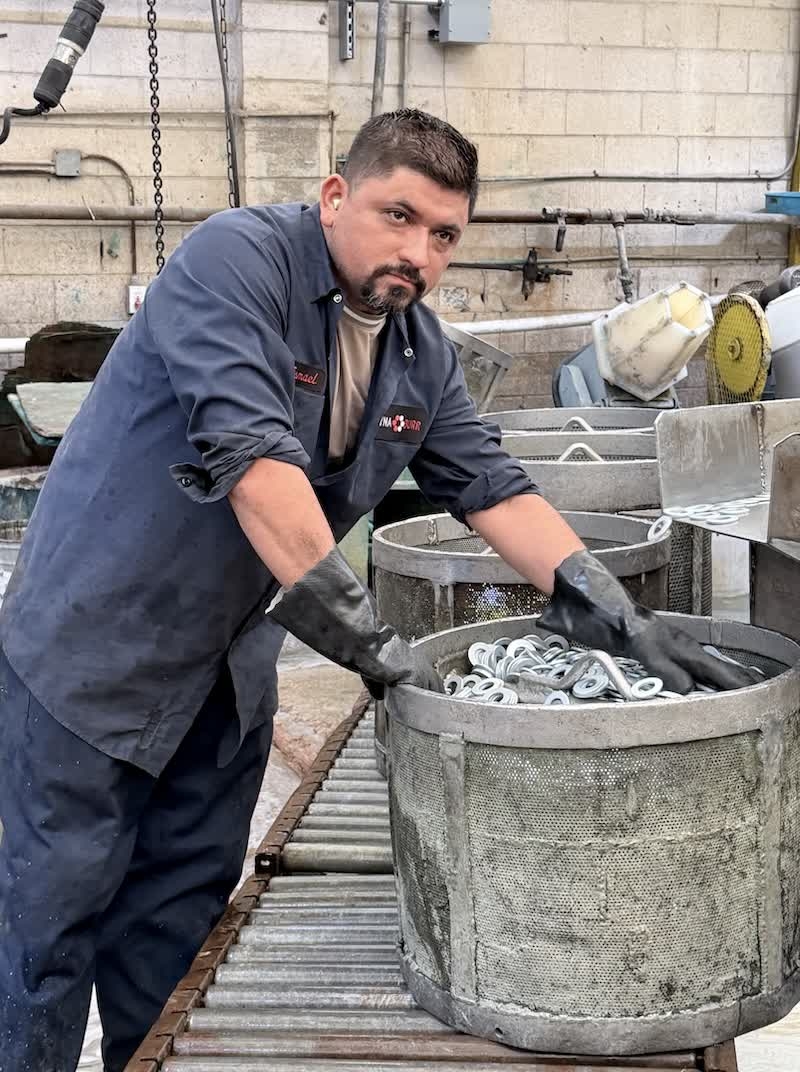 Dynaburr in Chicago is a mechanical plating and galvanizing company founded in 1968.Winard’s professional experience before Dynaburr was deeply rooted in manufacturing. He spent approximately 24 years with a large publicly traded Japanese company, where he built an engineering department and manufacturing operation primarily involving machining and welding.
He managed engineering for roughly 10 to 11 years and later developed a service operation providing both field and in-shop service. The company’s customers were primarily manufacturers and machine shops, with its products used in CNC lathes, milling machines, and other machining operations.
Later, Winard was recruited by another publicly traded company to improve manufacturing operations at locations in Chicago and Wisconsin. His responsibilities included rebuilding the management team, fixing operations, and improving the operation’s profitability.
He spent approximately six years there before deciding in 2023 that it was time for a significant change. His frustration wasn’t necessarily with manufacturing itself. He knew and enjoyed manufacturing.
Instead, he grew frustrated with what he saw as dysfunctional corporate decision-making.
“It seemed logical that a for-profit company would focus on becoming ever more profitable, but that was often not the case,” Winard says.
That experience eventually pushed him toward ownership.
“Title doesn’t mean anything to me,” he says. “Money is not what led me down this path. In much of corporate life, and this is true of independently owned businesses as well, company decision-making can often be dysfunctional.”
Rather than finding another corporate position, Winard decided to find a business. Not to start one, but to buy one.
Defining the Search
Winard approached his search with several requirements: the business needed to generate at least $2 million in annual sales and approximately $300,000 to $1 million in annual profit. Manufacturing was preferred, and unlike many prospective buyers looking for operations with as few employees as possible, Winard actually wanted a company with a significant workforce.
“Being an Ops person, I preferred more,” he says.
His most restrictive requirement was geography. Winard and his wife wanted to remain in the Chicago area, so he limited his search to roughly a 15-mile radius of their home.
In the world of “Entrepreneurship Through Acquisition,” often called ETA, buyers frequently identify what Winard describes as the “big three”: geography, industry, and size.
“I’d send 100 letters a week, and I’d get one to two responses of some interest in selling.”
A buyer can constrain some of those variables, but usually not all of them. Because Winard’s geographical requirement was so tight, he knew he would have to remain flexible regarding industry.
“The geography was very constrained,” Winard says. “Which meant I had to be much more flexible on the industry.”
His search eventually ranged from machine shops and industrial companies to commercial cleaning, landscaping, and concrete and asphalt businesses. First, however, he attacked the most obvious opportunities.
Six Weeks and Nothing Left to Look At
 Dynaburr initially offered deburring before moving into mechanical plating and galvanizing.Winard began with companies already advertised for sale, known in the acquisition world as “on-market” businesses. Business brokers represented most.
Because he was searching full time and limited to such a small geographic area, he quickly exhausted that supply.
“I burned through all of those in probably about four to six weeks,” Winard says. “I looked at every business that was within our geography.”
That left a much harder alternative: he had to find companies whose owners weren’t actively selling. Those “off-market” businesses represented a different problem because instead of evaluating owners who had already decided to sell, Winard first had to persuade someone to consider selling at all.
He started much like a business broker might, using a database to identify companies by geography, industry, and size.
Then he wrote letters—a lot of them. Within individual industries around his portion of Chicagoland, Winard estimated there might be only about 100 companies meeting his criteria.
“So I’d send 100 letters a week, and I’d get one to two responses of some interest in selling,” he says.
A response rate around 1% or 2% wasn’t enough. He was rapidly exhausting entire industry categories.
Winard needed a different approach. He decided to leave the office.
Walking the Industrial Streets of Chicago
Winard created a flyer explaining who he was and what he wanted to do. Then he printed his list of prospects and started walking.
“I would literally start knocking on doors,” Winard says. “I was walking up and down entire streets giving out my flyer.”
It wasn’t particularly sophisticated. But it worked. Where his letters might generate interest from one or two owners out of 100, Winard says the personal approach dramatically increased responses.
“For every 10 flyers I left, I would get an owner expressing some interest in selling,” he says.
He believes several factors may have contributed. Businesses were emerging from a period when face-to-face interaction was limited during the COVID-19 pandemic. Many small manufacturing companies were also owned by baby boomers who were more comfortable talking directly with someone than responding to another email or solicitation.
“It was extremely appealing that the business offered one service, as it lets the company focus on being the very best.”
And owners of good businesses receive plenty of those solicitations.
“They’re using email or letters, but it just gets to be so cluttered,” Winard says. “There’s nothing that makes you stand out. But when I’m standing there in front of you, and we’re having a conversation, you can make a connection.”
He stressed another distinction: he wasn’t a broker, a private equity group assembling a portfolio, but an individual looking for one company for himself and his wife.
One of the doors he knocked on belonged to Dynaburr Chicago.
Finding Dynaburr
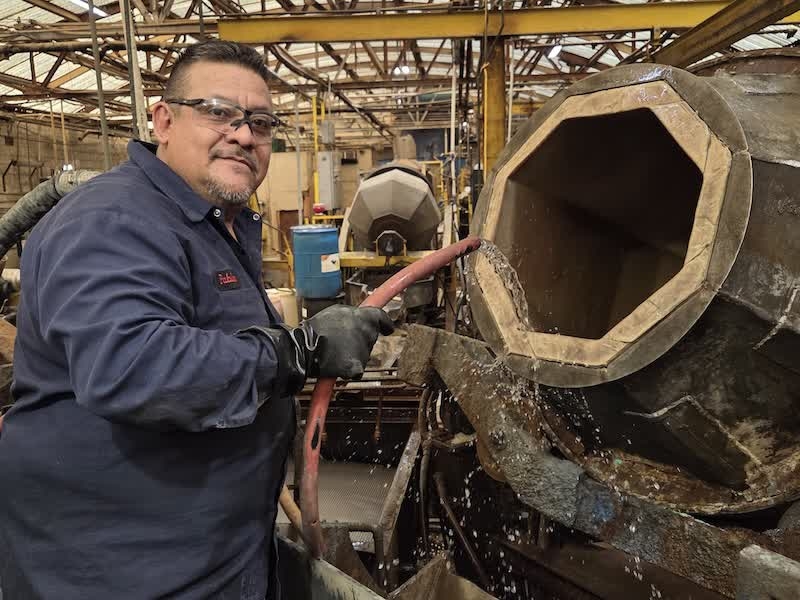
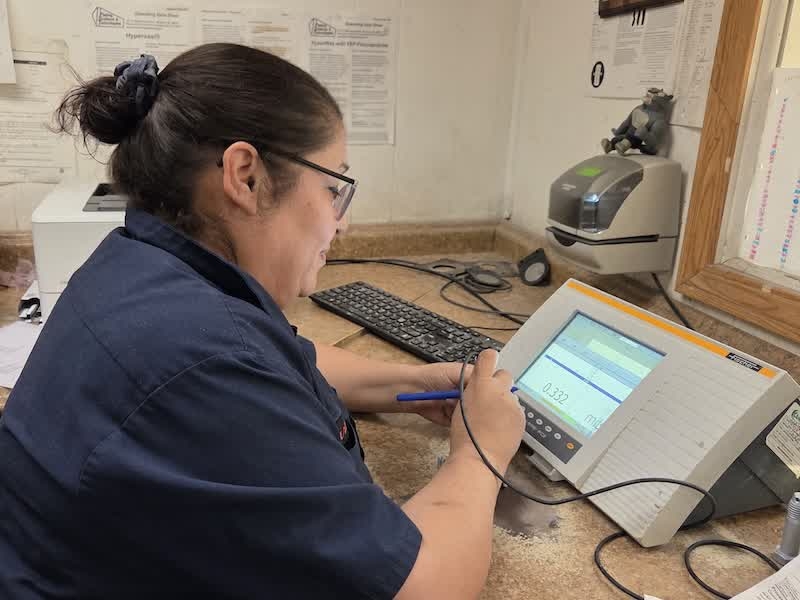 Founded in 1968, Dynaburr initially offered deburring before moving into mechanical plating and galvanizing.
Winard says several individuals associated with the company had backgrounds at 3M, which worked to advance mechanical plating technology during the 1960s.
Today, Dynaburr specializes in mechanical plating and mechanical galvanizing, working with coatings including zinc, tin, copper, and some silver. The company also provides associated finishes such as waxes, dyes, chromates and sealers.
The business focuses on mechanical plating and galvanizing based around ASTM B695. That specialization appealed to Winard.
“Dynaburr Chicago is a 58-year-old company with a strong reputation, long-standing customers, and a focus on doing one thing perfectly,” he says.
Rather than being another concern for someone who had spent decades in manufacturing, its narrow specialty was an attraction.
“It was extremely appealing that the business offered one service,” Winard says, “as it lets the company focus on being the very best.”
But concerns remained, and a major one was entering the plating industry for the first time.
Investigating the Environmental Risk
Winard approached Dynaburr with considerable manufacturing experience, but he had never owned or operated a metal finishing company. That raised immediate questions concerning environmental compliance and the history of a company that had operated for decades.
“My initial concern was being in the plating business; I was concerned about the environmental aspects,” he says.
Before completing the acquisition, Winard brought in an environmental attorney and a consultant to review the company’s compliance obligations.
He wanted to understand the operation’s status with agencies and regulatory authorities, including the Illinois EPA, the federal EPA, and the local water reclamation authority responsible for wastewater.
“First of all, is the company doing the right things?” Winard says. “The last thing I want to do is step into something with all this history to it.”
“You’re the one introducing the idea about selling to an owner. They were thinking about it, but weren’t sure, and so now they have to get educated themselves.”
The due diligence helped ease his concerns. In Dynaburr’s case, Winard says he learned that its water discharge and solid waste were classified as non-hazardous special waste rather than hazardous waste.
“That was what I really warmed up to because I was a little bit nervous around hazardous materials, handling it, disposing of it and the cost of it,” he says.
Other characteristics of the company were increasingly attractive: it had survived for nearly six decades, and some customers had been doing business with Dynaburr for decades.
Most importantly, employees had decades of experience, with some personnel having been with the business for 20, 30, and even more than 40 years.
The knowledge wasn’t concentrated solely in the owner. That mattered enormously.
Buying a Business, Not an Owner’s Job
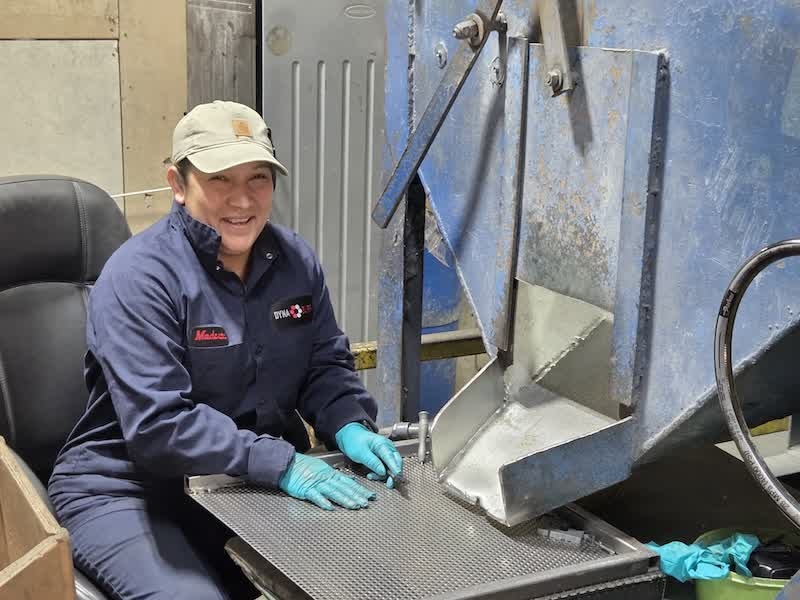 One of Winard’s acquisition principles was that a company could not be completely dependent on its existing owner. If all customer relationships, technical expertise, and decision-making live in the owner’s head, the company can face serious problems when that person leaves.
“No one should ever really buy a business where the success of the business is based on the owner,” Winard says.
Dynaburr passed that test. The former owner could take vacations and leave the company in the hands of the existing organization.
Winard estimates the facility at approximately 13,000 square feet with about 25 employees when he acquired it. The company also had middle management to handle day-to-day responsibilities.
“The size of this business was good because it could support this size business where we had middle management,” Winard says. “We have enough staff that’s able to take care of the functioning of the organization.”
That meant he wasn’t buying a collection of jobs the former owner had performed; he was buying an organization. Still, reaching the closing table wasn’t quick.
From Winard’s initial contact with Dynaburr to completing the acquisition took approximately 15 months. That is one of the challenges of pursuing an off-market company.
“You’re the one introducing the idea about selling to an owner,” Winard says. “They were thinking about it, but weren’t sure, and so now they have to get educated themselves.”
Buyers and sellers also need time to build enough trust to determine whether a transaction is workable. After 21 months of searching overall, Winard finally completed the purchase on Feb. 18, 2025.
Then the real work started.
Don’t Move the Titanic Too Quickly
Winard arrived at Dynaburr not intent on changing everything immediately. His first job was to listen and observe.
“First you’re trying to get a lay of the land,” he says. “You’re trying to understand the culture. You’re trying to understand the people, how they think about things.”
That process convinced him that culture needed serious attention. But telling employees things would change wasn’t enough. Winard wanted to demonstrate what his leadership would look like. So the new president could occasionally be found sweeping warehouse floors, crawling underneath racks and removing accumulated debris.
“In my case, there’s nothing beneath me work-wise,” he says. “I literally was out there sweeping the floor in the warehouse, crawling underneath the racks, cleaning out debris to demonstrate that this is what good looks like.”
The gesture represented something larger.
“There’s no one here at this company more important than anybody else,” Winard says. “We each have a role, and if a person’s on vacation or missing, we feel it. That’s because everyone is critically important to the business.”
“When you’ve got one person in one role, it’s not like you’ve got redundancy. What are you going to do?”
He also understood that trying to transform a nearly six-decade-old culture overnight could easily backfire.
“You’ve got this Titanic that, in my case, has been in motion for 58 years,” he says. “Moving the Titanic is going to take a long time.”
So Winard initially concentrated on improvements he could make himself without demanding significant behavioral changes from employees. Over time, as trust developed, improvements could increasingly involve the rest of the organization.
“If you push change too hard, you’ll lose your people,” Winard says. “You can create resentment.”
Blocking and Tackling
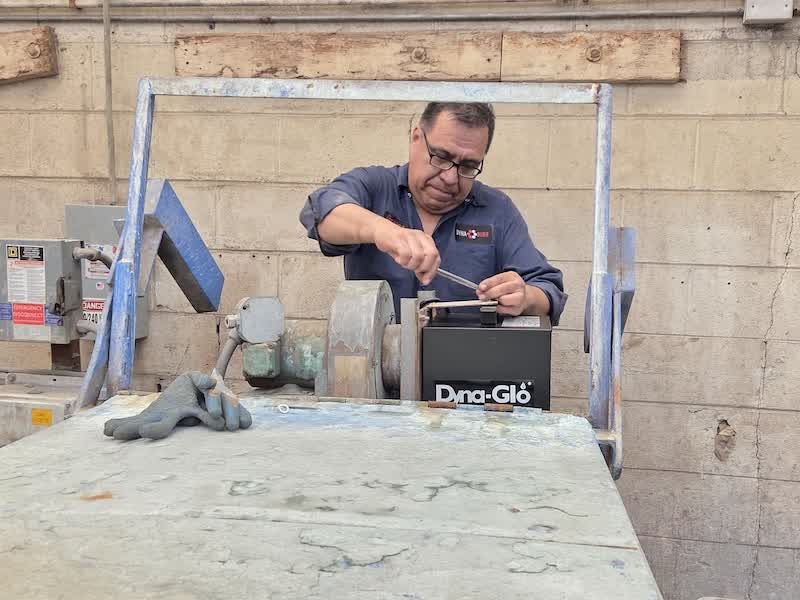 Many of the improvements Winard has brought to Dynaburr aren’t glamorous, and that was intentional. He describes them as manufacturing’s version of basic “blocking and tackling.”
The priorities include improving predictable uptime of machines and support equipment, updating facility infrastructure, eliminating unnecessary clutter and waste, documenting missing processes, and developing employee incentives that better align workers and the company.
Winard found basic administrative processes that had never been formalized; customer credit limits were one example.
“You may have a customer not paying you, but you’re going to continue doing work for them,” he says.
Formal collection procedures needed attention. New-customer applications were lacking. Customer information wasn’t always gathered systematically. Sales tax exemption documentation became another example. Dynaburr began collecting the needed certificates and modifying its software to build process controls around the documentation.
Winard also introduced regular accounts receivable and production meetings.
“It’s just a lot of that blocking and tackling,” he says, “and having regular AR meetings, having regular production meetings, just trying to create a more cohesive organization rather than it just being on one person.”
The company also added overseas talent to assist with accounts payable, accounts receivable, month-end closing, inventory control, price maintenance, and cost analysis.
For Winard, documenting processes isn’t about making employees less valuable. It is exactly the opposite.
Preserving Knowledge Instead of Hoarding It
Few challenges confronting manufacturing concern Winard more than what happens when skilled employees take decades of experience with them. He rejects the idea that documenting employee knowledge justifies eliminating those positions.
An operation already struggling to find skilled people gains little by losing the people who hold its institutional knowledge. Instead, Winard wants processes documented for continuity, training, and cross-functional support.
That became especially tangible after an office manager suffered a stroke only months into the job.
“When you’ve got one person in one role, it’s not like you’ve got redundancy,” Winard says. “What are you going to do?”
“You have to know that your people love doing that because it has to get done. But in other cases, you’ve got people that learn very quickly, they can apply it very quickly, and they’re a big fish in a small pond.”
He believes owners also have to ask themselves that question.
“If I have a stroke or something happens to me, what happens to the company?” Winard says. “Does it continue to function, or does it shut down because you’ve got one person that is that instrumental?”
Process documentation and cross-training should make vacations, sick days, and employee transitions manageable, not emergencies.
“As an owner, you want to be in the position to say, ‘Wonderful, enjoy yourself,’ and it really doesn’t matter,” he says. “It doesn’t touch me; it doesn’t touch the company because we have people that are game to cover that.”
Letting Customers See Continuity
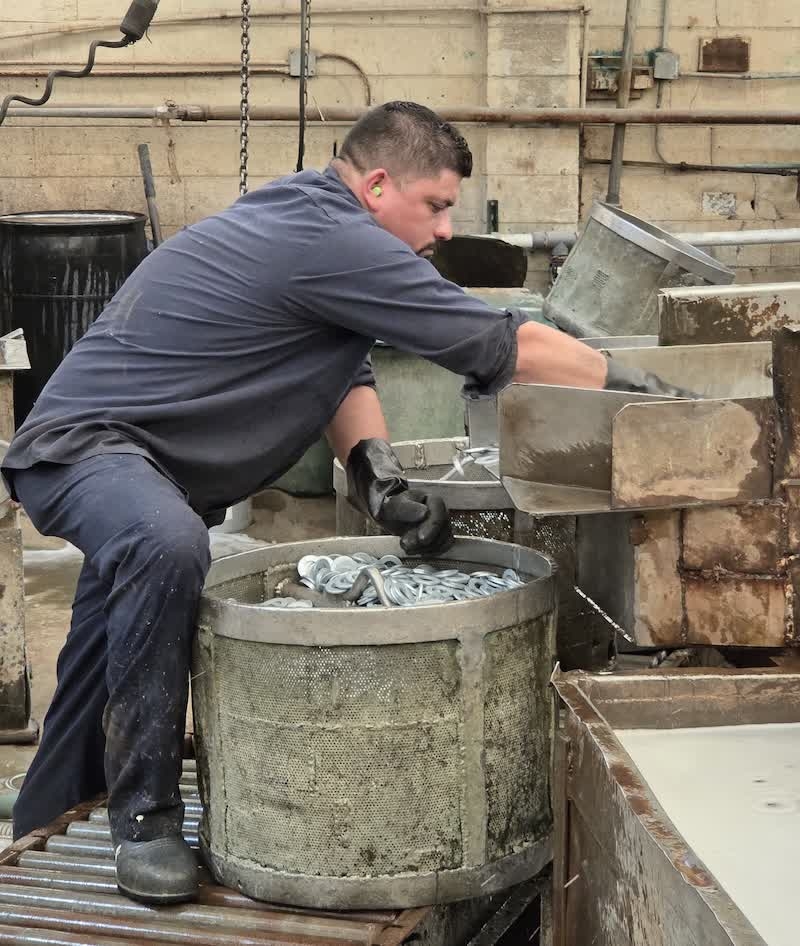 Winard took an equally measured approach with Dynaburr’s customers. He resisted making a splashy ownership announcement immediately after the acquisition.
For customers who had worked with Dynaburr for decades, “under new management” could raise questions that hadn’t existed before. Winard wanted customers to judge the company by its performance, not ownership.
“What I was wanting to be able to do is get some time behind me,” he says.
His ideal reaction would be for customers to learn the business eventually changed hands long ago and realize they hadn’t noticed any decline in service.
“‘We haven’t seen a change in your performance.’ I’m like, ‘That’s great,’” Winard says. “That’s what we want.”
Better yet, he wants performance to improve without customers viewing that improvement simply as the work of a new owner. That fits his broader philosophy: a healthy business should be larger than the person in the president’s office.
“It’s an organization that should be an ever-flourishing, profitable company,” he says. “Which speaks to continuity. It requires customers’ trust and continuing to do their work to win more of their work because of our performance.”
Building a Company People Want to Work For
Winard’s long-term vision may ultimately have less to do with spreadsheets or corporate procedures than with employees. He believes recognition matters.
So does understanding that different people want different things from their careers. Some employees are perfectly content becoming exceptionally good at a particular job. Others master a position quickly and begin looking for their next challenge.
Leadership needs to recognize the difference.
“You have to know that your people love doing that because it has to get done,” Winard says. “But in other cases, you’ve got people that learn very quickly, they can apply it very quickly, and they’re a big fish in a small pond.”
“I want to be able to create an environment of trust where improving people’s lives is really important to me.”
Those employees may require progressively greater responsibility to remain engaged.
“That’s leadership’s role: to recognize, to understand the makeup of their people, and to allocate those resources properly,” he says. “Keeping a team together is a major part of that.”
Winard says some of the most enduring operational improvements begin with employees knowing the organization appreciates their contributions.
“The longest-lasting gains come when members know they’re valued and appreciated,” he says. “This then begins to reflect the culture I aspire to see.”
No Illusions About Ownership
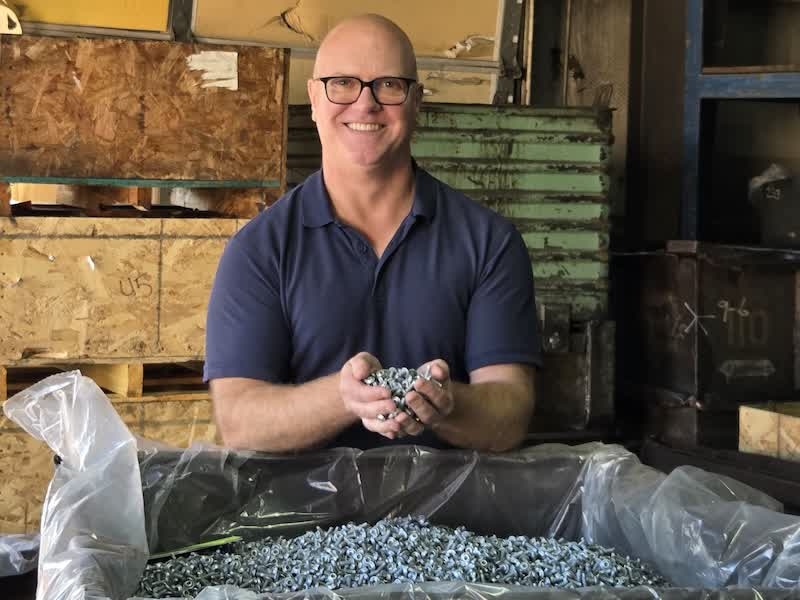 In Feb. 2025, Winard closed on the acquisition of Dynaburr in Chicago.For all his enthusiasm about Dynaburr, Winard is surprisingly cautious about recommending Entrepreneurship Through Acquisition to others. He estimates he evaluated approximately 400 companies before completing his purchase, developing financial models for 35 to 40 and making somewhere between 10 and 15 offers.
He compares the acquisition search to taking a sales position with no incoming leads, a 24-month sales cycle, and practically no feedback telling you whether you’re succeeding.
And after closing, the work isn’t over; it’s beginning. Winard is particularly skeptical of the notion that someone can purchase a “boring business,” hire an operator, and simply collect the profits.
“Any business you’re going to, you’re going to have to do some heavy lifting at some point,” he says. “You have to set your expectations appropriately.”
He encountered that reality himself when Dynaburr needed structural welding. Winard once worked as a millwright and ironworker. Realizing that the job required skills from his earlier career, he went into his basement and dug out welding equipment he hadn’t used in decades.
It was an appropriate symbol for the entire journey. After 30 years climbing through corporate manufacturing, Winard didn’t buy Dynaburr to escape work. He bought it partly for the opportunity to determine how the work should be done.
“I want to be able to create an environment of trust where improving people’s lives is really important to me,” Winard says.
He jokes that he’s more likely to get a speeding ticket going to work than coming home.
“I love to work,” he says.
Not everyone shares that feeling. Winard knows that. But if people spend a substantial portion of their lives at work, he believes a company ought to give them challenges, opportunities, and a reason to find satisfaction in what they accomplish.
“Creating that type of culture is, I think, really important,” he says. “Creating teams, I love creating teams, putting together high-performing teams.”
For Dynaburr, that philosophy is now being layered onto a mechanical plating business built over nearly six decades. Winard arrived as an outsider to the finishing industry. He didn’t arrive as an outsider to manufacturing.
After knocking on hundreds of doors in search of the right company, he found one where the history, people, customer relationships, and operational foundation gave him something to build on rather than something to reinvent.
“The bones of the business were solid,” Winard says. “It’s just that a lot of the conventional practices that larger companies take for granted, smaller companies wouldn’t have been exposed to some of those best practices.”
Visit https://www.dynaburr.com.