

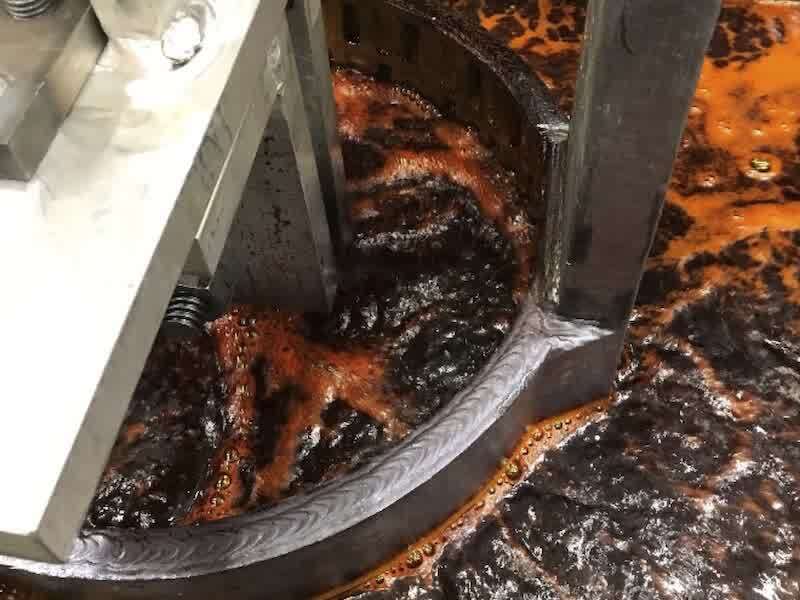
The hard chrome industry was built on skills and techniques developed over generations, dating back to the mid-1920s.
 Eric Svenson Sr.The generations since perfected the process, allowing the trade to grow into an industry that’s critical for America’s economy and defense. This blossomed into an important trade that both smaller job shops and larger OEM operations apply.
The technical knowledge was passed down from one generation to the next before those with the skills retired. The practice of fully training the next generation of workers enabled the hard chrome industry to develop and progress.
Social Change
Societies and traditions change over time, and these changes often go unnoticed because they occur gradually. Starting around the 1980’s, for reasons unknown, knowledge of hard chrome wasn’t passed down as it had been previously. This might have been due to the newer trend of workers changing jobs more frequently rather than staying with one company for all or most of their careers.
The typical approach to this was for a remaining worker to train their helper. That tactic seemed to work until it didn’t. The problem is that critical information and skills are lost with each transfer; this is referred to as the ‘brain drain’. The trend towards shorter work tenures over the years resulted in an ever-increasing loss of the techniques and skills needed for optimum results.
American industry cannot survive without a viable hard chrome industry. The OEMs that have hard-chrome-plated surfaces on their parts can’t succeed unless that process is operated with high efficiency.
This snowballs over time until a point is reached at which no employee has the knowledge needed to achieve the desired operational efficiency. The result is lower production combined with increased rework demands. This greatly increases the operation’s overhead costs, shrinks their profits, and exposes them to competitors that are better trained and more efficient.
Training is Critical
The author has seen the result of this in recent years across much of the industry, and it’s become a major problem for some job shops and OEM operations today.
The Federal Reserve even confirms that this is a national problem in its January 2026 Beige Book report, stating that the majority of companies reported continued challenges in finding skilled labor, particularly across various trades. Their report mainly applies to the plumbing, electrical, construction, HVAC, and other major occupations. Those trades have schools and apprenticeships, but no such school or program exists for the hard chrome industry.
American industry cannot survive without a viable hard chrome industry. The OEMs that have hard-chrome-plated surfaces on their parts can’t succeed unless that process is operated with high efficiency. That’s why acquiring the work skills needed for efficient, high-quality production is so important. This situation underscores the crucial need for training and for retaining those with the necessary job skills.
Breaking the Trend
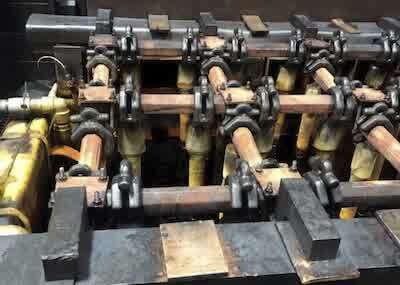 Unfortunately, many companies treat their plating department as the least important step in the manufacturing cycle. This is often reflected in their pay and benefit programs. It’s typical for the hard chrome plater to be the lowest-paid role in the company; this is especially true at many OEMs. They consider their in-house trades, such as machinists, to be more critical and harder to replace; hence, they are often paid more. The irony is that those skills are much more available than an experienced hard chrome plater is.
The hard chrome plater practices a very rare and special trade. They are hard to find and hard to keep unless they are properly paid and treated. Without that, they will simply find a better job somewhere else.
Hard chrome plating is often the last process done to a part before it is completed and ready for sale. A bottleneck is created, and production suffers whenever the plating falters. A lack of training or work skills often causes this. Therefore, it’s important to ensure the plating department is fully trained, especially the plating supervisor, who should have the most process knowledge.
Training is the first step toward improving operations. The challenge then becomes retaining the platers so the training process doesn’t have to be repeated over and over again. This is where their wages become important. Equally vital is their benefit package and the way they are respected and treated within the company. Ideally, the plating department would become one of the most sought-after job functions in the company, one where other workers actually want to be promoted to.
The Plating Supervisor
This is the most important person on the plating team. He should have extensive plating knowledge combined with strong management skills. Consequently, he should be paid accordingly and encouraged to retain his position rather than be promoted to a ‘higher’ level within the company. Why? Because his plating skills and knowledge take years to develop, and he isn’t easily replaced. Replacing the plating supervisor can be very costly in terms of time and lost production.
The Tank Side Platers
The tank workers are equally important and should be sufficiently paid so they aren’t looking for a better job. It’s a mistake to underpay them by considering their role as merely that of common labor.
The tank-side platers should also be skilled in their job duties, but they don’t necessarily require a high level of technical knowledge. However, they do need to be trained in all aspects of processing their parts. This includes the techniques involved with surface finishing, stop-off, anodizing, fixturing, pre-cleaning, reversing, applying, and stripping hard chrome. This can be complicated depending on the part configuration, the base metal involved, its hardness, heat treatments, and the chrome deposit requirements. That’s much above the skill set associated with a common laborer. They should be adequately compensated if employee and skill retention is desired.
Fortunately, there’s an alternative: hard chrome training can be provided at your plant, on-site, using your parts, equipment, and processes.
It’s more profitable to retain skilled plating personnel who efficiently produce quality plated parts than to save a few dollars on their labor. Cheap labor invariably increases the rework load, resulting in even greater costs.
On-Site Training
 The concept of having one employee train their replacement has not proven to be the best approach. This fosters the transfer of bad habits and the loss of process knowledge that’s critical to the company. Having one employee train another in hard chrome techniques is the least effective training method.
Professional training is needed, and it should provide the knowledge base required to successfully process a given part. That approach is the most effective and is extremely beneficial to the company. Book knowledge backed up with hands-on training has proven to be the most successful approach.
Remote schools are sometimes available for processes such as anodizing and electroless nickel plating, but nothing viable is available for hard chrome. The NASF provides a course, but it barely covers the basics and doesn’t offer any hands-on training. In addition, attending an off-site school creates production issues when valuable employees are away from work for an extended period. Off-site schooling also adds costs due to travel, housing, and living expenses.
Fortunately, there’s an alternative: hard chrome training can be provided at your plant, on-site, using your parts, equipment, and processes. This training comes to you, so there are no work stoppages or travel expenses involved, and multiple employees can be trained at the same time.
This training can be tailored to your specific needs and can even include problem-solving in certain areas. This can be provided as either classroom instruction, tank-side training, or a combination of these. Most scenarios include a mixture of both and can also incorporate an evaluation of the equipment and procedures being used.
The topics can cover the full range of technologies involved or focus primarily on specific issues causing problems. Again, this training is adapted to your specific needs.
What if the answer to the problem was available by simply reviewing a technical manual? This is exactly what the Hard Chrome Secrets book is for.
These can include topics such as surface finishing, hydrogen embrittlement, stress relief, plating difficult alloys, preparation for plating, stop-off, anodizing and fixturing, cleaning and activation, reverse etching, controlling the process, impurity control, troubleshooting, bath analysis, chemical additions, environmental concerns, chrome stripping, and a host of related topics.
This training is also available to bring new employees up to speed and help them get started on the right foot. Another option that some corporations find attractive is annual refresher training. This helps eliminate the gradual reduction in efficiency that seems to plague certain operations. The annual refresher training can be combined with an equipment and maintenance evaluation to ensure everything is functioning at peak performance.
Book Knowledge is Also Available.
Very few manuals or books are available that outline the entire hard chrome process and the technology involved. None of the published books cover every aspect of the art and science, especially the techniques for successfully plating hard chrome on parts with different configurations and varying alloys and surface treatments.
New information is now available in a book titled Hard Chrome Secrets. This text covers a vast amount of Knowledge, both scientific and practical, gained through trial and error and hands-on experience over many, many years. It’s invaluable as a reference for managing a hard chrome operation. Hard Chrome Secrets provides advanced information and is most helpful to those already experienced in the trade.
Imagine operating a chrome operation where a particular plating issue is causing excessive rejects and rework, or the production rate is lower than what’s desired. You may have struggled with this for months or even years without ever really solving the problem. This might be causing the company a serious loss of income, perhaps hundreds of thousands of dollars every year. None of your suppliers has been able to help, and you resist hiring an expert because of pride or the cost, so the problem continues, as does the frustration.
What if the answer to the problem was available by simply reviewing a technical manual? This is exactly what the Hard Chrome Secrets book is for. It’s all about the specialized technology behind hard chrome plating, which is either hidden or unknown to most in our industry.
That’s it – Hard Chrome Secrets is a detailed, specialized manual that reveals virtually every aspect of the art and science of hard chrome. It contains both practical and technical information on the entire process; it’s an all-inclusive go-to guidebook for hard chrome plating.
Every chrome operation that’s serious about producing top-quality deposits, efficiently and economically, needs at least one copy. Most operations want one for management and another for the plating supervisor. It may even be beneficial if the lead plater had their own copy.
Those less experienced with hard chrome should start by first reading Hard Chrome University, which covers the basics on all aspects of the process. These two books together are often used in our on-site training programs.
Final Thoughts
We can’t change today’s situation, but we can educate ourselves in the specialized trades needed to run our businesses efficiently and produce top-quality products. Help is available. For some operations, the two books mentioned above may meet your needs. Others may want to consider an on-site training program.
It’s important to realize when a training program is needed. Smart businessmen act and avoid letting their companies fall behind when help is available.
Please contact Vicky Salsbury at Vicky@Plating.com or the author at PlatingResources@Yahoo.com with any questions or to further explore these suggestions. Visit www.Plating.com.