



Natalia Stephen thanks one special person for putting her in the position she is in: the owner of two finishing operations in Ontario, Canada, and a foremost expert in corrosion-prevention coatings.
 Natalia StephenBut it isn’t someone who supported her through her early years when she was on the chemical supplier side of the finishing industry. Far from it, to be exact; it was instead someone who made her life so difficult that she had to leave the supplier career.
“He made my life absolutely hell,” says Stephen, who won’t give the name of her boss in the chemical company. “I lasted for one year. I got sick, and I got an ulcer. There is no point in dwelling on that, but if I have to thank someone for starting my company, I must thank him.”
Indeed, Stephen has a lot to be thankful for as President and Owner of Compound Metal Coatings and CEO and Owner of PVD Advanced Technologies, both located in Ontario, and looks forward to her 25th anniversary in 2026.
From Communist Romania to South Africa to Canada
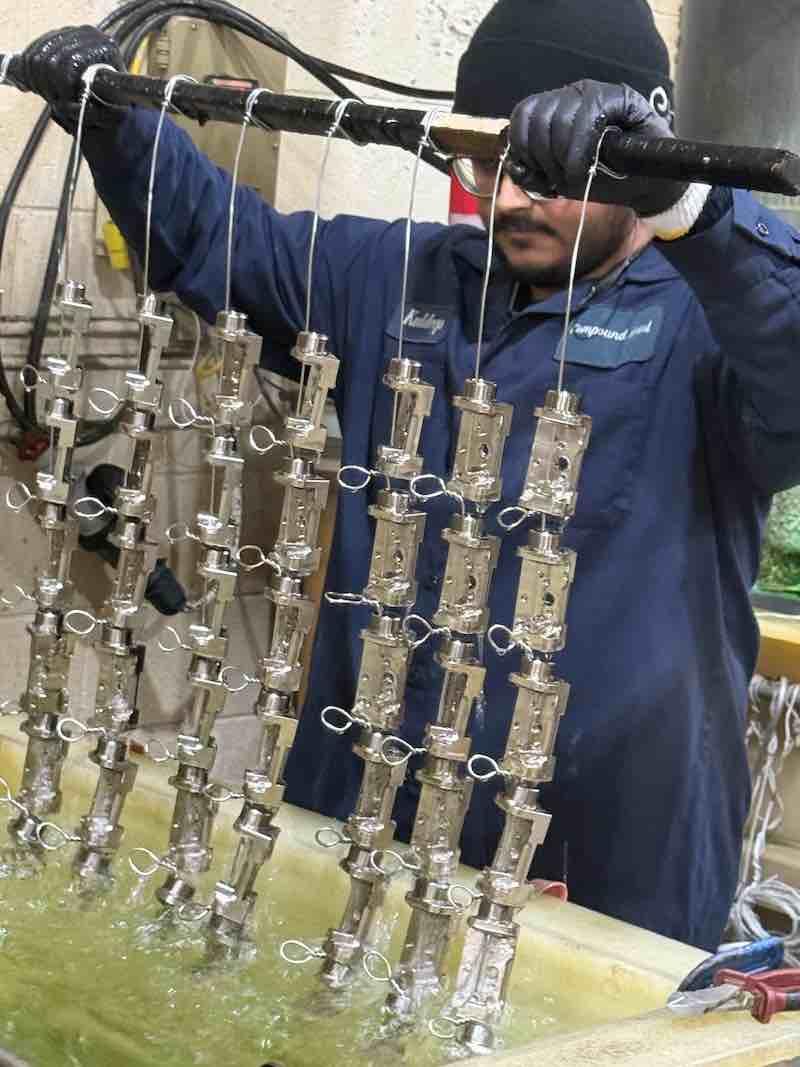 Compound Metal Coatings claims to be the largest provider of electroless nickel and composite coatings in the province of Ontario.Stephen founded CMC in 2001, after a career that took her from her birthplace in Romania to college and her first job in South Africa, where she sold chemistry supplies, and eventually to Canada, where she was on the supplier side as well.
Along the way, she has become well known for her expertise in corrosion prevention and wear-resistant coatings. She is an active member of various trade associations, including the Canadian Association of Moldmakers (CAMM), of which she recently became chairman.
“I'm not a mold maker, but I love this industry very much,” Stephen says. “Our coatings make molds better, and have better wear resistance, better corrosion protection, and better release properties. It's a science, and it's so underrated in the entire manufacturing process.”
Compound Metal Coatings claims to be the largest provider of electroless nickel and composite coatings in the province of Ontario. It specializes in ceramic nickel, electroless nickel, composite diamond coating, immersion gold plating, nickel boron nitride, electroless nickel PTFE, and physical vapor deposition, in collaboration with its sister company, PVD Advanced Technologies.
CMC and PVDAT collaborate with some of the largest companies in Canada, particularly those in the nuclear energy, aerospace, oil and gas, electrical, plastic tooling, defense systems, mining, and automotive industries.
More importantly, Stephen says she has built both companies by not serving as just a finishing company, but rather as an extension of their customers, working alongside engineering teams and designers to consult on how parts can be constructed more effectively, taking into account the final finish.
“When I was off from the other job, I used to go and spend all day in this lab learning all about this equipment. And while I was learning that, I was also reading procedures and other materials, so I started to speak a little bit of English.”
In fact, CMC offers specialized materials science courses for design engineers and other industry professionals. The courses are tailored to meet the needs of the relevant industry and provide participants with a comprehensive understanding of the fundamentals across a broad range of focus areas.
“With my customers, many times when they develop a part, I sit in their meetings and say, ‘Can we do this? Can we do that? And what is this part used for?” Stephen says. “I am not saying that I know it all because sometimes if you didn't work with an application, you don’t know if it's going to work or not, but I know for sure what would not work.”
Speeding the Process of Getting Parts Finished
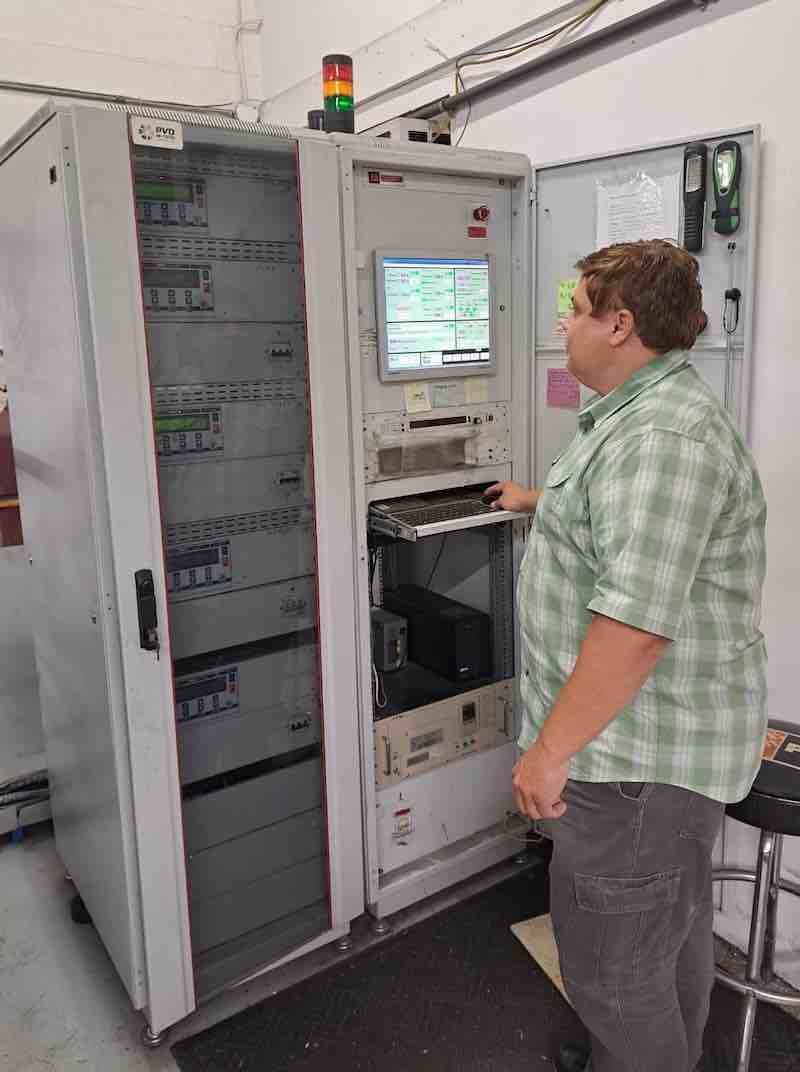 CMC and PVDAT collaborate with some of the largest companies in Canada, particularly those in the nuclear energy, aerospace, oil and gas, electrical, plastic tooling, defense systems, mining, and automotive industries.Having that insight helps CMC and PVDAT work with their customers to expedite the process of finishing and coating parts correctly, so they can be sent to market faster. It is a thought process Stephen honed during her days on the supplier side, and one she truly relishes as a trained scientist.
“I like that part of the business the most because I really like the technical side,” she says. “When I worked for suppliers, I did all kinds of crazy projects, and so this is how I got my reputation way back then.”
Stephen's love of science began at the University of Politehnica in Bucharest, Romania, where she studied physics and chemistry. She moved to South Africa after graduation to work in the lab for a chemical supplier, where one of its largest customer groups provided process and proprietary chemistry for platers.
Stephen did not yet speak English, but she took on a part-time job as a nursing assistant at a hospital, where she began developing her English. While there, she also spent time at a chemical company, where she was impressed by the lab equipment, especially the atomic absorption calibrators.
“These were great instruments, which we had never seen in Romania because it was communist,” she says. “When I was off from the other job, I used to go and spend all day in this lab learning all about this equipment. And while I was learning that, I was also reading procedures and other materials, so I started to speak a little bit of English.”
When she interviewed for a job at the chemical supply company, she still knew very little English, but wanted the job because it fulfilled her curiosity about science. It was a concern for her bosses, but she insisted they would not regret taking a chance on her.
“It was extraordinarily hard,” she says. “I was very scared, and I thought, ‘I have a child in school, I've got a mortgage, and I have no salary.’ This was really tough.”
“They were a little bit concerned with my English, but I think that they just laughed at my enthusiasm,” Stephen says. “And I thought, ‘It doesn't matter because I will learn.’”
She was hired and soon found herself troubleshooting nickel, chrome, and zinc plating issues affecting the supplier’s customers. Stephen would analyze a sample, provide additions if needed, and troubleshoot a solution to solve it, and was as happy as she could be.
“I started to learn every plating process,” she says. “And within about a year and a bit, I actually took over the technical side. And wow, I was working nonstop. I loved it.”
Balancing Career and Family in a New Company
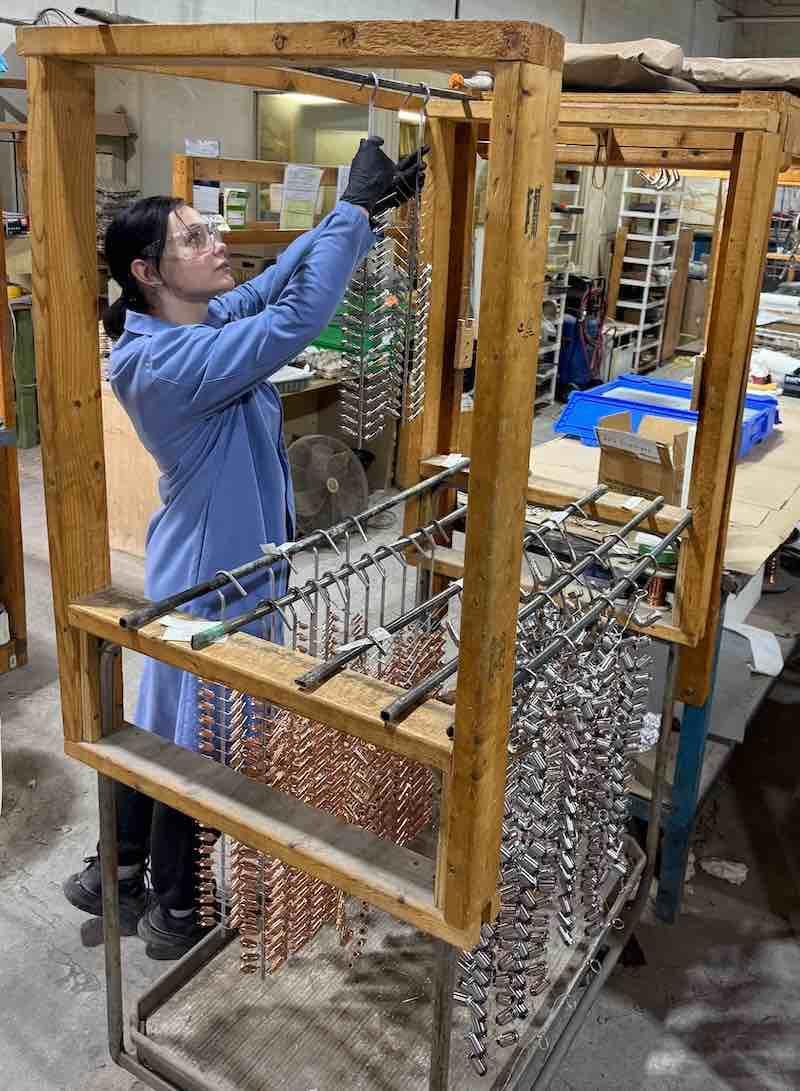 CMC specializes in ceramic nickel, electroless nickel, composite diamond coating, immersion gold plating, nickel boron nitride, and electroless nickel PTFE.In 1995, Stephen moved to Canada to work for a chemical supplier and settled in Mississauga, Ontario. By then, she was a single mother with a son, balancing her career and family life as best she could.
“I wanted to have more responsibilities,” she says, “And I wanted a salary increase.”
She left the lab work behind and became a marketing manager for Enthone in Western Canada, where she oversaw five large customers and numerous accounts to build. Stephen admits she had a wonderful relationship with her bosses at Enthone’s U.S. headquarters, but her manager in Canada was beginning to make her life more difficult.
“It was the first time that I worked somewhere and I didn't get along with my boss,” she says. “He was a different type of person; I don't know if it was confidence or something else, and I just don't know. But it was tough for me.”
Fortunately, Stephen had an opportunity open with one of her customers that performed brush plating for the nuclear industry and was struggling with electroless nickel.
“They had tested the electroless nickel side, and he didn't do very well at it,” she says. “He said, ‘You can take this part from me and go with it.’ So I started my own company.”
Unfortunately, her grand opening was September 1, 2001, just 10 days before the terrorist attack in the U.S. that crippled most manufacturing operations and slowed down the economy as the world began changing.
“I think that what separates us from others is that we understand as much about the coatings’ properties as anyone,” she says. “More importantly, I understand their limitations.”
Stephen had borrowed and put nearly every dollar she had into running this business — which she often operated in the evenings at her former customer’s plating shop — and was now seeing the brakes applied to everything in North America and around the world.
“It was extraordinarily hard,” she says. “I was very scared, and I thought, ‘I have a child in school, I've got a mortgage, and I have no salary.’ This was really tough.”
Discovering the Moldmaking Process to Grow Business
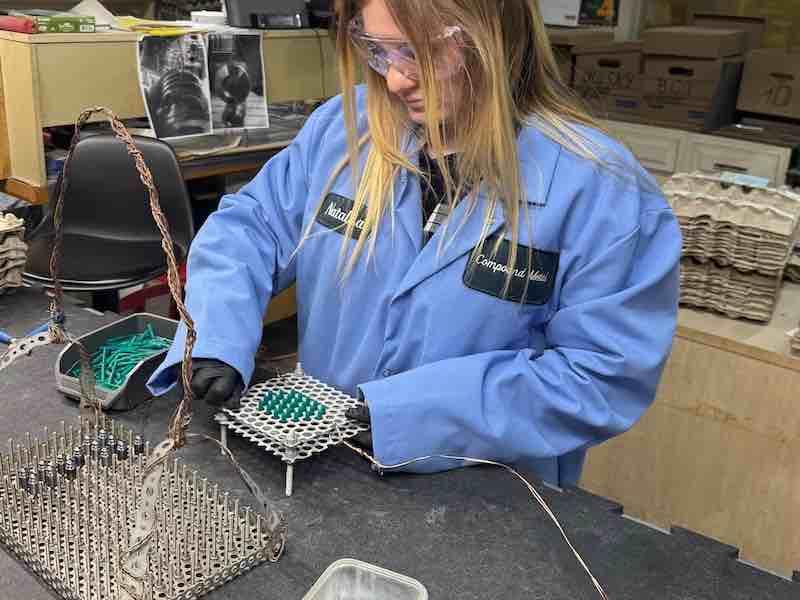 For CMC, which has 14 employees, Stephen aims to be recognized as a precision plater who tackles challenging customer tasks with exacting specifications.Stephen had just four employees when she started CMC. The new startup — and a barebones staff — also gave Stephen the chance to run the plating lines herself, often late into the evening because the parts were needed the next day. One early project was an extrusion 96 inches in diameter, which required Stephen to improvise with tanks and swimming pools to complete the parts.
“I didn't go home for what seems like two weeks,” she says. “I was sleeping on a chair here, so it was crazy. However, this is precisely what you need to do. You can't just give up.”
When Stephen went on the road to drum up business for CMC, one of her first stops was an international plastics tradeshow, which intrigued her because she had started to introduce new finishes such as nickel PTFE, a co-deposition process of electroless nickel combined with polytetrafluoroethylene particles that had excellent release characteristics and uniform particle incorporation, which was perfect for the injection molding industry.
“I was like a kid in a candy store,” Stephen says. “I couldn't believe all the machines and all the molds were making parts, and it was everywhere. I kept looking to see what applications I could develop, and it came to me that they needed a better cycle time, which meant they had to have the right coating.”
She started to talk to more people in the industry — “I started to knock on doors,” she says — and CMC began marketing its a nickel PTFE and then a nickel boron nitrite. In 2010, CMC began offering PVD, partnering with an Ontario company close to them, and began seeing some projects in that area as well.
That is when she formed a partnership with the other shop owner to start PVD Advanced Technologies and began offering those services as well. In 2012, they developed a proprietary Diamond-Like Coating, which has a hardness of about 2000 Vickers.
“Growing up, no little girl says, ‘I want to work as a plater.’ I happened to stumble into this industry, and then you realize that it is such an amazing industry. You can design the most amazing thing, but if you do not have it coated, it won't work.”
“I think that what separates us from others is that we understand as much about the coatings’ properties as anyone,” she says. “More importantly, I understand their limitations.”
That knowledge has propelled her to the new role as chair of the Canadian Association of Moldmakers, where she is focused on uniting the industry, growing membership, and strengthening Canada’s global competitiveness. Stephen says the plastics tooling industry accounts for about 60% of their business.
“I'm not a mold maker, but I love this industry very much,” she says. “I was talking to one of my customers the other day, who is a moldmaker, and he said you and Kim did more for the moldmaking association than all the moldmakers. I'm focusing on this because it's a valued industry, and I know they have helped me over the years. It is my way of giving back.”
Staying a High-Precision Finishing Operation
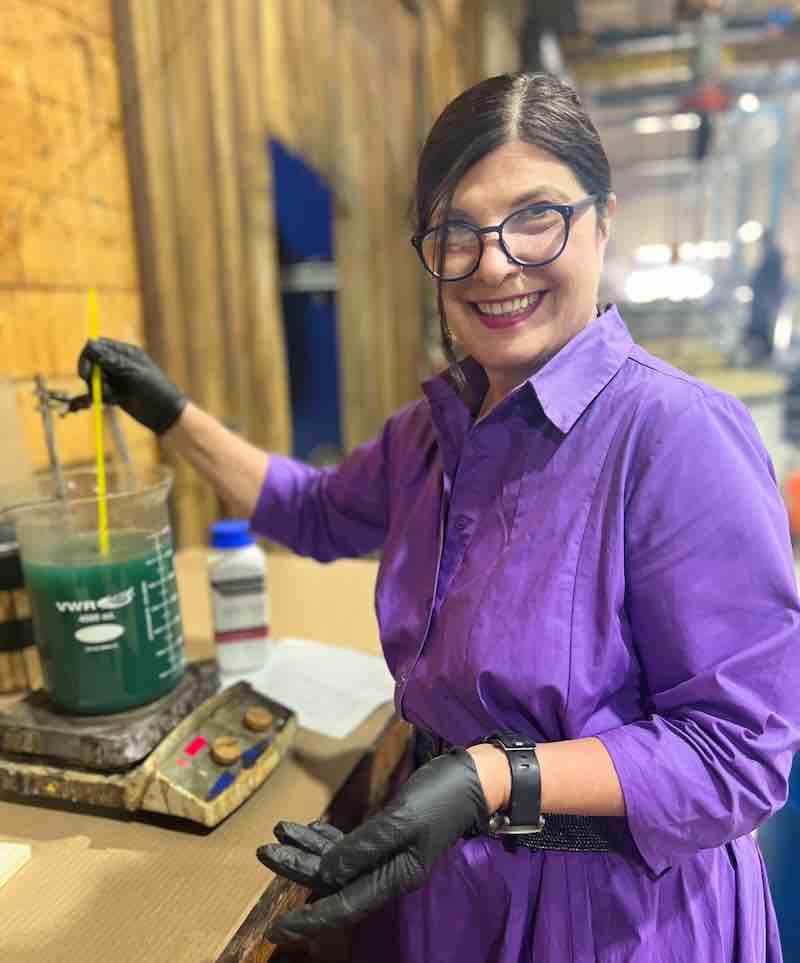 Looking back on her 25 years as a business owner in the finishing industry, Stephen says she doesn’t have much time to celebrate because every day presents its own challenges.Stephen says she has been tempted to expand her customer base to take on more work. Still, she recognizes that a downturn in the economy could trigger significant fluctuations, especially if costs drive those industries.
For CMC, which has 14 employees, she aims to be recognized as a precision plater who tackles challenging customer tasks with exacting specifications.
“I want to be a high-precision shop,” Stephen says. “We are looking at two micro tolerances, and you can't mix that work with doing millions of parts. When you do millions, if you lose 100,000 parts due to defects, no one cares. I decided to focus more on interesting projects and very high-precision components. It's almost like we are a boutique for coating.”
Looking back on her 25 years as a business owner in the finishing industry, Stephen says she doesn’t have much time to celebrate because every day presents its own challenges. But when asked, she marvels at how a single mother from Romania could achieve such a feat and still enjoys her work a quarter century later.
“I had my son when I was really young,” Stephens says. “By the time I started the company, he was already a teenager. I gave him many responsibilities and told him he had to manage the household. Don't get into drugs, don't get into stuff; I had no time to deal with teenager stuff.”
She says that if she can be a role model for other women who might want to start and own their own business — whether in finance or manufacturing — she is happy to be that, too. Knowing where she came from and how she ended up in Canada is a storybook tale.
“Growing up, no little girl says, ‘I want to work as a plater,’” Stephen says. “I happened to stumble into this industry, and then you realize that it is such an amazing industry. You can design the most amazing thing, but if you do not have it coated, it won't work.”