


Electrification, energy infrastructure, and emerging robotics share one thing: they demand more from surfaces than ever before.
 Bernd FrankA coating may be expected to resist corrosion and wear, transfer electrical signals, manage heat, and remain reliable over many years of service.
Today, OEMs and component manufacturers are asking new questions:
- How can corrosion protection be balanced with electrical performance?
- Which surface technologies best support lightweight materials?
- How can environmental impact be reduced without compromising durability?
- How early should surface requirements be considered during product development?
The answer is becoming clear: surface engineering must move further upstream in the design process.
Why Surfaces Matter More Than They Used To
For many years, people discussed plating and surface finishing mainly in terms of part protection, appearance, and production quality. Those fundamentals still matter, but they are no longer the whole story.
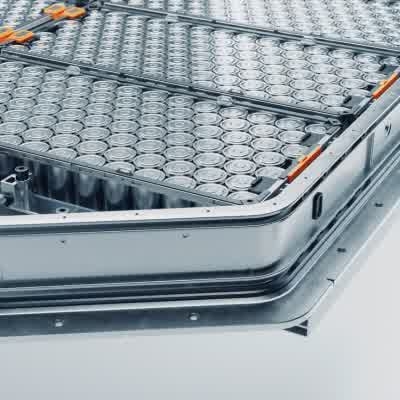
A battery housing needs corrosion protection, but it may also need a certain electrical conductivity, thermal compatibility, and exceptional cleanliness. A decorative automotive component still needs a premium look, while also transmitting light and showing symbols. A robot joint must withstand wear while its connectors maintain reliable conductivity, and its visible covers must be designed for close human interaction.
A coating may meet one requirement exceptionally well, but that is not enough if it fails to meet the needs of the complete system.
In each case, the surface serves as an active interface between materials, electronics, mechanics, design, and the surrounding environment. This makes surface engineering more strategically important, but it also makes application development more demanding.
Component-Level Challenges Across Markets
| Component | Key surface requirements |
| Battery housing | Corrosion protection; electrical conductivity; cleanliness; and adhesion for further coatings |
| Busbar | Conductivity and corrosion resistance |
| Electrolyzer bipolar plate | Conductivity; durability; active surface increase; and enhanced gas removal |
| Humanoid robot joint | Wear resistance; lifetime performance; and electrical and thermal conductivity |
| Illuminated trim | Appearance; light transmission; wear resistance; and cold touch |
Trend 1: Electrification is Changing the Performance Focus
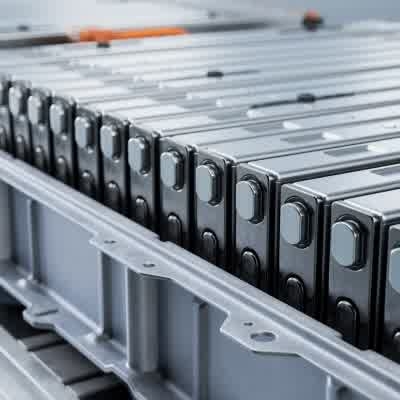 Electrification is shifting surface-finishing priorities across both mobility and stationary infrastructure. In electric vehicles, battery systems contain components with widely varying corrosion, electrical, and thermal requirements.
The same logic extends to battery energy storage systems. Here, long operating lifetimes and different environmental impacts require particular emphasis on durable protection and stable electrical interfaces. Outdoor exposure, humidity, and temperature changes can degrade surfaces, reduce reliability, shorten lifecycles, and create unforeseen warranty costs.
Hydrogen production adds another dimension. Electrolyzer components operate in chemically demanding environments and depend on surfaces that can combine corrosion resistance with low contact resistance. In such systems, the coating not only protects the component but also interacts directly with the energy conversion.
A coating may meet one requirement exceptionally well, but that is not enough if it fails to meet the needs of the complete system.
Trend 2: Multi-Material Design Creates Further Interface Challenges
Lightweight design accelerates the use of aluminum, magnesium, polymers, and multi-material hybrid constructions. These materials help engineers balance weight, cost, and performance, but they also complicate surface preparation and corrosion management.
The most critical point is often the contact area between materials. Different electrochemical behaviors can increase the risk of galvanic corrosion, while complex shapes, recesses, and edges make uniform treatment harder to achieve. Magnesium, in particular, offers attractive lightweight potential but demands carefully applied pretreatment and protection because of its high reactivity.
Process control therefore becomes a functional requirement, not only a quality metric.
This changes the way coating systems should be selected and qualified. Instead of applying a standard solution to a single substrate, the industry must evaluate material combinations, joining concepts, geometry, fluid exposure, and further assembly requirements as one combined challenge.
Trend 3: Decorative Surfaces as Intelligent Interfaces
Automotive design shows how decorative and functional aspects are closely connected. Bright metallic finishes remain relevant for emphasizing quality, distinction, and premium touch and feel. At the same time, design languages are becoming more varied, with darker metallic colors, satin effects, neutral blacks, selective contrasts, and combinations of plated and painted areas.
More importantly, the surface needs to be able to communicate with the user. Hidden-until-lit symbols, illuminated elements, and ambient light reflections allow designers to create calm, non-distracting surfaces that reveal information only when needed.
Optical consistency, adhesion, corrosion resistance, and wear performance must coexist with light transmission, precise edges, and cleanability. Even small variations in roughness or layer structure can affect appearance. Process control therefore becomes a functional requirement, not only a quality metric.
Cross-Industry Application Matrix
| Application | Corrosion | Conductivity | Thermal | Wear | Appearance |
| EV Battery | ✓ | ✓ | ✓ | ||
| Energy Storage | ✓ | ✓ | ✓ | ||
| Hydrogen | ✓ | ✓ | |||
| Robotics | ✓ | ✓ | ✓ | ✓ | ✓ |
| Smart Interiors | ✓ | ✓ | ✓ |
Trend 4: Robotics Brings Well-Known Challenges Into a New Market
One of the industry's most interesting developments is the emergence of advanced robotics. Humanoid robots combine batteries, lightweight structures, precision joints, sensors, actuators, electronics, and visible surfaces. In other words, they bring together challenges already familiar from automotive, electronics, and energy applications.
Wear-resistant surfaces can support moving joints and drive systems. Corrosion protection can protect lightweight frames and housings. Conductive finishes can improve the reliability of power and signal connections. Thermal-management components need protection that remains compatible with cooling media and operating temperatures. Visible surfaces must withstand regular usage in possibly harsh environments and remain easy to clean.
The significance of humanoid robotics goes beyond market forecasts, and it involves a combination of technologies. The boundaries between applications are becoming less rigid, and plating expertise can transfer across sectors when it is grounded in a clear understanding of component function and operating conditions.
Trend 5: Sustainability is Becoming Part of Technical Performance
Environmental requirements now influence chemistry, process design, and customer qualification. The shift toward trivalent chromium technologies, non-PFAS alternatives, lower-impact processes, and more resource-efficient production shows how closely environmental and technical performance are now linked.
The future of plating will be defined not only by the coating applied, but by the value the engineered surface creates for the complete system.
Customers still expect durability, appearance, adhesion, and process stability. The challenge is to deliver these while reducing environmental impact, supporting regulatory readiness, and improving efficiency. Longer component life also matters because a durable surface can help reduce maintenance, replacement, and total lifecycle demand.
This needs to be considered, including energy use and therefore CO2 emissions, waste and wastewater disposal, and recycling.
What These Trends Mean for the Plating Industry
 Deep knowledge of chemistry remains essential, but success also depends on understanding the application itself: what the finished component must do, which materials surround it, how it will be assembled, and what conditions it will encounter during its working life.
This demands closer collaboration across the value chain. Earlier alignment between platers, chemistry providers, component manufacturers, system developers, and OEMs can help balance performance, sustainability, and cost while reducing qualification delays.
It also strengthens the case for data-driven process control. As surfaces take on electrical, optical, thermal, and mechanical functions, consistency becomes even more critical. Stable pretreatment, controlled deposition, reliable post-treatment, and traceable quality data will help translate laboratory performance into repeatable industrial results.
The future of plating will be defined not only by the coating applied, but by the value the engineered surface creates for the complete system.
Five Priorities for Future-Ready Plating Operations
Priority, Why it matters, and Practical implication
| Priority | Why it matters | Practical implication |
| Design for the system | Surfaces now interact with materials electronics; heat; and mechanics at the same time. | Define coating requirements from component function and operating conditions; not from substrate selection alone. |
| Develop multifunctionally | Protection; conductivity; insulation; optics; and wear increasingly overlap. | Evaluate combined performance and trade-offs during development and qualification. |
| Collaborate earlier | Late coating decisions can restrict material; geometry; and sustainability options. | Bring surface specialists into concept and design discussions at an early stage. |
| Control the process | Functional surfaces require repeatability across complex geometries and high volumes. | Strengthen pretreatment control; deposition consistency; post-treatment; and quality data. |
| Make environmental performance part of development | Environmental expectations are becoming part of competitiveness. | Advance responsible chemistries and efficient processes without compromising reliability. |
About the Author: Bernd Frank is Global OEM Senior Director, GMF, at MKS Atotech and is based in Europe/Germany. He joined the company in 2020, bringing more than 25 years of experience across the automotive and manufacturing value chain. His career includes leadership and business development roles at Valeo, ZF, Linamar Corporation, and Nemak, giving him deep insight into OEM requirements, industrial transformation, and strategic partnership development. Bernd holds a diploma in Chemical Engineering from the University of Aachen and an MBA in Finance and General Management. With a strong understanding of automotive technologies, surface-finishing applications, and global customer needs, he plays a key role in strengthening MKS Atotech’s OEM engagement and advancing collaborative solutions for future mobility, energy, and emerging technology markets.
Visit www.mks.com and www.atotech.com.