


I walked in while they were still setting up the line.
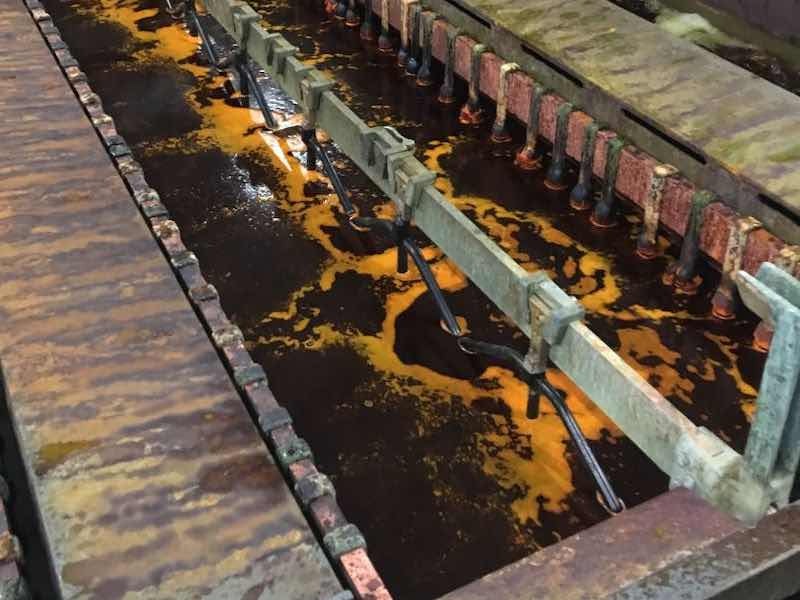
 Olesia TsarevaThe copper process had been dialed in at the lab, the production bath was filled, and the team had a puzzle for me. The copper concentration kept dropping, then climbing back up, and nobody could tell me why. On top of that, the anodes weren’t dissolving as expected.
They had already tried a lot. They changed things, reconnected things, checked the current, measured with a micrometer. Nothing explained it.
My first question: “What’s your chloride level?” Silence. Nobody had ever checked it.
Honestly, I get it. You’re starting up a new line, and you’ve got copper to track, acid to check, and a whole zoo of additives to figure out. Then there’s chloride, sitting at 60 to 80 ppm. Put that next to numbers in grams per liter, and it looks like a rounding error. How much trouble could that little bit possibly cause?
Enough that it was the first thing I asked about.
Why Chloride? Because I Follow the Copper
When I see copper concentration wandering around, I think about copper going out and copper coming back in. The parts take it out of the solution. The anodes are supposed to put it back. A copper analysis only tells me what’s in the bath at the moment I pull the sample. If the number keeps moving, I want to know what’s going on at both ends.
Chloride keeps copper anodes dissolving in a controlled, well-behaved way. Let it drop too low, and the anodes can polarize and even passivate. The bath still has copper, and parts are still being plated, but the anodes can’t keep up. That’s one reason chloride went to the top of my list.
Too low, and the anodes polarize and passivate. Too high, and they dissolve too fast, and the deposit coarsens. Either way, you lose control of both ends of the bath.
The second reason is the deposit itself. This was a microelectronics process, where how the copper grows matters a lot. Chloride helps some of the organic additives do their job at the cathode. Change the chloride, and you change how the same additive package behaves, and that can show up in the structure or appearance of the copper.
It’s a Window, Not a “More Is Better”
Now, before anyone runs off to dump chloride into the bath: too much is just as bad as too little.
Push chloride too high and the anodes start dissolving too aggressively. More copper goes into the solution than the parts take out, and the copper concentration climbs. With high copper, the deposit structure changes. It becomes more coarse-grained. So the coating itself is no longer what you designed.
Too low, and the anodes polarize and passivate. Too high, and they dissolve too fast, and the deposit coarsens. Either way, you lose control of both ends of the bath. The goal is to keep chloride inside its window, and every bath has its own window, which can shift a little in either direction. The 60 to 80 ppm I mentioned was right for this process. For yours, find your own range and stay in it.
So one tiny number touches both ends of the bath: the anode and the cathode. Not bad for something measured in parts per million.
How Do You Measure a Few Dozen PPM?
We used potentiometric titration: silver nitrate as the titrant, silver electrode to catch the endpoint. It worked well at these levels.
But one thing bugged me. With 0.01 N silver nitrate, the titration was over after barely more than a milliliter. That’s very little volume to work with, and when a tiny volume difference moves the reported result, I’m not comfortable.
One more thing: what do the anodes do when the line sleeps?
So I switched to 0.001 N silver nitrate. Same sample size, about ten times more titrant to reach the endpoint. Suddenly I had room to work, and a small error stopped being a big deal.
The result? Chloride came back at roughly half of where it should have been.
Okay. So where did it go?
The Carbon Treatment: It Takes More Than You Ordered
The additive supplier recommended a carbon treatment every three months. Treat the bath, then bring the organic additives back into range. The team was already doing exactly that.
Here’s the catch: activated carbon doesn’t only grab organics. It grabs chloride too. Every carbon treatment was quietly pulling some of the chloride out of the bath, and nobody had thought to look. The additives went on the “restore afterward” list. Chloride never did, because nobody realized it had left.
When I told them, they were genuinely surprised. They had tried so many things, and the answer was a few dozen ppm that nobody had on their radar.
Once we brought chloride back into range and started checking it regularly, the bath settled down. Copper stopped playing yo-yo.
The elephant in that bath wasn’t copper at all. It was a tiny bolt nobody was looking at.
If you asked me what belongs on the maintenance sheet for that line, I’d put chloride right next to the other post-carbon-treatment checks. Catching a low reading there is so much easier than working backward from a problem at the anodes.
One more thing: what do the anodes do when the line sleeps?
When copper levels wander, I always ask what happens when the line sits idle. The rectifier is off, but copper can still dissolve chemically. Meanwhile, no parts are in the bath to remove copper. If your procedure calls for pulling the anodes during a long shutdown, make sure that step is on the shutdown checklist. And when you come back, check where your copper concentration is.
The Tiny Bolt
I still think about that first conversation. They asked me about copper, and I asked about something that should've been there at a few dozen ppm. The elephant in that bath wasn’t copper at all. It was a tiny bolt nobody was looking at.
So don’t throw away a tiny bolt just because it looks insignificant. Sometimes the whole machine is waiting on it.
Olesia Tsareva holds an MSc in Engineering, specializing in Electrochemical Manufacturing Technology. She worked in Moscow before moving to the United Arab Emirates, where she launched the country’s first electroplating shop for Mi helicopter repair. She now works at ATI Aviation Services in Cleveland, Ohio, where she repairs Boeing landing gear. She is also building her own electroplating consulting business. She’s passionate about launching plating lines, troubleshooting and stabilizing processes, and setting up chemical labs. Reach her at olesia@tsareva-electroplating.com.