



In an industry often defined by specialization, Progressive Coatings has spent the last several years doing something few finishing companies are willing—or able—to attempt: expanding horizontally while simultaneously scaling geographically.
 Stephen WaltersUnder the leadership of CEO Stephen Walters, the Chicago-area job shop has evolved from a thermoplastic coating specialist into a multi-process supplier supporting automotive, electrical infrastructure, and electric vehicle markets across North America.
“We’re a job shop committed to the functional side of things,” Walters says. “Fluidized bed application is our primary method. We also do electrostatic powder and some vinyl plastisol. Everything we do is about performance.”
That performance-first mindset has guided Progressive Coatings through more than four decades of operation—and through one of the most ambitious expansion efforts in the company’s history.
A Foundation Built on Functional Coatings
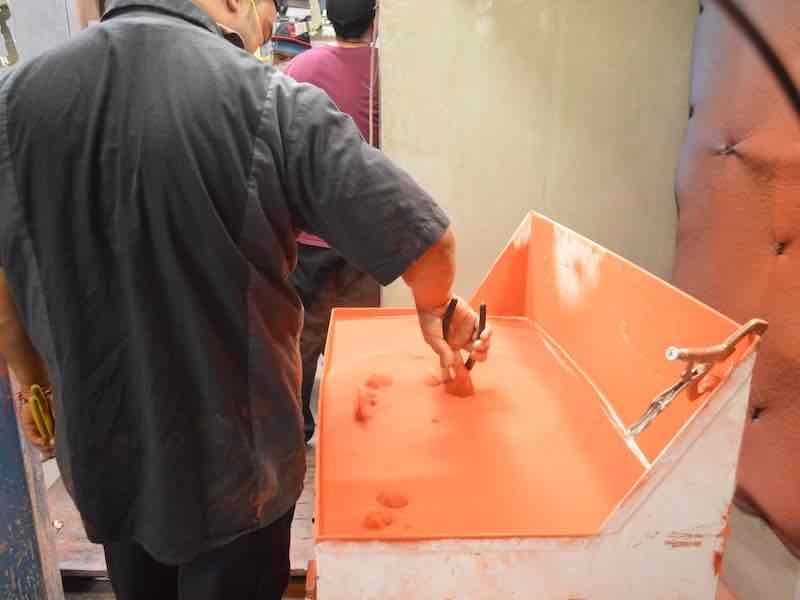 Fluidized bed is Progressive Coatings' primary method of application in Chicago.Founded in the early 1980s, Progressive Coatings established its reputation with fluidized-bed thermoplastic coatings, particularly nylon, PVC, and plastisol systems, used on wire forms, springs, and industrial components. Walters purchased the company in 2006 and immediately began reinvesting in infrastructure, quality systems, and technology.
“Once I took over, we rebuilt pretty much everything here,” he says.
Those investments paid off as Progressive Coatings deepened relationships in traditional automotive markets and expanded into electrical insulation applications. By the late 2000s, the company was coating busbars and other components requiring electrical insulation—a segment that steadily expanded.
“It was not a simple decision. But once we made it, things moved remarkably fast. We went from one line to three, took over the entire 65,000 sqft. building, and had about 100 people working two shift.”
“That side of the business grew to about a third of what we were doing,” Walters says. “Then electrification really started to accelerate.”
Electrification Drives Strategic Expansion
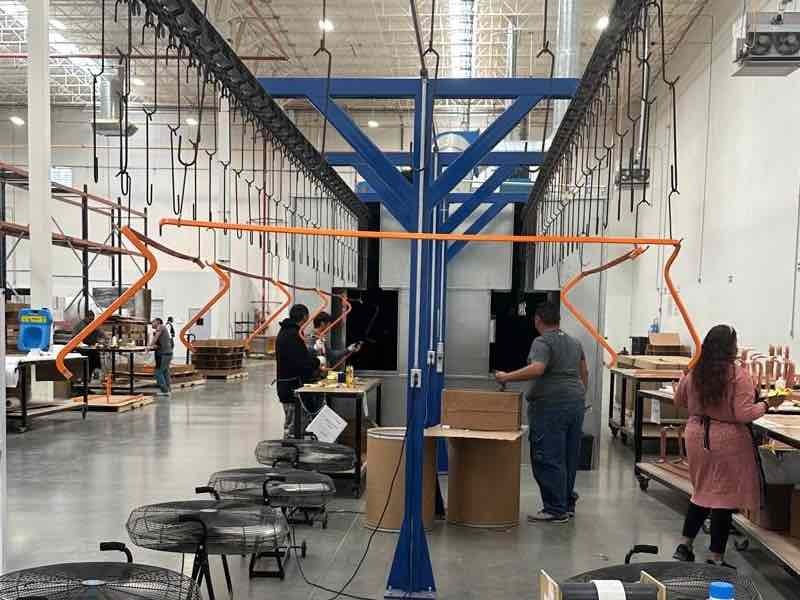 Progressive Coatings launched its Juárez, Mexico-area facility in early 2024 with 25,000 square feet, one coating line, and five employeesAs electric vehicles, renewable energy, data centers, and grid infrastructure gained momentum, Progressive Coatings saw demand for electrically insulated components rise sharply. Rather than pivot away from its core strengths, the company leaned into them.
In 2021, that strategy took a decisive turn when a Tier 1 automotive supplier serving General Motors approached Progressive Coatings to support electric vehicle programs—initially from Chicago.
Shipping quickly became the limiting factor.
“These were very large parts,” Walters says. The shipping containers were the size of a pool table, but could hold only 88 parts. The shipping costs back and forth were prohibitive.”
The customer explored local suppliers in Mexico but struggled to find one that met Progressive Coatings’ quality standards. Ultimately, Walters decided to build capacity closer to the customer.
“It was not a simple decision,” he says. “But once we made it, things moved remarkably fast.”
Operating under a shelter arrangement, Progressive Coatings launched its Juárez, Mexico-area facility in early 2024 with 25,000 square feet, one coating line, and five employees. By the end of the year, the operation had expanded significantly.
“We intend to be that high-quality shop in the area. And it’s been very well received.”
“We went from one line to three, took over the entire 65,000 sqft. building, and had about 100 people working two shifts,” Walters says.
That rapid growth supported EV-focused automotive programs, but it also laid the groundwork for something more transformative: integrated electroplating.
Adding Electroplating for True One-Stop Capability
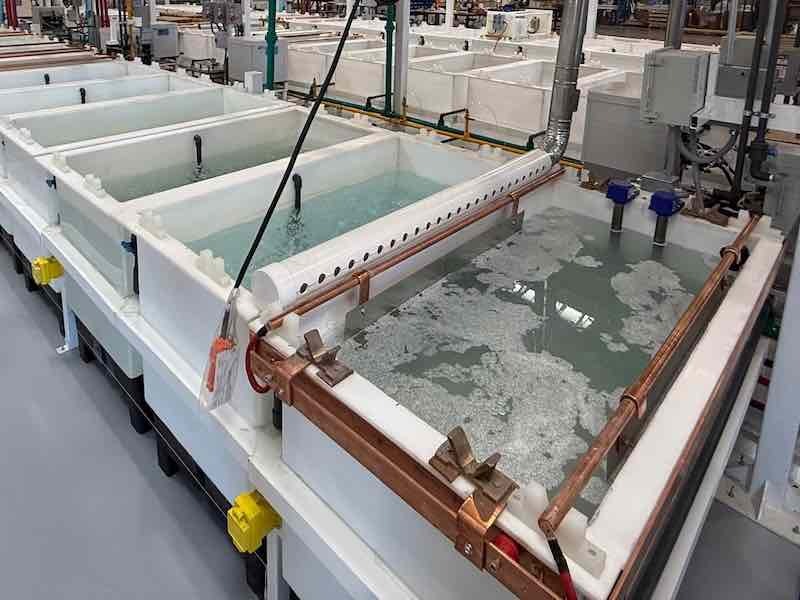 Walters had long viewed plating as a natural extension—and one that required careful execution.For years, nearly every part of Progressive Coatings’ processing required electroplating either before or after coating. Walters had long viewed plating as a natural extension—and one that required careful execution.
“In the middle of last year, we decided to move forward with plating in our Mexico facility,” he says. “We added tin, nickel, and silver plating to support the projects we’re working on down there.”
Electroplating represented a new technical frontier for the company. Walters approached it deliberately, surrounding himself with experienced personnel and trusted suppliers.
“I’ve been vigorously learning as much as I can,” he says. “We have an engineer down there and another team member who’s been in plating for 30 years. It’s come together quickly and solidly.”
“There’s huge demand. The data center boom, grid expansion—it’s driving a lot of activity.”
The result is a rare combination: thermoplastic coating, powder coating, and electroplating under one roof—eliminating transportation costs, reducing lead times, and simplifying supplier management for OEMs.
“We intend to be that high-quality shop in the area,” Walters says. “And it’s been very well received.”
Navigating a Shifting EV Landscape
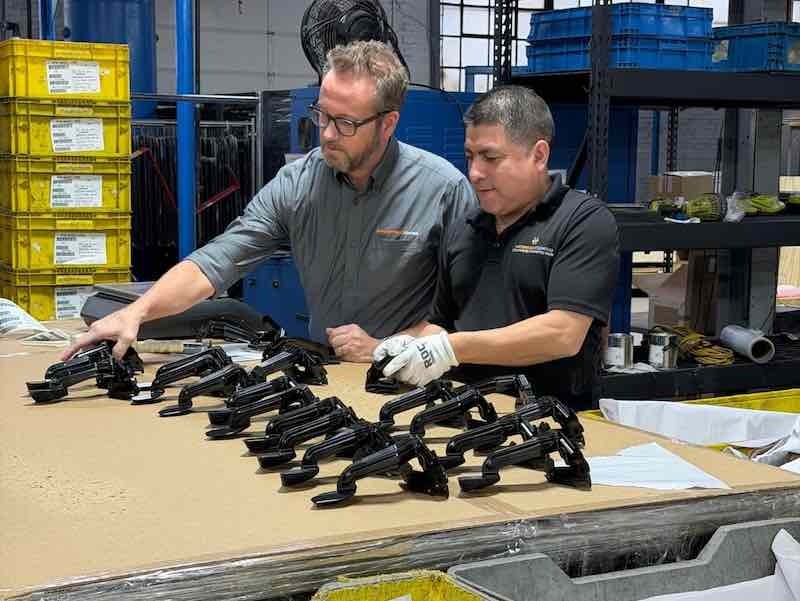 CEO Stephen Walters works with a staff member in reviewing parts.While 2024 delivered explosive growth, 2025 has brought new challenges. Volatility in EV demand, policy uncertainty, and shifting market dynamics have tempered expansion plans.
“There’s a little more stabilization right now,” Walters says. “I’m optimistic for 2026, but 2025 was challenging.”
Still, Progressive Coating continues to quote aggressively, recognizing that automotive programs are often awarded years in advance. The company also made its first major trade show appearance in decades at the Battery Show and Electric/Hybrid Vehicle Technology Expo in Detroit.
“The reception was great,” Walters says. “A lot of interest—some from customers we knew, and some we didn’t.”
While EV-related automotive work has largely shifted to Mexico, Progressive Coating’s Chicago operation remains robust and diverse. The facility continues to focus on fluidized bed thermoplastics, with a growing emphasis on electrical infrastructure.
“I didn’t plan to go into [finishing]. But it has been incredibly satisfying—building the kind of company I envisioned.”
“A lot of what we do here is switchgear for substations that go into data centers,” Walters says. “We also support drive systems, locomotives, and industrial automation.”
That diversification has helped insulate the Chicago operation from EV market swings and positioned it squarely within the booming electrical infrastructure sector.
“There’s huge demand,” Walters says. “The data center boom, grid expansion—it’s driving a lot of activity.”
Leadership, Delegation, and Culture
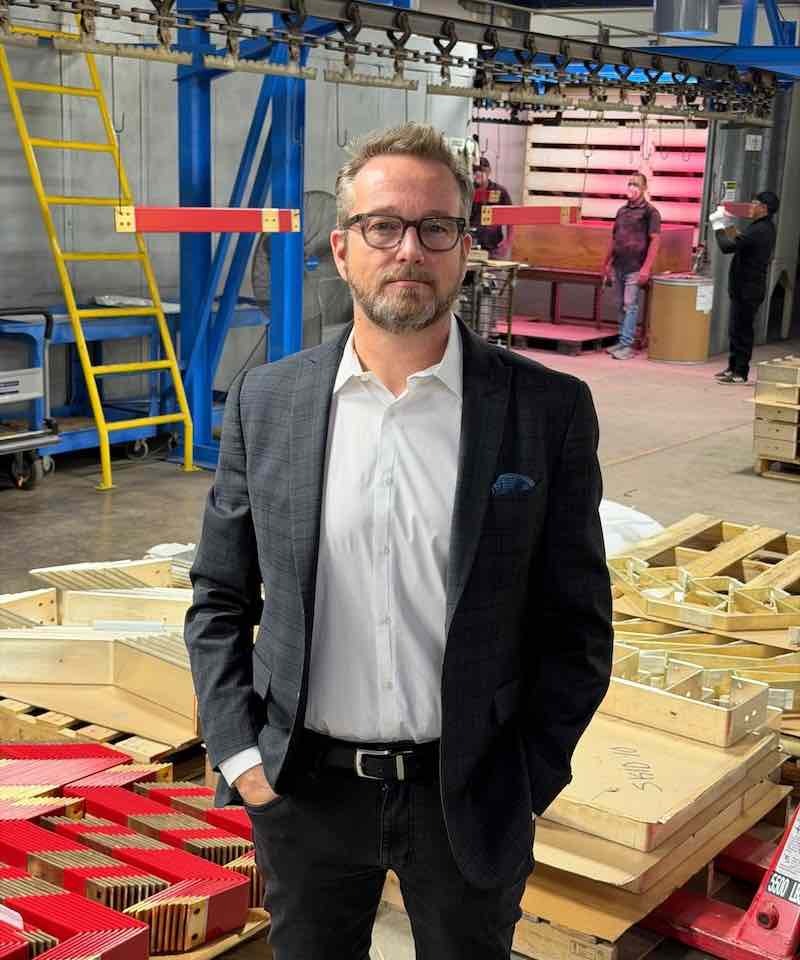 A fourth-generation finisher, Walters grew up working summers in his family’s coating operation.Managing two operations in two countries has tested Progressive Coating’s leadership structure—but also validated it. Walters credits a strong management team for enabling growth without sacrificing culture.
“There’s no way to do this without delegating and trusting your team,” he says.
Key leaders travel regularly between facilities, and several longtime Chicago employees relocated to Mexico to help establish processes, culture, and expectations.
“They knew how we do things,” Walters says. “That was a huge factor in our success.”
Walters’ approach is rooted in a lifetime in metal finishing. A fourth-generation finisher, he grew up working summers in his family’s coating operation—masking parts, hanging racks, and learning the business from the ground up.
“I didn’t plan to go into it,” he says. “But it has been incredibly satisfying—building the kind of company I envisioned.”
That vision is built around consistency, quality, and values.
“We’re customer-first and employee-first,” Walters says. “We don’t want to compromise on who we are or how we do things.”
Looking Ahead
 Progressive Coating continues to evaluate future expansion opportunities, including potential plating capabilities in Chicago and additional geographic growth in automotive and medical hubs such as Monterrey and the Bajio region of Mexico.
For now, the focus remains on strengthening existing operations, filling capacity, and executing with discipline.
“The industry has elevated itself,” Walters says. “The commitment to quality and investment is higher than ever. If you stay true to your values, you can be proud of what you’re building.”