


Former investment banker Jamie Visker had zero finishing experience when he bought Winona Powder Coating in 2002, which he thinks turned out to be a good thing.
 Jamie ViskerWhat Visker brought instead was a strong entrepreneurial instinct, years of experience working in industrial environments, and the confidence that the company could become something much larger than it was at the time.
More than two decades later, that belief has transformed Winona Powder Coating from a regional job shop into one of the Midwest’s most diversified and technically capable finishing operations. Today, the company operates two facilities in northern Indiana totaling roughly 230,000 square feet, employs approximately 160 people, serves industries ranging from automotive and agriculture to marine and building products, and has expanded beyond powder coating into electrocoat capabilities designed for large, heavy-duty industrial parts.
The company’s growth story is not simply about adding square footage or increasing revenue. It is a story about a business owner who entered the finishing industry from the outside, embraced difficult manufacturing challenges, invested heavily in employees and equipment, and built a culture centered around quality, turnaround, and customer partnership.
“We don’t want to be a vendor,” Visker said. “We consider ourselves partners.”
That philosophy has helped Winona Powder Coating grow to roughly five times its original revenue size while steadily expanding its technical capabilities and customer base.
A Different Path into the Finishing Industry
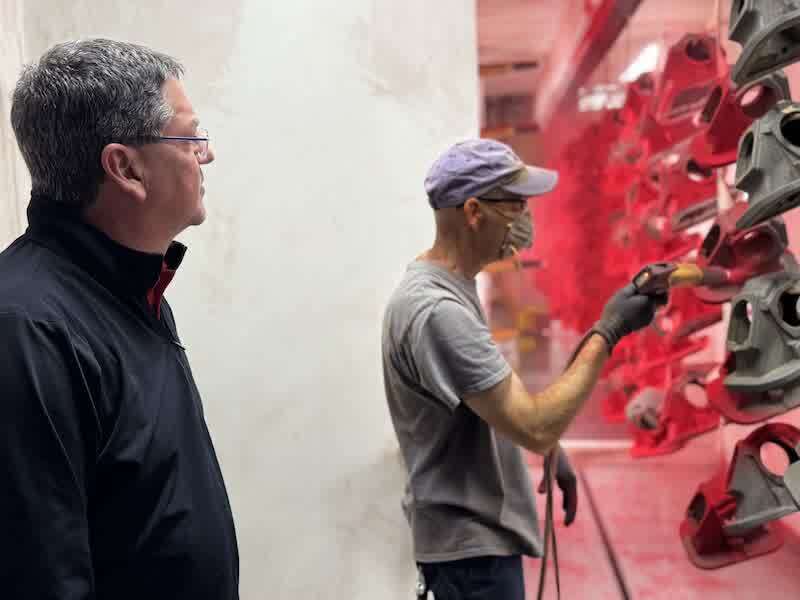 Visker, left, leads a compant that has two facilities in northern Indiana totaling roughly 230,000 square feet, and employs approximately 160 people.Unlike many owners in the finishing industry who grew up around plating tanks, paint booths, or family-run coating businesses, Visker’s path into powder coating was highly unconventional.
“This was the business that was started in 1974 and started powder coating very early in powder coating history,” Visker explained. “The story of how I got here is a little interesting.”
Before purchasing the company, Visker was working as an investment banker. Winona Powder Coating had been sold to a private equity rollup that acquired multiple surface finishing companies. When that deal began to unravel, LaSalle Bank brought Visker in to help sell off the assets.
“The last company left was Winona,” he said. “So I called the bank and said, ‘Look, I’m conflicted because I represent you, but I’m interested in buying Winona Powder.’”
The bank’s response was practical and direct.
“The only question was, ‘Can you fund?’” Visker recalled. “I said yes, and so I made them an offer and bought the company.”
At the time, Visker had virtually no powder coating experience.
“What I learned about powder coating, I learned when I got the call to step in and see if we could help resolve the situation,” he said.
“As we got larger, we started getting into more complicated work,” Visker says. “It was work that required much more in terms of quality system certification and teams in place.”
Still, his background gave him confidence that he could grow the business. Earlier in his career, Visker worked in industrial construction, epoxy flooring, and electrical and mechanical contracting. Those experiences made him comfortable operating in manufacturing settings and on the plant floor.
“I was always completely comfortable on a plant floor,” he said. “That’s where I spent most of my early days.”
That familiarity with industrial operations, combined with an entrepreneurial mindset and a willingness to take calculated risks, gave him confidence that Winona Powder Coating could become something much bigger.
“I just had a strong sense that I knew what to do with it,” he said.
Building a Growth-Oriented Company
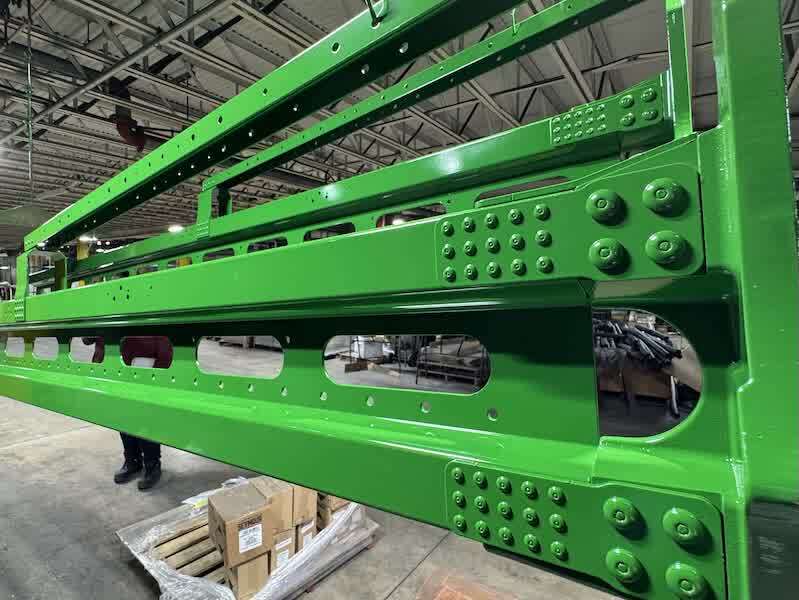 Winona Powder Coating serves industries ranging from automotive and agriculture to marine and building products.When Visker purchased the company in 2002, Winona Powder Coating was much smaller than it is today. The business operated out of facilities totaling about 45,000 square feet between Mentone and Elkhart, Indiana, and employed roughly 40 people.
Today, the company operates a 167,000-square-foot headquarters facility in Etna Green, Indiana, along with a 50,000-square-foot facility in Elkhart. The company’s workforce has grown to approximately 160 employees, and expansion plans are already under consideration as it once again runs short on space.
“We’re now sitting at 230,000 feet under the roof, and we’re out of space,” Visker said. “And we’re looking at expanding.”
What makes the growth particularly noteworthy is that it did not come from a single large customer or one major acquisition. Instead, the company expanded through consistent execution, diversification, technical problem-solving, and a relentless focus on customer service.
“We just kept focusing on serving the customer, getting more certifications, customer certifications, and becoming ISO certified,” Visker said.
The company became ISO certified in 2012, the same year Visker purchased the Etna Green headquarters facility. That investment marked a major turning point in the company’s evolution.
As the company grew, Winona Powder Coating moved beyond being a traditional local job shop. It began taking on more technically demanding work requiring robust quality systems, engineering support, and advanced operational capabilities.
“My car could get there on its own by now,” Visker says about the drive between the facilities.
“As we got larger, we started getting into more complicated work,” Visker says. “It was work that required much more in terms of quality system certification and teams in place.”
Today, coated parts processed at Winona Powder Coating ultimately end up on vehicles and products from major manufacturers, including Volkswagen, Ford, General Motors, Subaru, and leading agricultural OEMs.
“We embrace that business,” Visker said. “We want that business.”
Two Facilities Supporting Diverse Industries
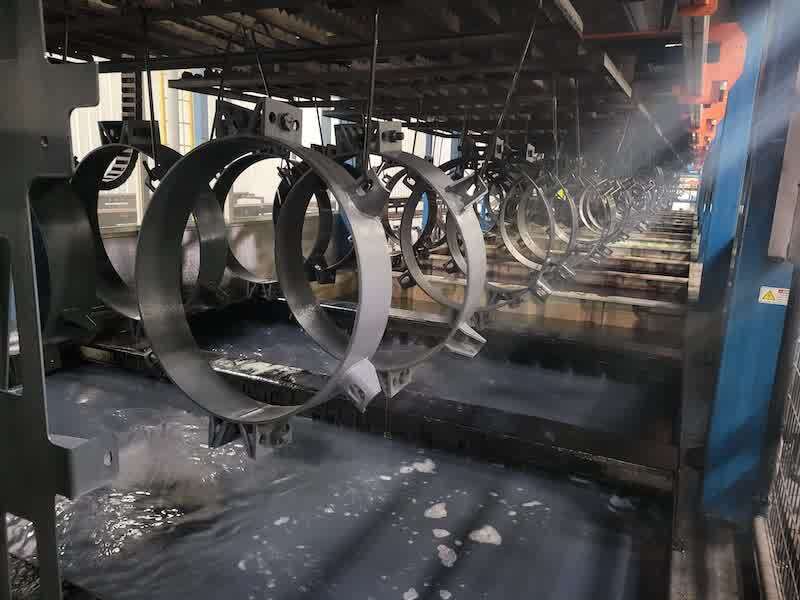 The company has expanded beyond powder coating into electrocoat capabilities designed for large, heavy-duty industrial parts.Winona Powder Coating’s Etna Green headquarters serves as the company’s primary manufacturing hub. The facility houses two powder coating lines and a large-part electrocoat line designed to handle heavy industrial components.
One of the powder coating lines is dedicated specifically to aluminum products and includes an aluminum pretreatment system designed to support demanding marine applications and post-formable aluminum products.
“We do a lot in the marine industry and then post-formable aluminum,” says Visker, whose staff went to a chemistry class that specifically meets those needs to learn all they could.
The second powder coating line at the Etna Green facility is a bi-metal line capable of processing cast iron, steel, and aluminum components. The facility serves customers in the marine, automotive, agricultural, and building products industries, among others.
Meanwhile, the Elkhart facility houses two traditional bi-metal powder-coating lines and supports the company’s growing customer base, located approximately 50 miles from the Etna Green headquarters.
“My car could get there on its own by now,” Visker says about the drive between the facilities.
The dual-location setup allows the company to support a wide variety of customer requirements while maintaining flexibility and production capacity.
Embracing Difficult Problems
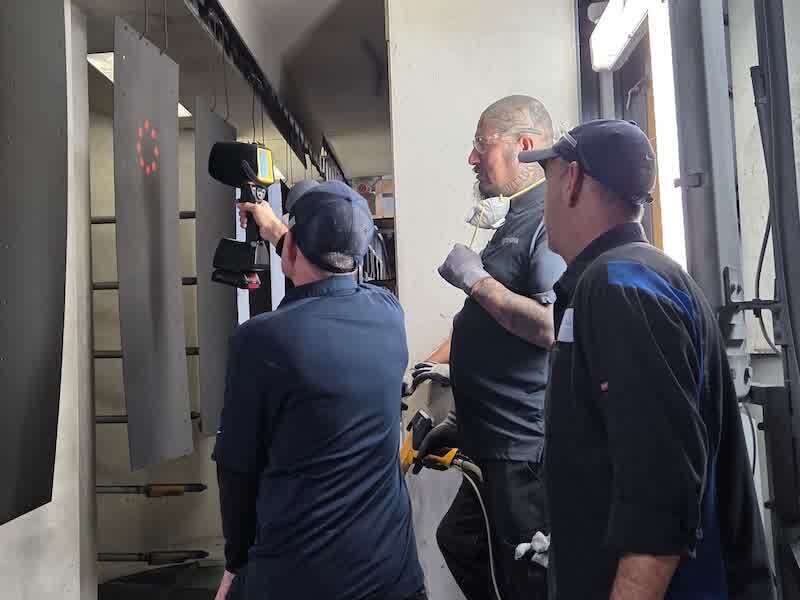 One of the defining characteristics of Winona Powder Coating’s culture is its willingness to tackle difficult applications and specialized finishing challenges that many coaters avoid.
“We like to do hard things,” Visker says.
That mindset has led the company into technically demanding projects involving post-forming aluminum, complex packaging requirements, large castings, and corrosion-resistant coating systems.
One example involves agricultural components that must be packaged and shipped globally as service parts. Winona Powder Coating not only coats components but also designs specialized shipping solutions to protect them throughout the supply chain.
“We’re actually putting a structure in the box to screw the part down,” Visker said. “When it leaves here, it’s ready to go into their parts distribution without them ever touching it again.”
The company also handles complex packaging operations for customers in the architectural and building products markets, including extrusion components for convention center ceiling systems.
“We coat them, put them two to a plastic sleeve, six plastic sleeves to a box, add a hardware kit, seal the box, and palletize the box,” Visker said.
Those additional services help customers streamline operations and reduce handling throughout the manufacturing process.
“Where it makes sense for us to touch it last, that’s the kind of services that we want to provide,” he explained.
Solving the Marine Industry’s Post-Forming Challenge
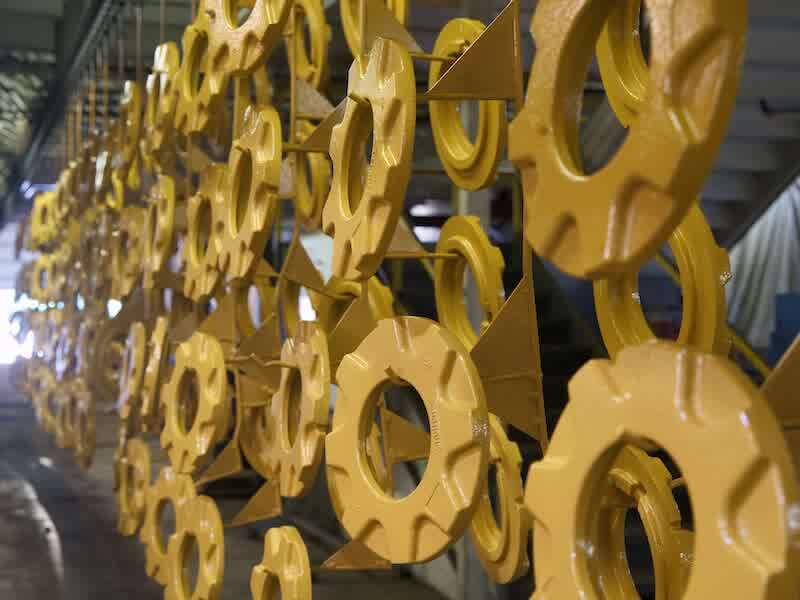 One of Winona Powder Coating’s most significant technical accomplishments involved solving a difficult coating problem for the marine industry.
The challenge centered around pontoon boat rails that required coating before being bent into shape during final assembly. Previous attempts throughout the industry had produced poor results and coating failures.
“It had been tried before with somewhat disastrous results,” Visker said.
Winona partnered closely with boat manufacturer Smoker Craft to develop a process capable of surviving the demanding post-forming operation.
“We said, ‘Look, we’re going to either figure this out or we’re going to run it to the end,’” Visker recalled. “The marine business was one of those that — now that we solved that problem — now has probably north of 30,000 boats in the field with no warranty issues.”
The project exemplifies the company’s broader philosophy toward customer relationships.
“The focus is always on what we can do to solve somebody’s problem,” Visker said.
Adding Electrocoat Capability
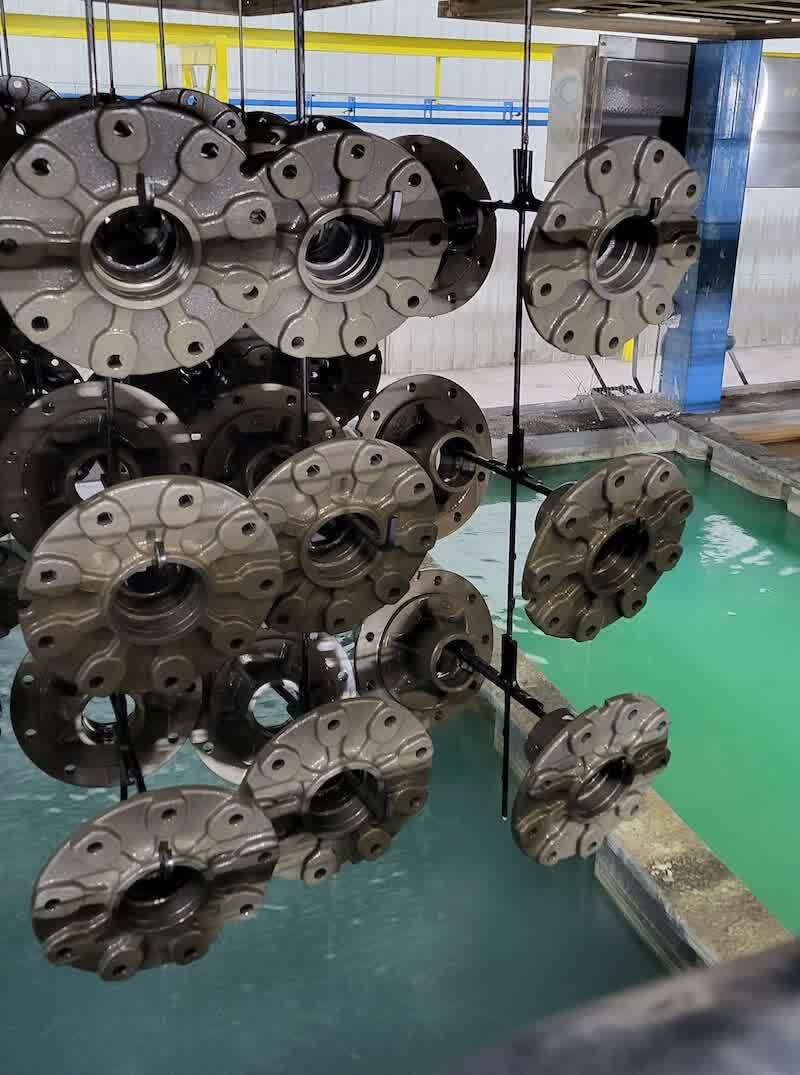 Although Winona Powder Coating had discussed adding electrocoat capabilities for years, the investment did not officially happen until 2020.Although Winona Powder Coating had discussed adding electrocoat capabilities for years, the investment did not officially happen until 2020. Visker says they had been talking about e-coating since 2003, and, as someone with a finance background, Visker admits he initially viewed e-coat as a difficult investment proposition.
“E-coat lines were a terrible value prop,” he said. “Terrible ROI. It’s just a terrible business.”
However, customer demand increasingly pushed the company toward adding the capability.
“We’re seeing more and more parts that are e-coat and powder coated,” he explained. “If you’re going to be our size and serve these customers, that combination is becoming more common.”
The growth of corrosion-sensitive automotive and agricultural applications made the investment increasingly necessary.
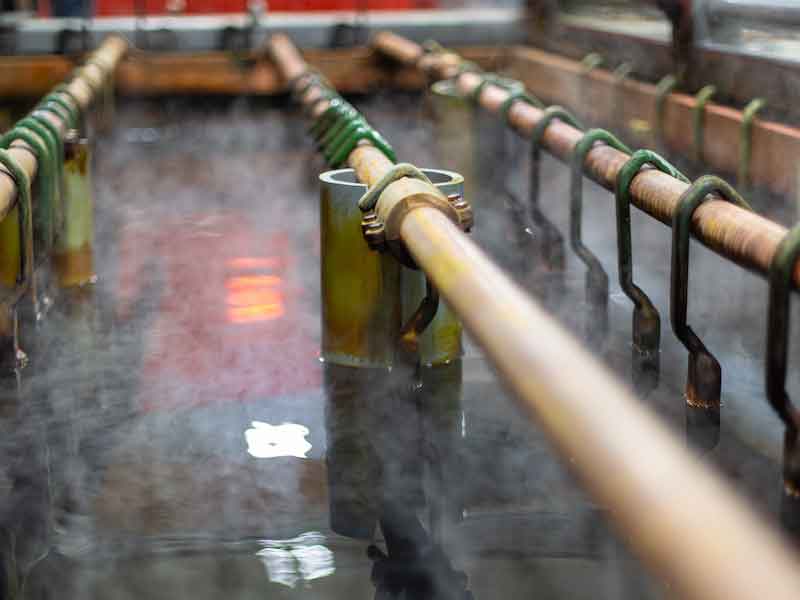
The company designed its electrocoat system specifically to handle large, heavy industrial parts that many existing e-coat operations struggle to process.
“A lot of the e-coat capacity that’s out there was designed for smaller, thinner parts,” Visker said. “They didn’t have the cure window to deal with some of the heavier castings.”
Winona’s indexing electrocoat system features a large part window measuring 48 inches wide by 48 inches tall by 102 inches long, capable of processing up to 2,000 pounds of parts per rack.
“Our management team has evolved,” Visker said. “We have the best management team we’ve had in the 23 years of ownership.”
“That allowed us to handle some fairly large, heavy parts,” he said.
The investment immediately strengthened the company’s position with existing customers while attracting new business opportunities, and Visker says they are definitely seeing more e-coat and powder-coat work coming in.
Applications include automotive control arms and other components exposed to aggressive corrosion environments, where a zinc phosphate pretreatment, combined with electrocoat and powder topcoat, delivers superior durability.
“We’re eliminating creep-back corrosion,” he explained, a capability that also gave Winona Powder Coating more control over its production schedules after years of relying on outside e-coat suppliers.
“We kept getting kicked out because we weren’t big enough,” Visker said. “So it became a necessary evil.”
Investing in Employees Has Big Rewards
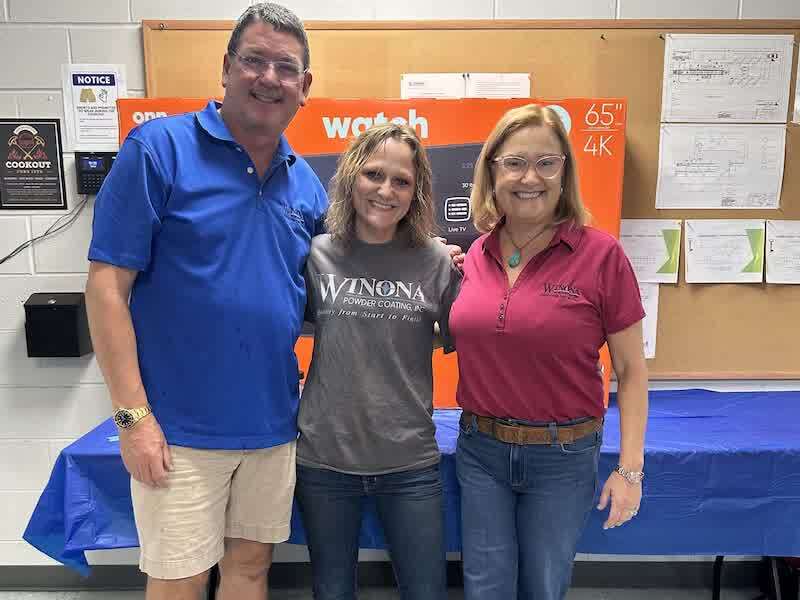 Jamie and his wife, Atlanta, right, VP of Marketing and Human Resources, provide extensive benefits, tuition reimbursement, and ongoing training opportunities while emphasizing long-term career development.As Winona Powder Coating expanded, one constant priority remained employee retention and workforce development.
“We invest in our employees,” Visker said.
The company provides extensive benefits, tuition reimbursement, and ongoing training opportunities while emphasizing long-term career development.
“I would be stunned if there’s anybody in the industry that provides better health insurance than we do,” Visker said. “We pay 70% of the cost, including family.”
The company’s retention numbers reflect that commitment. Many supervisors at the Elkhart facility have remained with the company for more than 20 years. The company also encourages employee participation in industry events and professional development opportunities.
As the company expanded into more demanding automotive and industrial markets, Winona also strengthened its management team by bringing in experienced professionals from major manufacturing organizations.
“Our management team has evolved,” Visker said. “We have the best management team we’ve had in the 23 years of ownership.”
That includes leadership hires from automotive supplier Magna, heat-treating company Bodycote, and Tier One automotive operations.
The company’s blend of experienced long-term employees and newer management talent has helped support continued growth while maintaining operational consistency.
Diversification as a Growth Strategy
Another key factor behind Winona Powder Coating’s long-term stability has been diversification. Rather than relying heavily on a single customer or industry, the company intentionally markets to a broad range of sectors.
“We very much have focused on not being industry or customer heavy,” Visker said.
Today, no single customer accounts for more than 10% of the company's revenue, and the company serves industries including marine, automotive, agriculture, construction, architectural products, industrial equipment, and bearing manufacturers.
That diversification has helped the company navigate economic cycles more effectively than businesses heavily tied to a single market.
“When I bought the company, we were sub-10% cast iron,” Visker said. “At this point today, we’re probably 35% cast iron.”
“We’re sort of weathering this,” Visker said.
The company’s marketing approach has also evolved significantly over the past two decades. Traditional sales methods involving traveling salespeople and printed brochures have largely been replaced by digital marketing strategies designed to reach modern manufacturing decision-makers.
“The pandemic crammed 10 years of change in B2B marketing into two,” Visker said.
Today, the company focuses heavily on digital visibility, technical content, and problem-solving expertise to attract new business opportunities.
“We’re focused on feeding the kind of data out there that AI is picking up,” he said.
That strategy has helped position Winona Powder Coating prominently in online searches for qualified coating suppliers and approved finishing partners.
Growing with Customers
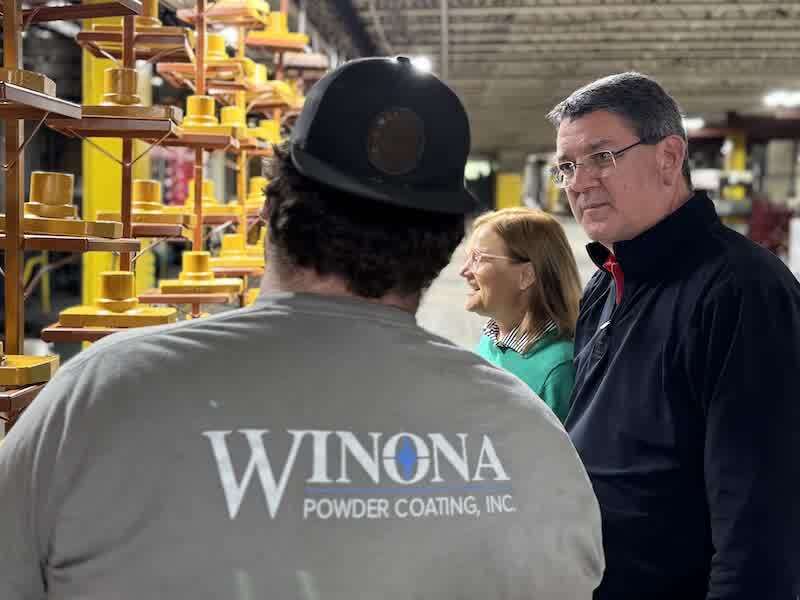 Some of Winona Powder Coating’s greatest success stories involve growing alongside customers that started small and eventually became major accounts.
One example is Cable Bullet, a Warsaw-based company that manufactures railing systems. Before partnering with Winona Powder Coating, inconsistent finishing quality had become a bottleneck that limited growth.
They had gone through two or three powder coaters, Visker says, but after switching to Winona, the relationship transformed the company’s operations.
“The owner said, ‘All I used to think about was powder coating. Now I don’t think about it at all,” Visker said.
Another example involves AAC, a pest control products company that began as a startup and has since grown into one of Winona’s larger customers. Those stories reinforce the company’s customer partnership philosophy.
“We don’t want to be a bottleneck,” Visker said.
Controlling Coating Thickness on Castings
Winona Powder Coating has also developed specialized expertise in coating cast-iron components, which now account for roughly one-third of the company’s business.
“When I bought the company, we were sub-10% cast iron,” Visker said. “At this point today, we’re probably 35% cast iron.”
The company’s experience with castings has led to highly refined processes for controlling coating thickness on components that require post-coating machining.
“If you get much over four or five mils and go to machine the part, you don’t get a clean machine line,” Visker explained.
“We’ll continue to grow organically, but we’ll also look down the road at acquisition opportunities,” he said.
That expertise became significant enough for the company to publish technical content highlighting its ability to control coating thickness and support post-machining applications.
“It was one of the highest open-rate articles we’ve ever done because it was a problem people had,” he said.
To support growing casting volumes, Winona installed a dedicated powder coating line in 2019 featuring an approximately 900-foot conveyor system with extensive cooling capacity.
“You’ve got to be able to pack that part off,” Visker said.
The Future of Winona Powder Coating
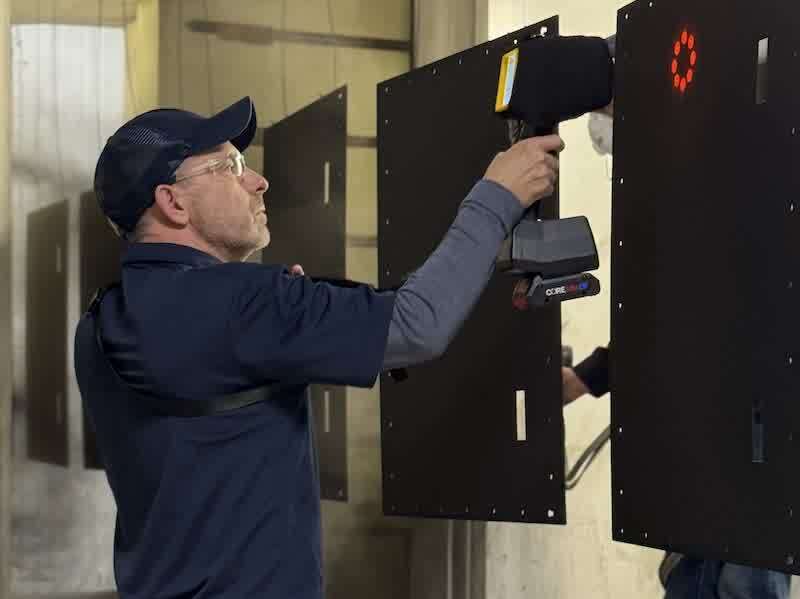 Looking ahead, Visker sees continued opportunities for both organic growth and future acquisitions.
“We’ve got plenty of capacity left to sell,” he said.
The company expects to continue expanding production shifts while evaluating future growth opportunities throughout the Midwest.
Importantly, Visker emphasizes that Winona Powder Coating is intended to remain a family-owned company.
“This is a long-term family holding,” he said. “We have no intention of selling the company.”
His son is scheduled to join the company after earning a degree in business analytics from the University of Denver and gaining manufacturing experience elsewhere.
At the same time, Visker believes future acquisition opportunities may emerge as aging business owners without succession plans seek alternatives to private equity ownership.
“We’ll continue to grow organically, but we’ll also look down the road at acquisition opportunities,” he said.
After more than two decades leading the company, Visker still approaches the business with the same entrepreneurial mindset that led him to purchase it in the first place.
“I’m a hardcore entrepreneur guy,” he said. “We just buckled up and went for the ride and took opportunities as they came at us.”
That willingness to embrace risk, invest in people, solve difficult technical problems, and continually evolve has helped transform Winona Powder Coating into one of the Midwest’s most respected finishing operations.
And for Visker, the mission remains unchanged.
“Our focus,” he said, “is on solving problems.”
Visit https://www.winonapowder.com.