For decades, manufacturers across North America have known the company in Blaine, Minnesota, as Arrow Cryogenics, which reflected the specialized process that helped launch the business in 1983 and establish its reputation in the medical manufacturing sector.
 Ryan SeversonBut as the company expanded into anodizing, electropolishing, passivation, laser marking, blasting, coating technologies, and dozens of other finishing services, the name no longer told the complete story.
Today, the company is known as Arrow Finishing, a name that more accurately reflects the breadth of services it provides to thousands of customers nationwide.
The rebranding was more than a marketing exercise. It recognized that Arrow had evolved into something much larger than a cryogenic deflashing operation. Ryan Severson, Arrow’s Business Development Manager, saw the issue firsthand when he set up a booth at a trade show.
“People were walking by, and I kind of laugh to myself now looking back,” he says. “I had to stop people and say, ‘Hey, do you send parts out for anodizing?’ When they’re looking at our name going, ‘What?’”
A Comprehensive Finishing Partner
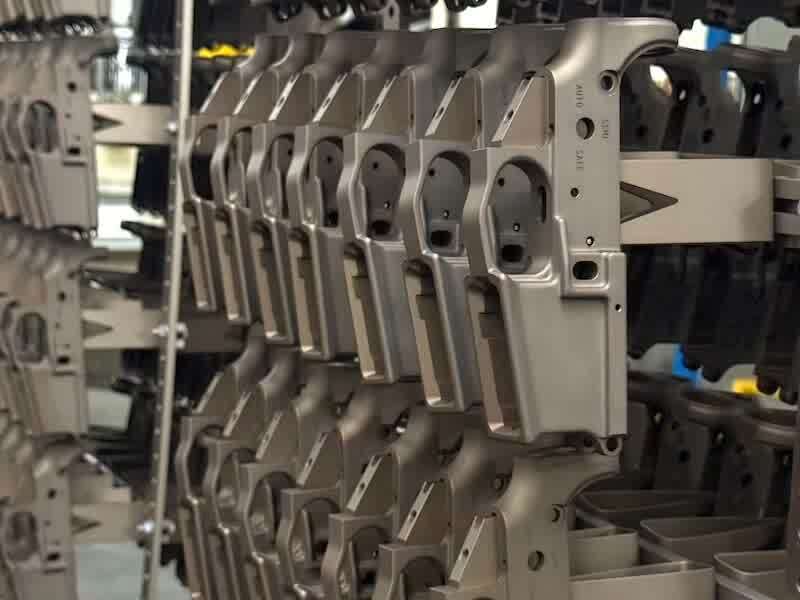 The Cerakote ceramic-based coating has gained significant traction in military, defense, firearms, industrial, and specialty applications because of its durability, corrosion resistance, and appearance.The old name reflected only one portion of the company’s capabilities. The new name immediately communicates what customers need to know: Arrow Finishing is a comprehensive finishing partner offering an extensive range of surface treatment, deburring, coating, polishing, and metal finishing services under one roof.
That capability has become increasingly important as manufacturers seek to simplify supply chains, shorten lead times, and work with finishing partners that can provide multiple processes without shipping parts between several vendors.
“We’re really meeting people from all over the country,” Severson says. “And it’s been great being able to meet those people face to face because they don’t have places to go where they can get all of these different services done under one roof, which really helps them with lead time, cost, quality, everything.”
That one-stop-shop approach has become a defining characteristic of Arrow Finishing and one of the key reasons the company continues to grow more than four decades after its founding.
From a Garage Startup to a National Finishing Provider
 Arrow’s story began in 1983 when founder Steve DeMotts launched the business in his garage. What started as a small operation focused primarily on deburring quickly grew as customers requested additional finishing services.
As demand increased, the company expanded into a dedicated facility in Blaine, Minnesota, where it remains today. From his garage, DeMotts expanded and built a shop in Blaine, and they have been in the same location ever since.
The original deburring services became the foundation for an increasingly diverse portfolio.
“Basically all of the deburring operations spurred our growth into all these different things that we do, which is about 40-plus internal deburring, finishing, plating services here,” he says.
Today, Arrow serves approximately 2,000 active customers across the United States and supports industries ranging from medical device manufacturing and defense to automotive, industrial equipment, firearms, and aerospace-related applications.
Understanding Cryogenic Deflashing
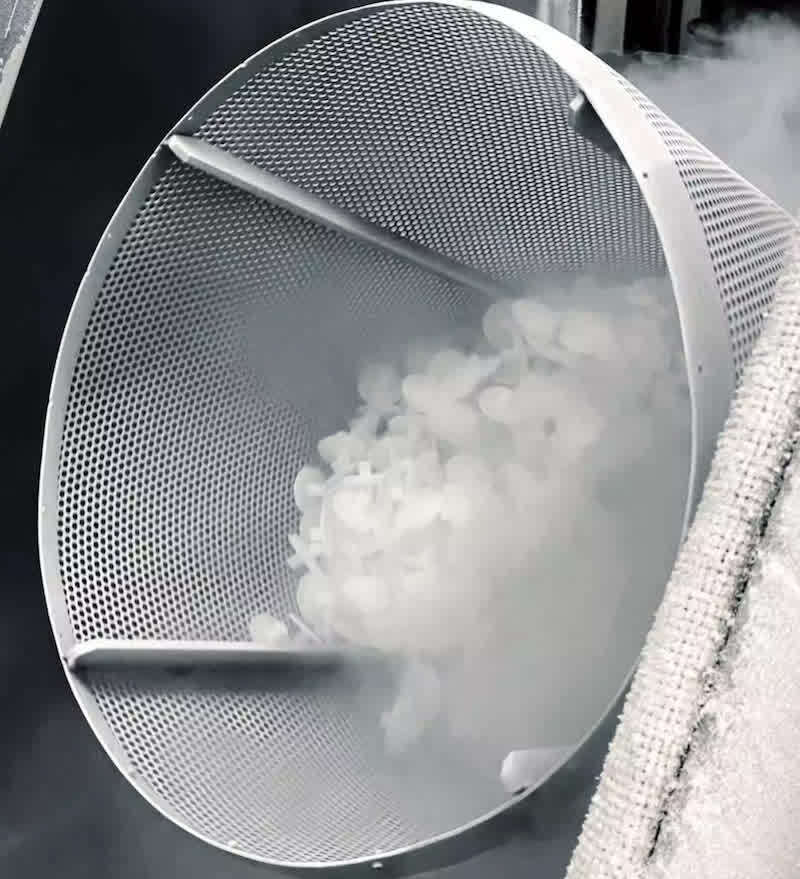 Cryogenic deflashing is a technique employed to remove flash, mold lines, and excess material from plastic, injected moldings, silicone, and rubber components.Although the company name has changed, cryogenic processing remains one of Arrow’s signature capabilities. The technology is particularly valuable for molded plastic and silicone components that develop flash as tooling wears over time.
“Everybody who makes molded parts starts with flash-free parts,” Severson explains. “That’s their goal. The mold eventually starts to wear out and creates a little bit of flash along the parting lines.”
Arrow’s cryogenic process removes that excess material without damaging delicate components.
“We take those parts, and we put them in the machines,” Severson says. “We’ll turn the temperature down to whatever that material can handle, let’s say minus 150.”
As the parts are cooled, the unwanted flash becomes brittle.
“While the parts are being frozen, they’re actually being protected because they’re frozen,” he says. “That flash becomes brittle, and we’re blasting the part with a plastic-type media, which basically snaps the flash right off.”
The process has proven especially valuable for small medical components, including ear tube products that helped establish the company’s early reputation.
Because molded plastic and silicone parts are lightweight and easy to ship, Arrow receives cryogenic processing work from customers throughout North America and beyond.
“We still have cryogenics as one of our major services here,” Severson says.
A Diverse Portfolio of Finishing Services
What distinguishes Arrow today is the sheer range of processes available within a single facility. The company has grown far beyond its cryogenic roots to offer a broad menu of finishing solutions designed to address the increasingly complex requirements of modern manufacturing.
These capabilities include cryogenic deflashing, deburring, anodizing, hardcoat anodizing, electropolishing, nitric passivation, vapor polishing, laser marking, precision masking, grit blasting, surface texturing, Cerakote ceramic coatings, and various specialty finishing services.
“Literally the Twin Cities area here is just huge on medical manufacturing,” Severson says. “There are hundreds of machine shops in this area.”
Combining multiple operations under one roof creates efficiencies for customers while reducing logistics complexity.
For many manufacturers, Arrow effectively functions as an extension of their own production operations.
Surface Texturing for Medical Applications
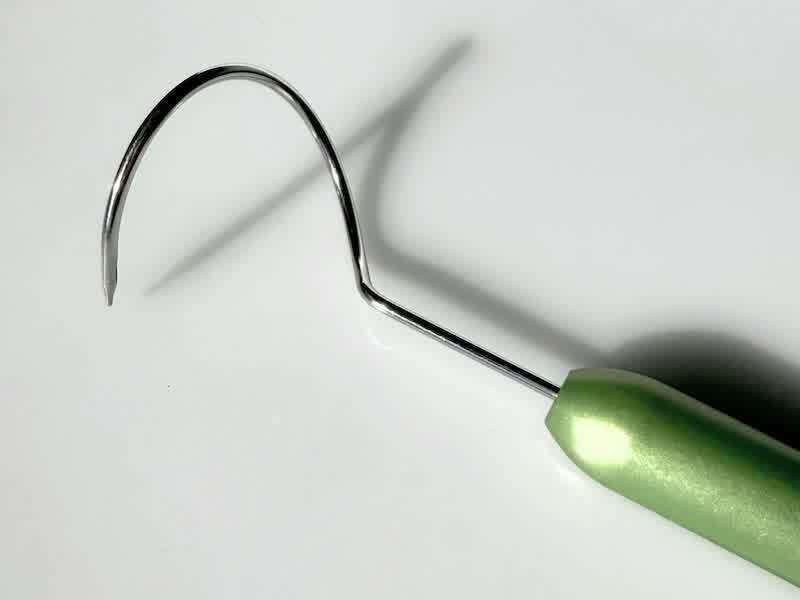 One area where Arrow has developed specialized expertise is precision surface texturing for medical devices. The company uses controlled blasting techniques to create specific surface characteristics on implantable components.
“We do quite a bit of work with the medical field side of things with grit blasting and specific masking and blasting certain areas,” Severson says.
These textured surfaces often play a critical role in device performance.
“A lot of what I’ve seen out there is medical applications, and they need the surface roughened so it adheres to the bone better,” he says. “We’re able to do that with precision blasting.”
Given the concentration of medical device manufacturers throughout the Minneapolis-St. Paul region, these capabilities have become increasingly important.
“Literally the Twin Cities area here is just huge on medical manufacturing,” Severson says. “There are hundreds of machine shops in this area.”
That ecosystem continues to generate opportunities for specialized finishing services that require precision, documentation, and strict process control.
Reading the Market Correctly
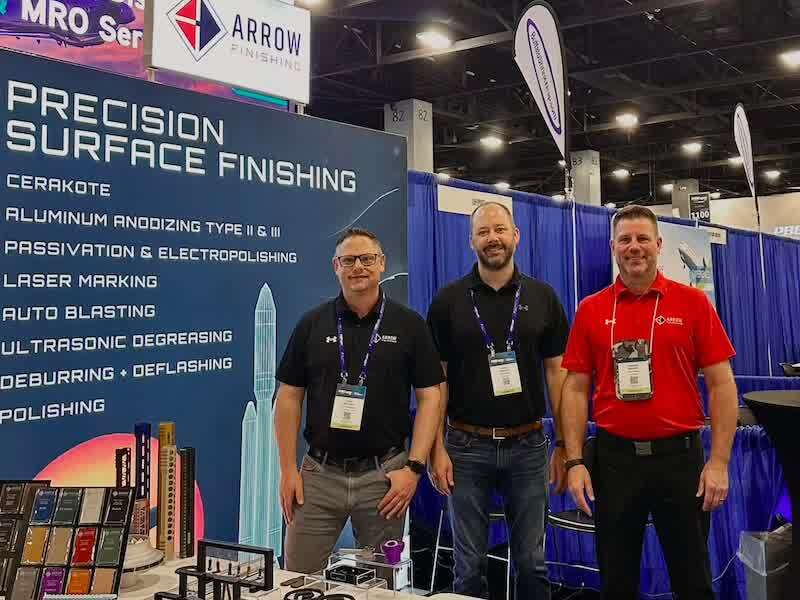 Arrow Finishing takes part in numerous manufacturing trade shows.One recurring theme throughout Arrow’s history has been management’s ability to identify emerging opportunities and invest before demand peaks.
Perhaps the best example is the company’s decision to enter anodizing. Arrow began building its anodizing operation in 2008 and officially launched the line in 2009, during one of the most challenging economic periods in recent history.
At the time, the decision seemed risky.
“We were all questioning the owner at the time,” Severson recalls. “‘What are we doing? We hardly have any work here. Why are we building an anodize line?’”
In hindsight, the move proved exceptionally successful.
“It just turns out that it was a genius move at that time,” he says.
The investment was driven by customer demand and market research.
“With some of the services that we were doing with blasting and laser marking and stuff like that, we were noticing the majority of this work was coming in or going out to anodizing,” Severson says.
Rather than continue sending that work elsewhere, Arrow began studying the market.
“We start questioning all of our customers on, ‘Hey, what’s your spend a year on this process? What’s your need?’”
The answers provided confidence that anodizing would become an important growth driver. “He just went full in on it,” Severson says. “And it was just perfect for this company.”
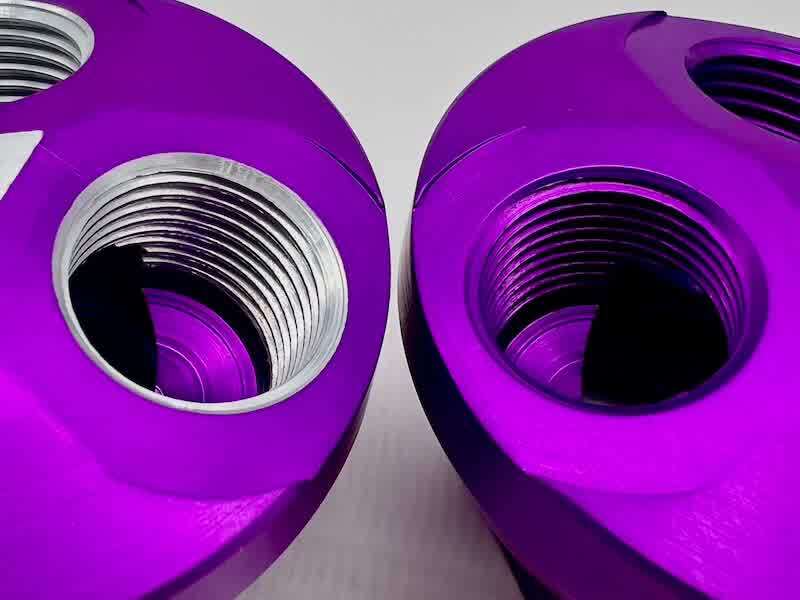
Today, anodizing and hardcoat anodizing remain major components of Arrow’s finishing portfolio.
Expanding Electropolishing and Passivation Capabilities
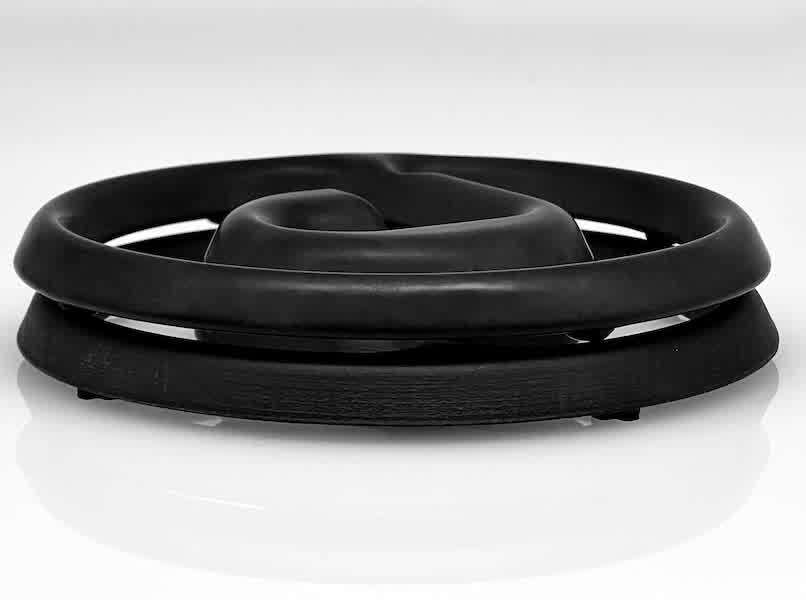 Arrow’s commitment to growth continued in 2020 with a significant investment in electropolishing and nitric passivation. Although the company had offered these processes for many years, rapid growth created the need for expanded and modernized operations.
“We’ve been doing passivation and electropolishing for many years,” Severson says. “Going back 20 years probably.”
As anodizing volumes increased, facility layout became increasingly important.
“We moved them to a different part of the building and created new lines to support the growth of our anodizing line and our masking department,” he says.
The company installed a new electropolishing and nitric passivation line in 2020, adding capacity while improving workflow throughout the facility. The investment reflected the growing importance of these processes, particularly for medical, industrial, and precision-manufactured components.
Electropolishing removes microscopic surface irregularities while enhancing corrosion resistance and cleanability. Nitric passivation improves stainless steel's corrosion resistance by strengthening the protective oxide layer on the surface.
For manufacturers operating in highly regulated industries, both processes have become increasingly important. The updated lines positioned Arrow to meet growing customer demand while creating space for additional expansion elsewhere in the facility.
Becoming a Certified Cerakote Applicator
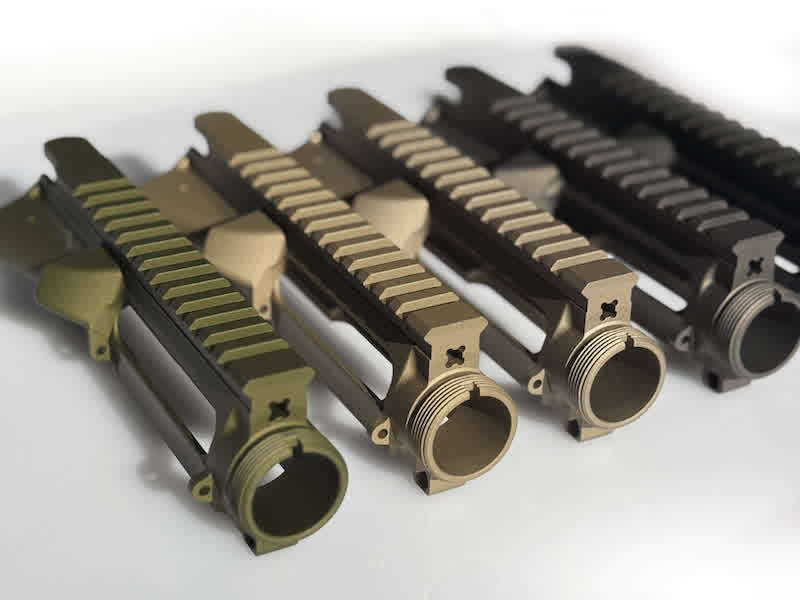 Arrow’s most recent growth story centers on Cerakote. This ceramic-based coating has gained significant traction in military, defense, firearms, industrial, and specialty applications because of its durability, corrosion resistance, and appearance.
The company entered the market after a customer approached Arrow with a major opportunity.
“One of our customers approached us with a pretty large project, and we decided to go all in on that,” Severson says.
The decision led Arrow to become a certified Cerakote applicator in 2024. Demand quickly exceeded expectations.
“Since then we have really expanded,” Severson says.
The company’s investment included not only coating capabilities but also advanced automation.
“We just got one of our robots going,” he says. “We had a custom robot made just for that process.”
Building a Custom Automation Solution
Rather than buying an off-the-shelf system, Arrow developed a custom robotic solution designed specifically around its coating requirements.
“We basically had our robot built from the ground up,” Severson says. “We sought out several different robot manufacturers, and we wanted to go with one that we could grow with.”
The robot was never intended to replace skilled operators. Instead, it was designed to improve consistency and repeatability on challenging projects.
“It doesn’t replace the actual operator, but it does help us with some of these more advanced, difficult jobs,” Severson says.
“It’s a ceramic paint coating that the medical or military defense work has really taken off with,” he says. “We’ve seen a reshoring effort with some big automotive players.”
Initially developed for a specific customer program, the automation system has since found broader applications throughout the operation.
“It was for a specific customer,” he says. “Now it’s also morphed into other things.”
The experience reinforces a familiar pattern at Arrow: customer needs frequently become catalysts for investment and innovation.
Supporting Medical, Defense, Automotive, and Firearms Markets
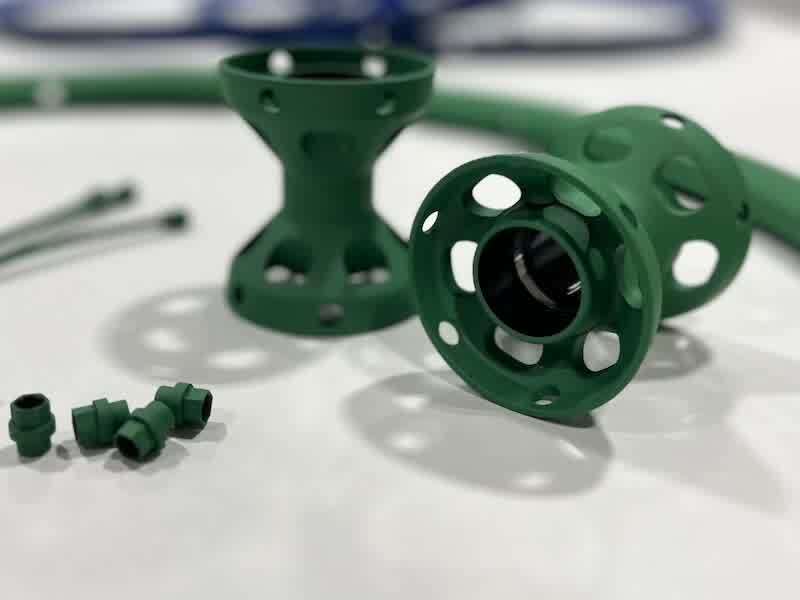 Arrow’s diversified customer base helps insulate the company from fluctuations in any single industry. Medical manufacturing remains a major market segment, but defense, automotive, industrial, and firearms applications continue to expand.
“Medical defense work is booming,” Severson says. “We’re seeing a large influx with that type of work.”
Cerakote has been a major contributor to that growth.
“It’s a ceramic paint coating that the medical or military defense work has really taken off with,” he says. “We’ve seen a reshoring effort with some big automotive players.”
Those opportunities have included hardcoat anodizing projects tied to OEM programs and domestic manufacturing initiatives.
By maintaining a diverse customer portfolio, Arrow remains positioned to adapt as market conditions evolve.
Engineering as a Competitive Advantage
One of Arrow’s most significant investments in recent years has been its engineering team. The company now employs approximately four engineers who support estimating, specification review, process development, and customer consultation.
For many manufacturers, particularly those in medical and aerospace-related markets, finishing specifications can be extraordinarily complex.
“Every day our estimating team is being challenged with specifications,” Severson says. “These specifications are very complicated, very time-consuming to go over.”
The engineering team helps determine whether requirements can be met and what process modifications may be necessary.
“It really helps us move ahead of everybody else with that capability here,” he says.
The resource has become especially valuable when customers approach Arrow during product development.
“A lot of the people that contact us are engineers,” Severson says.
Those conversations often involve questions about feasibility, performance requirements, and process selection.
“My answer is anything’s possible,” he says. “Let me find out from my engineering team.”
Connecting customer engineers directly with Arrow’s technical staff helps accelerate problem-solving and improve project outcomes.
NADCAP Certification and Process Discipline
Arrow’s commitment to quality is further demonstrated by its NADCAP certification, achieved in 2017. For many manufacturers, particularly in the aerospace and defense sectors, NADCAP accreditation is an important qualification requirement.
The certification reflects the company’s focus on process control, documentation, quality systems, and continuous improvement. Combined with the company’s expanding engineering resources, NADCAP helps position Arrow as a trusted finishing partner for demanding applications.
Today, Arrow employs approximately 150 people and continues to hire as demand grows. The company typically keeps several positions open while expanding capabilities and supporting new customer programs.
In an industry where adaptability often determines long-term success, Arrow Finishing has built a business model around staying one step ahead.
Employee retention has been a major strength.
“We have a lot of people here that have been here for 10+ years,” Severson says.
Recruiting efforts benefit from employee referrals and a workplace culture that encourages long-term careers. Growth has created space challenges, but management continues exploring creative solutions.
The company is evaluating facility expansions, mezzanine systems, and workflow improvements designed to maximize available space.
“We do have a little space that we’re able to add on over here,” Severson says.
Those projects are intended to support continued growth in masking, anodizing, and other high-demand operations.
Staying With a Longtime Strategy
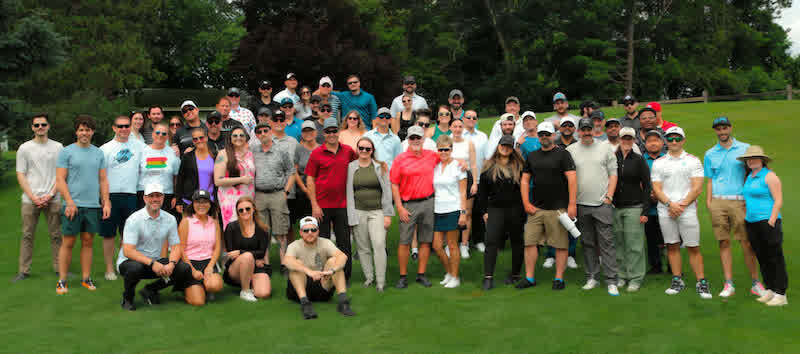 As Arrow Finishing looks ahead, the company remains committed to the strategy that has guided it for more than four decades: listen carefully to customers, identify emerging opportunities, and invest ahead of demand.
The company’s engineering team regularly evaluates new technologies, while trade shows such as IMTS provide opportunities to explore future capabilities.
“Danforth and I are always coming back pitching different ideas and seeing what the market is for it,” Severson says.
That mindset has repeatedly positioned Arrow for success, whether through anodizing in 2009, expanded electropolishing and passivation capabilities in 2020, or Cerakote certification and robotic automation in 2024.
From its beginnings in a garage to its current position as one of the Upper Midwest’s most diversified finishing providers, Arrow has shown it can evolve with the industries it serves.
The company may have changed its name, but the philosophy remains the same: understand customer needs, invest in the right technologies, and provide solutions that simplify manufacturing challenges.
The difference today is that the name finally reflects the full scope of what the company has become.
Arrow Finishing is no longer known solely for cryogenic processing. It is a comprehensive finishing partner offering dozens of specialized services, advanced engineering support, and a willingness to invest in the future before the rest of the market catches up. In an industry where adaptability often determines long-term success, Arrow Finishing has built a business model around staying one step ahead.
Visit https://www.arrowfinishing.com