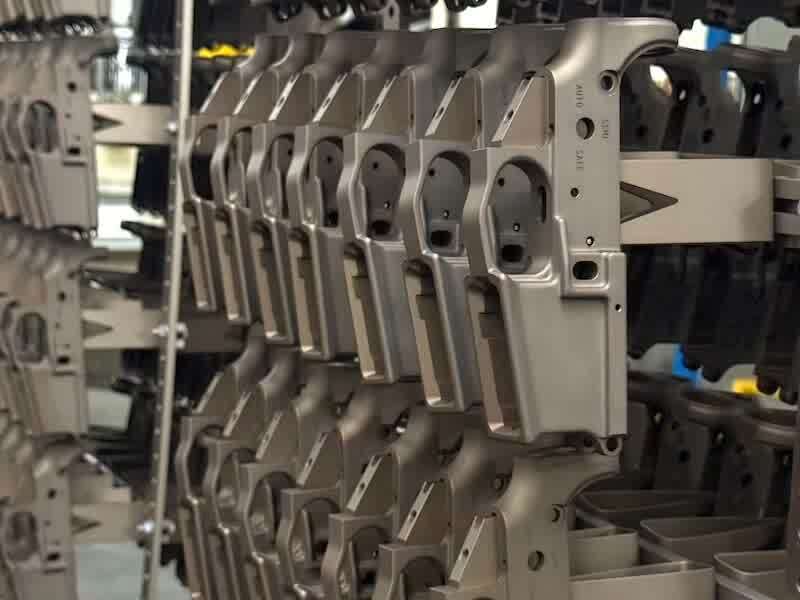



Electrostatic guns offer several benefits, including excellent finish quality and a very high transfer efficiency of up to 90%.
 Wendy HartleyThis high transfer efficiency matters because it helps you save money on paint, reduces VOCs (volatile organic compounds) and HAPs (hazardous air pollutants), potentially reduces permitting issues, and increases production. To take advantage of these benefits, you need to understand what materials you can spray, which coatings to use, and how to optimize the transfer efficiency of your manual electrostatic gun.
For starters, remember that you can spray almost anything with electrostatic spray guns. As long as the charged paint “sees” a conductive grounded surface, it will be attracted to it and can be painted in this manner. Though metal is often the first material people think of, wood, plastic, and rubber can also be sprayed electrostatically. Even nonconductive items can be sprayed with electrostatic spray guns, as long as they are placed between the applicator and a conductive, grounded surface, or if they are first sprayed conventionally with a conductive primer.
Determine the Correct Electrostatic Gun for Your Coating
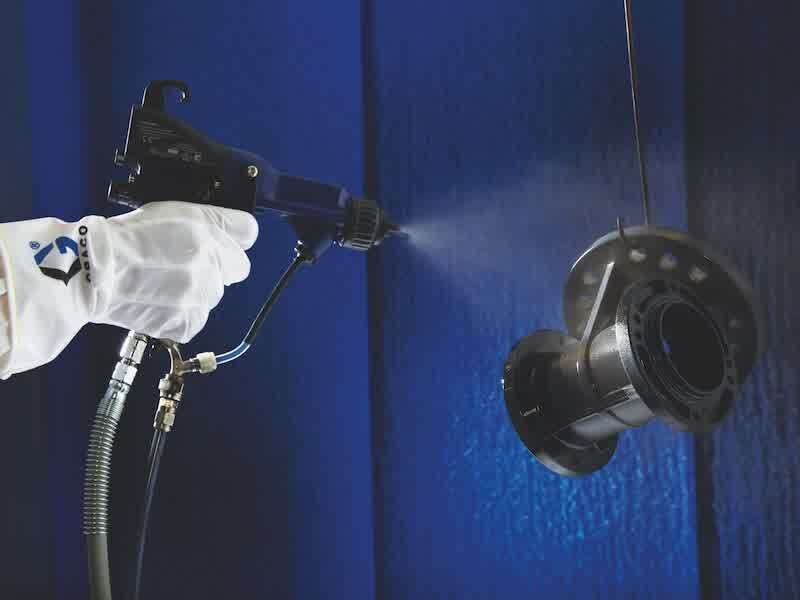 To determine the correct coating to use with your electrostatic gun, you must consider its “resistivity”. The materials, solvents, and reducers used in the manufacture of the coatings determine the “resistivity” of the coating. You can measure this with a paint probe meter, which measures resistance in megohms per centimeter. The best electrostatic results are achieved when the coating's resistivity is between 25 and 50 megohms per centimeter. Getting the paint formulated from the manufacturer for electrostatic use is typically the best solution.
To get the full benefit of electrostatic guns, check a few items. The first is proper gun setup. Proper air and fluid pressure are critical for transfer efficiency. Too much air pressure will cause turbulence in the sprayed material, resulting in excessive overspray and reduced transfer efficiency. The key is to use enough air pressure to get a high-quality spray pattern, but low enough to optimize transfer efficiency. Minimize fluid pressure to reduce material bounce-back on the substrate.
Spray pattern height is also important. Your spray pattern height needs to match the part you are spraying. Material blow-by from an overly large spray pattern reduces transfer efficiency. Size the tip to the largest spray pattern height for your parts, but no larger. You should also purchase a spray gun with a fan-pattern adjustment knob so the operator can adjust the spray-pattern height as part size varies.
Proper Operator Technique to Improve Efficiency
Operator technique can affect transfer efficiency by 10% to 30%. Because of this, operators should be trained on proper spray techniques to maximize transfer efficiency. Training should include spraying the right distance from the part, spraying perpendicular to the part, plus triggering and detriggering at the proper time.
Many factors in the spray booth can also affect electrostatic gun effectiveness. First, all components in the spray booth must be properly grounded to optimize electrostatic guns. This includes the operator, the parts being sprayed, the electrostatic gun, and other objects in the spray booth. Next, the spray booth and gun must be clean. Using gun covers and clean part hangers increases the material's ability to be attracted to the sprayed part.
Finally, the air conditions in the spray booth also impact the transfer efficiency of your electrostatic gun. Crossdrafts, downdrafts, and high-velocity air exhaust can deflect the paint away from the target, decreasing the operating efficiency of the electrostatic system. Temperature and humidity can also significantly affect electrostatic system efficiency, so ideally, the booth should be an enclosed, controlled environment.
If you’re not seeing the full potential of your electrostatic system, make sure you or someone on your team understands what materials can be sprayed, which coatings to use, and how to optimize transfer efficiency. Manufacturers often offer training that might be beneficial. By doing so, you should see not only increased production and reduced material usage, but also long-term cost savings.
Wendy Hartley has been a Worldwide Product Manager for Graco industrial equipment since 2004. With 20 years of experience, she has become an expert in manual and electrostatic applicators, spray packages, and plural component manual systems. At Graco, she has launched well over 20 products used in factories worldwide, with a commitment to continual improvements that address manufacturers’ ever-changing needs. Hartley also earned a Master of Business Administration (MBA) from the University of Minnesota. Visit https://www.graco.com.