
Dürr has developed X.Cellify DC, a new kind of dry coating for electrodes: a free-standing film of active material that is 100% recyclable until it is laminated onto the collector foil.
This significantly reduces active material waste. The proof-of-concept for the process shows that the technology works reliably and is scalable. This paves the way for pilot projects on a gigawatt scale – initially for lithium-ion batteries and, in the future, for solid-state batteries as well.
Electrode production has so far relied almost exclusively on wet coating, in which the cathode and anode materials are applied as solutions to metal foils and then dried in an energy-intensive process. The technology developed by Dürr, in collaboration with partners, does not require solvents or drying ovens, as it produces electrodes from a dry powder mixture. The dry battery material is pressed into a film using the Activated Dry Electrode process by development partner LiCAP Technologies. The new X.Cellify DC development covers all process steps – from dosing, film formation, and densification to lamination onto the collector foil.
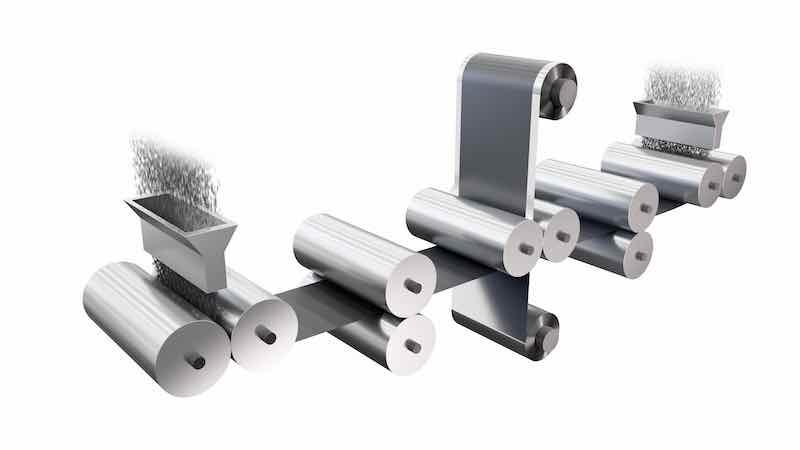 In Dürr's dry coating process, a free-standing active material film is formed, densified, and then laminated onto both sides of the collector foil.
Less Energy, Less Production Space
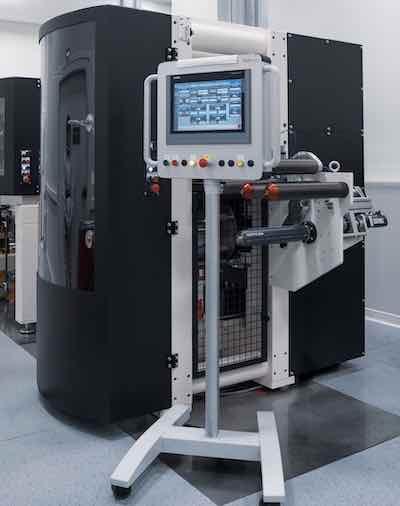 With its proof-of-concept plant in France, Dürr has demonstrated the reliable functioning of this innovative process.Dry coating offers clear advantages over conventional wet coating in electrode production: it reduces space requirements by up to 65% and lowers energy consumption by up to 70%. These savings are mainly due to the elimination of dryers and solvent recovery.
“The successful proof of concept is a major step forward for us. We have demonstrated that the new type of dry coating with a free-standing film works reliably and delivers consistently high quality. It can be scaled up, making it the basis for initial pilot projects in industry,” says Bernhard Bruhn, Vice President of Dürr's Global Business Unit LIB. The process is suitable for both today's lithium-ion batteries and solid-state batteries.
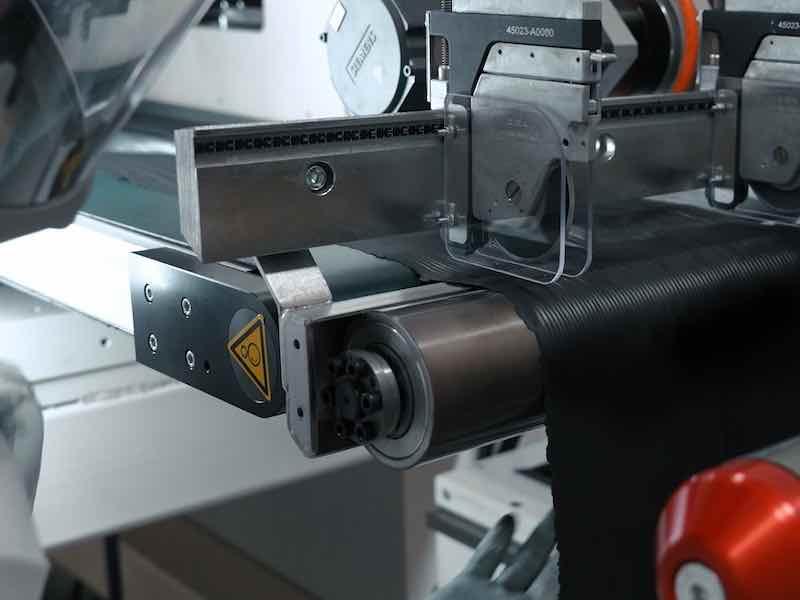
The proof-of-concept plant is located in Chassieu in southern France, in a dry room environment at Ingecal, a Dürr Group company specializing in calender technology. Calenders are machines with rollers that compress materials into an even layer. Dry coating starts with film formation: A horizontal calender forms the dry powder into a film. It is referred to as “free-standing” because it runs through the machine without a carrier foil. In the second step, additional calenders compress the film to the desired layer thickness, density, and porosity. Finally, one film is laminated to the collector foil on each side, thus forming the electrode.
“Since we don't need a carrier foil until the final step, we can return the film to the process in its entirety if it does not meet the desired specifications,” Bruhn says. “Thanks to the closed loop, no valuable active material is lost and we significantly reduce waste – an important point in battery production.”
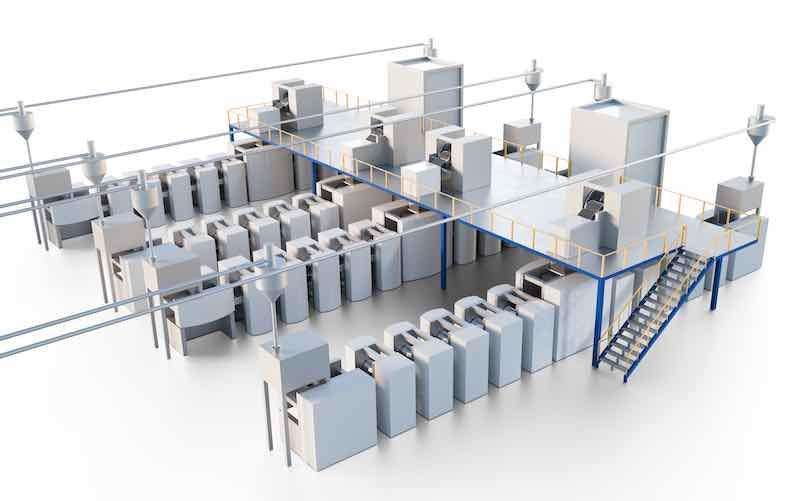 The next step is to use Dürr's X.Cellify DC dry coating system in industrial pilot projects.
Improved Further Processing
The special characteristic of X.Cellify DC lies in its web guidance: the system supports the free-standing film and compresses it before it is applied to the current collector.
The subsequent lamination onto the current collector requires less force than calendering in the wet coating process, thereby preventing foil deformation and improving its processability for the downstream steps of notching and stacking.
The new approach to dry coating combines Dürr's expertise in electrode manufacturing and system integration, Dürr Ingecal's high-precision calenders, and LiCAP's patented Activated Dry Electrode technology.
“To take the next step, we are actively seeking pilot partners in the industry for gigawatt-scale projects,” Bruhn says. “This will enable us to bring the technology into real production environments – whether for electric cars, stationary storage, or other applications.”
The Dürr Group is one of the world's leading mechanical and plant engineering firms, with particular expertise in automation, digitalization, and energy efficiency. Its products, systems, and services enable highly efficient and sustainable manufacturing processes – mainly in the automotive industry and for producers of furniture and timber houses, but also in sectors such as the chemical and pharmaceutical industries, medical devices, electrical engineering, and battery production. In 2024, the company generated sales of €4.7 billion. The Dürr Group has around 18,400 employees and 139 business locations in 33 countries. As of January 1, 2025, the former divisions Paint and Final Assembly Systems and Application Technology were merged to form the new Automotive division.
Visit www.durr.com.