
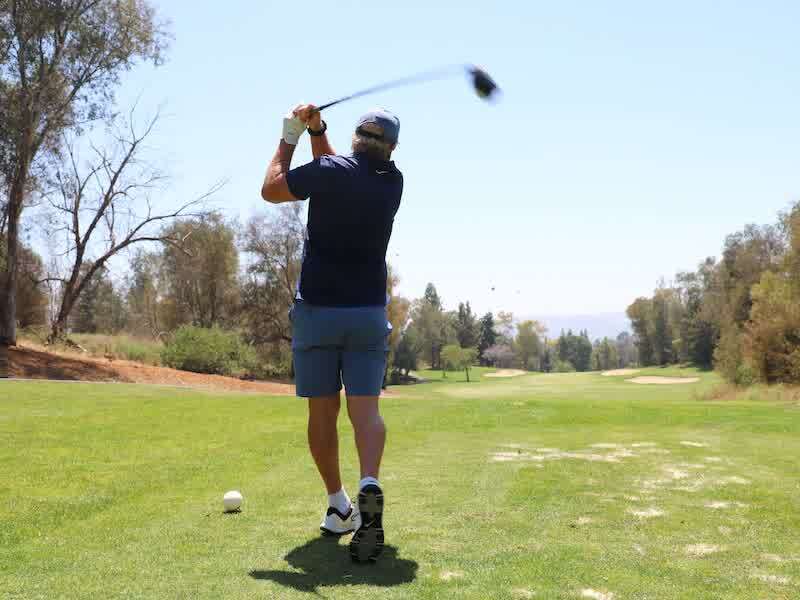
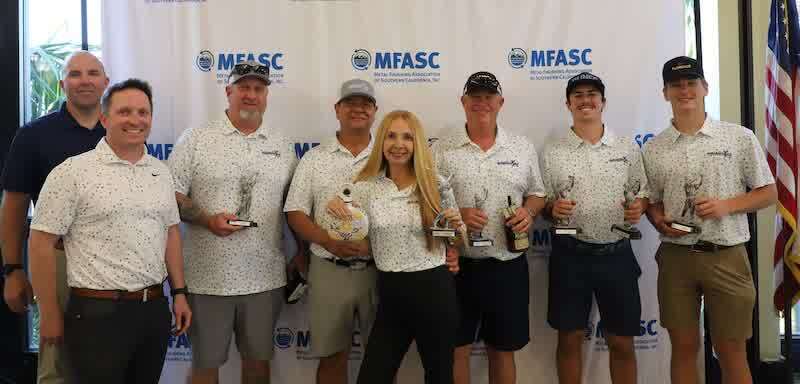
The Metal Finishing Association of Southern California’s annual golf outing on May 11 brought together the region’s surface finishing community for a day focused on networking, advocacy, and industry support — while also generating a record amount of fundraising revenue for the association.
According to Golf Co-Chairman Dan Zinman of Miles Chemical, this year’s event drew strong participation from throughout the Southern California finishing industry. It highlighted the growing importance of industry collaboration as manufacturers continue facing regulatory and public perception challenges. The other co-chairs of the golf comittee were Justin Guzman and Beau Zinman.
“This year we are happy to report that, between the golf tournament and dinner, we had 100 attendees and 20 sponsors, generating approximately $35,000 for the association,” Zinman said.
The annual golf outing has become one of the Metal Finishing Association of Southern California’s signature events, attracting platers, anodizers, suppliers, consultants, equipment manufacturers, and service providers from across the region. The event serves as both a networking opportunity and a major fundraiser supporting the association’s advocacy and educational efforts.
Opportunity to Reconnect
For many in attendance, the tournament represented an opportunity to reconnect with customers, suppliers, and colleagues outside the pressures of daily operations.
“The objective of the networking portion is to allow everyone to connect — away from the office — with others in the industry, including your customers, suppliers, and fellow industry associates,” Zinman said.
That networking mission has become increasingly valuable for California’s finishing industry as companies continue navigating complex environmental regulations, workforce challenges, and changing economic conditions.
The Metal Finishing Association of Southern California has long played an active role in representing the interests of plating, anodizing, polishing, and related finishing operations throughout the state. Through advocacy, education, and outreach, the association helps members respond to legislative and regulatory developments that impact manufacturing operations.
This year’s golf outing reflected broad support from throughout the finishing supply chain.
“California continues to face significant challenges with regulatory agencies,” Zinman said. “We support modern science and fair regulations, but we oppose legacy technology and the mindset of elimination.”
Twenty companies participated as sponsors for the event, supporting everything from meals and beverage carts to contest holes and tee signs.
Strategic Partner sponsorship support came from MacDermid Enthone Industrial Solutions, while Miles Chemical served as Executive Partner sponsor.
Dinner sponsors included Aircraft X-Ray Laboratories and TrueLogic Company, while lunch sponsorship came from KKAJ, LLP CPA Firm.
Additional sponsors included Sheffield Platers, MetalChem, Bowman Plating Company, Gannon & Scott, Leavitt Pacific Insurance Brokers, Palm Commodities International, and Hitachi High-Tech America.
Tee sign sponsors included Atotech, EME Plating, General/Brite Plating, PM Sales, Pro-Chem Corporation, One-Plate, Ronatec, and Technic Inc.
Fundraising Remains Critically Important
While the golf outing has become a popular social event within the industry, Zinman emphasized that the fundraising aspect remains critically important to supporting the association’s ongoing work.
“The fundraising objectives are twofold,” Zinman said. “First, notice the bold three letters in ‘FUNdraising’ — we want everyone to have fun.”
He added that event organizers intentionally focus on making the tournament enjoyable to encourage long-term participation by industry professionals.
“In our planning meetings, we discussed how the fun factor is key to encouraging future participation by our attendees,” Zinman said.
The second goal, however, is to help finance the association’s advocacy initiatives as California manufacturers continue to face increasing scrutiny from regulators and policymakers.
“Second, we focus on the funds raised and how the association utilizes them,” Zinman said.
“Not only do they bring a wealth of experience and knowledge regarding how legislators and regulators operate, but they also serve as staff for the California Metal Coalition and the American Foundry Society of California — industries with which metal finishing closely aligns.”
California’s metal finishing industry continues operating in one of the nation’s most heavily regulated manufacturing environments. Environmental compliance requirements surrounding wastewater treatment, emissions, chemical management, and permitting have placed significant operational and financial pressures on finishing companies throughout the state.
Industry associations such as MFASC continue working with legislators, regulators, and scientific experts to advocate for policies they believe fairly balance environmental concerns with the realities of modern manufacturing.
“California continues to face significant challenges with regulatory agencies,” Zinman said. “We support modern science and fair regulations, but we oppose legacy technology and the mindset of elimination.”
Substantial Financial Support Needed
According to Zinman, those advocacy efforts require substantial financial support.
“These advocacy efforts come with costs — not only for the scientific work, but also for lobbying in Sacramento,” he said.
Beyond regulatory issues, the association is also focused on improving public awareness of the finishing industry and strengthening its image among younger generations and surrounding communities.
Manufacturing industries throughout California have increasingly emphasized workforce development and public outreach as companies attempt to attract younger workers into technical careers.
“Due to the pervasive ‘not in my backyard’ perception of metal finishing, we are also working hard to enhance our image in the community, with the next generation, and through public relations efforts,” Zinman said.
Association leadership believes outreach and education will play an increasingly important role in the future sustainability of California manufacturing.
Helping guide those initiatives are Executive Director James Simonelli and Staff Assistant Laura Adams Hoppe, who Zinman credited for bringing extensive legislative and regulatory knowledge to the organization.
“Leading all of our efforts is our relatively new Executive Director, James Simonelli, and Staff Assistant Laura Adams Hoppe,” Zinman said. “Not only do they bring a wealth of experience and knowledge regarding how legislators and regulators operate, but they also serve as staff for the California Metal Coalition and the American Foundry Society of California — industries with which metal finishing closely aligns.”
Those relationships have become increasingly important as multiple manufacturing sectors collaborate on issues affecting industrial operations throughout the state.
Close-Knit Nature of Finishing Industry
The golf outing itself reflects the close-knit nature of the Southern California finishing industry, where competitors, suppliers, and customers often collaborate on broader industry concerns despite competing in the marketplace.
For many participants, the event provided a valuable opportunity to strengthen business relationships in a more relaxed environment than a trade show or conference floor.
The strong turnout and record fundraising total also demonstrated continued support for the association’s mission during a period when manufacturers face mounting economic and regulatory uncertainty.
California’s surface finishing industry remains an essential part of numerous supply chains, supporting aerospace, defense, electronics, automotive, medical, and industrial manufacturing sectors throughout the state and across the country.
As those industries continue evolving, organizations such as the Metal Finishing Association of Southern California remain important resources for advocacy, technical education, regulatory guidance, and industry networking.