

A paradigm is a standard model or framework for how something should be done. It’s a focus or a set of shared assumptions that shapes how you perceive things and solve problems.
 Eric Svenson Sr.Abnormalities occur over time that the existing paradigm can’t adequately explain. The industry enters a crisis phase when these pile up, as is happening today in the hard chrome and other plating industries.
Hard chrome plating (HCP) is a business that’s vital to industry and national security. Numerous manufacturers and job shops apply it, but today’s HCP situation is far from its model paradigm. It’s suffering an overlooked and gradual drift from the ideal. Consider the following three conditions:
A Brain Drain Exists in Many Operations
Many HCP applicators are experiencing a brain-drain without even realizing it. This causes them to perform work out of habit or from improper instruction. The workers who make processing errors aren’t incompetent; they just haven’t yet developed the skills needed to operate the process correctly. Hard chrome plating is a unique trade that requires a specific skill set that’s only acquired through specialized training.
An unskilled workforce diminishes process efficiency and increases rework and application costs. The effect is an overhead cost that’s much higher than needed and reduced profits.
The inefficiency created by an improperly trained workforce is one problem. A potentially worse issue is the lower plating quality and the resulting delayed delivery times. This opens the door for competitors who are better positioned and better trained. The resulting loss of business can be devastating.
The solution to the brain drain problem lies in adopting two policies. Some corporate managers will oppose these without realizing the short and long-term benefits they provide. A forward-looking company will adopt the following if longevity and strategic market positioning are important:
Training the Workforce
The workers should be trained in both the technology involved and the particulars on plating the parts being processed. This includes both the tank-side workers and their supervisors. The supervisors, obviously, should have the most training and technical knowledge.
Both job and captive plating operations should make renewed operator training a top priority. A huge tactical mistake is overlooking worker training updates or assuming that hand-me-down information is adequate. Newer procedures and techniques have been developed to address many of the problems existing operations are experiencing. These are mostly unknown to those without access to the current technology.
Operating a HCP facility without knowing the true costs is like flying in the dark without instruments. You hope and pray for a successful outcome but are often left disappointed.
Special on-site training programs are available, tailored to a particular operation. This includes newer processing technologies and what’s most effective for processing a specific part. This training can update the operating parameters, tweak the processes, and address any quality issues that may exist. This outside expertise often solves problems that aren’t always recognizable because some deficiencies involve several unseen factors.
Shorter annual refresher training is also recommended to keep a company’s technology up to date and maintain operations at peak production efficiency.
Paying the Workers a Decent Wage
The wages should be sufficient to encourage workers and supervisors to remain on the job and grow with the company. For OEM operations, the ideal situation is for working in the plating department to be the most preferred job in the plant.
The Application is Often Undersold
 Few HCP applicators know their true costs and thus often undersell their product. Others fail to realize the value their HCP coating brings to the table and underprice their service. Both cases result in less revenue available to maintain the business in a healthy state. The typical results that follow include:
- Lower wages paid to the workforce resulting in the above brain drain problem.
- Less investment capital available for equipment maintenance and upgrades.
HCP applicators must know their true costs. This cost is often higher than many think, especially for the job shop operations. This disconnect results in their underselling their service.
A detailed Excel program is available that covers all cost aspects of the overhead and the process application. It projects the actual production cost for a wide variety of part types, configurations, and quantities. It also includes various profit margins used to determine accurate selling prices for quotations to the customer.
Operating a HCP facility without knowing the true costs is like flying in the dark without instruments. You hope and pray for a successful outcome but are often left disappointed. Accurate calculations of various per-part costs are critical for successfully operating a hard chrome business.
Resistance to Adapting Technical Improvements
For unknown reasons, there seems to be resistance in the HCP industry to adopting process improvements. This includes the equipment used, the chemical processes, the application procedures, and the training of the personnel responsible for the operation.
The general mentality seems to be to use what has always been used, in the same way it has been for decades. This completely overlooks the benefits of adopting the many improvements made over the years. The advances are numerous and include improved efficiency, increased production, reduced rework rates, enhanced deposit quality, advanced environmental protection, worker safety benefits, overhead cost reductions, and greater profitability.
Most forward-looking managers recognize that staying up to date with technology enables continued growth, staying ahead of the competition, increasing sales, and increasing revenues. But that approach seems to evaporate when hard chrome operations are involved.
Chromium metal is on the 2025 revised list of critical minerals essential for our national security.
As an example, walk into a typical hard chrome shop in 1970 and again in 2026, and you will hardly notice the difference. It’s like a step backward in time. Nothing has been updated in over 50 years for the processes, the equipment, or the procedures used. A half-century with no improvement; that’s pretty astonishing.
Here are some of the developments those operations have missed during that time:
- Significant equipment design improvements.
- The use of conforming anodes and eductor agitation.
- Bath impurity control for improved quality and lower costs.
- Using the updated High-Efficiency plating process.
- The application of Sustainable Hard Chrome plating: zero Cr air discharge and safer workers without using fume suppressants; and absolute compliance regardless of how low the regulations are changed to.
Growing and Sustaining the Hard Chrome Operation
Some smaller job shop operations may be planning to sell the business or simply retire and close the operation. These may not warrant additional capital investments; instead, they would simply maintain the status quo. However, if the plating operation plans to continue, making critical improvements that benefit the business is always considered a smart investment.
The survival, growth, and success of today’s hard chrome operations depend on the following seven critical factors:
- Retaining a skilled labor force and updating their training.
- Using modernized equipment components.
- Using more efficient and advanced chemical processes.
- Controlling the bath impurities and components within their desired operating ranges.
- Following the newer treatment procedures and avoiding shortcuts.
- Inventorying sufficient chemicals and replacement equipment for supply disruptions.
- Maintaining and supporting a supplier that’s technically oriented for assistance when needed.
Some hard chrome applicators ignored several of these factors critical for their prosperity. Prudent managers realize that the operation suffers when any of these points flounder. Therefore, they allocate and invest sufficient capital to keep the operation up to date.
Critical Supplies
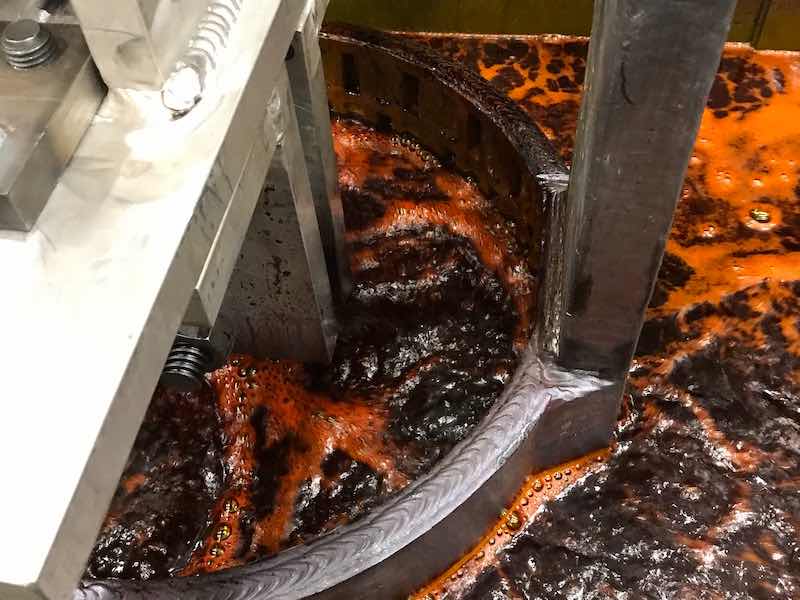 Chromic acid is obviously a critical ingredient for hard chrome operations; without it, the industry will cease to function. But there are some dark signals on the horizon. The chromic acid market is now controlled almost exclusively by China. This means they control both the supply and the price of the primary ingredient used in the process. Hard chrome plating in the USA will screech to a halt without this chemical ingredient. This has the potential to seriously hurt our industry, given the current geopolitical situation.
Chromium metal is on the 2025 revised list of critical minerals essential for our national security. Still, it is in the form primarily used to make stainless steel, not for chromium plating. There is no known national stockpile of chromic acid in the United States. All that exists is what’s inventoried by the individual chemical suppliers. The vast majority of these use China as their source.
The Chinese could easily use this as a weapon against us by either restricting its supply or by drastically increasing its cost. They have a history of doing this. First, they gain control of an industry, then they raise costs, and finally they restrict its availability and use it as an economic weapon. We have no reason to believe they won’t do the same with chromic acid.
Therefore, it’s a smart business practice to buy and maintain at least a year’s supply of chromic acid. This would buy some time to develop an alternative source while also protecting against future price increases. Smaller interim purchases would then be made to replace the material consumed during normal operations
and maintain at least a year’s supply in your inventory. Besides ensuring a supply, this also takes advantage of the lower cost of bulk purchases.
This wouldn’t be money wasted, because chromic acid is an asset while it sits in your inventory. This tactic reduces your costs and provides a buffer that could save your business in the event of a shortage.
Summary
Most hard chrome operations need modernization and upgrades to be productive, competitive, and sustainable. Here’s a short list of issues some shops are facing. Yours may or may not be one of them. However, good business managers will consider these points and take action whenever inconsistencies exist.
- Workers deficient in the processing skills needed for continual high-quality production.
- Supervisors who lack a background in hard chrome technology.
- High worker turnover from being underappreciated and underpaid.
- Missed profits when not knowing the true production costs and the available margins.
- The resistance mentality toward technical upgrades and the adoption of newer technologies.
- Clinging to the old process and overlooking the benefits of using a high-efficiency plating bath.
- Overlooking the significant benefits of maintaining the bath impurity levels within range.
- Expecting to maintain the operation without making the needed capital improvements.
- Ignoring the value of having a relationship with a technically oriented supplier.
- Keeping a minimal supply of chromic acid and not anticipating supply disruptions.
Eric Svenson Sr. is CEO of Plating Resources and a Master CEF and IUSF member. Visit www.Plating.com. If you have any questions or wish to explore this topic further, please contact Vicky at Vicky@Plating.com.