

For more than three decades, Great Lakes Metal Finishing’s management team has always expected the best and braced for the worst when it comes to keeping their high-volume zinc and zinc-nickel plating operations in production.
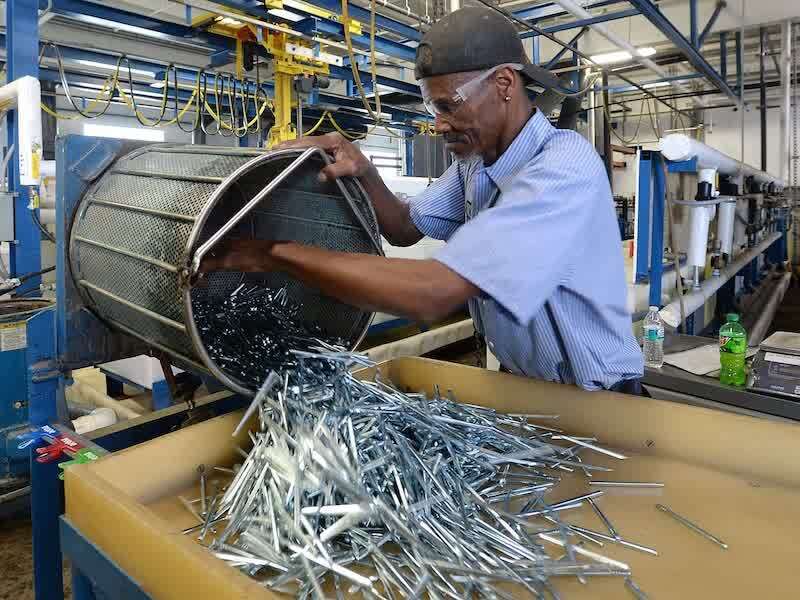 Great Lakes Metal Finishing currently operates nine plating lines, including five rack lines and four barrel lines.The Erie, Pennsylvania, company has steadily expanded its capabilities, footprint, and production capacity while staying true to a philosophy that has guided the business since its founding: continually reinvest in the company before customers ever feel the strain of aging equipment or capacity limitations.
That philosophy starts with company President Dennis Hartwig, whose long-term planning approach has shaped Great Lakes Metal Finishing from the beginning. According to General Manager Dave Wachter, the company’s growth over the years has never been based on standing still and waiting for problems to arise. Instead, the company has consistently looked ahead with one-year, three-year, and five-year plans designed to prepare for future demand, improve redundancy, and maintain the quality and delivery standards customers expect.
“That’s how Denny went when he started the company,” Wachter says. “That’s how he has always run it and has instilled in the leadership team here — don’t wait until it’s too late. Think ahead and be proactive about it. That’s why we have plans and try to look ahead and be prepared. You have to continually invest to keep your customers happy.”
“It still has its ups and downs,” Wachter says of the automotive market. “It’s a little bit slower right now. Luckily, we’re pretty well diversified.”
That proactive mindset is evident throughout the company’s Erie operation today. Great Lakes Metal Finishing currently operates nine plating lines — including five rack lines and four barrel lines — while serving customers across automotive, military, and general industrial markets throughout the United States and Canada.
The company specializes primarily in zinc and zinc-nickel electroplating, offering both rack and barrel processes for each. Great Lakes also performs significant nitric passivation work in both rack and barrel applications. Running two shifts with approximately 45 employees, the company has evolved into a sophisticated plating operation focused on specification-driven finishing work that requires consistent quality and dependable turnaround times.
Balanced Markets Help Stabilize Growth
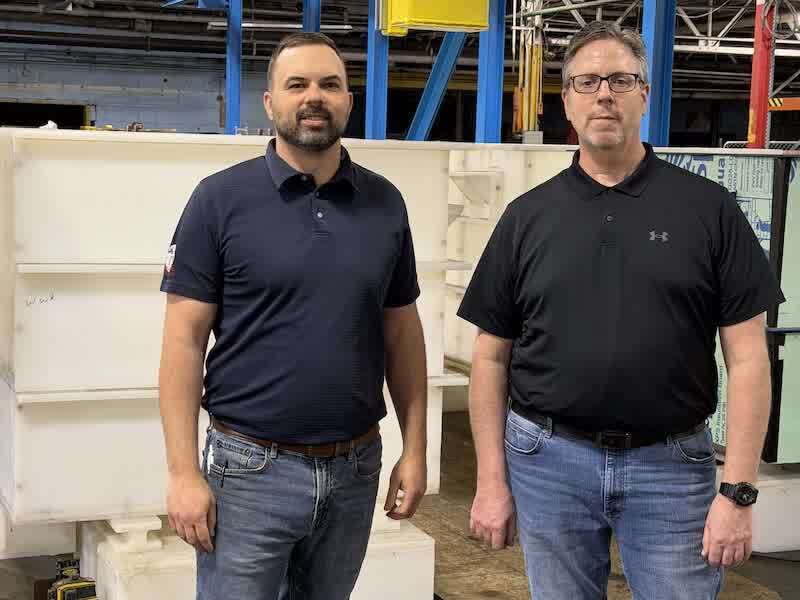 General Manager Dave Wachter, left, and Technical Director Dave Cadwallader lead a highly experienced team group focused on maintaining operational consistency and customer serviceOne of the company’s strengths is its diversification across multiple industries. Great Lakes Metal Finishing’s customer base is divided relatively evenly among automotive, military, and general industrial sectors. That balance has become increasingly important in recent years as economic swings and supply chain disruptions have created uncertainty in certain manufacturing segments.
“We’re about a third automotive, a third military, and a third general industrial,” Wachter says.
The mix was not always that evenly distributed. Earlier in the company’s history, automotive work accounted for a larger share of the business. Over time, however, Great Lakes diversified its customer base, particularly as general industrial fastener work expanded over the last decade.
“We used to be a little bit heavier in automotive,” Wachter said. “And we’ve seen some other areas, especially the general industrial fasteners, grow quite a bit over the last decade.”
That diversification has proven valuable during periods when automotive production slows.
“It still has its ups and downs,” Wachter says of the automotive market. “It’s a little bit slower right now. Luckily, we’re pretty well diversified, so if there is a slowdown in the automotive industry, it doesn’t hit us as hard as some others that may be entirely automotive.”
Military work has also provided steady demand, although Wachter noted that growth in that sector has not accelerated as much as some might assume given global events.
“We get customers in a lot, and when I tell them we’re a third military, they say, ‘Oh, the military must be really busy right now with everything going on in the world,’” he said. “It hasn’t grown quite as much as you would think with all the conflict around. But it’s a nice steady industry.”
Building Capacity Before It Is Needed
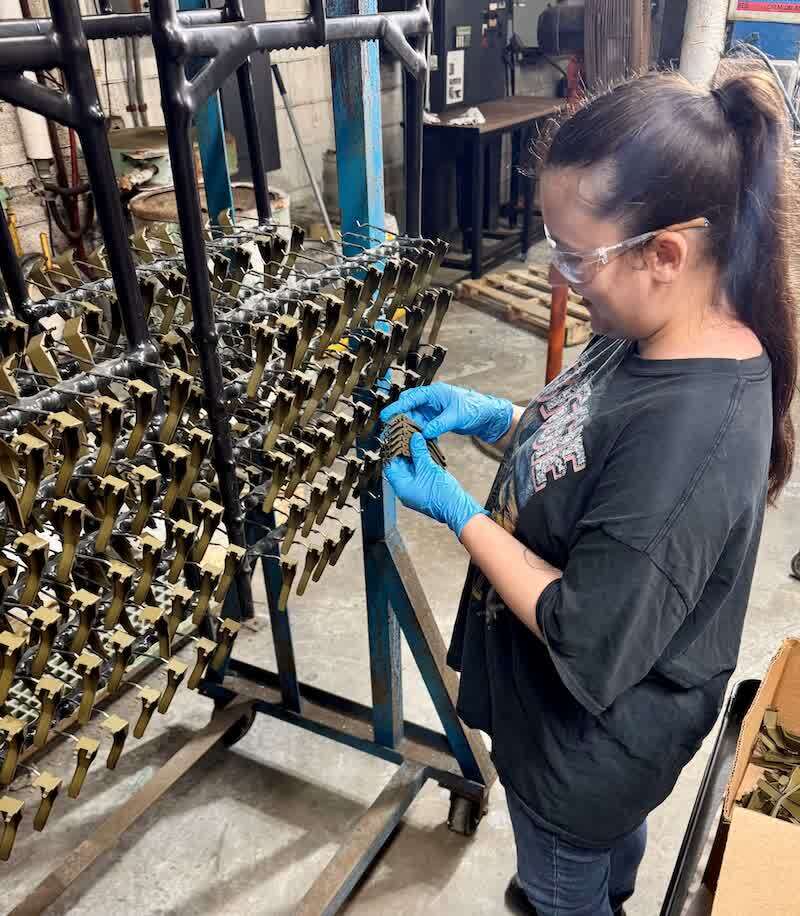 The company’s reinvestment strategy is perhaps most visible in its ongoing expansion projects. Great Lakes Metal Finishing is currently installing another zinc-nickel barrel plating line that will more than double the company’s zinc-nickel barrel processing capacity.
“Because of those plans, we’re putting in another barrel line right now,” Wachter said. “It’s a bigger zinc-nickel barrel line.”
The line is expected to come online during the summer and reflects growing customer demand, particularly in automotive applications.
“Right now we have a little bit of a smaller line, so this will add more than double our capacity for zinc-nickel barrel work,” Wachter says. “It’s for several customers, and mostly automotive in the zinc nickel, but not entirely.”
What makes Great Lakes’ expansion approach notable is that growth is not simply about adding more production. The company also emphasizes redundancy and operational backup systems to protect customers from unexpected downtime.
“We like to have duplication in our processes,” Wachter said. “In case something does happen — if a hoist goes down on one of the rack lines — we’re able to move that work somewhere else so our customer doesn’t see a delay in shipment.”
“We were lucky enough to acquire the building attached to ours,” Wachter said. “The individual who had it was looking to get out, so it was just perfect timing for us for our expansion.”
That same philosophy extends throughout the facility infrastructure.
“I think customers like seeing that we have multiple boilers,” Wachter said. “If one goes down, we’re not shut down. We have multiple chillers and multiple air compressors. If we lose a piece of equipment — which happens — we have others for backup.”
For automotive and military customers operating under tight production schedules, that redundancy can be critical.
“They don’t want to see any delays,” Wachter says. “They don’t want to have their lines down for any reason because they can’t get parts. I think they become comfortable seeing newer equipment and seeing that duplication of efforts.”
A History Built on Strategic Growth
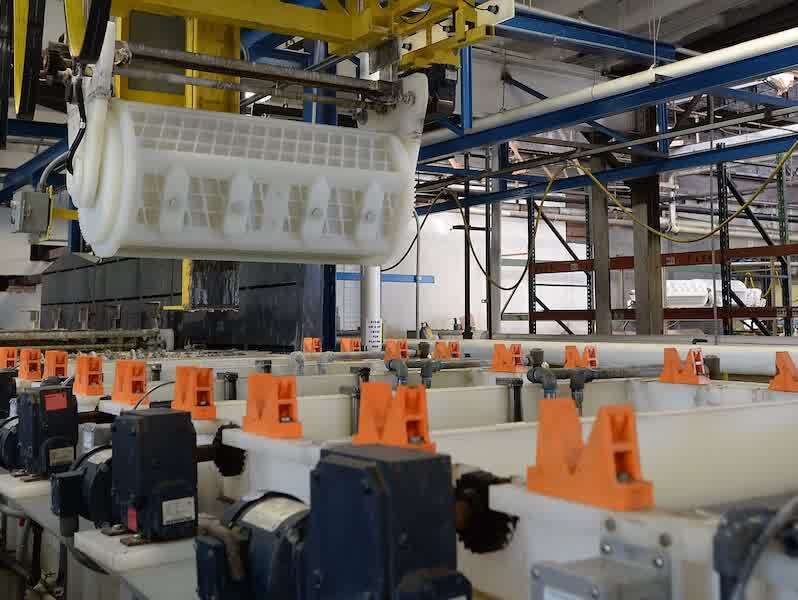 Great Lakes Metal Finishing is currently installing another zinc-nickel barrel plating line that will more than double the company’s zinc-nickel barrel processing capacity.Great Lakes Metal Finishing’s growth story began more than 32 years ago when Hartwig founded the company with the idea that long-term success in metal finishing required continual modernization and planning.
From the beginning, Hartwig recognized that many plating operations struggled because they delayed capital investments until equipment failures or customer complaints forced them to act. Great Lakes instead pursued a different path, regularly reinvesting profits into equipment upgrades, facility improvements, automation, and additional production lines.
Over the years, that strategy allowed the company to steadily grow its customer base across the Midwest and beyond. As demand increased, Great Lakes expanded both its physical footprint and process capabilities.
One major turning point came when the company acquired an adjoining building approximately six years ago. The neighboring structure, containing roughly 170,000 square feet, provided significant room for future expansion.
“We were lucky enough to acquire the building attached to ours,” Wachter said. “The individual who had it was looking to get out, so it was just perfect timing for us for our expansion.”
The acquisition gave Great Lakes the flexibility to reorganize operations and prepare for future growth initiatives. Shipping and receiving operations, along with offices, quality operations, incoming parts storage, and chemical storage, were relocated to the new space.
“You reduce the amount of potential human error,” Wachter said. “And it helps on those longer runs to give more consistent results.”
“Just recently, about a year and a half ago, we moved our shipping department because we outgrew our old shipping area,” Wachter explained. “We moved to the other side of the building to give them a little bit more space.”
The company’s Technical and Quality Departments, led by Technical Director Dave Cadwallader, also moved into the expanded facility space. The additional room has helped support tighter quality verification and inspection requirements demanded by today’s customers.
As the company expanded, its leadership team also evolved into a highly experienced group focused on maintaining operational consistency and customer service. Alongside Hartwig, Cadwallader, and Wachter, Great Lakes’ management team includes Plant Manager George Gore, Production Manager Shawn Baichmaier, and Quality Manager Jackie Toy.
Together, the team oversees a plating operation that balances production efficiency, specification compliance, maintenance planning, environmental management, and customer responsiveness.
Automation Drives Consistency
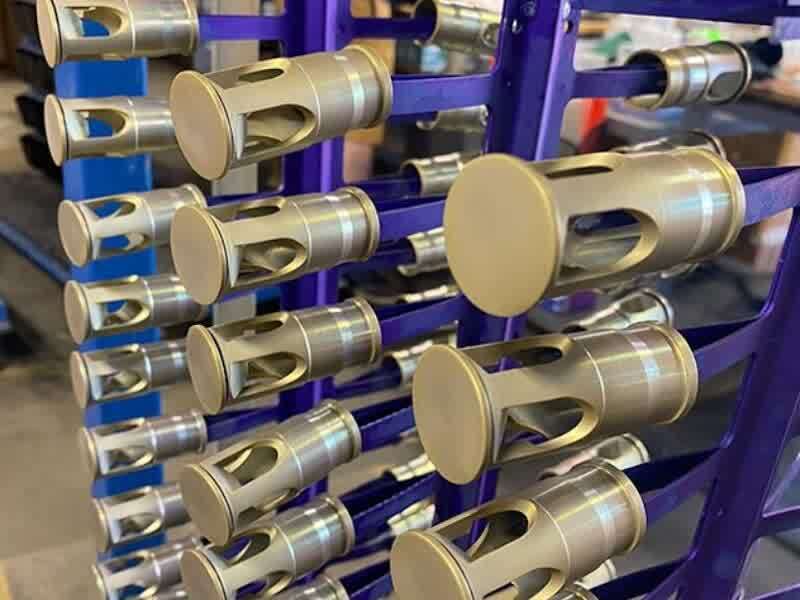 Like many finishing operations, Great Lakes Metal Finishing has increasingly invested in automation over the years. The company’s automated plating systems help improve consistency while reducing opportunities for human error.
“Everything’s automated,” Wachter said. “The program runs itself. Once you have it locked in on your thickness and your chromate times and everything needed, it generally runs pretty smoothly.”
Automation has also become increasingly important in helping manufacturers manage workforce challenges while maintaining throughput.
“You reduce the amount of potential human error,” Wachter said. “And it helps on those longer runs to give more consistent results.”
The company’s focus on specification work makes consistency especially important. Great Lakes processes a large volume of customer-specific specification plating work, in which thickness requirements, corrosion resistance, visual appearance, and process controls must consistently meet demanding standards.
“We have a great staff, which helps us give that needed quality,” Wachter said. “I think that high quality is what’s helped us really grow over the years doing that spec work, abiding by all the requirements of the specifications, and just giving the customer exactly what they need.”
Those efforts are spearheaded by Cadwallader, who has over 30 years of plating experience and works closely with our suppliers and customers on complex plating issues.
“You have to reinvest,” Wachter said. “You have to put the money back in and continue to update the equipment and add new lines to keep your customers happy.”
As customer expectations have evolved, maintaining those standards has become increasingly complex.
“Delivery has become tighter,” Wachter says. “Customers want their parts quicker, and quality requirements have become stricter. Tolerances and visual requirements have become a lot tighter.”
The company credits much of its success in meeting those expectations to its experienced workforce and leadership team.
“We’re lucky enough we have a great staff — production, quality, maintenance all around — that we’ve been able to keep up with the times and give customers what they need,” Wachter said.
Investing Beyond the Plating Lines
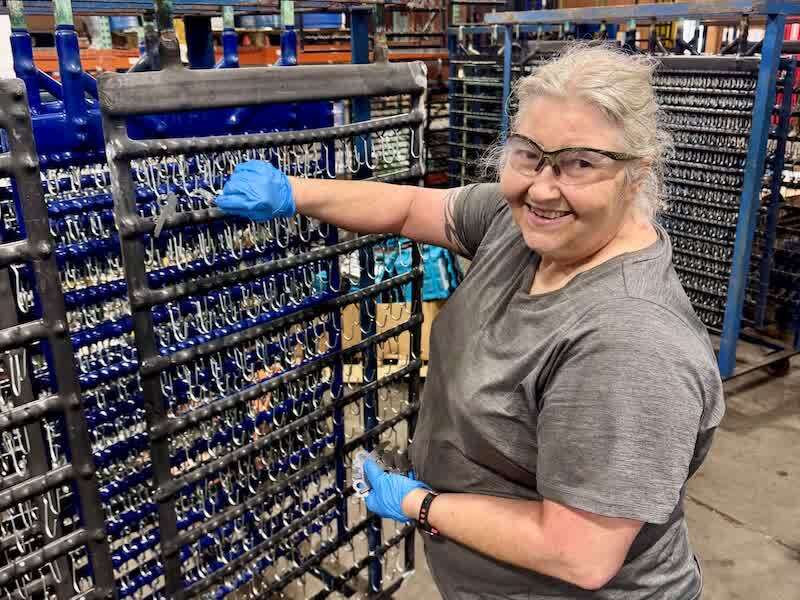 While plating lines naturally attract the most attention during expansions, Great Lakes has also invested heavily in supporting infrastructure, including wastewater treatment capabilities.
The company installed a wastewater treatment system roughly eight years ago that, at the time, exceeded its operational needs. However, ongoing growth has once again pushed the company toward expansion.
“Unfortunately, our waste treatment isn’t that old entirely,” Wachter said. “At the time, it was more than we needed. But now it’s getting close.”
The company’s long-term plans already include a larger wastewater treatment system expected to be installed within the next several years.
“We’re looking to add the new waste treatment after this line is up and running,” Wachter says. “Potentially in 2027 or 2028.”
The installation itself will require careful planning to avoid operational disruptions.
“It’s going to be in a different footprint,” Wachter explained. “We’ll have to get the new one up and installed, and then over a long weekend have the switchover, redo the final piping, and get it up and running.”
The willingness to invest in environmental infrastructure before it becomes a crisis reflects the company’s overall philosophy.
“You have to reinvest,” Wachter said. “You have to put the money back in and continue to update the equipment and add new lines to keep your customers happy.”
The Economics of Expansion
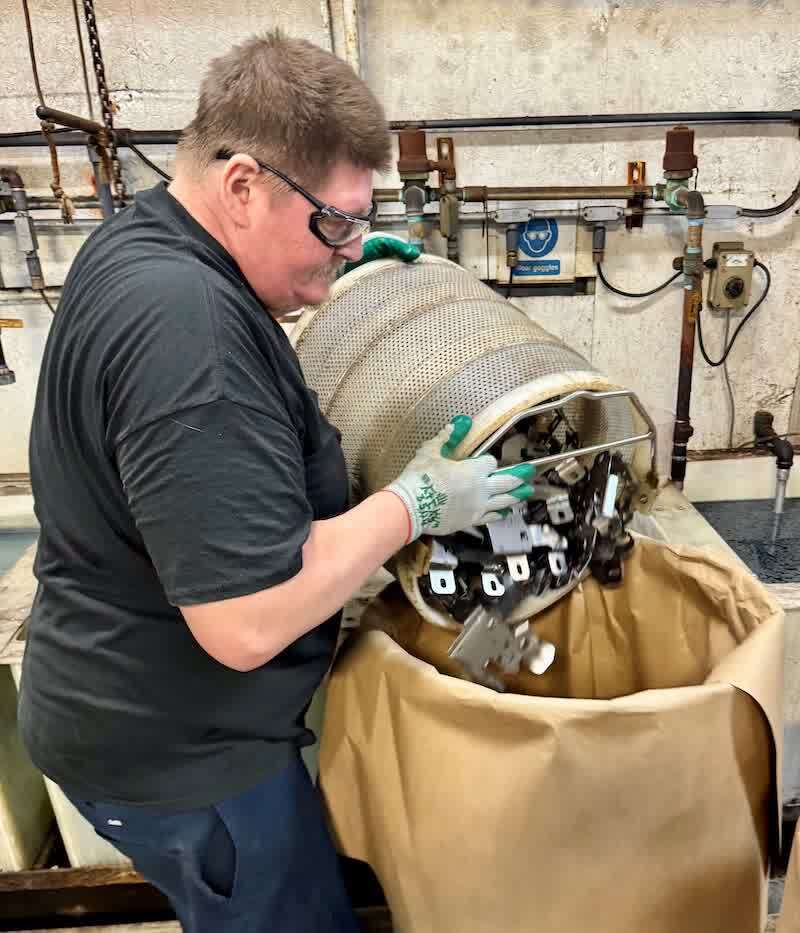 Expanding plating operations today involves significant capital costs, and Wachter acknowledged that equipment prices have continued to rise steadily in recent years.
“If you wait, it just gets worse,” he said. “It seems every few months there are price increases across the board.”
To help control project expenses, Great Lakes performs much of the installation work internally. While outside contractors handle tasks such as tank fabrication, superstructure construction, and automation programming, much of the piping, utilities, and line-integration work is performed by the company’s own maintenance personnel.
“We have someone come in and put up the superstructure and build the tanks,” Wachter says. “But we install everything ourselves, run all the lines, the air lines, the water lines.”
Using in-house personnel provides substantial savings while also giving the company more control over installation timing and system familiarity. Their maintenance team handles a lot of the work, Wachter said, and the company’s planning-oriented culture allows expansions to be mapped out years in advance, helping management determine how to reorganize departments, relocate operations, and maximize available floor space.
“It’s absolutely needed to run a successful business,” Wachter said. “Without doing any of that, it would be very difficult to maintain the quality, customer service, and delivery that your customers need.”
Serving Customers Across North America
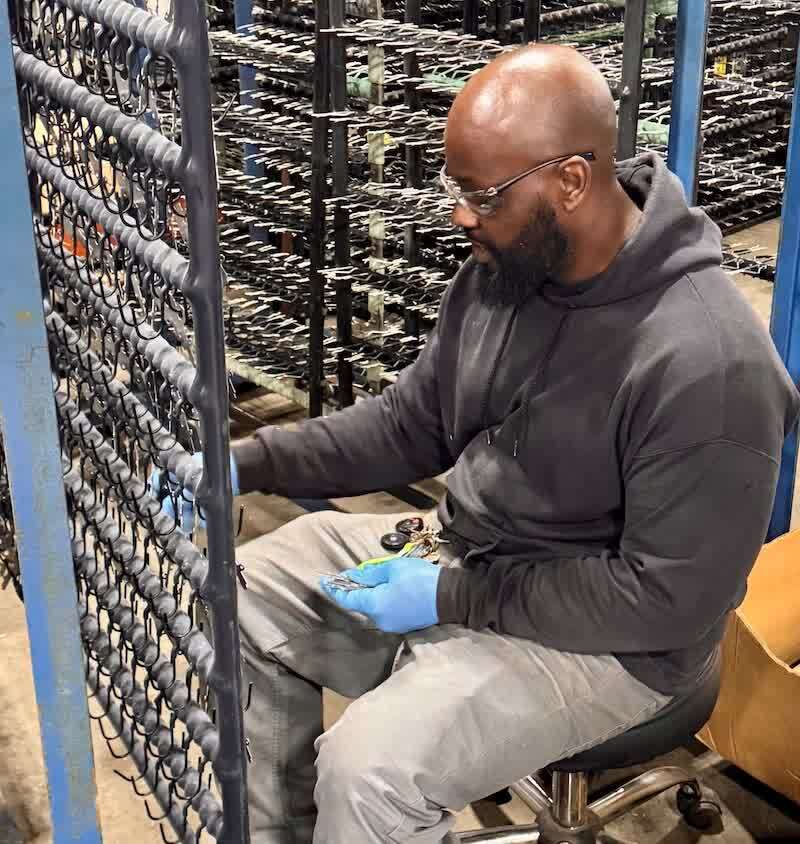 Although Great Lakes Metal Finishing is based in Erie, the majority of its business comes from outside the immediate region. The company serves customers throughout the Midwest, Northeast, South, and Canada.
“The majority of the work we do is not in the Erie area,” Wachter said. “We do a lot from Cleveland, Rochester, Buffalo, Connecticut, Florida — pretty much all over the United States — and some customers from Canada as well.”
That geographic reach has expanded steadily as the company’s reputation for quality and reliability has grown.
For many customers, especially in automotive and military applications, supplier reliability has become just as important as price.
“You’re the last person to touch that part,” Wachter said. “You’ve got to get it right the first time.”
Maintaining that level of consistency requires coordination across every department, from production and maintenance to quality and logistics.
The company’s leadership team continues emphasizing employee development and long-term workforce stability as part of that effort.
“We have a really good core group, and a lot of good employees,” Wachter says. “But as you grow, not only do you have to maintain, but you’ve got to add. It’s physical work. The metal finishing industry isn’t one that a lot of people dream of going into as a young child.”
Still, Wachter believes the industry offers strong long-term career opportunities for employees willing to learn the trade.
“The young individuals that stayed with us and took the time and effort to learn how to run a line and learn how to plate — it’s paid off for them,” he said. “They’re doing very well. Hopefully, they have long careers here.”
Planning for the Next Decade
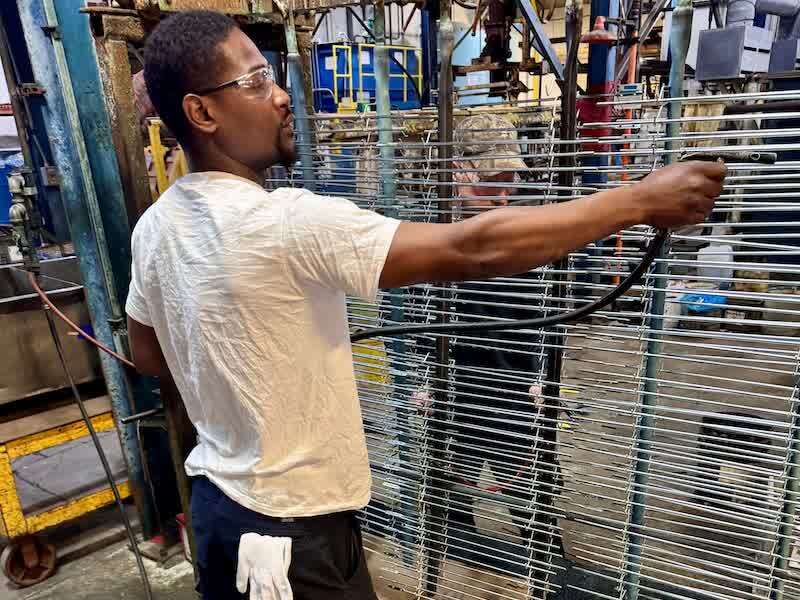 As Great Lakes Metal Finishing looks ahead, the company’s leadership sees continued growth opportunities driven by customer demand, tighter specification requirements, and increasing outsourcing of finishing work by manufacturers.
The company’s roadmap already includes future wastewater expansion projects and additional rack plating capacity following completion of the new zinc-nickel barrel line.
“We’re looking to add another rack plating line shortly after that,” Wachter said.
The approach reflects the same philosophy that has guided Great Lakes since Hartwig founded the business more than three decades ago: stay proactive, modernize continuously, and build infrastructure before customers require it.
That strategy has helped Great Lakes evolve from a regional plating operation into a diversified finishing company with national reach and sophisticated production capabilities.
For Wachter, the company’s success ultimately comes down to a willingness to continually invest in people, equipment, and systems rather than delaying decisions until problems arise.
“Hats off to Denny and the rest of the team,” Wachter said. “Reinvesting back into the equipment is something a lot of people just don’t seem to do sometimes. We try to be proactive.”
Visit https://www.goglmf.com.