


Large quantities of hazardous waste, most in aqueous solution or as sludges, are being produced at numerous metal plating and processing facilities in the U.S. Regulatory pressures, future liability, and limited landfill space have driven the cost of metal waste disposal to levels that are becoming nonviable.
 Diana BlessFor metal finishing operations to remain competitive and in compliance with environmental requirements, companies must focus efforts on pollution prevention to reduce waste generation and disposal costs, limit liability, and restore maximum profits.
By applying the pollution prevention concept, metal finishers can reduce the generation of metal-bearing wastes at the source.1 When waste cannot be reduced in the process, the preferred alternative is recovery/recycling of metals and the maintenance of process solutions used in the metal finishing and primary metals industries. Even though many innovative technologies exist, there is a need to develop and improve sorption-based separation technologies to reduce chemical discharges and minimize the need for wastewater treatment. In 1995, EPA established a Common Sense Initiative (CSI) Subcommittee for the Metal Finishing Industry. The Subcommittee developed a consensus package of cleaner, cheaper, and smarter policy actions for the industry as a whole to test innovative ideas and approaches. For this reason, metals recovery/recycling is an important aspect to consider when human health risks and ecological consequences are involved. To maximize pollution prevention: (a) water use must be minimized; (b) metals must be recycled “in-process” or recovered; (c) contaminants must be removed from the process bath to extend bath life. This literature search will focus mainly on nickel recovery/recycling in electroplating processes.
Editor’s note: This is an edited version of a paper presented at the 21st AESF/EPA Pollution Prevention and Control Conference, Orlando, FL, January 2000.
Background: Bright Nickel Process
Nickel is one of the most extensively used metallic coatings worldwide to enhance the cosmetic appeal of metallic articles as well as to enhance corrosion protection. Nickel is also used extensively in engineering applications because of its corrosion resistance and mechanical properties. Nickel electroplating is an electrolytic process in which nickel metal dissolves at the nickel anode and enters the plating solution as nickel ions. These ions are then deposited at the cathode (the part being plated) to form a layer of metallic nickel. The properties and appearance of the nickel deposit can be altered through the use of different basic processes and the incorporation of additives.2
Decorative nickel plating solutions differ from some other electroplating (e.g., Watts) solutions in that they incorporate a variety of addition agents. The most commonly used decorative processes are “bright” and “semibright” nickel. Depending on the addition agent used, deposits with a high degree of brightness and leveling (ability to fill in surface imperfections, such as polishing) can be obtained.2
Bright nickel coatings are used primarily to enhance the appearance of consumer articles by imparting a high degree of brightness and luster to the plated article. A secondary benefit is that the nickel plating also enhances the corrosion resistance of the article and extends its useful life. The organic addition agents used in decorative nickel plating are in most cases mixtures of more than one compound and are usually covered by patents. These addition agents are used to modify the crystal structure of the nickel as it is deposited and, depending on the addition agent, can produce a wide variety of properties (i.e., brightness, leveling, ductility, stress reduction). The inorganic salts used in decorative plating are usually based on the Watts formulation.2
Most nickel plating is operated at elevated temperatures, with heating elements generally required. In most installations, the plating solution is filtered continuously using pumps and suitable filtration equipment. It is often beneficial to stir the solution, and mechanical agitation or air bubbled through the solution is used. Geometrical factors, such as the shape and size of the plating vessel and the cathode, and the relative positioning of the anode and cathode within the plating bath, play a large part in determining the current and, as a result, the metal distribution.
Because most of the nickel plating baths used today are based on variations of the original Watts formulation, an understanding of the operation of the Watts bath is a requisite for understanding the nickel plating process. Nickel sulfate is always present in the larger amount, and its chief function is to provide the proper concentration of nickel ions. Nickel chloride improves anode corrosion and increases the conductivity of the plating bath. Boric acid may act as a weak buffer to help maintain the pH within the desired range, although the exact mechanism by which it improves the deposit is still open to question.
Electroplating operations are typically performed in baths (tanks), then followed by a rinsing cycle or a series of rinsing cycles. The purpose of the rinsing cycles is basically to collect dragout and may be set up as counterflow rinses. An appropriate method to conserve water and maintain bath life and chemicals is a recycling system. A recycling system could include a schematic of closed-loop unit processes, such as a nickel plating bath followed by a three-stage counterflow rinse cascade, a filtering unit, and an ion exchange unit (Fig. 1).
Contaminants
Nickel electroplating solutions are sensitive to many impurities, such as grease, oil, organic breakdown products from proprietary additives, copper, zinc, iron and hexavalent chromium. The effects of these impurities on the appearance of bright nickel deposits and common methods of removal are discussed below.
Dummy plating is an electrolytic treatment process in which metallic contaminants in a metal finishing solution are either plated out (low-current-density electrolysis) or oxidized (high-current-density electrolysis). Precipitation (high pH treatment) is generally a batch process often performed in a spare tank where the solution is chemically treated, filtered, and returned to its original tank.3 When nickel plating solutions are maintained at a high degree of purity, electrodeposited nickel has excellent mechanical and physical properties.
Source Reduction
According to the hierarchy of preferred approaches to waste management established by the Pollution Prevention Act of 1990, source reduction options should be investigated first, followed by sound recycling, treatment and disposal. Before turning to methods to recover metals from wastewater, metal finishers should examine processes and operations for opportunities to reduce waste generation at the source.
Source reduction techniques for metal finishers include:1
- Modifying rack designs to minimize cupping—fluid will flow together and off the part by the quickest route.
- Adjusting automatic hoist parameters to include extended drip times—slow down to allow drain time above tanks to reduce dragout.
- Using two- and three-stage counterflow rinses.
- Using stagnant baths for recovery of dragout from bright nickel baths.
- Slow down—reduce the speed of parts removal.
- Bath chemistry—monitor bath chemistry regularly.
- Restrict water flow—simple inline flow restrictors can limit the water flow rate.
- Drain Boards—place a drain board over the lips of two adjacent tanks to catch dragout.
- Agitation Baths—agitation can be done manually, moving the part with a mechanical agitator or with forced air or solution in an immersion tank.
- Fogging/Spray/Air Knives—after a part is removed from a bath, these devices can force some of the dragout off the part and back into the bath.
Dragout recovery is one of the most important source reduction practices.
Current and Competing Technologies
There is a variety of purification procedures used with nickel plating solutions that can be used effectively to remove contaminants in nickel baths. The most common existing practices are electrolytic treatment (dummying), batch metal precipitation, and batch adsorption. One major source of contamination stems from the corrosion of copper bus bars and corrosion of copper and copper alloy parts that fall into the tank. Copper is commonly removed by electrolyzing at low current densities on “dummy” cathodes. The recommended C.D. is 2050 A/m2 (25 A/ft2).
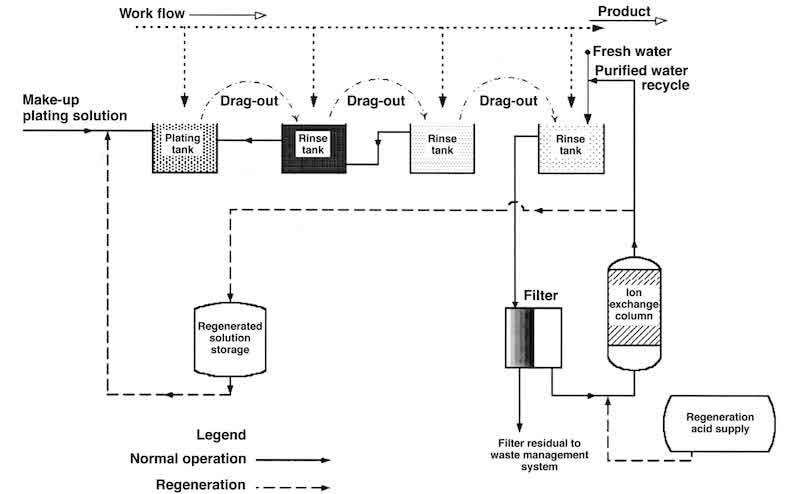
Fig. 1—Closed-loop plating bath recycling system.
Contamination by zinc is very common in installations plating die castings. Zinc is also removed by dummy electrolysis. When zinc contamination is troublesome, continuous dummy electrolysis is recommended to purify the solution. The procedure requires a small auxiliary tank. The auxiliary tank requires 0.1 m2 of dummy cathode for every 400 liters (1 ft2/100 gal) of plating tank volume. A suitable arrangement of a pump and weir to maintain constant circulation of the plating solution from and to the plating tank should be provided.
Iron (Fe+2, Fe+3), aluminum (Al+3) and chromium (Cr+3) are removed by high pH treatment. Adding basic nickel carbonate to a nickel plating bath raises the pH to around 5.5. The increase in pH causes iron, aluminum, and chromium to precipitate as the hydroxides. Heat speeds the reaction, drives out carbon dioxide formed during the neutralization, and facilitates coagulation of the metallic hydroxides, which are removed by filtration.
During electrolysis, the organic additives in bright nickel produce decomposition products that, if allowed to accumulate, can result in unacceptable plating, such as poor ductility, hazy deposits, poor coverage, etc. To help reduce the occurrence of these problems, it is normal practice to filter the solution continuously through an approved grade of activated carbon. Along with organic contamination, excess brighteners can be removed by electrolysis or activated carbon.2
Electrolytic treatment (dummying) is particularly effective for the removal of copper, zinc, and excesses of certain organic brightening agents. The frequency of electrolytic treatment depends on the rate at which contaminants are introduced into the solution. If an operation has a constant source of contaminants, it may be necessary to perform continuous electrolytic purification.2
Metal precipitation, or “high pH,” is used to remove impurities such as aluminum and iron. The removal of iron is the primary reason that “high pH” treatments are performed, and one of the major causes of iron contamination is parts that have fallen into the tank. Parts should be removed regularly, at minimum daily. An inexpensive tank magnet makes this a simple task. Water used for evaporation losses can be a major source of contaminants (aluminum, silicates, and calcium). Deionized water should always be used for solution makeup.2
Adsorption with activated carbon is effective for removing organic contaminants from nickel plating baths. Not all activated carbons are suitable for use with nickel plating solutions. Suppliers of proprietary additives can recommend a suitable grade and the quantity of carbon required will depend on the degree of contamination. Most suppliers of addition agents recommend continuous filtration through activated carbon to eliminate the decomposition products and the minor levels of oils and greases that may be dragged in. In following these recommendations, batch treatment can, in most cases, be avoided or at least reduced to a very infrequent basis. The metal precipitation and adsorption batch treatment processes are often combined.2
The National Center for Manufacturing Sciences (NCMS) sponsored a project in cooperation with the National Association of Metal Finishers (NAMF) to assess pollution prevention and control technology available to the plating industry. The results of the Users Survey show which treatment, recovery, and bath maintenance technologies have been most successful for different plating processes. Various technologies are used by plating shops to separate plating chemicals from rinse waters and air emissions or to concentrate them, thereby making them available for reuse/recycling. Respondents to the Users Survey employ seven different types of technologies:3
- Atmospheric evaporation
- Vacuum evaporation
- Ion exchange
- Electrowinning
- Electrodialysis
- Reverse osmosis
- Meshpad mist eliminator
Table 1 displays a summary of the technologies for nickel and copper identified during the Users Survey and the average success rating given by respondents. Technology success was measured by respondents on a scale of 1 to 5, with 1 being the least successful and 5 being the most successful.4
Table 1: Metal Contaminants in Bright Nickel Plating Baths
| Metals | Dullness Range | Remedy |
| Cu 10 ppm | Low C.D. | “Dummy” Electrolysis |
| Zn 20 ppm | Low C.D. | “Dummy” Electrolysis |
| Fe 50 ppm | Mid C.D. | High pH Treatment |
| Al 40 ppm | High C.D. | High pH Treatment |
| CrO 2 (10 ppm Cr) | High C.D. | High pH Treatment |
The following sections will discuss the technologies identified by the Users Survey that apply to nickel electroplating processes. The applications, restrictions, capital and operating costs will be the main focus of the discussion.
Electrowinning
Electrowinning is one of the most widely used methods of metal recovery in the plating industry, the other being atmospheric evaporation. The basic unit of electrowinning technology is the electrolytic cell: two electrodes (anode and cathode) are placed in a solution containing ions, where ions move toward the charged electrodes. Dissolved metals in the electrolyte are reduced and deposited on the cathode. The deposited metal is removed by mechanical (e.g., scraping) or chemical means and either reused as anode material or sent offsite for refining/reuse or disposal.3 Electrowinning is most frequently used to: (1) reduce the mass of inexpensive regulated metals (e.g., zinc, copper, lead) and cyanide being discharged to treatment, thereby reducing the quantity of treatment reagents used and the quantity of sludge generated and/or (2) recover expensive common metals (e.g., silver and gold) for recovery/recycling and thereby reducing overall operating costs. In either case, electrowinning is most often applied for gross metal recovery from concentrated solutions such as dragout rinses or ion exchange regenerant.3
The combination of ion exchange and electrowinning potentially has a much higher metal recovery efficiency than just pure electrowinning from a dragout (still) rinse. The ion exchange unit concentrates the metal into a regenerant stream and the electrowinning unit removes the metal.3
Literature indicates that the metals most commonly recovered by electrolytic treatment are gold, silver, copper, cadmium, and zinc. Metals that have more positive standard electrode potentials plate more easily than ones with less positive potentials. Chromium is the only commonly electroplated metal that is not recoverable using electrowinning. Nickel recovery is possible, but it requires close control of pH and therefore is less frequently employed than, for example, cadmium or copper. Solutions such as those for electroless plating containing chelated metals, reducing agents, and stabilizers are more difficult to apply directly to electrolytic recovery. One vendor indicated that these baths can be processed by electrowinning after undergoing pretreatment (e.g., selective ion exchange) to break the metal-chelate bond. Fluoborate solutions (e.g., tin, tin-lead) are not commonly treated using electrowinning because they attack anode materials, including iridium-oxide-coated titanium and niobium. Certain corrosive solutions (e.g., certain etchants) may also pose problems for electrowinning because metal deposited on the cathode may be etched off as quickly as it is plated.3
This technology is not labor-intensive or expensive. The capacity requirement for conventional electrowinning depends most heavily on the amount of metal to be recovered and the rate of metal deposition. Factors that affect metal deposition are: electrode type and area, agitation rate (or in general, mass transfer), solution chemistry, electrical variables, and temperature. Capital costs can be estimated once capacity requirements are determined. Most vendors refer to capacity in terms of amperage; more precisely, the maximum amperage setting on the applicable rectifier. The rectifier and electrodes comprise the majority of the cost from most units; other contributing components are the fluid containment tank, pumps, filters, and optional metering devices.
Operating cost components are labor, electrode replacement, maintenance, and energy. Labor costs are largely installation- and application-specific. Energy costs will comprise only a small percentage of total operating costs for most applications. For large units, however, energy costs may be higher in relation to total operating costs. Electrode replacement costs depend on their construction and life expectancy.3
Ion Exchange
Ion exchange is characterized by a chemical reaction wherein an ion from solution is exchanged for a similarly charged ion attached to an immobile solid particle (i.e., an ion exchange resin). The resins are normally contained in vessels referred to as columns. Solutions are passed through the columns, and the exchange occurs. Subsequently, when the capacity of the resins is reached, the ions of interest, which are attached to the resin, are removed during a regeneration step where a strong solution containing the ions originally attached to the resin is passed over the bed.3
Some respondents to the Users Survey misapplied ion exchange technology for chemical recovery. For example, one user operates a Watts nickel plating line with a 140°F bath and a four-stage counterflow rinse. This shop feeds the ion exchange system from the first rinse, which is the most concentrated, and returns the treated water to the last rinse. Instead, this shop should use the configuration shown in Fig. 2. Using a recovery rinse will greatly reduce the nickel load on the ion exchange resin.3
As a recovery technology, ion exchange should be applied to dilute rinse waters. It does not apply to concentrated dragout solutions or plating baths. A major limitation of this process is that many plating baths are more concentrated than the ion exchange regenerant; therefore, it should not be used in a “bleed and feed” system, where spent bath is bled to the rinse water. The result in these cases is that the chemicals are diluted in the rinse water, collected by ion exchange, regenerated (using costly chemicals), and recovered in a lower concentration than they started.3
The installed costs are estimated based on the projected costs for electricity and piping, including two components of electrical costs (service module and regeneration station) and three components of the piping costs (service module, regeneration module, and service/regeneration module interface). For small, manual applications, capacity is usually expressed in terms of resin volume, to which capital costs are directly related. Larger system capacities are more often expressed in terms of flow rate. Still, direct vendor-to-vendor pricing comparisons based only on capacity units such as gal/min can be quite misleading. The Users Survey did not account for several cost factors, including the amount of customization, the precise level of automation, the type and quality of metering and monitoring instrumentation, and the general design strategies. Manual systems are often sized to provide an acceptable service period. Larger columns offer the benefit of fewer regenerations or replacements, less downtime, and less labor expense. Automatic systems, on the other hand, are sized to handle the expected flow rate. Water recycling systems are, in general, more expensive than metal scavenging units. Installation expenses are site-specific but can be significantly higher, typically 5 to 40 percent or more of basic equipment costs.3
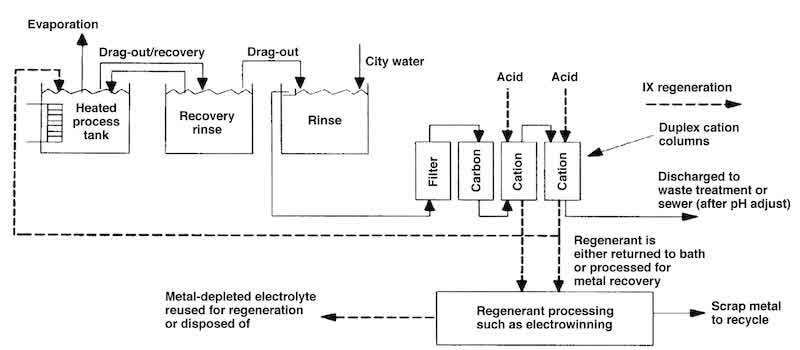
Fig. 2—Ion exchange recovery metal scavenging configuration.
Labor, regeneration chemistry, resin replacement, and energy are the major operating cost categories. Labor costs are significantly affected by the automation level of the system, and automation capital costs are often quickly recouped. Undersized or misapplied equipment can greatly impact labor and costs. Resin life is usually measured in years, but can be shortened by misuse and improper application. Resin fouling, mentioned by several respondents, is usually a result of marginal application, misuse, or insufficient upstream filtration or pretreatment.3
The Air Force (at Tyndall AFB) conducted a research program to test the efficiency of using ion exchange resins to remove heavy metal wastes from process baths. The resin DOWEX XFS4195 was effective for the removal of copper, cadmium, and lead from nickel strike solutions. This technique regenerated these baths in situ, without incurring the cost of frequently replacing the entire bath and treating the resultant heavy metal-contaminated waste.
Other resins that work well for copper adsorption are: polyacrylic acid crosslinked with divinylbenzene, methacrylic acid, iminodiacetic acid, Duolite (aminomethyl phosphonate), gel resin, and others.4
Reverse Osmosis
The primary plating chemical recovery application for reverse osmosis is nickel plating, including Watts nickel and bright nickel plating. From the Users Survey, there were only two successful applications of reverse osmosis for chemical recovery. These involved recovery of nickel acetate seal and acid zinc dragout. Reverse osmosis applies to the recycling of effluent from an end-of-pipe treatment system. A typical effluent contains from 500 to 4,000 mg/L of TDS. Typically, rinse quality criteria for functional and bright plating are in the range of 100 to 700 mg/L and 5 to 40 mg/L TDS, respectively.3
Reverse osmosis is generally not considered applicable to highly concentrated, oxidative solutions, like chromic acid, nitric acid, and peroxysulfuric etchant. The unsuccessful chemical recovery applications from the Users Survey included: Watts nickel, zinc cyanide, acid zinc, and copper cyanide. The reasons for failure relate mostly to fouling.3
The capital costs of reverse osmosis are best expressed in terms of membrane surface area, where the required area for a given chemical recovery application will depend on the flux rate and the percent rejection. Flux is the volume flow of permeate per unit of membrane area, usually expressed as gal/ft2/day or gfd. The percent rejection is defined as:
Percent Rejection = [feed conc. permeate conc.]/[feed concentration] x 100
Higher percent rejections will result in better-quality permeate (i.e., higher purity) and a higher concentration of the plating chemicals. The permeate is typically reused for rinsing, and the concentrated chemicals are typically returned to the bath. There are insufficient data available to account for the various parameters that impact RO system sizing and cost; therefore, capital costs are described in terms of feed stream rate.3 The most significant operating costs include labor, energy, chemicals (cleaning), and membrane replacement.3
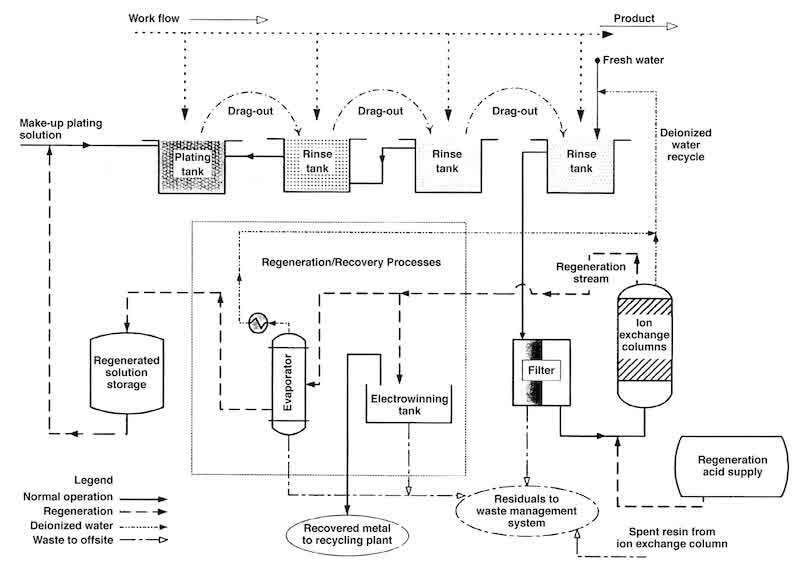
Fig. 3—Ion exchange bath maintenance system schematic.
Atmospheric Evaporators
Atmospheric evaporators are the most widely used method of chemical recovery in the plating industry. Of the 318 plating shops responding to the Users Survey, 71 (or 22.3%) have employed atmospheric evaporators. Three shops used atmospheric evaporation to concentrate liquid plating wastes before hauling them offsite for treatment/disposal, thereby reducing transportation costs.3
The commercial atmospheric evaporator used for recovery in the plating shop consists of a pump to move the solution, a blower to move the air, a heat source, an evaporation chamber in which the solution and air can be mixed, and a mist eliminator to remove any entrained liquid from the exit air stream.3
Most applications are for elevated-temperature process baths (> 120°F), moderate-temperature baths (100°F to 120°F), and ambient or low-temperature baths (ambient to 100°F). An important aspect of implementing this technology is incorporating recovery rinsing. For some processes, where the operating temperature is high, and dragout is sufficiently low, a closed-loop configuration can be employed. Several respondents to the Users Survey indicated achieving a closed-loop (e.g., for nickel; or for nickel and chromium). Generally, these shops used either a three- or four-stage recovery rinse.3
The basic equipment cost for atmospheric evaporators is relatively low. The most common installation cost is for exhausting the air exiting the evaporator. Other installation work includes connecting power and water to the evaporator, rearranging other equipment or tanks, installing controls, and installing a transfer tank. Auxiliary equipment may include, for example, a transfer tank, additional recovery rinse tanks, an additional heat exchanger, or a DI water system.
The major operating costs for atmospheric evaporators include operating and maintenance labor and energy. From the Users Survey, the average operating and maintenance labor is 157 hrs/yr. It was assumed that this level of labor is adequate for a unit evaporating 15 gal/hr, 24 hr/day for 260 days/yr. The energy cost accounts for replacement heat in the process tank and for operating a pump.3
Vacuum Evaporators
A vacuum evaporator is a distilling device that vaporizes water at low temperatures when placed under a vacuum. Such systems are relatively complex and therefore more expensive to construct and maintain than simpler atmospheric systems. Of the 318 plating shops responding to the survey, 23 shops (7.2%) have employed vacuum evaporators for chemical recovery, whereas 71 shops (or 22.3%) have used atmospheric evaporators. Several types of vacuum evaporators are used in the plating industry: rising film, flash type, and submerged type. Generally, each consists of a boiling chamber under a vacuum, a liquid/vapor separator, and a condensing system.3
Vacuum evaporators are applied to the recovery of a wide range of plating solutions. They are especially applicable in situations where atmospheric evaporators are either technically or economically impractical. This includes: (1) the recovery of heat sensitive chemicals (e.g., cyanide plating baths); (2) the recovery of chemicals sensitive to air oxidation (e.g., cyanide plating baths or the stannous tin bath); (3) low or ambient temperature plating solutions where there is no appreciable surface evaporation; (4) the recovery of solutions containing volatile components; and/or (5) where high evaporation rates are necessary to achieve recovery and atmospheric evaporators become too expensive to operate.3 In the case when large volumes of low concentration solutions are involved, neither atmospheric nor vacuum evaporation is economically practical to operate. In such cases, ion exchange or reverse osmosis is more practical.3
Equipment costs will vary depending on the materials of construction. Popular materials include titanium, tantalum, borosilicate glass, stainless steel, and carbon steel. When selecting a vacuum evaporator, the plater should make every effort to reduce the flow rate of the feed stream by employing pollution prevention measures because the technology is capital intensive.3
The primary operating costs for vacuum evaporators are labor, energy, and cooling water. Higher operating and maintenance costs can be expected for end-of-pipe applications because the solutions are evaporated to higher solids levels, which increases fouling and scaling.3
Electrodialysis
Electrodialysis technology employs ion-permeable and selective membranes under an applied DC potential difference to separate ionic species from an aqueous solution. Its primary application for chemical recovery is nickel plating (Watts, sulfamate and bright), where it competes with recovery rinsing (dragout tanks), evaporation technologies and ion exchange. The results of the Users Survey indicate that only three respondents (less than one percent) have employed electrodialysis for recovery. All of these units, which were used for nickel recovery, are no longer in operation.3
A potential advantage of electrodialysis over other concentrating and return methods of nickel recovery (e.g., evaporation and reverse osmosis) is its ability to selectively retard the recovery of certain organic materials that tend to build up in nickel plating baths, while more freely permitting the transport of a desirable organic bath constituent (saccharin) and nickel salts. This aspect of the process could reduce the frequency of bath purification as compared to other recovery schemes.3
The capital cost of an electrodialysis unit is related primarily to the stack size, which can be expressed in terms of membrane area (ft2).4. Electrodialysis operating costs include operating and maintenance labor, electricity, and replacement costs for membranes. Estimated costs are 15 to 30 percent of investment costs.3
Bath Life Extension
Chemical solution maintenance includes a range of pollution prevention practices and technologies that preserve or restore the operating integrity of metal finishing process solutions, thereby extending their useful lives. Because of rising costs for chemicals, energy, and treatment/disposal and increasingly more stringent environmental requirements, solution maintenance has become a greater priority for plating shops. In addition to extending bath lives, solution maintenance often improves the average operating efficiency and effectiveness of a process solution and therefore has a positive impact on production rates and finish quality.3 Some common preventive and corrective measures include but are not limited to:
- Prompt removal of all dropped parts
- Regular filtering of nickel plating baths (except particle nickel baths), and treatment with carbon as required
- Special care to prevent introducing contaminants from cleaners, or from poorly maintained racks.
- Where metallic contamination is a chronic problem, such as with small zinc castings, use of a continuous electrolytic purification, or “dummying,” cell is recommended.
EPA Effluent Limitations Guidelines, Pretreatment Standards, and New Source Performance Standards: Metal Products and Machinery
The current regulations are found in CFR, Parts 413 and 433. The new Guidelines will be out for review in the year 2000 and finally out in 2003. The guidelines are based on chemical precipitation and in-process practices such as countercurrent rinses. From visits to facilities, it is reported that ion exchange is being used more for recovering precious metals, such as gold and silver. However, some semiconductor industries are using ion exchange for high-quality copper. Electrolysis is being used more often than ion exchange for nonprecious metals. The standards are: Nickel: 1.1 mg/L/day total and Monthly avg. = 0.505
Concluding Remarks
Overall, the most efficient pollution prevention measures are accomplished through a recycling system that employs a combination of previously implemented source reduction practices (i.e., dragout recovery, two- or three-stage counterflow rinses) along with a configuration of two or more bath treatment technologies. Figure 3 shows a plating tank followed by three counterflow rinse tanks for dragout recovery. A filter follows the third rinse tank, from which the solution is fed into an ion exchange unit. There are two treatment units in the square, indicating the option of using either. Electrowinning recovers the metal from the regenerant and sends it to a recycling plant; the other option employs an atmospheric evaporator to concentrate the dilute solution, which is then fed back to the plating tank.
Editor’s note: This is an edited version of a paper presented at the 21st AESF/EPA Pollution Prevention and Control Conference, Orlando, FL, January 2000.
About the Author: Diana Bless is a staff member of the Environmental Protection Agency’s National Risk Management Research Laboratory, 26 W. Martin Luther King Dr., Cincinnati, OH 45268. She has conducted research for the prevention and cleanup of toxic/hazardous waste. Her research interests focus on low-cost technologies for metals recovery/ recycling in metal finishing, biological removal of metals in mine drainage, and the ecological/health impact of mercury contamination in abandoned mercury and gold mines. She holds a BS in chemical engineering with a minor in biochemical engineering from New Mexico State University.
References
- Cushnie, George C., Source Reduction and Metal Recovery Techniques for Metal Finishers, State of Ohio Environmental Protection Agency, 1994.
- Derek Vachon & Ken Lemke, AESF/EPA Pollution Prevention Practices for Use in Nickel Plating, P2 Concepts & Practices for Metal Plating & Finishing, 1997.
- George C. Cushnie Jr., Pollution Prevention and Control Technology for Plating Operations, National Center for Manufacturing Sciences, 1994.
- Robert Albright, private communication.
- Steven Geil, U.S. EPA, personal communication.
General References
- Enviro$en$e. Metal Recovery: ion exchange/electrolytic recovery. http://es.inel.gov/techpubs/3/6243.html (accessed Nov. 1997).
- EPA Handbook, Guides to Pollution Prevention: The Metal Finishing Industry, EPA/625/R92/011, October 1992.
- EPA Effluent Limitations, Guidelines, Pretreatment Standards, and New Source Performance Standards, Metal Products and Machinery, 1998.
- EPA Project Summary: Recycling Nickel Electroplating Rinse Waters by Low Temperature Evaporation and Reverse Osmosis, 1993.
- D. Zhou, E.C. Stortz, E.J. Taylor & R.P. Renz, Proc. 17th AESF/EPA Pollution Prevention & Control Conference, February 57, 1996.
- Ludwig Hartinger, Handbook of Effluent Treatment and Recycling for the Metal Finishing Industry, Second Ed., Finishing Publications Ltd., 1994.