


The hard chrome industry is respected for its unique plating methods, diverse applications, and importance to America’s economy and defense.
 Eric Svenson Sr.This trade requires skill sets that differ greatly from more common types of electroplating, such as zinc, copper, nickel, or decorative coatings.
The following is a list of items necessary for hard chrome plating. Some overlap with other plating types, while others, like chromic acid, lead, and sometimes stop-offs, are unique to hard chrome. While most of these are obvious, they are all vital for uninterrupted production. Sadly, some platers overlook these necessities and only pay attention to them when production stops.
These items are not listed in any order of particular importance; however, a defect in any one of them will negatively affect the business. A productive hard chrome operation should address and manage each of these to keep the business successful and sustainable.
Electricity
Electroplating obviously requires electricity. High voltages like 480 VAC at significant amperage are typically required for industrial applications. The AC amperage needed is determined by the sizing of the various rectifiers and the electrical support equipment being used.
Rectifiers are used to convert this AC into DC, which is what’s used for the actual plating processes. The recent trend is to upgrade older SCR rectifiers to newer switch-mode units. Switch-mode rectifiers offer significant benefits, including more efficient power conversion, cleaner DC waveforms, lower ripple, and much better process control through programmable controls. The switch-mode units are also much smaller, which saves floor space.
Annual electrical savings are significant because hard chrome draws a lot of amperage. These units can automatically reverse current, saving time and eliminating the need for bussing changes and bulky reversing switches.
Switch mode units use stacked modules, typically 1,000 amps each. These units continue operating if a module ever malfunctions, which is rare, because they use solid-state technology. Keeping a spare module on hand lets you replace it quickly and easily. The defective module can then be returned for repairs without ever losing production. Switch mode rectifiers are a savior for modern hard chrome platers. Most operations replace their old SCR units when they crash. In contrast, others replace them to take advantage of energy savings, programmable controls, and better chrome deposits from the improved waveform and very low ripple.
Electricity can also be saved by keeping the bath impurity levels under control. Excessive bath impurities, such as high trivalent, iron, and copper, can add Thousands of Dollars to annual electrical costs. Since zero impurities are impossible, the best approach is to keep them within the recommended 4.8–7.2 TCL (total contaminant level). Fortunately, practical, cost-saving methods can achieve this.
Bussing
Bussing is used to connect the rectifier(s) to the various electrified tanks. Solid copper is typical, although aluminum is sometimes used instead. An alternative to solid copper is using high-capacity cable, which is much easier to route and install.
The optimum bussing sizing is one square inch of copper as a minimum cross section per 1,000 DC amperes being transmitted. It’s often recommended to oversize the bussing by 5-10% as a safeguard. Undersizing the bussing to save on initial cost is a mistake because it increases resistance, generates heat, and wastes expensive energy. That wasted energy, which can be as much as 50%, needlessly drives up electrical costs year after year.
Water
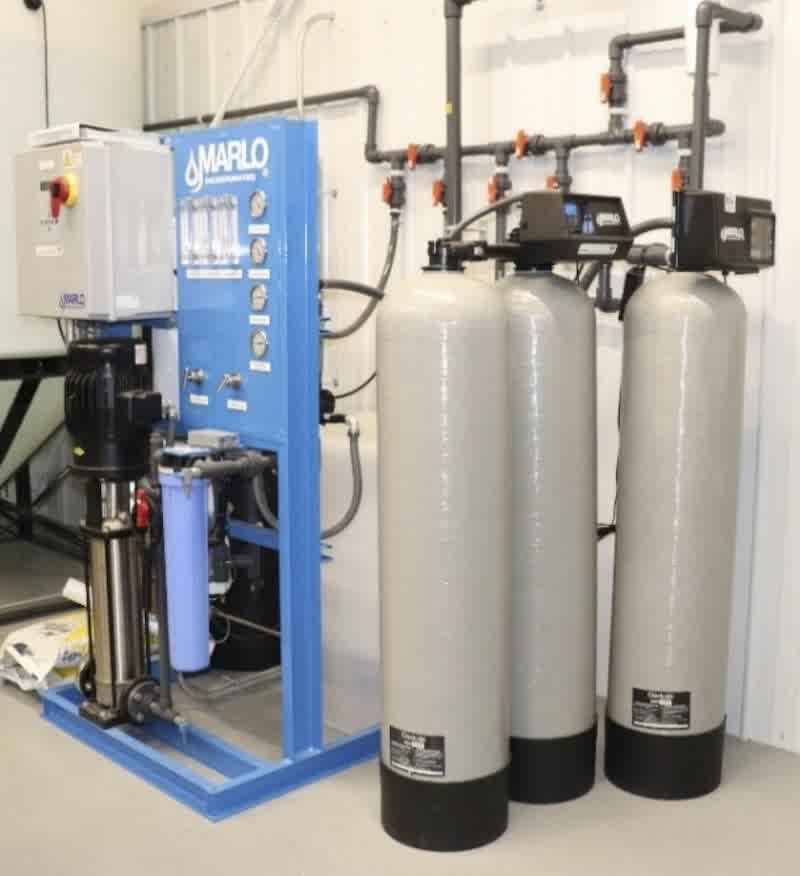 Water is another critical component; the plating process cannot operate without an adequate, reliable supply. It’s a necessity for the plating and process baths, the rinsing, and often for the cooling systems. Using city water is recommended because well water typically contains extremely high mineral levels that harm the plating bath.
The best operations purify the city water used in plating. Typical purification systems include RO and DI components that remove sulfate, chloride, metals, and minerals. This prevents these ions from continually building up in the plating baths until their levels cause serious plating problems.
Chromic Acid
Chromic acid is the most critical chemical ingredient used in hard chrome operations. The operation would be out of business without it. It is a vital chemical for our industry and our national defense. There are only three chromic acid sources in the world today: China, India, and Turkey. None of these are particularly friendly toward our nation; they could easily restrict our supply or drastically increase prices.
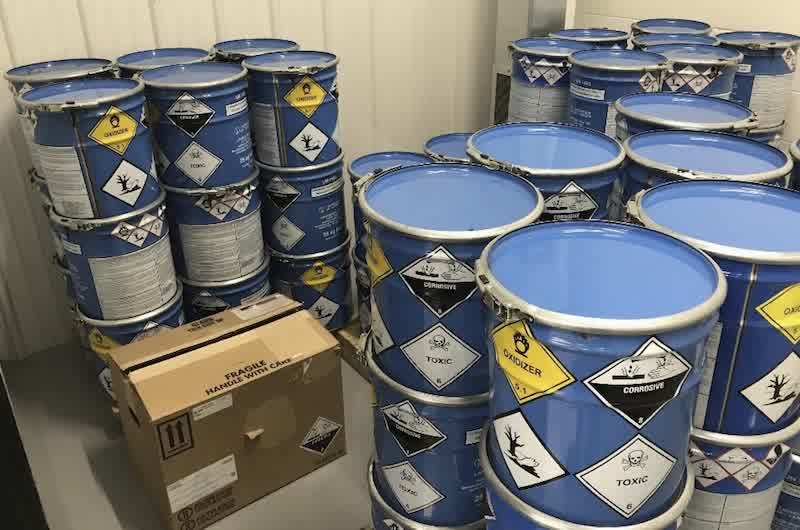 HCP Grade Beaded Chromic AcidMost of the material produced in India and Turkey is poor quality because of high impurity levels, notably excess sulfate, chloride, iron, and copper. Some of the Chinese chrome has similar impurity defects. Using high-purity chromic acid is important because these contaminants build up in the plating bath and poison it, making it impossible to deposit suitable chrome. Those impurities end up in the products because of inadequate refining during manufacturing.
There is a limited quantity of chromic acid inventoried in the USA. Chemical suppliers keep only a few months' supply on hand, and there’s no national stockpile. Chromic acid availability is limited to what’s imported, either as chromic acid or as its ore.
Most of the chromic acid our industry uses comes from China, and they have no desire to support our industry. China could easily restrict supply or drastically raise prices. They have a history of doing this with critical goods.
There are two ways to resolve the cost, quality, and availability problems with chromic acid:
Buy Certified HCP Grade Chrome
Use only chromic acid material that’s been certified as HCP Grade. This eliminates impure material dumped on our market. HCP Grade is meticulously assayed for purity, so the material is free of impurities that harm your plating bath(s).
This step goes a long way toward preventing excessive and costly bath dumping caused by iron, copper, and other impurities. It also limits the barium carbonate treatments needed to remove excess sulfate and the dummying needed to lower the chloride levels. The HCP Grade doesn’t cost much more than the impure grades do, so there’s nothing to lose and everything to gain by using it. This step solves the quality issues.
Another suggestion is buying the newer beaded type of chromic acid instead of the older flake material. Besides being higher purity, the beaded material pours almost like a liquid, so it’s much easier to add to the tanks. It also reduces splashing because it resists absorbing moisture, so it doesn’t clump up like the older flake material.
Stockpile a Year’s Supply
Many hard chromers purchase chromic acid only when it’s needed and in the amount required to restore their bath concentrations. Others rarely keep more than a month’s supply in inventory. This is a mistake on two very important fronts – the cost and the availability.
It’s much better to purchase your chromic acid in larger bulk quantities. This provides several distinct and important benefits. The first is the huge cost savings involved, which are provided in two important ways:
- Buying in larger quantities provides lower prices because of the bulk discounts available. The cost savings can be significant when buying 5,000 pounds instead of 1,200, or 40,000 pounds instead of 5,000, etc. This also lowers your shipping costs.
- Keeping a large inventory of chromic acid on your floor helps you avoid the inevitable price increases that occur throughout the year. This can add to your savings by another 20-30% or more. Chromic acid is also often in short supply, and prices can rise even more during these shortages.
The issue now becomes what the ideal quantity is to buy at one time. Innovative managers want to keep at least a one-year supply of chromic acid in inventory at all times. There are several ways this concept can be approached. Start by determining your average monthly usage, then multiply it by 12 to get the quantity. This is what’s recommended as your minimum inventory.
This solves both the availability and the cost issues. A stockpile of chromic acid also lets you keep plating when others can’t because of a shortage.
Some critics will say that’s wasting assets by tying up so much capital in inventory.
They would be wrong because, over time, the cost savings percentage often exceeds the operation’s normal profit margin. This wouldn’t be wasted money because chromic acid is an asset while it sits in your inventory. This tactic reduces your costs and provides a buffer that could save your business when the next shortage occurs.
Lead, Stop-Off and Fixtures
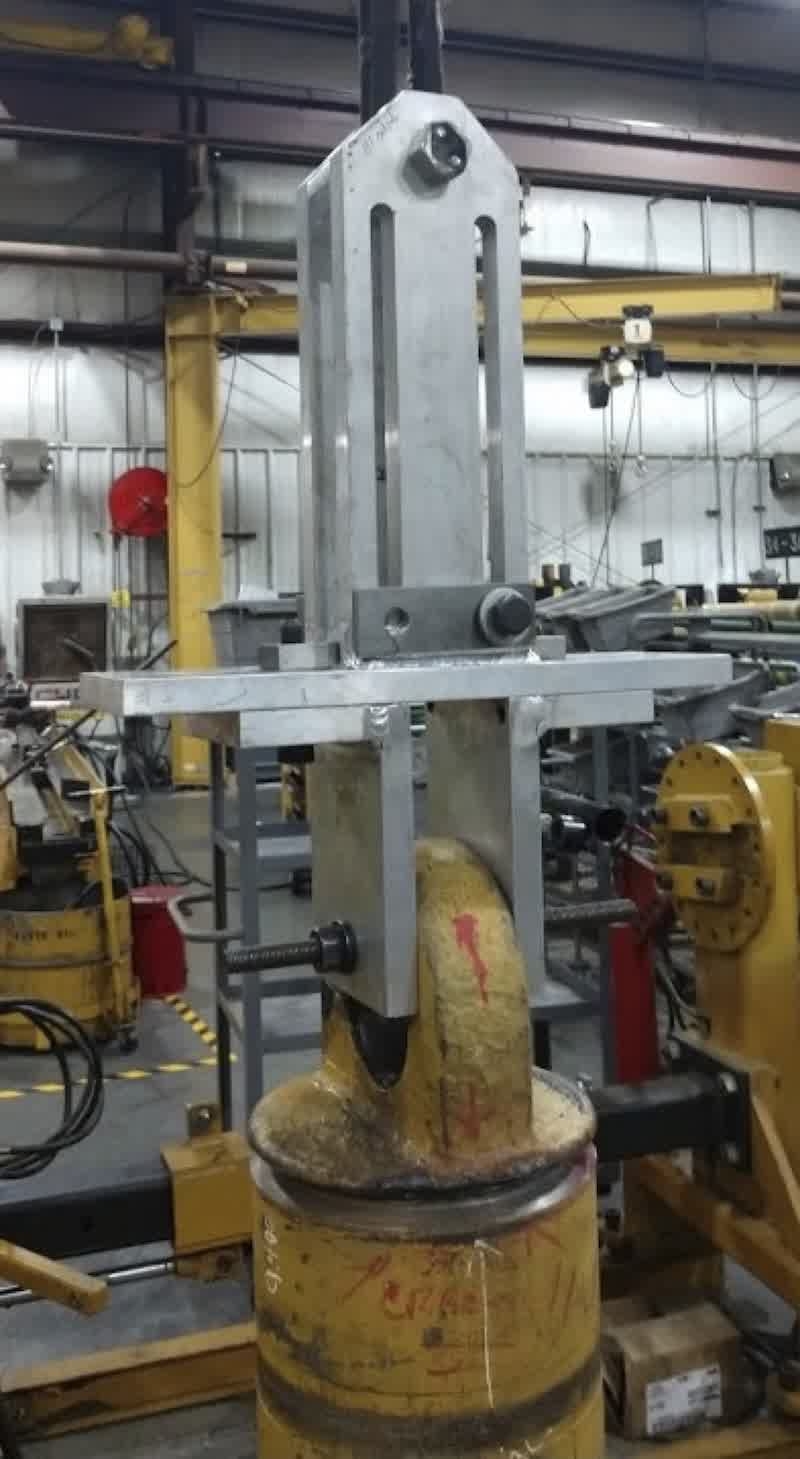 Universal Fixture for CylindersLead alloys are another necessary item for the hard chrome operation. Some platers buy ready-made tank or conforming anodes while others prefer to fabricate their own. Either way, lead alloys are a must-have item.
Those that make their own anodes will want to keep an inventory of the various ingots, cast grids, sheet, and wire stock needed. As with chromic acid, keeping a year’s inventory of these materials provides an adequate safety net against shortages and price increases.
Companies that purchase ready-made anodes should maintain an adequate back-up of the anode types used. It’s also recommended to maintain a good relationship with the anode supplier. Like chromic acid, lead has also faced environmental scrutiny, so the number of anode suppliers has become limited. Only a few remain, and their support is fundamental to your well-being.
There’s no shortage of stop-off suppliers, but that doesn’t negate the need to maintain an adequate inventory of the materials used. Depending on the type of parts being plated, this can include tapes (conductive and non-conductive), various vinyl shapes, waxes, lacquers, permanent PVC or CPVC shapes, and a host of other items.
Keeping a larger supply on hand ensures availability when needed. Each operation should evaluate its stop-off needs because they vary drastically with the part requirements. A captive shop typically uses the same stop-off materials, while a job shop needs to inventory all types so it can plate anything that comes in the door.
The type of fixtures used varies with the parts configurations being plated. For captive operations, this is typically a set of standardized fixtures dedicated to a particular part. Job shops, on the other hand, need a more varied set of fixtures to plate a wide variety of parts. They also need the ability to fabricate specialty fixtures for unusual parts.
Regardless of the operation, it’s important to keep an adequate inventory of backup fixtures and the materials needed for fabrication.
Skilled Labor
Labor is a clear necessity; this includes tank-side workers and their supervisor(s). Education for both is important if efficiency and success are expected, but each requires a different skill set. The tank-side workers need knowledge of the basic processing skills related to the parts being plated. This includes recognizing when conditions change and when questions should be asked. Supervisors need a deeper understanding of the process, its quirks, the specifications they must follow, the many variables involved, and insights into troubleshooting and problem-solving.
Unfortunately, schools don't teach hard chrome plating as a trade, yet it is of significant importance to our industry. Older-vintage hard chromers became skilled through trial and error; their knowledge was gradually passed down to their replacements. However, valuable information is always lost at every transition. That training method worked well enough until around the mid-1970s.
Unfortunately, the last batch of skilled ‘old-timers’ retired years ago, which left an education gap in today’s workforce. To make matters worse, very little written material on hard chrome plating explains the skills needed.
A lack of education and know-how in any industrial process always results in inefficiencies, typically:
- A decrease in the overall product quality.
- An increase in the rework volume.
- A decrease in the production efficiency.
- Lost business and lower profit margins.
Hard chrome plating is no different. In fact, these defects are amplified in our industry because, unlike other trades, it’s hard to find people with these skills. These employees usually need to be trained in-house.
Operating with a poorly trained workforce is a costly mistake. This applies to both the tank-side workers and their supervisors. On the other hand, trained, highly skilled workers can greatly improve throughput and increase the company’s profits.
We addressed the training issue using three approaches:
1. On-Site Training
Remote schools are sometimes available for processes like anodizing and electroless nickel plating, but nothing viable exists for hard chrome. NASF offers a course, but it barely covers the basics and provides no hands-on training. In addition, off-site schooling creates production issues when valuable employees are away for an extended period. Off-site schooling also adds costs for travel, housing, and living expenses.
Fortunately, there’s an alternative. Hard chrome training can be provided at your plant, on-site using your parts, your equipment, and your processes. This training comes to you, so there are no work stoppages or travel expenses, and you can train multiple employees at the same time.
This training can be tailored to your specific needs and can even include troubleshooting for various problems or difficult parts. This can be provided as classroom instruction, tank-side training, or a combination of both. Most scenarios include a mixture of these and can also incorporate an evaluation of the equipment and procedures being used.
This training is also available to bring new employees up to speed and help them get off to the right start. Another option that some corporations find attractive is annual refresher training. This helps eliminate the gradual efficiency reduction that seems to plague certain operations. You can combine annual refresher training with an equipment and maintenance evaluation to ensure everything is functioning at its peak.
2. Technical Manuals
Two manuals are available that cover the entire knowledge base needed for a successful hard chrome operation. These are recent publications with the latest up-to-date information.
Hard Chrome University Book (the Red Book): This book is used for generalized hard chrome training and is a valuable resource for both the tank-side plater and the supervisor. It covers every topic involved with the trade and provides valuable process control information. It’s complete with color illustrations and graphs for clarity. The text covers both the fundamentals and detailed advanced information.
Hard Chrome Secrets Book (the Blue Book): This book contains closely held technical knowledge in an easy-to-read format. It covers every aspect of the art and science, from both the practical and technical viewpoints. It includes scientific information, technical advice, and numerous tricks of the trade developed by experts over the years. It covers how to apply high-quality hard chrome deposits at the lowest cost. Hard Chrome Secrets is most valuable to the plating supervisor and should be on the shelf of every hard chrome operation whose objective is producing a quality hard chrome deposit most efficiently at the lowest cost.
These manuals have a limited publication and are not inexpensive. However, they provide incredibly valuable information that could easily save your operation six figures annually. They are only available to companies with a commercial hard chrome operation.
3. Online School Development
Plating Resources, Inc. is considering developing an on-line training program specifically for hard chrome technology. This is currently in the planning stage and only needs confirmation from the hard chrome industry that it would be useful. This online school would include several development levels, such as Tank-Side Plater, Plating Supervisor, and Hard Chrome Technician.
These levels would provide the knowledge needed for those positions, with each level building on the previous one. The program will use an easy-to-follow format, and each course should take around 40 hours to complete. Students can complete the course at home in the evenings, with instructor interaction so they can ask questions and gain clarity.
This would be an industry first because an online hard chrome school hasn’t existed before. This is a better approach than using a remote classroom because it eliminates travel and living expenses, as well as lost production while employees are away. An online school seems like a better approach because it eliminates expenses and time away, and students can learn at their own pace.
Laboratory
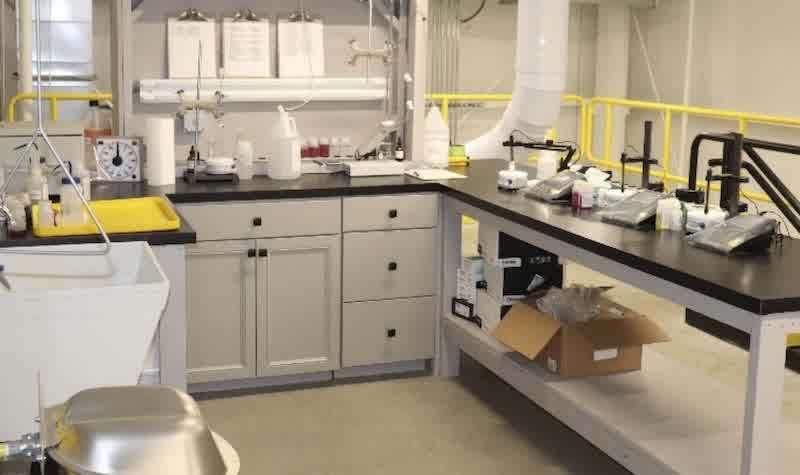 An In-House Plating Bath Control LaboratoryMany platers use an outside laboratory for controlling their bath concentrations, often their chemical supplier. This is generally a mistake on several fronts unless the operation is small and has minimal throughput. The worst case is when the company delays bath analysis until plating problems appear and the rework rate increases.
Relying on vendor-based laboratories for bath control has two problems.
- There’s a significant time delay from when the sample was taken and when you receive the results. The bath changes during that time lapse, so the results are never current, and the bath remains unbalanced.
- Many of today’s laboratories use automated analysis equipment, and the results are often unreliable. This primarily depends on when and how often instruments are calibrated and maintained. The reliability of these results is always in question.
Establish a routine analysis frequency so bath chemistry stays within a reasonable variance. This variance mostly applies to the chromic acid, sulfate, and any secondary catalyst used. Most experts recommend limiting this variance to 2-5% for best performance and repeatability.
The best way to control the chromic acid and sulfate is by in-house testing. A small laboratory set-up doesn’t need to be large or elaborate. Forget using Baume’ or Kocour kits for this because these are inaccurate. Using professional lab glassware, reagents, and procedures is much better. Weekly testing works well for most small- to medium-sized operations. Several baths can be tested in less than an hour.
A reliable outside laboratory or your vendor should then be used for back-up testing once the in-house analysis program is established. This will confirm your results while also controlling the impurities like trivalent, iron, copper and chloride. Those impurities don’t typically build up quickly, so monthly testing for these is usually sufficient.
Maintenance
Many platers overlook equipment maintenance until a breakdown occurs, then it’s a mad rush to get back in production. Some breakdowns require replacing a component, which invariably has a lengthy delivery time, sometimes exceeding 6-8 weeks or more. Meanwhile, the plating system is down, and production stops until the repair is completed. Equipment breakdowns are very costly in terms of lost income.
A regular maintenance program is critical to business success. These should be established for daily, weekly, monthly and annual requirements. The Hard Chrome University book published by Plating Resources, Inc. has a chapter on System Operation and Maintenance that outlines the various requirements in detail. Each plating system has its own particular requirements, but many generalities apply across the board.
Assign equipment maintenance to one person, using written instruction forms for each maintenance period.
Another part of a smart maintenance program is maintaining an inventory of critical spare parts. Having these on hand can save weeks of downtime because you can replace the failed component immediately instead of waiting for delivery. A replacement can then be ordered to restore your inventory.
Stocking the following spare parts should be considered, in no particular order of importance:
- Immersion Heaters
- Pumps
- Chemicals
- Anodes
- Fixtures
- Fan Belts
- Stop-Off Supplies
- Gaskets & Seals
- Polishing & Grinding Supplies
- Laboratory Supplies
- Ventilation HEPA Filters
- Filter Media
- Rectifier Modules & Parts
- Lubricants
- PPE Gear
- Others specific to your system
Profits
A business should generate a profit on every part plated, not just here and there. One of the problems is that the actual plating costs are often unknown. It’s relatively easy to calculate the general overhead, but a lot more complicated to detail specific job costs. This is especially true when multiple tanks are used, and several jobs are plated at the same time, each with different quantities, chrome thicknesses, and preparation steps.
A plating job should only be quoted once the actual costs are known; then the desired profit margin is applied. Typical hard chrome profit margins vary all over the map, but these seem to be typical:
- 20%: Considered a low margin
- 30%: An average margin
- 50%: Or more is a high margin
Margins above 50% can apply to unusual jobs where the part is excessively large, requires a thicker or tight-tolerance deposit, is overly complicated, or has unusual specification constraints. Another area where high margins apply is when you can repair an expensive part instead of replacing it, or when your shop is the only one that can handle the job.
A plating operation must detail its exact costs on every job it handles. Guessing costs or using estimates typically leads to losses. A costing program is now available in Excel that details all costs, both overhead and those related to plating a specific job, regardless of its requirements. This program
includes suggested profit margins and even generates the selling price for quoting, all based on the actual costs and the desired profit margin. Both job and captive operations would benefit from using this. Many job shops will be surprised by how much profit they leave on the table.
Capital
Many business managers consider setting aside a portion of profits as a capital reserve a good business practice. This amount is dedicated to the plating operation for maintenance, capital expansions, and unknowns. This may also include the future costs for any changes in the regulatory requirements. The exact amount of the capital reserve varies from operation to operation and is considered a strategic practice for future unidentified costs. There’s nothing worse in business than needing capital and not having it available.
Compliance
Regulatory compliance for environmental and worker safety issues is an ongoing requirement for hard chrome operations. You can’t sidestep this requirement because violations can be very costly and, if excessive, can even shut down the operation. The biggest issue usually involves meeting the air discharge limits.
Most hard chrome operations today rely on the Zero Discharge Recovery approach for their sewer regulations. This system is easy to understand and inexpensive to operate. It functions by reclaiming and reusing all of the operation’s rinsates, thereby bypassing the need for a waste treatment system and a sewer connection.
Tackling the air discharge has been both challenging and costly until a recent design innovation. Many operations rely on a complex ventilation system and/or expensive fume suppressants. A new approach provides a design that produces ZERO chrome discharge to the atmosphere – without needing to use a fume suppressant. This is the Sustainable Hard Chrome concept. It is not a marketing gimmick or tactic and has been proven in Real-World hard chrome shops operating at 20,000 amperes. The air discharge was shown to be ‘Zero’ by an EPA-approved laboratory.
This was accomplished without using a fume suppressant. This technology is easiest to apply to new system installations and plating system upgrades. The beauty of this approach is that authorities can’t regulate below zero, so the operation stays in compliance regardless of any regulatory tightening. Other features include improving the operator’s safety and lowering the operation’s chemical costs.
We hope this article opened some eyes and offers direction for improving your hard chrome operation.
Eric Svenson Sr. is CEO of Plating Resources and a Master CEF and IUSF member. Visit www.Plating.com. If you have any questions or wish to explore this topic further, please get in touch with Vicky at Vicky@Plating.com.