


The metal finishing industry has spent years talking about digital transformation.
Now, according to Steelhead Technologies CEO and Co-Founder Jeff Halonen, the conversation is rapidly shifting from whether shops should embrace technology to how quickly they can leverage it.
That reality is one of the driving forces behind Steelhead Technologies’ recent acquisitions of Visual Shop and Bluestreak, two long-established providers of job shop management and quality management software serving the finishing and coating industry.
While the acquisitions expand Steelhead’s customer base and technical expertise, Halonen says the bigger story is what the combined organizations can deliver to finishers in an era increasingly defined by artificial intelligence, automation, and data-driven decision-making.
“The velocity of technology improving is going to continue staying elevated,” Halonen says. “That’s really the magic of joining forces.”
Bringing Industry Expertise Under One Roof
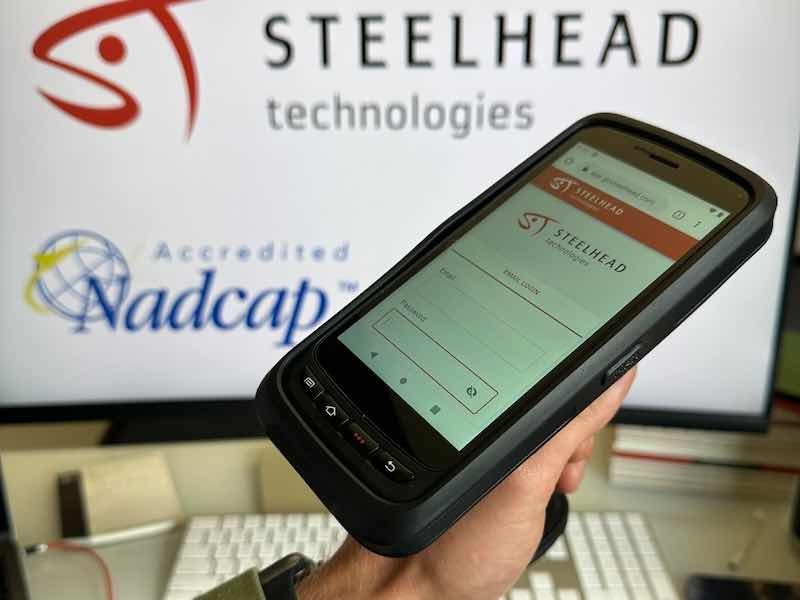 Visual Shop and Bluestreak have built strong reputations in the finishing industry over many years, serving approximately 150 and 90 customers, respectively.
According to Halonen, one of the greatest benefits of the acquisitions is not simply adding customers but bringing decades of industry knowledge into a single organization.
“Visual Shop and Bluestreak have deep relationships with their customers,” Halonen says. “They know their businesses inside and out. So we are absolutely benefiting from now having all that information, know-how, and relationships under one roof.”
“To truly leverage AI, it needs to be deeply integrated into your everyday workflow,” he says. “And that’s what we deliver for our customers.”
That expertise is already being put to work.
Todd Wenzel, founder and president of Bluestreak, recently spent time at Steelhead’s headquarters collaborating directly with the company’s engineering team.
“They have certain features that we don’t have in Steelhead that their customers love and depend on,” Halonen says. “So we’re working on bringing the best together.”
The long-term strategy is to consolidate future development efforts within the Steelhead platform while incorporating the most valuable capabilities from both acquired products.
Building a Comprehensive Platform
 Steelhead’s vision differs from traditional software approaches that focus on a single operational area.
Rather than serving only as a quality management system or production tracking tool, Steelhead combines multiple business functions into a unified platform.
“We will be putting all product investments into the Steelhead platform in the future because that’s where we see the opportunity,” Halonen says.
He describes Steelhead as a platform that integrates enterprise resource planning (ERP), manufacturing execution systems (MES), quality management (QMS), customer relationship management (CRM), and accounting functionality into a single system.
That integrated approach becomes increasingly important as artificial intelligence capabilities mature.
“If AI can see your accounting and your quality and your receiving and your purchasing and your maintenance, it can do all sorts of magical things,” Halonen says.
“The goal is to find all these different work streams in your business and reduce the number of people that it takes to operate your business,” he says.
By contrast, when information is scattered across disconnected systems, the value of AI becomes limited.
“To truly leverage AI, it needs to be deeply integrated into your everyday workflow,” he says. “And that’s what we deliver for our customers.”
AI Is Already Delivering Results
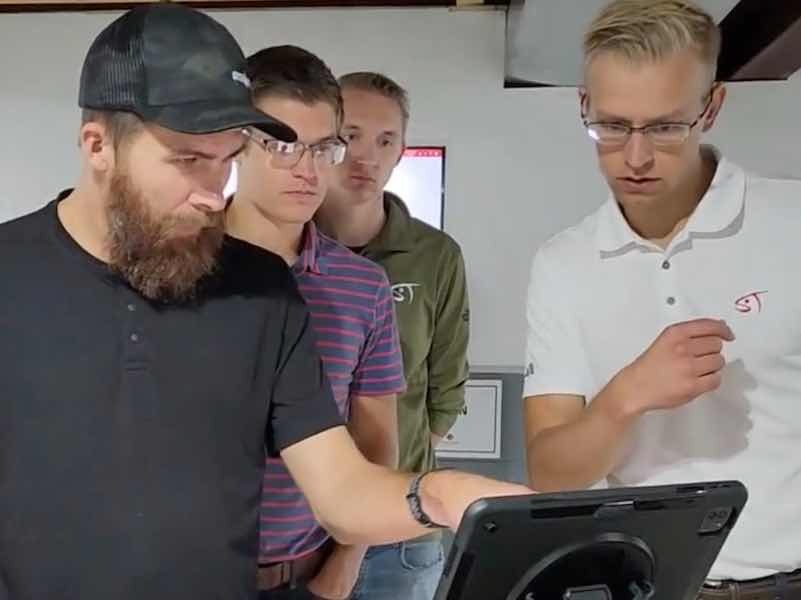 Although many shop owners still view artificial intelligence as something futuristic, Halonen believes AI is already creating measurable operational improvements throughout the industry.
“The wonderful thing about AI is that it makes technology very approachable,” he says.
One example is AI-powered order entry, which Steelhead customers are already using to reduce administrative workloads.
“We’re seeing shops reduce their order-entry burden by half or more,” Halonen says.
He points to a 30-employee finishing shop in Minnesota that reduced order-entry staffing from two people to one while simultaneously improving accuracy and processing speed.
“There are fewer errors, and it gets done faster,” he says.
Steelhead is also developing AI tools for bill entry, lead-time management, quoting, business analytics, and operational insights.
One upcoming capability will allow shop owners to interact with their business data using natural language through a mobile application.
“You’ll be able to click a button on your phone and talk to it and say, ‘How was my revenue last week? How’s my quality trending? Who are my top five customers?’” Halonen says.
The goal is not to replace people but to automate repetitive administrative tasks so employees can focus on higher-value activities.
“The shops that know if they’re making money on a part-by-part basis are the ones that really run away with it,” Halonen says.
“The goal is to find all these different work streams in your business and reduce the number of people that it takes to operate your business,” he says.
More importantly, he adds, shops can grow without proportionally increasing front-office staffing.
“You can double your revenue without adding any people to the front office.”
Data Becomes a Competitive Advantage
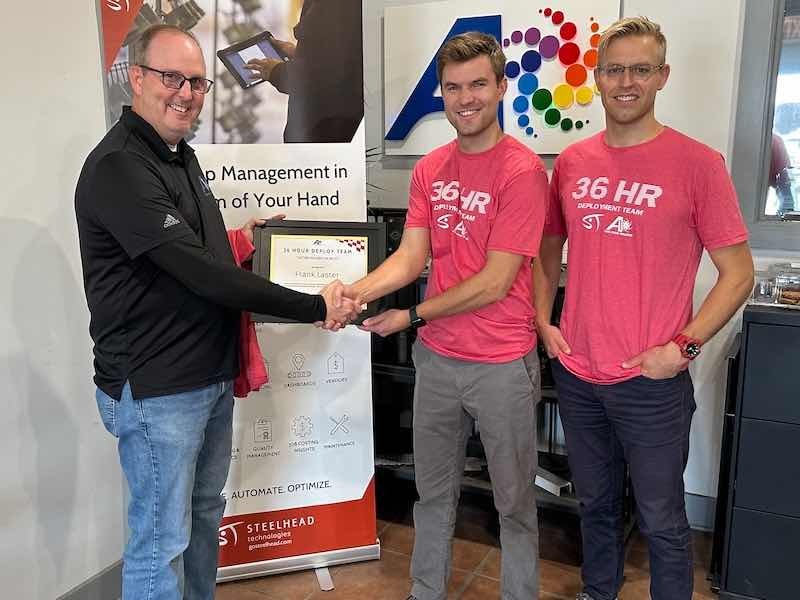 Beyond automation, one of the most significant benefits of digital transformation is improved visibility into business performance. Halonen says many finishing operations still lack detailed insight into profitability at the process, line, or part level.
Some shops track revenue and labor costs by process, while others have little visibility into operational performance.
“There are a lot of shops that don’t even have that level,” he says.
The most successful operations, however, are using detailed data to understand profitability on a part-by-part basis.
“The shops that know if they’re making money on a part-by-part basis are the ones that really run away with it,” Halonen says.
With access to information such as masking costs, inspection costs, packaging expenses, labor consumption, and production performance, managers can make more informed decisions about pricing, scheduling, and capital investments.
As margins become increasingly important in a competitive marketplace, that level of insight can create a meaningful advantage.
Technology and Succession Planning
Digitalization is also becoming a key consideration for owners preparing to transition their businesses. Whether the goal is selling to a strategic buyer, private equity firm, employees, or family members, Halonen believes technology infrastructure can significantly influence valuation and long-term success.
“One of the biggest failure modes of a plating shop, a finishing shop, or even any small business is when the owner is vital to the day-to-day operation,” he says.
If a business depends heavily on one person’s knowledge, relationships, or decision-making, succession becomes far more difficult.
Financial buyers, in particular, want systems, processes, and leadership depth that can operate independently of a single individual.
“They want to see depth in leadership,” Halonen says. “They basically go through your org chart and push and pull and say, ‘If I take this person out, does the whole thing come down?’“
“That’s what’s really exciting,” Halonen says. “Once you get the foundation shifted over, now you’re on the upside, and you’re focusing on growing the business.”
Digital systems help institutionalize knowledge and standardize workflows.
“If your quality manager leaves, can you train a new quality manager in a couple of weeks, or is the whole quality program in their mind?” Halonen asks.
Those are the types of questions buyers increasingly evaluate.
Technology platforms that capture operational data, document procedures, and standardize decision-making can make organizations more resilient and more attractive to future investors or successors.
More Than a Software Installation
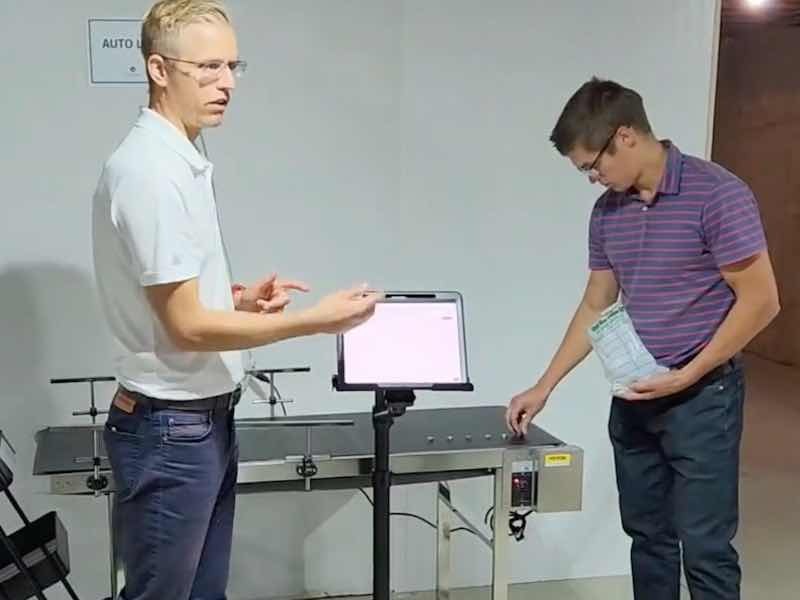 Halonen emphasizes that adopting a comprehensive management platform is not simply a software purchase.
“It’s really something you do when you want to change where the business is,” he says.
Before selecting any technology solution, he encourages owners to honestly assess their current operations and identify specific goals.
“Are we trying to grow? Are we trying to double in size? Are we trying to improve our profitability from 4% net margin to 20% net margin?” he says.
He also recommends involving employees throughout the evaluation process.
“Owners will watch their own team do scheduling or invoicing and say, ‘Wow, that’s how painful your workflow is,’” Halonen says.
The implementation process itself requires commitment, planning, and collaboration.
Steelhead typically assigns a deployment leader, project management resources, on-site support, training, and consulting services to guide customers through the transition.
For a mid-sized finishing operation, the deployment process often takes several weeks to a few months. Once the system is operational, however, the focus shifts toward continuous improvement and long-term growth.
“That’s what’s really exciting,” Halonen says. “Once you get the foundation shifted over, now you’re on the upside, and you’re focusing on growing the business.”
A Stronger Technology Partner for Finishing
For Steelhead, the acquisitions of Visual Shop and Bluestreak represent more than simple market expansion. They reflect a broader commitment to helping finishing and coating companies navigate an increasingly digital future.
As artificial intelligence, automation, and integrated business systems become more common across manufacturing, Halonen believes finishers need technology partners that understand the unique challenges of their industry.
By combining the expertise, customer relationships, and technical capabilities of three established software providers, Steelhead hopes to accelerate innovation while helping shops improve efficiency, profitability, and operational visibility.
For an industry facing labor shortages, increasing quality requirements, and growing competitive pressures, that may be the most significant benefit of all.
“We hold ourselves accountable to keeping our customers at the front of the pack on technology,” Halonen says. “They’re continuing to be able to grow their business, focus on quality, focus on their customers, and leverage AI to automate as much as possible.”
Visit https://gosteelhead.com.