



Mike Barnstead: A Finishing Career Built on Solving Problems Others Couldn’t

When Mike Barnstead walked into Apple in March 2013 as a Surface Finishing Subject Matter Expert, he was one week away from turning 50.
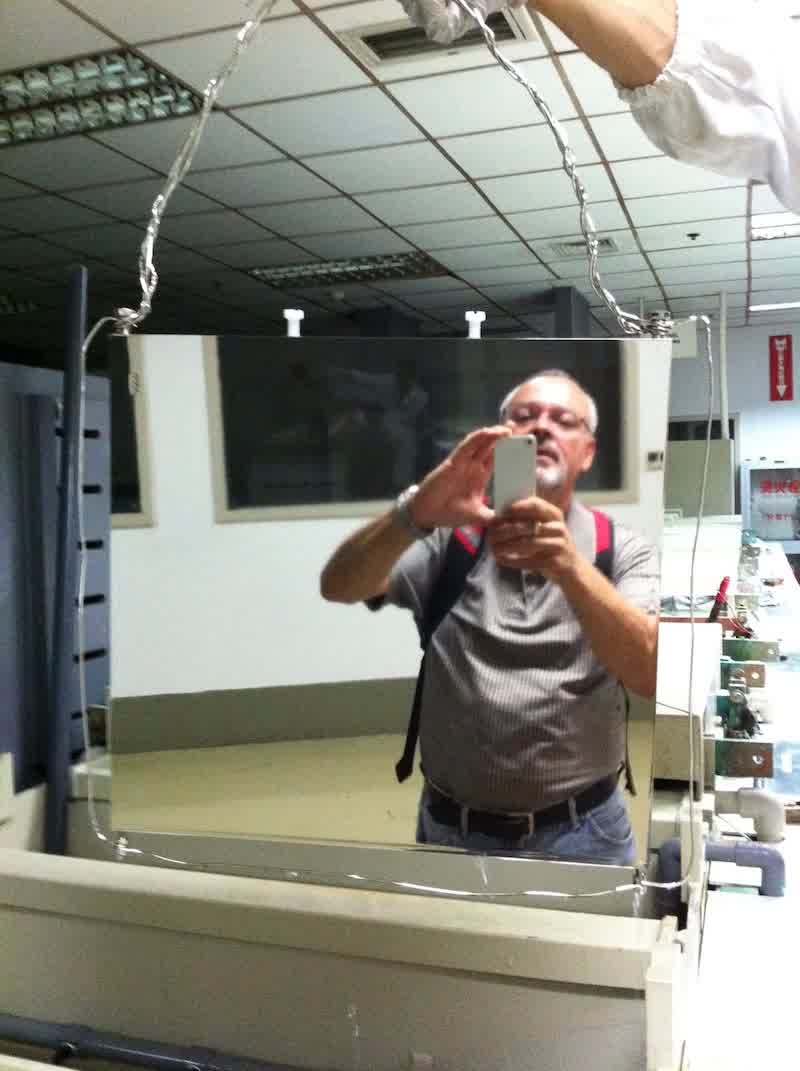
Mike Barnstead takes a photo of a finished test piece for an Apple product line.He had already spent decades in the surface finishing industry. He knew plating chemistry; he knew electroless nickel; he knew technical service and troubleshooting, and he had worked inside plating operations and for chemical suppliers. Perhaps most importantly, he had years of experience walking into finishing shops where something wasn’t working, and everyone expected him to figure out why.

Barnstead was hardly beginning his career. Yet during his first couple of months at Apple, one thought kept running through his head.

“I’ve made a big mistake,” Barnstead recalls thinking.

He didn’t doubt surface finishing. It was because he had suddenly entered a company filled with engineers, designers and technical experts working at a pace and level of detail unlike anything he had previously experienced.

“These people are so smart,” Barnstead says. “These people are so active.”

Eventually, he found his footing.

“Apple is a hard place to learn,” Barnstead says. “But once you learn it, it actually is a very good place to work.”

Nearly 13 years later, Barnstead retired from Apple as Manager of Surface Finishing, an extraordinary conclusion to a career that began almost accidentally when he turned down the better-paying of two job offers because he didn’t like where the job might eventually take him.

The other position introduced him to metal finishing. Once Barnstead entered the industry, like so many others captivated by the chemistry, science, and almost indefinable art behind finishing metal, he never seriously considered leaving it.

Choosing Plating Over Lottery Tickets
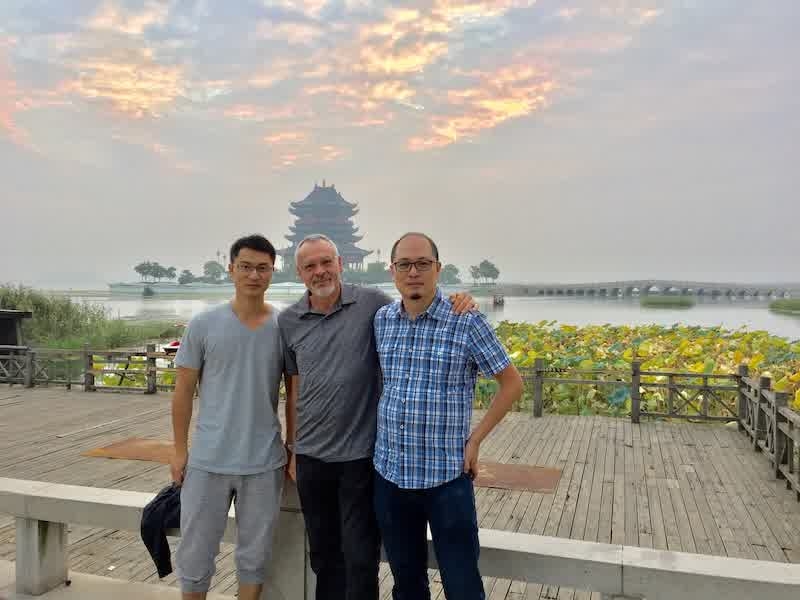
Barnstead's work with Apple took him all over the world, and frequently to their research facilities in Asia.Barnstead's work with Apple took him all over the world, and frequently to their research facilities in Asia.Barnstead’s path into finishing began after leaving North Carolina State University and moving from North Carolina to New Jersey.

He moved into his brother’s one-bedroom apartment, which meant his new residence was essentially the couch while he searched for work. Eventually, the search came down to two offers. One came from an ink company. The other was from Fidelity Chemical Products Corp.

The ink company actually made the better offer, including higher compensation and benefits. Its specialty, though, gave Barnstead pause. The company made and applied inks used on scratch-off lottery tickets.

Barnstead was pursuing a chemistry position, but the company told him its greater need was security. Management said he might start in chemistry, but they envisioned moving him into security eventually.

Barnstead knew that wasn’t what he wanted. So he accepted Fidelity’s offer, and it changed his life.

“Like so many people in the industry, once you’re in, you just never even consider leaving,” he says.

Barnstead began as a laboratory technician doing what he describes as fairly routine work before moving into increasingly technical responsibilities.

“I made a lot of mistakes,” Barnstead says, “but I only made them once.”

He started as a manufacturing quality technician and moved into in-house technical service, including cycle development. Early responsibilities included developing processes for plating aluminum memory disks as Fidelity grew its electroless nickel and pretreatment business in that market.

His interest intensified when he began working directly with customers.

“That was where the excitement started,” Barnstead says. “Working with people, taking pieces of ugly metal and turning them into jewelry.”

There was something immediately gratifying about transforming a component’s surface and seeing chemistry create something that hadn’t existed minutes earlier.

“There’s just something satisfying to me personally about, like I said, taking a piece of something and turning it into something else at the end,” Barnstead says.

It became his career.

Learning Finishing Before Cell Phones
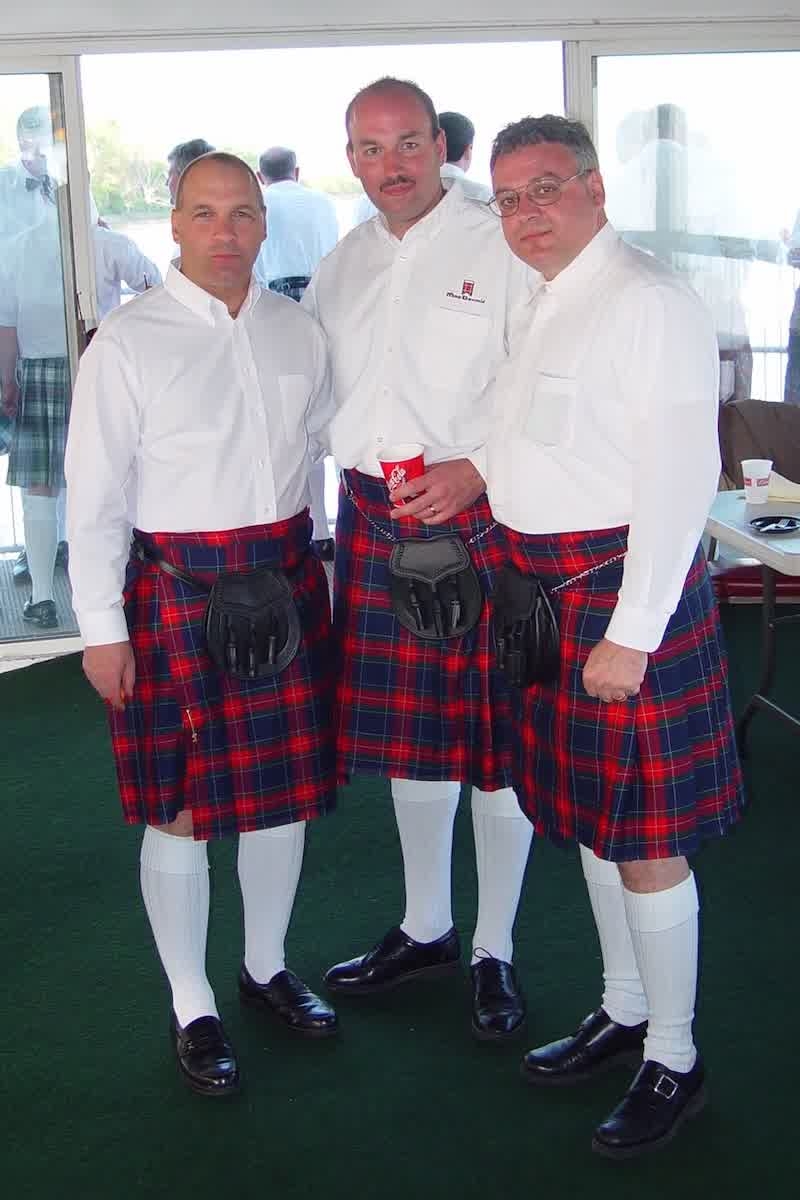
Barnstead back in his days with MacDermid Enthone.Barnstead back in his days with MacDermid Enthone.Eventually, an opening gave Barnstead responsibility for Fidelity’s nine-state Northeast territory. The job became Barnstead, his car and seemingly endless miles of highway.

He estimates he drove approximately 1,000 miles a week. One week he’d make his service stops traveling clockwise through his territory. The following week he’d go counterclockwise.

It was also the era before somebody standing beside a troublesome plating line could pull out a smartphone and immediately reach an expert.

Barnstead had to figure things out. And sometimes he couldn’t.

“I made a lot of mistakes because there was no one to call,” he says.

When he hit a problem he couldn’t solve, Barnstead had to leave the shop, find his car, and locate a payphone to call someone with more experience.

He laughingly describes that trip as “the walk of shame.”

But there was an upside.

“I made a lot of mistakes,” Barnstead says, “but I only made them once.”

It taught him one of the fundamental lessons that would guide the remainder of his career: surface finishing may be based on science, but successfully operating and troubleshooting finishing processes also depends enormously on experience.

“Absolutely, it’s a science,” Barnstead says. “But there’s a lot of art, so to speak.”

Thirteen Septillion Reasons Experience Matters
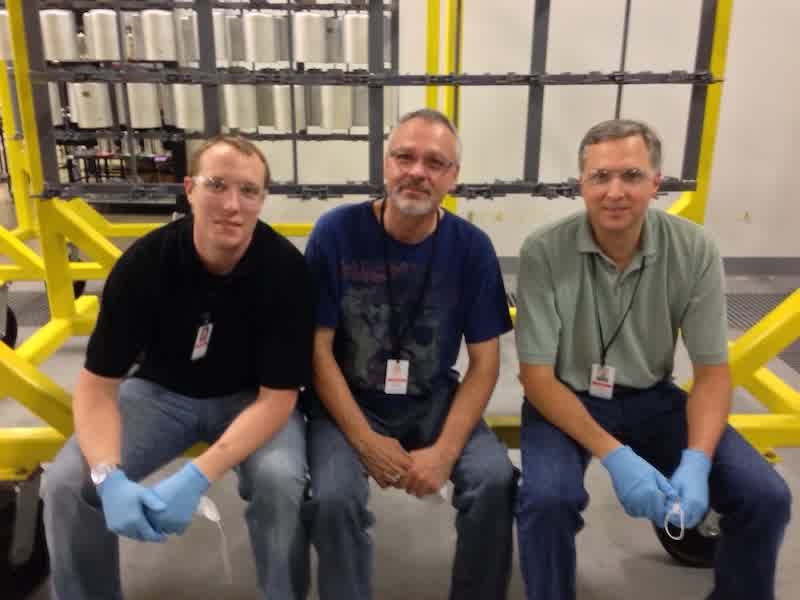
Barnstead and his Apple cohorts on a finishing test line working on a solution.Barnstead and his Apple cohorts on a finishing test line working on a solution.Years later at Apple, Barnstead received an unforgettable demonstration of just how complex finishing can become. A quality manager questioned whether all the process controls Barnstead had specified for a finishing line were verified and asked for a corner-case study that changed each variable individually to see the impact.

It was no small processing line, with approximately 60 tanks. Barnstead asked for the control plan. Together they began examining the variables controlled at each stage, perhaps three in one tank, five in another, and 10 farther down the line.  Then he began multiplying the possible combinations. Barnstead says the exercise produced about 13 septillion corner-case combinations if each parameter was changed and tested independently to see its potential impact.

Conducting that many corner case experiments might have represented tremendous job security, Barnstead jokes, but not much practical value. He removed factors such as rinse-water flow, dwell time, and other parameters he considered comparatively less significant.  The number was still staggering. Even after that reduction, Barnstead says more than 125,000 corner case experiments remained.

“The local service people hadn’t fixed the problem, so I was, like, the last gasp,” Barnstead says. “If I didn’t fix it, then bad things would remain.”

The experience provided an extreme example of something finishers understand intuitively. You can measure practically everything, but experience tells you what measurements matter most and where to look first when a process starts going wrong.

That expertise does not come from a specification sheet.

“You talk to the people that live the line,” Barnstead says.

Learning How to Troubleshoot People as Well as Processes
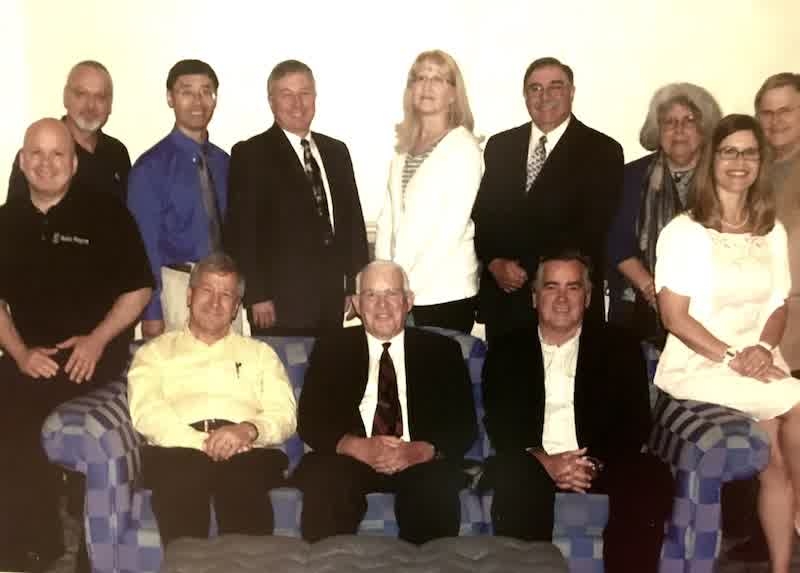
Barnstead, second from left in the back row, was actively involved in metal finishing trade groups his entire career.Barnstead, second from left in the back row, was actively involved in metal finishing trade groups his entire career.For roughly half of his career, Barnstead says his role was essentially troubleshooting for chemical suppliers. He spent two years with Fidelity, two with National Metal Finishing in Springfield, Massachusetts, two with McGean Rohco, and more than 16 years with MacDermid before joining Apple.

Often, by the time someone at Barnstead’s level arrived, others had already tried to fix the problem. That made listening more important than arriving with all the answers.

His first conversation would often be with the local service technician who had been working with the customer.

“The local service people hadn’t fixed the problem, so I was, like, the last gasp,” Barnstead says. “If I didn’t fix it, then bad things would remain.”

Interestingly, he often found that local technical-service personnel already had valuable insight into what was occurring, but their recommendations hadn’t necessarily been heard.

That reinforced Barnstead’s belief that troubleshooting must be collaborative. He talked with operators and asked basic questions. What’s changed? What’s different? What have you noticed?

A seemingly insignificant answer, such as changing a rack coating, could provide the clue that solved a stubborn problem. Barnstead also learned that fixing chemistry wasn’t always enough.

“I always wanted to solve not only the technical problem, but the comfort problem,” he says.

“You’ve been doing it wrong for 30 years then,” he finally told them. It got the owner’s attention. 

When a customer’s line isn’t functioning, people aren’t merely confronting a processing defect. They’re worried about production, quality, and whether the same failure will occur again.

“People are uncomfortable when their line isn’t working,” Barnstead says. “What’s happening? Why is this happening now? How can you assure me it’s never going to happen again?”

His approach was transparency. Barnstead explained what he believed was happening, described how he planned to investigate it, and shared what he discovered along the way.

“I was right sometimes, I was wrong sometimes, but I usually got to the problem at the end,” he says. “The main thing was the communication and the collaboration, and talking to the people who live on the line every day.”

‘You’ve Been Doing It Wrong for 30 Years’
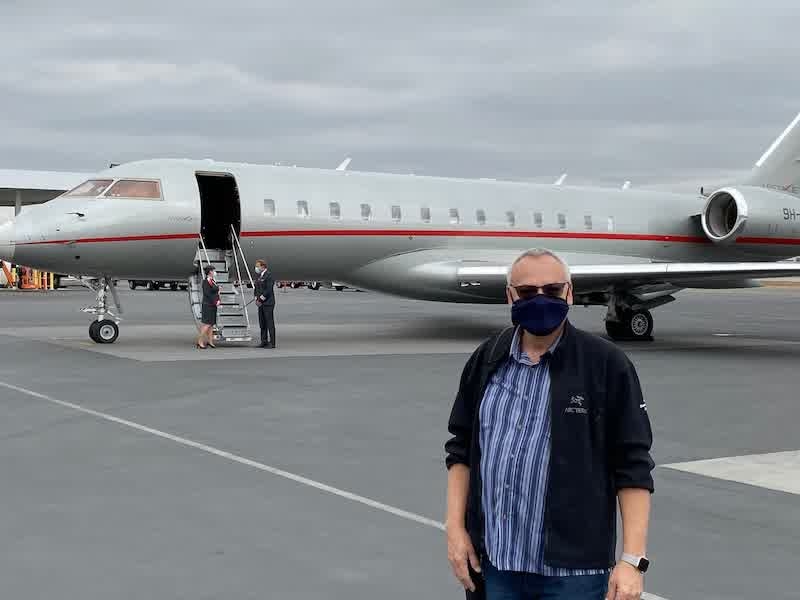
A perk of working for Apple during the pandemic was private jets that took the surface finishing team to Asia to visit production lines.A perk of working for Apple during the pandemic was private jets that took the surface finishing team to Asia to visit production lines.Collaboration did not mean Barnstead was afraid to challenge long-established practices. Early in his career, he visited a Pennsylvania finishing operation struggling to plate a particular copper alloy.

The company was using hydrochloric acid as an activator. Barnstead didn’t believe it was appropriate for the specific alloy and recommended an alternative approach. The response is one familiar to virtually every technical-service representative.

“We’ve been doing it this way for 30 years.”

Barnstead demonstrated an alternative in beaker tests. He placed a beaker of sulfuric acid solution on the line and showed that the problem, while not eliminated, could be dramatically reduced.

Still, the company resisted changing. The repeated insistence that the process had worked for 30 years eventually tested young Barnstead’s patience.

“You’ve been doing it wrong for 30 years then,” he finally told them.

It got the owner’s attention, and illustrates both the technical confidence Barnstead developed and the importance he places on understanding why processes work rather than merely accepting that they always have.

Mentors Who Explained the ‘Why’
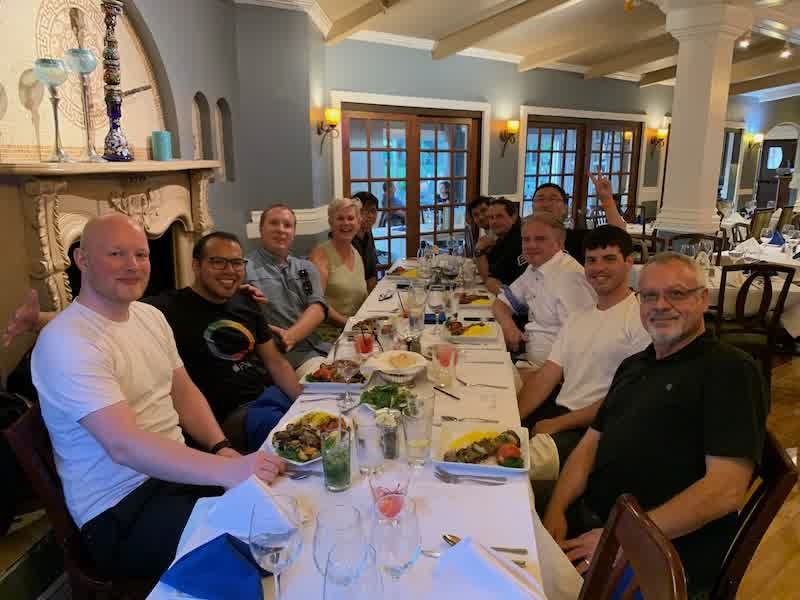
Barnstead and the U.S. and Asian Apple finishing teams celebrate at a dinner.Barnstead and the U.S. and Asian Apple finishing teams celebrate at a dinner.Barnstead readily acknowledges he didn’t acquire his finishing knowledge alone. One of his earliest and most influential mentors was Fidelity researcher and formulator Dr. Dolly Leibman.

“Dolly was a real gem,” Barnstead says.  He knew virtually nothing about metal finishing when he arrived at Fidelity, and Leibman took the young technician under her wing.

She explained electroless nickel, including what she was researching, how the process worked, and, particularly important to Barnstead, why she approached problems the way she did.

“She always took the time to explain the whys,” Barnstead says, adding that the mentoring provided him with a foundation in electroless nickel, which eventually became one of his technical specialties.

Another important influence was MacDermid Vice President Cliff Nye, who helped Barnstead develop as a manager. Barnstead specifically remembers struggling with another manager who gave Barnstead’s employees directions that conflicted with his own. Nye and Barnstead were in the same office, and Nye called him into a conference room, put the other manager on a conference call, and, as Barnstead remembers it, “read us the riot act” over the conflict.

Then Nye hung up, and he turned toward Barnstead.

“By the way, I would’ve done the same thing you did,” Nye told him.  Then he walked away. For Barnstead, lessons like those accumulated along with decades of technical knowledge. He would need all of it when Apple called.

Starting Over at 50
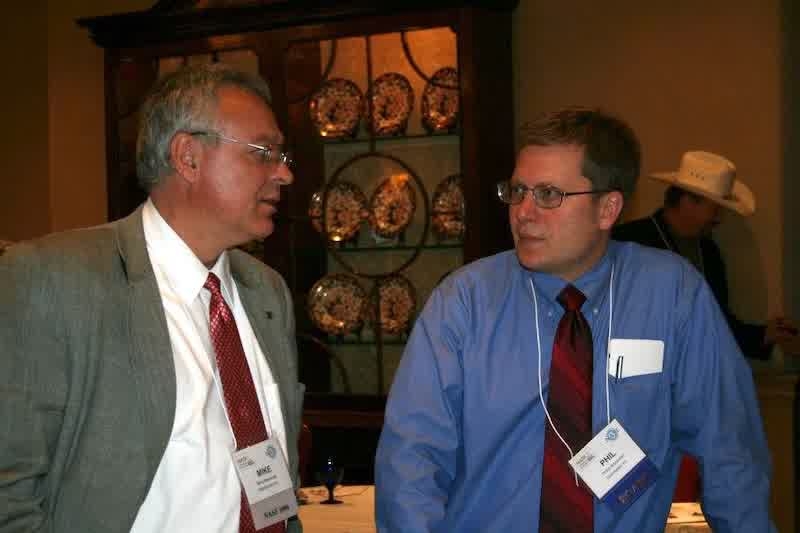
Barnstead back in his pre-Apple days, talking with Techmetals' President Phillip Brockman at an industry event.Barnstead back in his pre-Apple days, talking with Techmetals' President Phillip Brockman at an industry event.Apple first approached Barnstead approximately a year before he ultimately joined the company. He was living in Connecticut, and relocating across the country to Apple’s Cupertino headquarters wasn’t a decision to make casually.

Barnstead initially declined. Several months later, however, he reconnected with John Thornton, whom he had known through earlier work involving Gillette.

The conversations continued, and eventually Barnstead reconsidered. In March 2013, he made the move. Apple already had experienced anodizing personnel as well as expertise in inks and coatings. Barnstead says he was the first person hired specifically for plating.

And he started the week before his 50th birthday. It’s tempting to view 50 as a point when professionals should protect the expertise and position they have spent decades building.

Barnstead did almost the opposite. He moved across the country and entered an environment in which he suddenly had to learn again. His role also required changing perspective.

“It’s something no one would ever notice,” Barnstead says. “But that’s the kind of stuff Apple obsesses with. You won’t even notice it until it becomes a problem.”

For years, Barnstead had entered finishing shops representing suppliers. Now he entered them representing an OEM, and he quickly discovered people treated him differently.

But his basic philosophy didn’t change.

“Every shop’s different,” Barnstead says. “Every shop owner has different concerns, different constraints, different things that keep them up at night that I had to understand.”

Rather than dictating solutions, Barnstead preferred conversations.

“I think you should do this, and I recommend you do that. What do you think about this? Are there any problems?”

His goal was to work through problems with suppliers before implementing a solution.

Apple Asked Barnstead to Make the Invisible Better
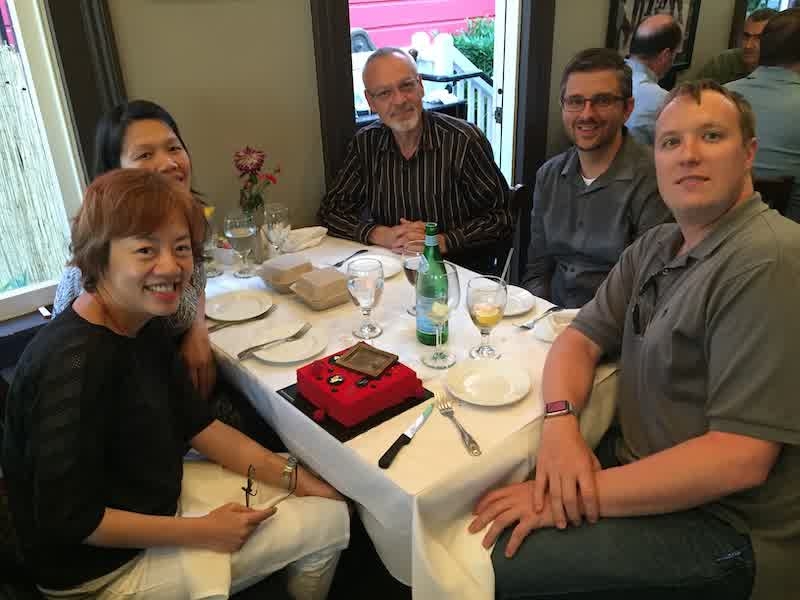
Apple's surface finishing team.Members of Apple's surface finishing team.One of Barnstead’s first major Apple assignments involved an object consumers handle constantly but rarely examine closely: electrical plug prongs. A designer didn’t like the variation in the force needed to insert and withdraw the company’s various power prongs from electrical outlets, nor how their surfaces wore during use.

Barnstead developed a finish that became known as pearl nickel plating. The requirement captured Apple’s approach to surface finishing. The prong needed to look good, but appearance wasn’t enough.

The finish had to withstand 50,000 insertion-and-withdrawal cycles without appreciable wear while maintaining a narrowly controlled force required to insert and remove the plug.

“It’s something no one would ever notice,” Barnstead says. “But that’s the kind of stuff Apple obsesses with. You won’t even notice it until it becomes a problem.”

The finish debuted in 2014 and, according to Barnstead, continued in use when he retired. Scaling the process presented another challenge, as Apple required electrical prongs in different configurations for products and electrical systems worldwide. Barnstead says production reached millions of parts each day.

Traditional rack plating wasn’t practical. The finish was also thickness-sensitive, because thickness variation affected gloss and Apple’s allowable gloss range was narrow.

Barnstead was told it couldn’t be done. He did it anyway, and developed a way to operate an emulsion-based satin nickel process in a reel-to-reel system.

“It was a challenge,” Barnstead says. “And not only did you have to do it, but you also had to do it the same way, 55 million times.”

The first attempt wasn’t exactly encouraging. The bath lasted seven minutes, and by the time development was completed, Barnstead says they were achieving approximately 36 hours.

The solution involved understanding what caused the process to agglomerate and how agitation inside a reel-to-reel configuration contributed to the problem.

“It took some engineering,” Barnstead says, “but we got there.”

The first production line required roughly 12 months to dial in. Barnstead says the second took approximately six months, and by the third installation the vendor brought the process online in about three months using the technical knowledge accumulated from the earlier efforts.

‘Nickel Isn’t a Thing, It’s a Family’
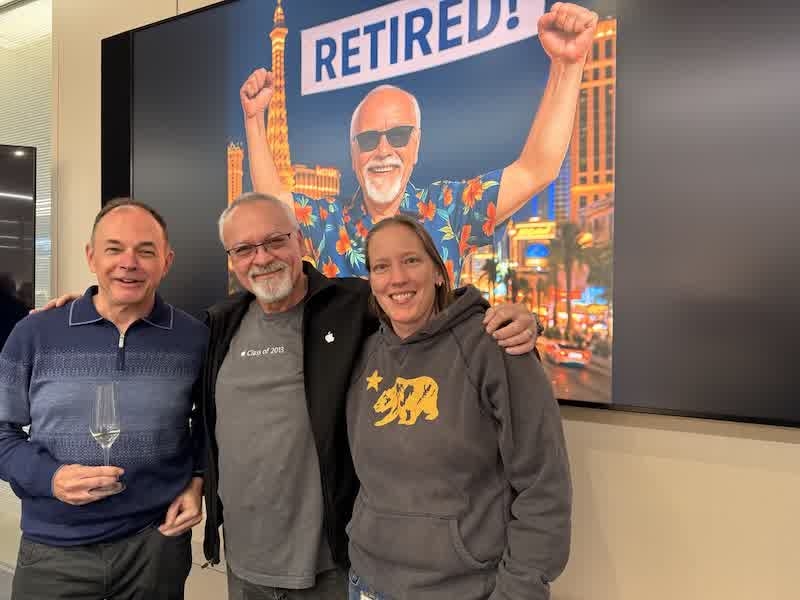
Barnstead was feted upon his retirement from Apple in 2026.Barnstead was feted upon his retirement from Apple in 2026.Some of Barnstead’s most important work at Apple wasn’t developing exotic finishes. It was helping designers and engineers understand finishing.

He remembers encountering a specification simply calling for “nickel plate.” To an engineer outside surface finishing, that might have sounded perfectly adequate, but not to Barnstead.

“Nickel isn’t a thing, it’s a family,” he says.

Electrolytic nickel, sulfamate nickel, satin nickel, and other processes can produce different attributes and suit different applications.

The real question wasn’t whether a component should have nickel. It was: What does the component need to do? Is appearance most important? Wear? Conductivity? Electrical contact?

Those conversations became essential because Barnstead worked closely with Apple’s industrial design and product design teams. Another memorable program dealt with plated fabric in a folding iPad keyboard.

Conductive traces depended on copper-plated fabric overplated with silver and sealed, creating an unusual finishing problem in which the material repeatedly flexed at a crease point.

The diversity of assignments reinforced a lesson Barnstead had learned decades earlier: surface finishing is rarely as simple as naming a metal.

Making It Right 55 Million Times

The iPhone was a product that Barnstead and the Apple surface finishing team took extreme pride in for its durability.The iPhone was a product that Barnstead and the Apple surface finishing team took extreme pride in for its durability.Eventually, Barnstead’s responsibilities expanded, and he became Manager of Surface Finishing, including involvement with Apple’s anodizing operation.

That exposed him to another dimension of finishing: extraordinarily tight cosmetic standards. At first, Barnstead admits, designers could place two parts in front of him, approve one, and reject the other, while he struggled to see the difference.

Over time, his eye developed. He learned to identify subtle differences in texture, gloss, and hue and recognize when something appeared slightly too rough, too dull, or slightly too blue, yellow, or dark.

“I have pretty good color discrimination,” Barnstead says. “I didn’t realize that until I started looking at two parts.”

But producing one perfect component was never enough.

“It was a challenge,” Barnstead says. “And not only did you have to do it, but you also had to do it the same way, 55 million times.”

Achieving that repeatability relied heavily on suppliers.

“Really, it comes down to close working relationships with the vendor,” Barnstead says. “Rigid process control. Very narrow parameters and a lot of automation, as much as we could cram into measuring and running and monitoring the process.”

Retirement, But Not Really Leaving Finishing
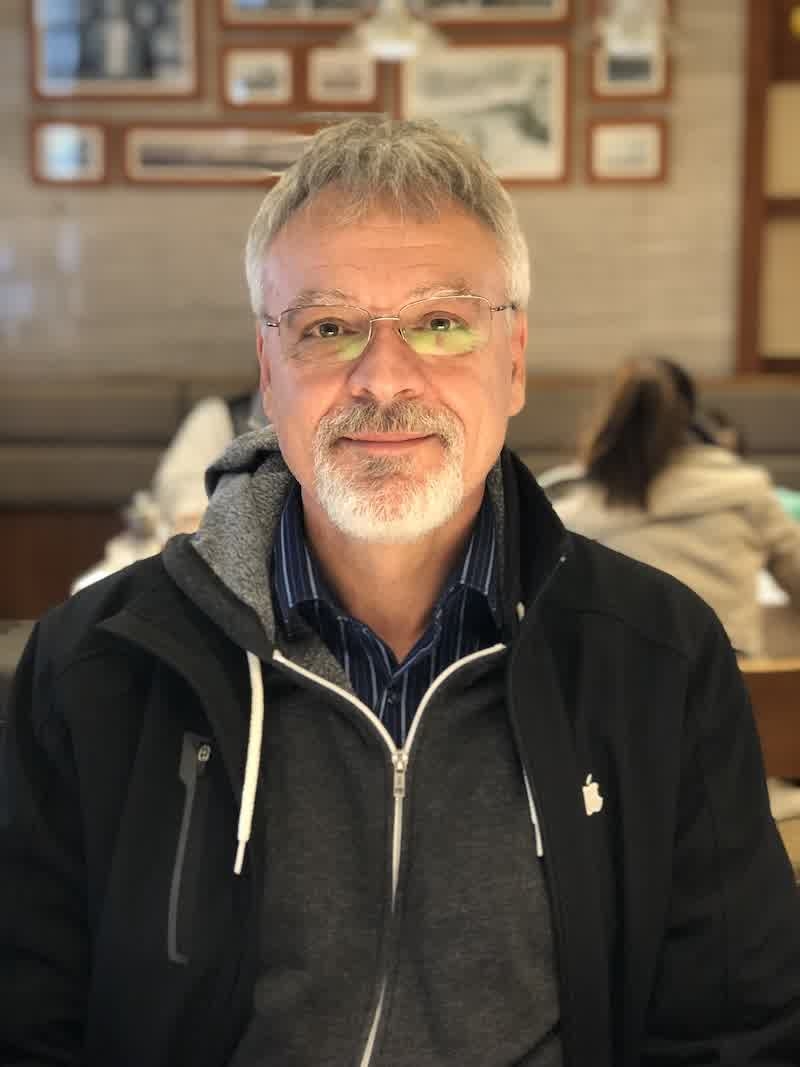
Barnstead has started Barnstead Consulting to continue his work in surface finishing and product development.Barnstead has started Barnstead Consulting to continue his work in surface finishing and product development.After nearly 13 years at Apple and decades in metal finishing, Barnstead retired as Manager of Surface Finishing.

But retirement hasn’t meant walking away from the problems he’s spent a career solving. Now living in Las Vegas, Barnstead has started Barnstead Consulting and says former colleagues keep contacting him when surface-finishing problems arise.

Some worked with him at Apple before moving to other technology OEMs.

“Hey, Mike, we’re having this issue, and we’re having that issue. What do you think about this?” Barnstead says they will ask.

That has already resulted in consulting assignments with several Silicon Valley OEMs. It may be a new company, but in many respects Barnstead is back where he started. Someone has a surface finishing problem, and Barnstead asks what they’re trying to accomplish.

He looks at the chemistry, the part, the design, the process, and the constraints. Most importantly, he talks to the people.

His consulting work also allows him to bridge a gap he encountered repeatedly during his Apple years: the distance between designing a component and understanding how it will actually be finished.

Visit https://barnsteadconsulting.com.

Mike Barnstead: A Finishing Career Built on Solving Problems Others Couldn’t

Mike Barnstead: A Finishing Career Built on Solving Problems Others Couldn’t

Mike Barnstead: A Finishing Career Built on Solving Problems Others Couldn’t

When Mike Barnstead walked into Apple in March 2013 as a Surface Finishing Subject Matter Expert, he was one week away from turning 50.

Mike Barnstead takes a photo of a finished test piece for an Apple product line.He had already spent decades in the surface finishing industry. He knew plating chemistry; he knew electroless nickel; he knew technical service and troubleshooting, and he had worked inside plating operations and for chemical suppliers. Perhaps most importantly, he had years of experience walking into finishing shops where something wasn’t working, and everyone expected him to figure out why.

Barnstead was hardly beginning his career. Yet during his first couple of months at Apple, one thought kept running through his head.

“I’ve made a big mistake,” Barnstead recalls thinking.

He didn’t doubt surface finishing. It was because he had suddenly entered a company filled with engineers, designers and technical experts working at a pace and level of detail unlike anything he had previously experienced.

“These people are so smart,” Barnstead says. “These people are so active.”

Eventually, he found his footing.

“Apple is a hard place to learn,” Barnstead says. “But once you learn it, it actually is a very good place to work.”

Nearly 13 years later, Barnstead retired from Apple as Manager of Surface Finishing, an extraordinary conclusion to a career that began almost accidentally when he turned down the better-paying of two job offers because he didn’t like where the job might eventually take him.

The other position introduced him to metal finishing. Once Barnstead entered the industry, like so many others captivated by the chemistry, science, and almost indefinable art behind finishing metal, he never seriously considered leaving it.

Choosing Plating Over Lottery Tickets

Barnstead's work with Apple took him all over the world, and frequently to their research facilities in Asia.Barnstead's work with Apple took him all over the world, and frequently to their research facilities in Asia.Barnstead’s path into finishing began after leaving North Carolina State University and moving from North Carolina to New Jersey.

He moved into his brother’s one-bedroom apartment, which meant his new residence was essentially the couch while he searched for work. Eventually, the search came down to two offers. One came from an ink company. The other was from Fidelity Chemical Products Corp.

The ink company actually made the better offer, including higher compensation and benefits. Its specialty, though, gave Barnstead pause. The company made and applied inks used on scratch-off lottery tickets.

Barnstead was pursuing a chemistry position, but the company told him its greater need was security. Management said he might start in chemistry, but they envisioned moving him into security eventually.

Barnstead knew that wasn’t what he wanted. So he accepted Fidelity’s offer, and it changed his life.

“Like so many people in the industry, once you’re in, you just never even consider leaving,” he says.

Barnstead began as a laboratory technician doing what he describes as fairly routine work before moving into increasingly technical responsibilities.

“I made a lot of mistakes,” Barnstead says, “but I only made them once.”

He started as a manufacturing quality technician and moved into in-house technical service, including cycle development. Early responsibilities included developing processes for plating aluminum memory disks as Fidelity grew its electroless nickel and pretreatment business in that market.

His interest intensified when he began working directly with customers.

“That was where the excitement started,” Barnstead says. “Working with people, taking pieces of ugly metal and turning them into jewelry.”

There was something immediately gratifying about transforming a component’s surface and seeing chemistry create something that hadn’t existed minutes earlier.

“There’s just something satisfying to me personally about, like I said, taking a piece of something and turning it into something else at the end,” Barnstead says.

It became his career.

Learning Finishing Before Cell Phones

Barnstead back in his days with MacDermid Enthone.Barnstead back in his days with MacDermid Enthone.Eventually, an opening gave Barnstead responsibility for Fidelity’s nine-state Northeast territory. The job became Barnstead, his car and seemingly endless miles of highway.

He estimates he drove approximately 1,000 miles a week. One week he’d make his service stops traveling clockwise through his territory. The following week he’d go counterclockwise.

It was also the era before somebody standing beside a troublesome plating line could pull out a smartphone and immediately reach an expert.

Barnstead had to figure things out. And sometimes he couldn’t.

“I made a lot of mistakes because there was no one to call,” he says.

When he hit a problem he couldn’t solve, Barnstead had to leave the shop, find his car, and locate a payphone to call someone with more experience.

He laughingly describes that trip as “the walk of shame.”

But there was an upside.

“I made a lot of mistakes,” Barnstead says, “but I only made them once.”

It taught him one of the fundamental lessons that would guide the remainder of his career: surface finishing may be based on science, but successfully operating and troubleshooting finishing processes also depends enormously on experience.

“Absolutely, it’s a science,” Barnstead says. “But there’s a lot of art, so to speak.”

Thirteen Septillion Reasons Experience Matters

Barnstead and his Apple cohorts on a finishing test line working on a solution.Barnstead and his Apple cohorts on a finishing test line working on a solution.Years later at Apple, Barnstead received an unforgettable demonstration of just how complex finishing can become. A quality manager questioned whether all the process controls Barnstead had specified for a finishing line were verified and asked for a corner-case study that changed each variable individually to see the impact.

It was no small processing line, with approximately 60 tanks. Barnstead asked for the control plan. Together they began examining the variables controlled at each stage, perhaps three in one tank, five in another, and 10 farther down the line.  Then he began multiplying the possible combinations. Barnstead says the exercise produced about 13 septillion corner-case combinations if each parameter was changed and tested independently to see its potential impact.

Conducting that many corner case experiments might have represented tremendous job security, Barnstead jokes, but not much practical value. He removed factors such as rinse-water flow, dwell time, and other parameters he considered comparatively less significant.  The number was still staggering. Even after that reduction, Barnstead says more than 125,000 corner case experiments remained.

“The local service people hadn’t fixed the problem, so I was, like, the last gasp,” Barnstead says. “If I didn’t fix it, then bad things would remain.”

The experience provided an extreme example of something finishers understand intuitively. You can measure practically everything, but experience tells you what measurements matter most and where to look first when a process starts going wrong.

That expertise does not come from a specification sheet.

“You talk to the people that live the line,” Barnstead says.

Learning How to Troubleshoot People as Well as Processes

Barnstead, second from left in the back row, was actively involved in metal finishing trade groups his entire career.Barnstead, second from left in the back row, was actively involved in metal finishing trade groups his entire career.For roughly half of his career, Barnstead says his role was essentially troubleshooting for chemical suppliers. He spent two years with Fidelity, two with National Metal Finishing in Springfield, Massachusetts, two with McGean Rohco, and more than 16 years with MacDermid before joining Apple.

Often, by the time someone at Barnstead’s level arrived, others had already tried to fix the problem. That made listening more important than arriving with all the answers.

His first conversation would often be with the local service technician who had been working with the customer.

“The local service people hadn’t fixed the problem, so I was, like, the last gasp,” Barnstead says. “If I didn’t fix it, then bad things would remain.”

Interestingly, he often found that local technical-service personnel already had valuable insight into what was occurring, but their recommendations hadn’t necessarily been heard.

That reinforced Barnstead’s belief that troubleshooting must be collaborative. He talked with operators and asked basic questions. What’s changed? What’s different? What have you noticed?

A seemingly insignificant answer, such as changing a rack coating, could provide the clue that solved a stubborn problem. Barnstead also learned that fixing chemistry wasn’t always enough.

“I always wanted to solve not only the technical problem, but the comfort problem,” he says.

“You’ve been doing it wrong for 30 years then,” he finally told them. It got the owner’s attention. 

When a customer’s line isn’t functioning, people aren’t merely confronting a processing defect. They’re worried about production, quality, and whether the same failure will occur again.

“People are uncomfortable when their line isn’t working,” Barnstead says. “What’s happening? Why is this happening now? How can you assure me it’s never going to happen again?”

His approach was transparency. Barnstead explained what he believed was happening, described how he planned to investigate it, and shared what he discovered along the way.

“I was right sometimes, I was wrong sometimes, but I usually got to the problem at the end,” he says. “The main thing was the communication and the collaboration, and talking to the people who live on the line every day.”

‘You’ve Been Doing It Wrong for 30 Years’

A perk of working for Apple during the pandemic was private jets that took the surface finishing team to Asia to visit production lines.A perk of working for Apple during the pandemic was private jets that took the surface finishing team to Asia to visit production lines.Collaboration did not mean Barnstead was afraid to challenge long-established practices. Early in his career, he visited a Pennsylvania finishing operation struggling to plate a particular copper alloy.

The company was using hydrochloric acid as an activator. Barnstead didn’t believe it was appropriate for the specific alloy and recommended an alternative approach. The response is one familiar to virtually every technical-service representative.

“We’ve been doing it this way for 30 years.”

Barnstead demonstrated an alternative in beaker tests. He placed a beaker of sulfuric acid solution on the line and showed that the problem, while not eliminated, could be dramatically reduced.

Still, the company resisted changing. The repeated insistence that the process had worked for 30 years eventually tested young Barnstead’s patience.

“You’ve been doing it wrong for 30 years then,” he finally told them.

It got the owner’s attention, and illustrates both the technical confidence Barnstead developed and the importance he places on understanding why processes work rather than merely accepting that they always have.

Mentors Who Explained the ‘Why’

Barnstead and the U.S. and Asian Apple finishing teams celebrate at a dinner.Barnstead and the U.S. and Asian Apple finishing teams celebrate at a dinner.Barnstead readily acknowledges he didn’t acquire his finishing knowledge alone. One of his earliest and most influential mentors was Fidelity researcher and formulator Dr. Dolly Leibman.

“Dolly was a real gem,” Barnstead says.  He knew virtually nothing about metal finishing when he arrived at Fidelity, and Leibman took the young technician under her wing.

She explained electroless nickel, including what she was researching, how the process worked, and, particularly important to Barnstead, why she approached problems the way she did.

“She always took the time to explain the whys,” Barnstead says, adding that the mentoring provided him with a foundation in electroless nickel, which eventually became one of his technical specialties.

Another important influence was MacDermid Vice President Cliff Nye, who helped Barnstead develop as a manager. Barnstead specifically remembers struggling with another manager who gave Barnstead’s employees directions that conflicted with his own. Nye and Barnstead were in the same office, and Nye called him into a conference room, put the other manager on a conference call, and, as Barnstead remembers it, “read us the riot act” over the conflict.

Then Nye hung up, and he turned toward Barnstead.

“By the way, I would’ve done the same thing you did,” Nye told him.  Then he walked away. For Barnstead, lessons like those accumulated along with decades of technical knowledge. He would need all of it when Apple called.

Starting Over at 50

Barnstead back in his pre-Apple days, talking with Techmetals' President Phillip Brockman at an industry event.Barnstead back in his pre-Apple days, talking with Techmetals' President Phillip Brockman at an industry event.Apple first approached Barnstead approximately a year before he ultimately joined the company. He was living in Connecticut, and relocating across the country to Apple’s Cupertino headquarters wasn’t a decision to make casually.

Barnstead initially declined. Several months later, however, he reconnected with John Thornton, whom he had known through earlier work involving Gillette.

The conversations continued, and eventually Barnstead reconsidered. In March 2013, he made the move. Apple already had experienced anodizing personnel as well as expertise in inks and coatings. Barnstead says he was the first person hired specifically for plating.

And he started the week before his 50th birthday. It’s tempting to view 50 as a point when professionals should protect the expertise and position they have spent decades building.

Barnstead did almost the opposite. He moved across the country and entered an environment in which he suddenly had to learn again. His role also required changing perspective.

“It’s something no one would ever notice,” Barnstead says. “But that’s the kind of stuff Apple obsesses with. You won’t even notice it until it becomes a problem.”

For years, Barnstead had entered finishing shops representing suppliers. Now he entered them representing an OEM, and he quickly discovered people treated him differently.

But his basic philosophy didn’t change.

“Every shop’s different,” Barnstead says. “Every shop owner has different concerns, different constraints, different things that keep them up at night that I had to understand.”

Rather than dictating solutions, Barnstead preferred conversations.

“I think you should do this, and I recommend you do that. What do you think about this? Are there any problems?”

His goal was to work through problems with suppliers before implementing a solution.

Apple Asked Barnstead to Make the Invisible Better

Apple's surface finishing team.Members of Apple's surface finishing team.One of Barnstead’s first major Apple assignments involved an object consumers handle constantly but rarely examine closely: electrical plug prongs. A designer didn’t like the variation in the force needed to insert and withdraw the company’s various power prongs from electrical outlets, nor how their surfaces wore during use.

Barnstead developed a finish that became known as pearl nickel plating. The requirement captured Apple’s approach to surface finishing. The prong needed to look good, but appearance wasn’t enough.

The finish had to withstand 50,000 insertion-and-withdrawal cycles without appreciable wear while maintaining a narrowly controlled force required to insert and remove the plug.

“It’s something no one would ever notice,” Barnstead says. “But that’s the kind of stuff Apple obsesses with. You won’t even notice it until it becomes a problem.”

The finish debuted in 2014 and, according to Barnstead, continued in use when he retired. Scaling the process presented another challenge, as Apple required electrical prongs in different configurations for products and electrical systems worldwide. Barnstead says production reached millions of parts each day.

Traditional rack plating wasn’t practical. The finish was also thickness-sensitive, because thickness variation affected gloss and Apple’s allowable gloss range was narrow.

Barnstead was told it couldn’t be done. He did it anyway, and developed a way to operate an emulsion-based satin nickel process in a reel-to-reel system.

“It was a challenge,” Barnstead says. “And not only did you have to do it, but you also had to do it the same way, 55 million times.”

The first attempt wasn’t exactly encouraging. The bath lasted seven minutes, and by the time development was completed, Barnstead says they were achieving approximately 36 hours.

The solution involved understanding what caused the process to agglomerate and how agitation inside a reel-to-reel configuration contributed to the problem.

“It took some engineering,” Barnstead says, “but we got there.”

The first production line required roughly 12 months to dial in. Barnstead says the second took approximately six months, and by the third installation the vendor brought the process online in about three months using the technical knowledge accumulated from the earlier efforts.

‘Nickel Isn’t a Thing, It’s a Family’

Barnstead was feted upon his retirement from Apple in 2026.Barnstead was feted upon his retirement from Apple in 2026.Some of Barnstead’s most important work at Apple wasn’t developing exotic finishes. It was helping designers and engineers understand finishing.

He remembers encountering a specification simply calling for “nickel plate.” To an engineer outside surface finishing, that might have sounded perfectly adequate, but not to Barnstead.

“Nickel isn’t a thing, it’s a family,” he says.

Electrolytic nickel, sulfamate nickel, satin nickel, and other processes can produce different attributes and suit different applications.

The real question wasn’t whether a component should have nickel. It was: What does the component need to do? Is appearance most important? Wear? Conductivity? Electrical contact?

Those conversations became essential because Barnstead worked closely with Apple’s industrial design and product design teams. Another memorable program dealt with plated fabric in a folding iPad keyboard.

Conductive traces depended on copper-plated fabric overplated with silver and sealed, creating an unusual finishing problem in which the material repeatedly flexed at a crease point.

The diversity of assignments reinforced a lesson Barnstead had learned decades earlier: surface finishing is rarely as simple as naming a metal.

Making It Right 55 Million Times

The iPhone was a product that Barnstead and the Apple surface finishing team took extreme pride in for its durability.The iPhone was a product that Barnstead and the Apple surface finishing team took extreme pride in for its durability.Eventually, Barnstead’s responsibilities expanded, and he became Manager of Surface Finishing, including involvement with Apple’s anodizing operation.

That exposed him to another dimension of finishing: extraordinarily tight cosmetic standards. At first, Barnstead admits, designers could place two parts in front of him, approve one, and reject the other, while he struggled to see the difference.

Over time, his eye developed. He learned to identify subtle differences in texture, gloss, and hue and recognize when something appeared slightly too rough, too dull, or slightly too blue, yellow, or dark.

“I have pretty good color discrimination,” Barnstead says. “I didn’t realize that until I started looking at two parts.”

But producing one perfect component was never enough.

“It was a challenge,” Barnstead says. “And not only did you have to do it, but you also had to do it the same way, 55 million times.”

Achieving that repeatability relied heavily on suppliers.

“Really, it comes down to close working relationships with the vendor,” Barnstead says. “Rigid process control. Very narrow parameters and a lot of automation, as much as we could cram into measuring and running and monitoring the process.”

Retirement, But Not Really Leaving Finishing

Barnstead has started Barnstead Consulting to continue his work in surface finishing and product development.Barnstead has started Barnstead Consulting to continue his work in surface finishing and product development.After nearly 13 years at Apple and decades in metal finishing, Barnstead retired as Manager of Surface Finishing.

But retirement hasn’t meant walking away from the problems he’s spent a career solving. Now living in Las Vegas, Barnstead has started Barnstead Consulting and says former colleagues keep contacting him when surface-finishing problems arise.

Some worked with him at Apple before moving to other technology OEMs.

“Hey, Mike, we’re having this issue, and we’re having that issue. What do you think about this?” Barnstead says they will ask.

That has already resulted in consulting assignments with several Silicon Valley OEMs. It may be a new company, but in many respects Barnstead is back where he started. Someone has a surface finishing problem, and Barnstead asks what they’re trying to accomplish.

He looks at the chemistry, the part, the design, the process, and the constraints. Most importantly, he talks to the people.

His consulting work also allows him to bridge a gap he encountered repeatedly during his Apple years: the distance between designing a component and understanding how it will actually be finished.

Visit https://barnsteadconsulting.com.