

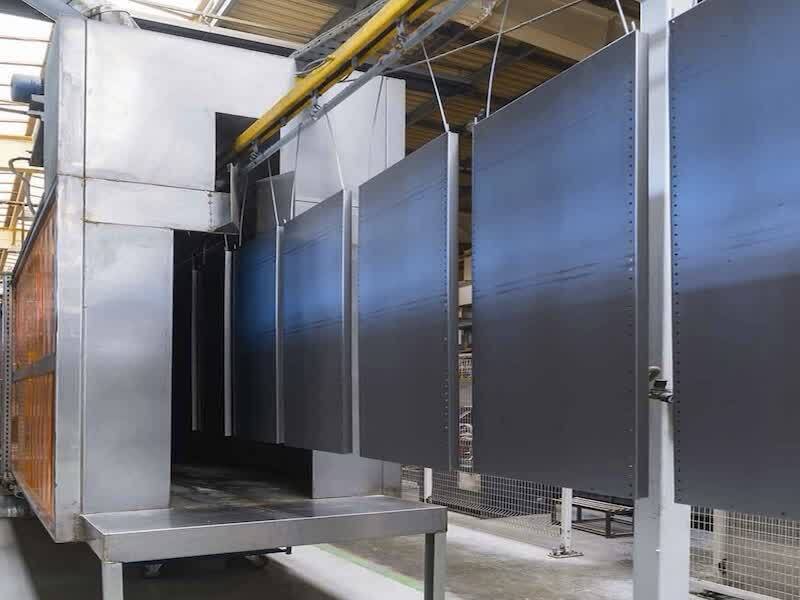
For decades, we have experienced the advent of more organic finishes replacing plated ones.
 Stephen Rudy CEFThe initial surge was estimated at over 30%, whereas currently, for specific finishes, it is approximately 85%. Organic finishing remains a strong, specialized branch of metal finishing. Serviceable coatings that meet wear resistance and corrosion protection owe their success to adequate surface preparation.
Sufficient cleaning before underlayment coatings, such as phosphates and chromates, to support organic top coats, makes this first step all the more critical. In-line cleaning cycles often revolve around spray machines, such as the typical three- and five-stage automatic lines.
Let us review key facts about optimal spray cleaning.
Parts
Many parts for processing are steel, with a mix of non-ferrous metals. Aluminum is very popular in this regard. Steel can be either cold-rolled or hot-rolled. Mechanical forming drives oil and metallic shavings into the surface. Heat treating bakes and burns oils and grease into surface pores and deep cavities. Oxide scales form, with a severity based on the treatment atmosphere. If the parts have been mass finished, media residue or chemical compounds may be left on the surface or driven into it. Parts may have been treated with a rust preventative. Storage based on humidity and time may affect the onset of surface corrosion. These are some concerns regarding setup.
Adequate cleaning is the first, and certainly the most important step. It is common to have a mix of products or a variety of parts, as the job shop may experience. Aluminum, brass, copper alloys, and zinc parts may be run in the same line, at different production loads, or interchangeably. Sometimes parts may be fabricated using mixed metals or alloys. These concerns affect the cleaner's chemistry, as well as cleaning demands and requirements. Choices for spray cleaning may include cleaning all parts in a single process line with a single cleaner, or offline pre-cleaning of some parts beforehand. Of course, the simplest situation is where all the parts are of the same base metal coated with the same process oils.
Racking
Parts are exposed to the mechanical spray of the cleaner. Racking of parts should be firm. Positioning of parts should expose the maximum surface area, allowing for enhanced drainage of cleaning solutions and rinses. This is very important. Spray cleaners are not typically blended with the concentrated formulation found in a traditional immersion soak cleaner. A significant portion of the cleaning mechanism is driven by the mechanical spray action, which enhances the activity of the cleaning components. The force of spray works in tandem with the cleaner detergency to remove soils.
Spray Cleaner
As described, spray cleaners combine chemical and mechanical action to remove soils from the substrate. The cleaning action must be rapid, as contact times in most spray machines range from 30 to 60 seconds, and temperatures are below those of traditional soak cleaners. The following benefits are realized:
- Low foaming action.
- Displacement of soils, rather than emulsification.
- Lower temperature ranges that reduce energy use contribute to cost savings.
 Overflow Tank where oils are separated.Spray cleaners may range in pH from mildly acidic to above 13. Liquid spray cleaner formulations are preferred for their better post-cleaning rinse characteristics. A variety of formulations allows the finisher to use a cleaner better suited to a range of metal surfaces. These would typically range from non-ferrous, light metals to steel and stainless steel. Displacement cleaning is most effective for removing oils and grease. The sprayed cleaner is recirculated through a side tank or sump. This tank may reduce the temperature of the cleaner solution by 20°F or more. Since the cleaner is a displacement type, it was formulated to release and displace oily soils and grease to the surface of the side tank. These contaminants are removed by application of a suitable belt or wheel, or by use of membrane filtration.
 Spray Nozzles in Action.Removal of the soils prevents redeposition on the parts and minimizes their loadings in the cleaner. Then the solution is pumped into the spray station to repeat the cleaning cycle. The cleaner formulation consists of low-foaming surfactants and wetting agents, solvents, alkali builders, and, very importantly, hard-water conditioners. It is beneficial to both the product formulator and the user to employ Sara Title III-exempt constituents in process cleaners. Softening hard water is very important to prevent plugging spray nozzles with soap sludge and water-scale buildup.
Spray Nozzles are critical to successful spray cleaning. Properly sized, shaped, and positioned spray nozzles maximize the impact and effectiveness of the pumped cleaner on parts to remove soil. A useful maintenance procedure to keep nozzles free is to initially spray a fresh, prepared cleaner for several cycles, during which clogged nozzles open. Otherwise, the nozzles can be replaced during scheduled maintenance downtime.
Liquid and powder spray cleaners operate similarly, as the following table shows.
| Cleaner Type | Conc. Range | Deg F | Deg C | Time | Pressure |
| Powder | 3-6 oz/gal | 100-160 | 38-71 | 0.5-3 min. | 15-35 psi |
| Liquid | 2-5% v/v | 100-160 | 38-71 | 0.5-3 min. | 15-35 psi |
 Inside a Spray Cleaner and Rinse Booth.Spray cleaning lines are typically 3-stage or 5-stage:
- 3 Stage: Combines cleaning and phosphatizing in a single stage. The cleaner is a mild acid. Quality cleaning and post-rinsing are very critical.
- 5 Stage: Cleaning is distinctly separate from the phosphate step. The cleaner is most commonly alkaline, which does provide better cleaning efficiency.
5 Stage: Cleaning is distinctly separate from the 3 Stage phosphate step. The cleaner is most commonly alkaline, which does provide better cleaning efficiency.
Troubleshooting Tips for Spray Cleaning Issues
This is a list of common problem areas to consider. The most common breakdown focuses on the operating parameters: time, temperature, and concentration.
- Under concentrated cleaner. Adjust as required.
- Cleaner temperature out of range. Adjust accordingly. Heat loss can be reduced by 90% when 2-inch-thick insulation is wrapped around the cleaner tank.
- Spray wash systems in the installation may exhibit high evaporation rates, resulting in heat loss. It is best to keep the spray cleaner within the recommended operating temperature range.
- Check and modify the contact time if required. Confirm whether different oils are now being used in manufacturing, stamping, cutting, forming, etc.
- Test for use of appropriate cleaner chemistry. Change as required.
- Spray nozzles may be clogged, damaged, or fail to produce an optimal spray pattern. Check for proper positioning of spray nozzles. Replace as needed.
- Soils are re-depositing on parts. Service oil removal equipment (e.g., belt, wheel). The cleaner may have exceeded service life and needs to be replaced with a fresh makeup.
Stephen F. Rudy, CEF, is president of Chem Analytic and has written extensively about the finishing industry. Visit www.chemanalytic.com or call him at 917-604-5001.