

Observe, evaluate, and look at the cleaning machine.
 Barbara and Ed KanegsbergLook at the company trying to sell you that cleaning machine. It is difficult to grasp how the cleaning equipment will fit into the manufacturing space and the process requirements based on brochures, video clips, websites, and drawings alone.
Once the Cleaning Team has identified at least one promising option for new cleaning equipment or has found several promising choices, get out there and look. In fact, it makes sense to look at more than one cleaning machine supplier and more than one type of cleaning machine. Look at the equipment in operation; look at how the cleaning machines are fabricated; determine how the cleaning machine performs during day-to-day operation.
Find A Supplier/Partner
For reliable, trouble-free manufacturing, the Cleaning Team should assess the cleaning machine's technical capabilities. Beyond that, the Cleaning Team should look for a supplier/partner, not just a vendor. What an equipment supplier offers goes beyond the equipment itself. It includes their design expertise, relevant experience in critical product cleaning, and understanding of regulatory requirements. The seller of the cleaning equipment may continue to work with your company for years, if not decades.
The supplier/partner must have the technical expertise and infrastructure to address and support your cleaning, surface prep, and process requirements. A great supplier/partner helps when the regulatory landscape shifts. A supplier/partner is not a forever collaboration – there is no “happily ever after.’ A supplier/partner may no longer have the technology required for the new cleaning process; technical support and manufacturing processes for the cleaning machines may not be what they were a few years ago.
Here are techniques to determine that the cleaning machines being offered are the right fit and that the vendor will be a good supplier/partner.
Questions and Checklists
Don’t wing it. Before the site visit, meet with the Cleaning Team and put together a list. A checklist helps ensure the Cleaning Team's requirements, preferences, questions, and concerns are addressed. On the checklist, indicate the date, location, the names and contact information of those present, and the type of meeting (site visit, web meeting).
A checklist makes a site visit run smoothly; a clipboard can look professional. Please don’t wave the darn checklist or clipboard in your host’s face, the cleaning equipment manufacturer. This is a fact-finding, information-gathering mission; it’s not an audit or an interrogation. Start by saying “hi” and shaking hands. Introduce the questions a bit later.
The cleaning equipment manufacturer often also supplies a list of questions for you to answer. Bring the answers to the site visit. The toughest questions, the questions that are most important for you to be aware of, are:
- What process precedes the cleaning process?
- What process happens after cleaning?
- What level of cleaning is required? What cleanliness metrics are used?
Even if the answers to some questions are a resounding “beats me,” work with the Cleaning Team to make estimates and provide as much information as possible. Their tough questions may help the Cleaning Team to crystallize equipment requirements.
Be a Detective
The goal is to observe astutely and to provide the Cleaning Team with pertinent, actionable information. Look, measure, photograph the equipment with people. Include photos of parts being loaded into the machine and cleaned. Observe the manufacturing environment. These observations go beyond checking the boxes. Debbie Carboni points out that solutions to interesting problems come from stepping back and looking at the interaction of materials, equipment, process parameters, environmental parameters, and people. As Debbie points out, what makes it all click sits between the process flow boxes.
How does the environment near the machine “feel”? Is humidity high? Very high humidity creates an unpleasant environment for workers, and high humidity can damage the product and the manufacturing facility itself. Do your eyes water? Can you smell, taste, or otherwise sense the presence of a cleaning agent? While odor (or lack thereof) does not necessarily correlate with toxicity, objectionable odors can block acceptance of a new process. Further, particularly with aqueous processes, odors can indicate bacterial contamination.
Workmanship
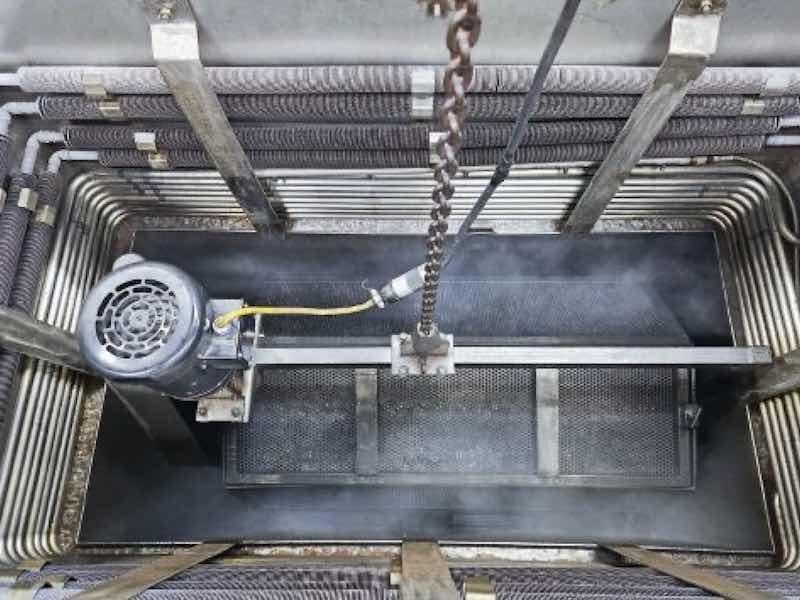
What materials of construction are used? Look at the interior of the cleaning baths. An ultrasonic bath with visible interior welding provides surfaces that degrade easily during use. Note obvious leaks in the system. It is surprising, but sometimes cleaning equipment ostensibly meant to be sold can leak.
For in-line and spray-in-air equipment, check the number and location of the spray nozzles. Is the spray likely to access your assembly or product? For ultrasonic systems, look at the location of transducers.
Ask to open or remove the doors and panels; look inside. Are the electronics arranged logically, and are they clearly labeled? How easy is it to access and repair the cleaning machine’s mechanical and electrical parts?
Look for thoughtful, logical design. While this is a very non-specific suggestion, we find that if equipment appears to be designed logically, it’s a good indicator that the designers know what they are talking about. Logical design is often associated with quality. If any part of the cleaning machine looks configured strangely, ask why that design was chosen.
Location in Your Facility
Determine how the new cleaning machine will fit in your facility. Take photos, lots of photos. Compare what you have now with what you are considering. Measure the current cleaning equipment (length, width, and height) to compare it with the equipment you're considering.
Measure the equipment under consideration. Look at the design of physical objects associated with the new cleaning machine, including robotic arms and storage tanks or separation for cleaning agents. Standing next to the cleaning machine and associated objects makes it easier to visualize how much space it takes and where it fits in your facility. Are doors and ceilings high enough?
Observe one or more cleaning runs. Determine how employees load and unload the parts. Sometimes, a staircase is needed. Ask why.
Parts Handling and Fixturing
The right fixturing ensures parts are positioned so they clean effectively without damage. While the cleaning process may be automated, effective racking and fixturing can require significant time and effort by assemblers.
If you have the opportunity, ask to fixture parts yourself. If fixturing is difficult for you, assemblers will probably find it a royal pain, too. In addition to cycle time, determine whether loading and unloading will take significant time and effort, as will positioning parts in the fixture. If your company gets more business and fixturing is inconvenient, you will be tempted to cut corners.
Don’t Jump to Conclusions
A site visit is an important step in finding the right cleaning equipment and in finding a good supplier/partner. It’s not the final step before purchasing.
Even if the cleaning machine checks all the boxes, and the equipment manufacturer is knowledgeable and receptive to collaboration, it’s best not to make a firm decision at the “dealership.” Don’t be pressured into a decision. Equipment design and build take time; legitimate supply chain issues, including costs, can delay delivery.
Cleaning equipment suppliers may tell you that if you don’t choose a particular model right now, the wait for new equipment could take months and months. Resist the temptation to decide on the spot. Sleep on it. Go back and discuss your observations and findings with the Cleaning Team.
Stay tuned for more about effective site visits.
References
- The Quest for New Cleaning Equipment: Series on Clean Source:
- “Update or Replace Cleaning Equipment,” August, 2025
- “New Cleaning Equipment Part 2 – Begin the Quest,” September, 2025
- “The Quest for New Cleaning Equipment Part 3: Extreme Investment and High-Power Cleaning,” January, 2026
- “The Quest for Cleaning Equipment, Part 4”, March, 2026
- “Throughput and Critical Cleaning Equipment: The Quest for New Cleaning Equipment Part 5”, May, 2026
- Debbie Carboni, Global Line Manager, Kyzen; LinkedIn post, August, 2026.
Barbara and Ed Kanegsberg founded BFK Solutions in 1994 as a critical cleaning consulting service and the go-to resource for eliminating cleaning, surface quality, and contamination problems — or, even better, preventing them altogether. Barbara, widely known as “The Cleaning Lady,” is an expert and trusted adviser in critical cleaning. Ed is known as “The Rocket Scientist.” They write Clean Source, an approximately monthly e-newsletter that provides practical ideas to improve cleaning, contamination control, and product quality. They co-edited and contributed to the acclaimed two-volume “Handbook for Critical Cleaning,” CRC/Taylor & Francis, 2011. Visit https://bfksolutions.com