

Perhaps the reader, like me, recalls the melody of the Eagles' "New Kid in Town," a song that was at the top of the musical headlines at that time.
 Miguel RodasToday, a new contender dominates the headlines: artificial intelligence, or AI. Collaborating on problems, challenges, and obstacles has historically depended on individuals working together and building on one another's ideas.
But AI, as a unique new way of working, is not merely a topic of discussion but a catalyst for emerging technologies, fundamentally reshaping our world. The world of metal finishing (MF) is no exception to this change. But how? Let us start by discussing how AI is changing our world.
The Shift from Human Connection
Just as hunger or thirst are fundamental biological drives, the need for social connection is both a biological and social necessity. This innate desire to connect with others shapes our interactions and underpins much of what makes us human.
Recently, I experienced a striking example of this shift while meeting with a consultant at the Industrial Wastewater Division (IWMD) in the City of Los Angeles, Sanitation and Environment (LASAN). Observing his effortless engagement with ChatGPT, an advanced AI-powered tool, I was confronted with the quiet replacement of human interaction by the digital efficiency of his tablet. The scene left me feeling unexpectedly isolated, as the subtle hum of technology replaced traditional conversation. It was a moment of profound realization—simultaneously filled with awe at the technological capabilities and discomfort at what this evolution might mean for the fabric of human connection.
These changes, however, will increase efficiency and help reduce the industry’s environmental footprint by ensuring compliance with emerging pollutant regulations and streamlining operations.
We cannot predict the future with certainty, but trends are emerging. While regulatory uncertainty persists, AI-driven predictive algorithms are already guiding the metal finishing industry's transition toward sustainability and compliance with emerging pollutants such as PFAS. By 2026, technological advances and new regulations will make AI a vital part of the sector, which remains crucial for extending the service life and enhancing the safety of core infrastructure such as transportation, bridges, aerospace, and defense.
Last year, our article highlighted the value of metal finishing to the city and its economy. Rather than relying on AI, we fostered collaboration through local meetings to promote environmental compliance among metal finishers. We also noted their ongoing adoption of cleaner practices to benefit nearby communities.
The Role of Artificial Intelligence in Regulatory Compliance
Although the future regulatory environment for metal finishing remains uncertain, artificial intelligence is already making significant contributions. AI-powered predictive algorithms are poised to assist the industry in developing strategies to comply with emerging pollutant regulations, such as those for PFAS. By 2026, the metal finishing industry is anticipated to be transformed by new environmental regulations, such as stricter air emission standards and tighter discharge standards, as well as advanced technologies such as automated plating systems and AI-driven predictive analytics.
These changes, however, will increase efficiency and help reduce the industry’s environmental footprint by ensuring compliance with emerging pollutant regulations and streamlining operations. As a result, metal finishers will be better equipped to meet regulatory obligations, maintain cleaner practices, and support long-term sustainability. Despite these shifts, metal finishing will remain vital to infrastructure maintenance—including transportation, railroads, bridges, aerospace, military, and defense—ensuring the longevity and safe use of these essential systems and supporting the country’s future needs.
Warfare, Economic Impact, and Industry Commitment
When we talk about warfare, our minds often leap to the thunderous roar of tanks, the swift flight of planes or drones, and the precision of missiles—all marvels of modern engineering, and all utterly dependent on metals. In the heat of conflict, war becomes more than just a clash of armies; it acts as a powerful engine, revving up economic activity and driving profits in certain corners of industry. The demand for metals surges, factories hum with urgency (not so much anymore in the US), and innovation accelerates as industries race to supply the tools of defense to the country (or other countries). In these moments, the metal finishing sector is at the center of the action. Yet to obtain a share of the pie to fuel the machinery of war, metal finishers need to be NADCAP certified, a cleaner method of performing the required finishing.
Furthermore, the industry is integral to upholding the country's defense capabilities, ensuring that military and defense equipment remain reliable and effective.
According to the UCLA Anderson School of Management, an economic slowdown is anticipated at the beginning of 2026, followed by a recovery later in the year. In California, metal finishers specializing in or holding NADCAP certification are capitalizing on emerging opportunities across the aerospace, defense, and PCB manufacturing sectors. The UCLA report further highlights substantial investments in artificial intelligence, underscoring its growing influence within these sectors.
The Enduring Importance of Metal Finishing for Society
Looking toward 2026 and beyond, the critical importance of the metal finishing industry will persist, independent of changes in the economic landscape, political shifts, or government leadership. Metal finishing remains indispensable in delivering stainless steel appliances that are commonplace in homes and the hardware that supports daily life. Beyond household appliances, the sector is fundamental in maintaining and enhancing the nation's essential infrastructure, including transportation systems, bridges, and other key facilities. Furthermore, the industry is integral to upholding the country's defense capabilities, ensuring that military and defense equipment remain reliable and effective. As a cornerstone of national progress, the metal finishing industry continues to support and preserve the systems vital to the country’s operation and development.
Getting Greener
While the industry's future remains uncertain, AI’s advances in predictive analytics are already shaping the sector's trajectory. The new AI-aided technologies will help metal finishers anticipate and navigate emerging operational challenges, including ever-evolving, more stringent regulations. Artificial intelligence is poised to play a vital role in the transformation, shaping the industry's response toward greenness.
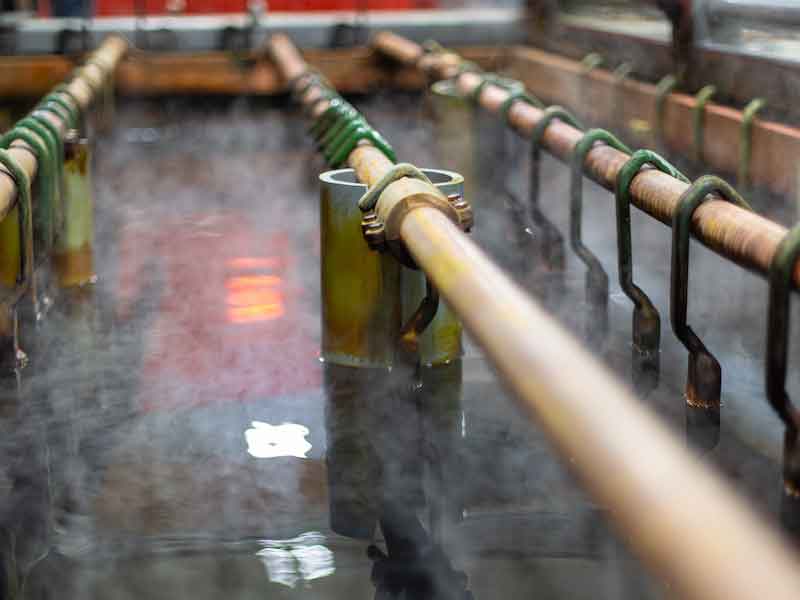
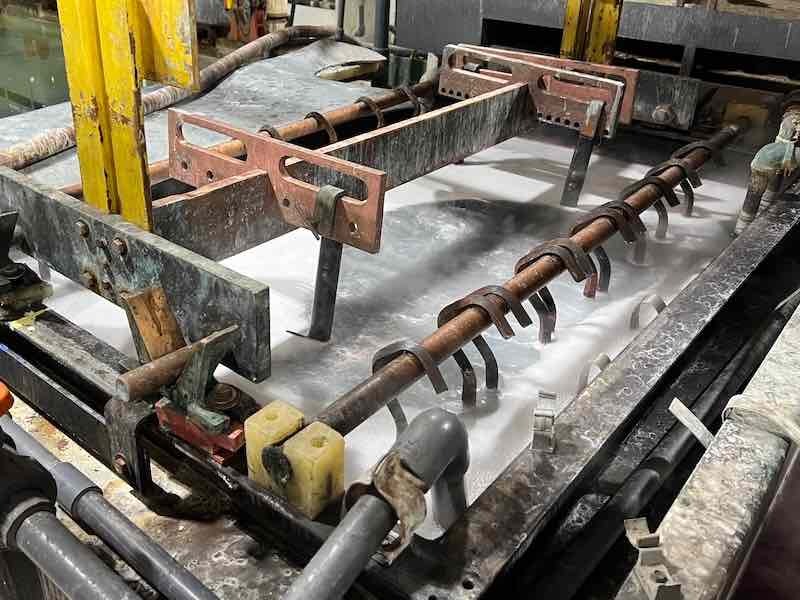
The ongoing advances in wastewater treatment are of exceptional significance to the metal finishing industry.
AI is transforming manufacturing by integrating Operational, Information, and Engineering Technology, pushing metal finishing facilities to shift from Best Practical Technology (BPT) to Best Available Technology (BAT). While BPT has helped eliminate key toxic pollutants, advanced methods such as ion exchange are now required to meet stricter environmental compliance standards. Previously, manual wastewater treatment led to frequent violations; adopting AI-driven technologies is crucial for industry sustainability and improved efficiency, source control, and environmental outcomes.
Wastewater Treatment is Getting Serious
The metal finishing industry continues to face significant challenges, including stringent EPA regulations and outdated infrastructure. This, however, depends on the government in power. Regulatory agencies, such as LASAN, closely monitor operational advancements and regulatory updates. For instance, the National Association of Surface Finishers (NASF) initiated research project R121 to develop a sustainability metric system for metal finishers, aimed at addressing operational challenges, technological gaps, and sustainability. This raises the question: Can AI provide the sustainability metrics necessary for the industry's continued survival?
The ongoing advances in wastewater treatment are of exceptional significance to the metal finishing industry. Metals such as iron, copper, nickel, zinc, cadmium, chromium, and rare elements like lithium play a fundamental role in the production of computer chips and digital military devices. As demand for rare metals grows, advances in metal finishing will increasingly rely on innovative, AI-powered technologies to address resource scarcity.
Looking Ahead
The future of metal finishing will be driven by operational, technological, and engineering changes, with AI and regulations pushing a shift from traditional methods to automation. Despite this, human skills in problem-solving and management remain irreplaceable. As demand for essential and rare metals grows, particularly for use in digital devices, advances in wastewater treatment are crucial. Industry managers must leverage automation to support human decision-making, ensuring AI enhances collaboration and learning without replacing people.
In the coming years, advancements in operations, technology, and engineering are set to play a major role in shaping the future of metal finishing. While artificial intelligence and automation are poised to revolutionize the industry, the irreplaceable value of human skills—such as problem-solving and management—remains essential. These abilities, shaped through hands-on experience and analytical thinking, will continue to play a critical role, even as AI becomes more prevalent.
As the industry transitions from traditional, empirical methods known as Best Practical Technology (BPT) to automated systems classified as Best Available Technology (BAT), the influence of AI and increasingly stringent regulations becomes more significant. Despite these technological advancements, human oversight will remain necessary to ensure effective implementation and to address complex challenges that require experience and judgment.
Continued commitment to the adoption and implementation of greener practices is vital for the industry’s success. By actively engaging with regulators, reaching out to communities, and prioritizing education, organizations can build public trust, mitigate risks, and position themselves as responsible leaders within the sector.
Lastly, owners and managers in metal finishing and allied industries: Now is the time to consider automation as a catalyst for more informed, agile decision-making. Harnessing the power of artificial intelligence isn’t just about keeping pace with technology; it’s about finding new opportunities for source control, water recycling, and metal recovery. Let’s ensure, with this caveat, that every technological advancement strengthens, rather than overshadows, the irreplaceable value of human expertise.
On behalf of the Metal Finishing Champions Group (MFCG) of LASAN, we extend our wishes for a prosperous New Year 2026.
Miguel Rodas is Senior Environmental Compliance Inspector for the Los Angeles Sanitation, Industrial Waste Management Division, and a member of the Metal Finishing Sector Champions Group, along with Edward Calleros, Brian Castellon, Ernesto Lozano, and Jan Marte.