
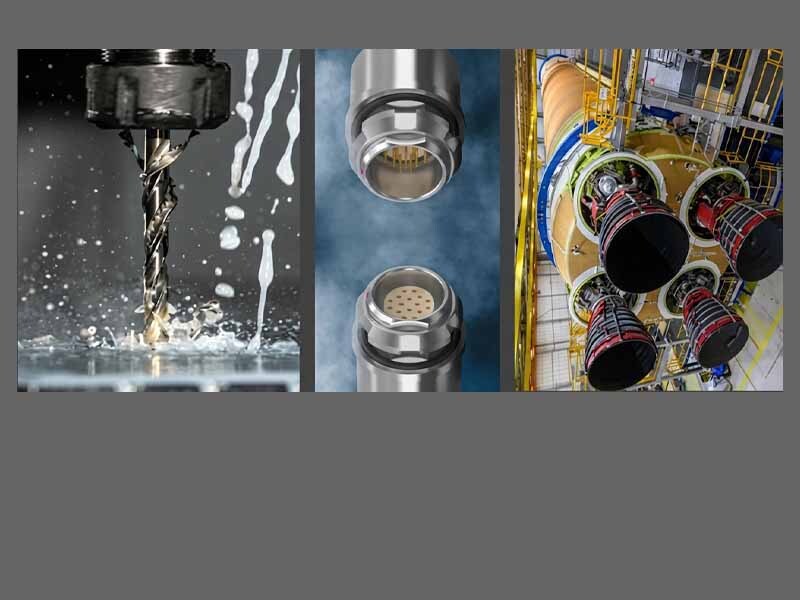
Throughout my long career supplying metalworking fluids, surface preparation chemistry, maskants, and wastewater/waste services to the metal fabrication, finishing, and assembly segments, I’ve had the opportunity to live and work in the Mid-Atlantic, Northeast, Midwest, and West Coast regions of the United States.
 Dan ZinmanEach area has its own unique “flavor”—from different business segments and sports rivalries to local foods (I still crave a “real-deal” Philly cheesesteak). But no matter where the operations occur—whether at a single site or across multiple facilities—the processes remain fluid (no pun intended) and deeply interconnected.
Our Metals Industry Ecosystem
The chain that transforms raw metal into durable, high-performance, and decorative end products depends on every link working together:
- Fabricators who machine, stamp, forge, cast, or extrude raw stock into precise shapes.
- Finishers who electroplate, anodize, paint, or apply coatings for corrosion resistance, durability, extreme performance, or eye-catching aesthetics.
- Assemblers who put it all together for real-world applications.
- Environmental teams that keep us compliant and sustainable at every step.
- Recyclers who close the loop, feeding materials back into the process.
Shared Challenges Across these Segments
Over the years, I’ve watched the industry change dramatically. Segments have shifted or faded, suppliers have consolidated, and even our strongest associations have felt the membership squeeze. The pressures are relentless and hit every part of the chain; no one gets a pass.
But the true strength isn’t only in the associations. It lives in the individuals and companies whose livelihoods depend on these affiliated industries.
Overall, some segment challenges
- Fabricators deal with material shortages and precision demands.
- Finishers battle evolving coating standards and emission controls
- Assemblers face supply chain disruptions.
- Environmental service providers navigate ever-stricter compliance.
- Recyclers contend with fluctuating markets and contamination issues.
What is shared is the following:
- Rising costs of doing business.
- Tighter regulations.
- Environmental demands.
- Workforce attrition.
These challenges ripple through the entire chain, making it clear that we're all in this together, if I may paraphrase from an old Elton John song (which really dates me back): "We're still standing after all this time."
The Real Power of Alignment
In the good old days, individual associations could tackle big issues on their own. Today, the real leverage—(without any need or desire to merge)—comes from alignment across segments. Each of us still delivers unique value through specialized meetings, training programs, local trade shows, and networking.
But the true strength isn’t only in the associations. It lives in the individuals and companies whose livelihoods depend on these affiliated industries. Fabricators, finishers, assemblers, environmental teams, and recyclers-we each bring specialized technical expertise, real-world impact data, successful compliance case studies, and established relationships with regulators and customers. When we actively collaborate, we create something far greater than any one segment could achieve alone.
I encourage every shop owner, manager, technician, and supplier reading this—whether you’re in finishing, fabrication, or anywhere in between—to reach out, share what you’re facing, and find ways to align.
That alignment gives us:
- Strength in numbers to highlight our collective economic impact—jobs created, communities supported—and to build meaningful alliances with lawmakers and local leaders.
- More effective advocacy by pooling resources so we can influence policy at the federal and state levels and push for practical, balanced solutions instead of one-size-fits-all rules.
- Shared resources through joint research, roundtables, job fairs, certification programs, and community events that show how we contribute positively as good neighbors.
As someone who works across every part of this chain every day, I’ve seen firsthand how interdependent we are. The success of the finisher depends on the fabricator, the assembler depends on the finisher, and the whole system depends on all of us stepping up.
I encourage every shop owner, manager, technician, and supplier reading this—whether you’re in finishing, fabrication, or anywhere in between—to reach out, share what you’re facing, and find ways to align. Our collective voice, grounded in real on-the-ground experience, is what keeps American manufacturing competitive, innovative, and sustainable for the long haul.
What are your thoughts?
Dan Zinman is Chief Commercial Officer at Miles Chemical, based in Arleta, California. Visit www.mileschemical.com.