

Every Sunday, the arrival of the Los Angeles Times was more than a routine; it became my anchor during a time of deep uncertainty and transition in a new country.
 Miguel RodasI set the thick newspaper on my kitchen table as the familiar scent of newsprint mingled with the aroma of morning coffee and fresh pupusas. The rustling pages accompanied my careful search, and the cool, slightly rough texture of the paper between my fingers gave me a tangible sense of purpose. As I turned to the classified section, my eyes scanned each listing as if it were a lifeline, with both hope and anxiety. Reading the paper gave me a brief respite from worry, but my motivation was urgent: I needed to find a job to support myself and my family.
This period was marked by uncertainty about my future, the challenge of adapting to a new environment, and the constant pressure to make ends meet. Certain Sundays brimmed with hope, especially when a listing seemed promising, while others left me feeling disappointed and discouraged, the silence of unanswered job applications echoing in my mind. In these quiet moments, the newspaper was more than pages-it was a bridge between possibility and reality, between fear and determination.
For many immigrants, the pursuit of the American Dream begins with employment, stability, and the hope of building something lasting. My own journey followed this path. A small, classified ad eventually led me to my current role as an Environmental Compliance Inspector (ECI). That experience of searching for stability helped me recognize similar hopes and pressures in the immigrant business owners I later met as an inspector.
Drawing from my experience as an ECI, this paper argues that environmental compliance, when paired with education, clear communication, and cultural understanding, can move beyond enforcement to support immigrant entrepreneurs, strengthen sustainable business practices, and protect the environment.
While he could describe the mechanical steps of plating-immersing parts, applying current, rinsing, he lacked familiarity with the underlying chemistry and the environmental implications of his processes.
To illustrate this intersection between regulation and entrepreneurship, I present the case of a small metal finishing shop. The case highlights the technical, regulatory, and human challenges faced by immigrant-owned businesses. It shows how compliance can become a pathway to long-term success rather than an obstacle.
Metal finishing is a technically demanding sector governed by complex environmental regulations. For small, immigrant-owned businesses, these requirements often present significant challenges, especially when language barriers and limited technical training are involved. Yet these same businesses are driven by resilience, ambition, and a deep commitment to entrepreneurship.
Compliance and Entrepreneurship
Environmental compliance in metal finishing is not simply a matter of paperwork. It requires a working understanding of basic chemistry, wastewater treatment, and federal and local regulations, including categorical standards under 40 CFR Part 433. Processes such as electroplating, electroless plating, anodizing, chemical conversion coating, chemical etching & milling, and manufacturing of printed circuit boards (PCBs) generate wastewater streams that must be carefully managed to meet federal discharge limits.
During my early years as an ECI, I saw that some shop owners entered the industry with strong operational skills but limited exposure to the scientific and regulatory foundations of their work. This gap often placed otherwise viable businesses at risk of enforcement action-not due to negligence, but due to misunderstanding.
Case Study: ABC Plating
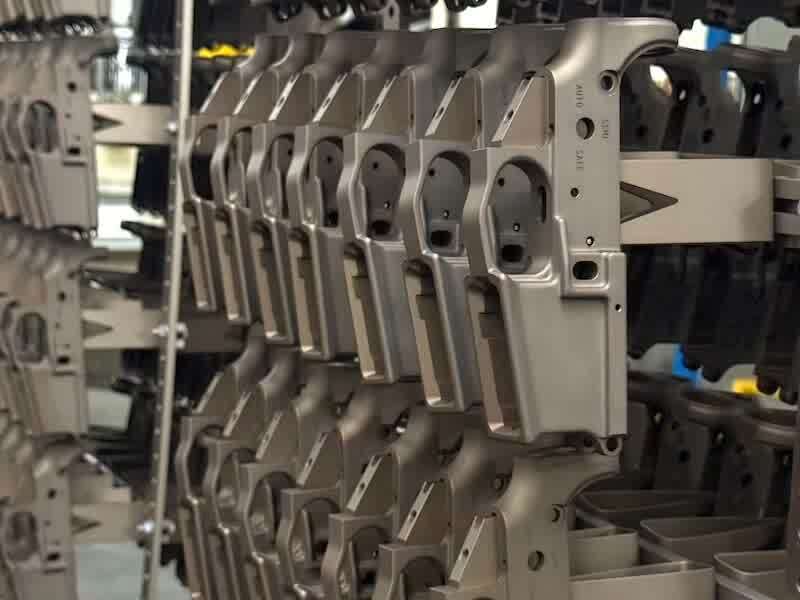
One example is ABC Plating, a fictional name for a small metal finishing shop run by "Manuel," an immigrant entrepreneur. The facility ran two primary process lines-zinc electroplating and sulfuric acid anodizing-with chromating as a post-treatment step. From a regulatory standpoint, the operation qualified as a Categorically Significant Industrial User (CSIU), subject to routine inspections, sampling, and reporting requirements mandated by federal regulations under the Clean Water Act (CWA).
During the first compliance visit, it became clear that Manuel's understanding of environmental obligations was limited. While he could describe the mechanical steps of plating-immersing parts, applying current, rinsing-he lacked familiarity with the underlying chemistry and the environmental implications of his processes. This disconnect became critical when sampling revealed violations of discharge limits for hexavalent chromium (Cr6+).
Finding the Root Cause
Further investigation showed that the chromium violation originated from the chromating process. A review of the Safety Data Sheets confirmed the presence of sodium dichromate, a known source of hexavalent chromium. Compounding the issue, Manuel had unknowingly reported the violation himself in a required Self-Monitoring Report without understanding its regulatory significance.
At this first stage, enforcement was necessary, and a Notice of Violation was issued. However, I realized that enforcement alone would not resolve the underlying problem. The situation called for education, clarity, and practical guidance.
Building Understanding Through Shared Experience
Communication proved to be a turning point. Conducting discussions in Spanish helped bridge gaps in understanding and reduce anxiety. More importantly, shared cultural experience created trust, allowing technical concepts to be explained in a way that connected regulatory requirements to daily operations.
Together, Manuel and I worked through the fundamentals: finding chromium-bearing waste streams, isolating affected rinses, and developing a basic Standard Operating Procedure (SOP) for wastewater treatment. While inspectors are not consultants, we can explain regulatory expectations, find compliance concerns, and direct facilities toward appropriate corrective resources.
When inspectors combine regulatory authority with education, clear communication, and respect for the people behind the businesses, compliance can become more than a requirement-it can become a path toward empowerment, accountability, and long-term success.
I recognized in Manuel the same uncertainty I had once felt while navigating an unfamiliar system. The difference was that, in his case, the system involved technical language, legal requirements, and environmental consequences. My immigrant experience made me more attentive to the fear that can arise when people face rules they do not fully understand. It also reminded me that dignity matters: a business owner is more likely to learn, correct mistakes, and build lasting compliance when the regulatory process is firm but respectful.
Outcomes and Lessons Learned
Following corrective actions, ABC Plating achieved improved compliance and operational stability. The process reinforced several key lessons relevant to regulators and industry professionals alike:
- Education is essential: Compliance failures stem from knowledge gaps rather than willful disregard.
- Communication matters: Language and cultural awareness can significantly improve compliance outcomes.
- Balanced enforcement works: Regulatory authority, when paired with guidance, can support both environmental protection and economic sustainability.
For a period, the shop ran without further violations, proving that informed compliance can align with business success.
Conclusion: Redefining the Enforcement Role
The experience at ABC Plating reshaped the way I understand environmental compliance. It showed me that enforcement is necessary, but enforcement alone is not always enough.
When inspectors combine regulatory authority with education, clear communication, and respect for the people behind the businesses, compliance can become more than a requirement-it can become a path toward empowerment, accountability, and long-term success.
For immigrant entrepreneurs, the American Dream is rarely a straight or simple path. It is built through sacrifice, adaptation, resilience, and the courage to keep moving forward in unfamiliar systems. My own journey helped me see Manuel not only as a regulated facility owner but as a person trying to build stability, support his family, and contribute to his community.
As compliance professionals, we have the opportunity to protect public resources while also helping businesses understand how to operate responsibly. By building trust, fostering accountability, and treating education as part of environmental protection, we help create conditions where entrepreneurship and compliance can advance together. In that work, the promise of the American Dream becomes more than an individual pursuit-it becomes a shared commitment to stronger communities, cleaner industries, and a more sustainable future.
Miguel Rodas is Senior Environmental Compliance Inspector for the Los Angeles Sanitation, Industrial Waste Management Division, and a member of the Metal Finishing Sector Champions Group, along with Edward Calleros, Brian Castellon, Ernesto Lozano, and Jan Marte.