
For a metal finishing operation in its 80th year, Cincinnati-based Varland Plating has spent decades doing something most shops avoid: continuously reinventing itself.
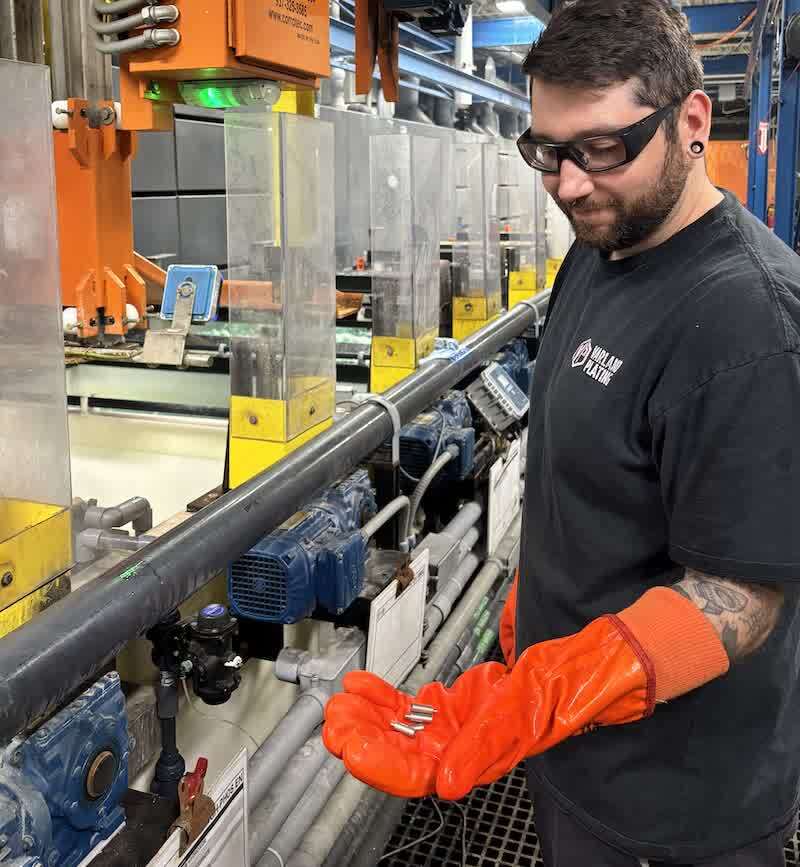
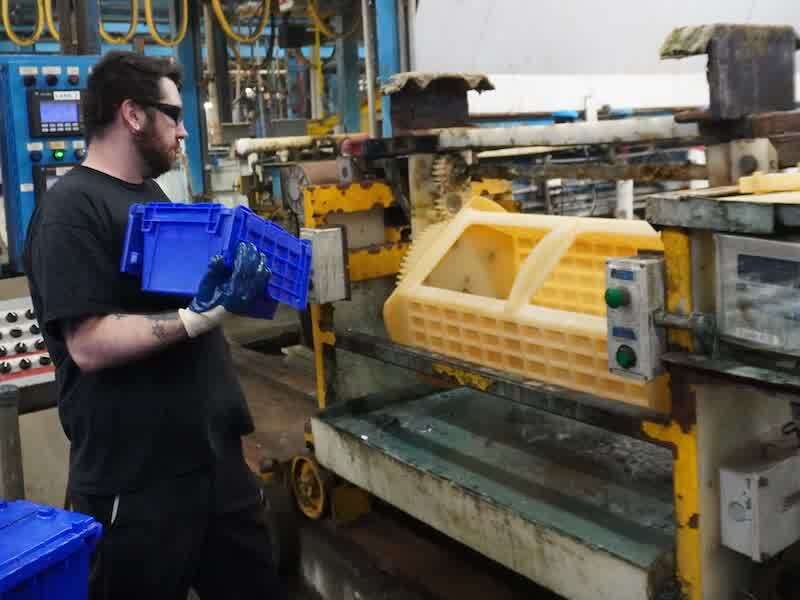 Garrett Nadicksbernd loads oparts into a barrel line at Varland Plating.Founded in 1946 by three engineering graduates from the University of Cincinnati, Varland Plating has grown from a small electroplating operation into one of the Midwest’s most respected finishing companies. Today, the company serves customers across automotive, military, electrical, and general industrial markets while maintaining a reputation for technical expertise, customer service, and a willingness to invest heavily in technology and automation.
That commitment to innovation has become increasingly important as finishing operations face labor shortages, rising quality expectations, tighter process controls, and growing demands for traceability. While many plating shops continue to struggle with aging infrastructure and manual processes, Varland has spent decades building its own automation systems, developing proprietary software, and creating manufacturing capabilities that allow it to remain competitive in an increasingly sophisticated marketplace.
“We are purely a job shop. “We have customers in our system where their first sale dates back to the 1950s, who we still plate work for every week.”
The result is a company that still operates with the values of a family-owned business while embracing the technologies typically associated with much larger organizations.
“We still see that same opportunity today,” says Toby Varland, Executive Vice President. “The founders correctly identified that there was a good market opportunity, and then they had the skills to seize that opportunity and actually establish a long-lasting company.”
Eighty years later, that entrepreneurial mindset remains deeply embedded in the organization.
Built on Engineering
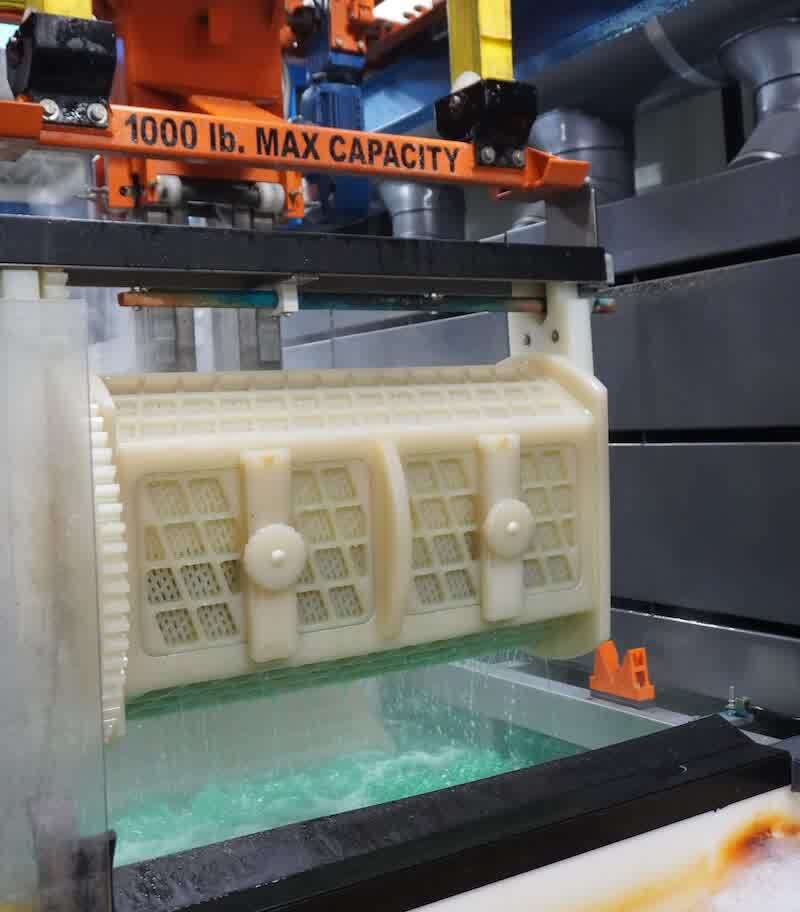
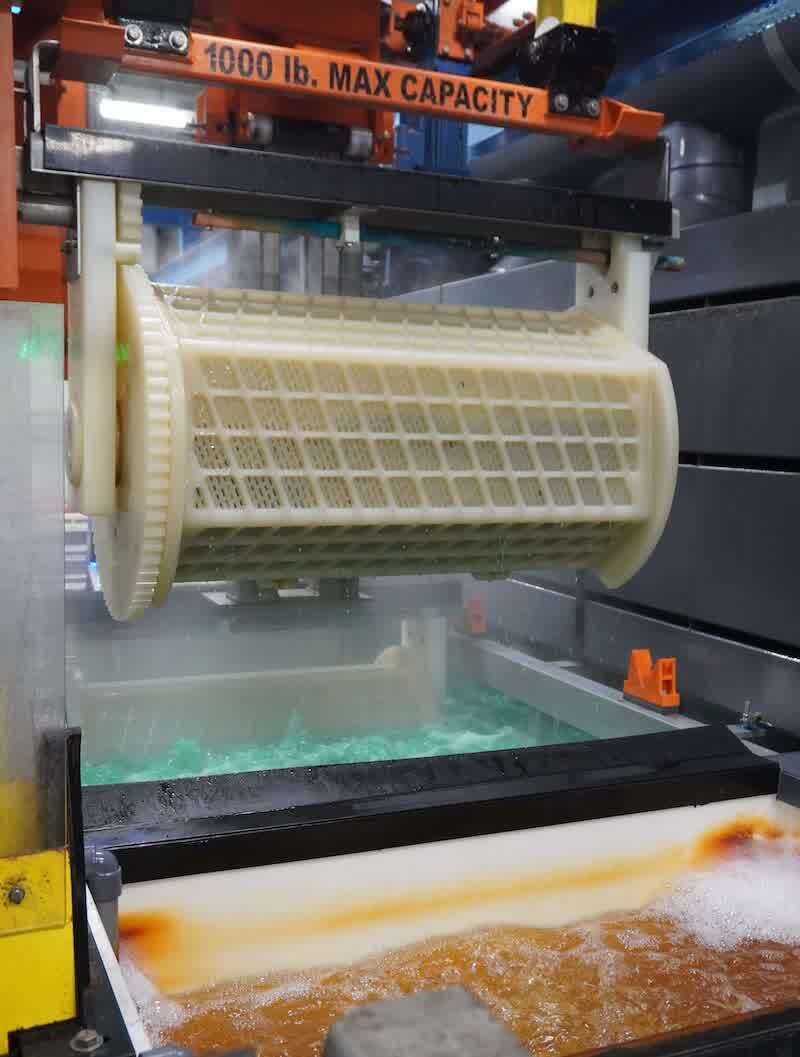 Varland new automated electroless nickel line.Varland Plating’s story begins with three founders: Curtis Varland, Edwin Roof, and W. Wilson Loveless.
According to company leaders, the three engineering graduates recognized an opportunity to improve the way electroplating services were delivered. Rather than accepting industry norms, they believed they could build a better business through technical expertise and a customer-focused approach.
That engineering-first mentality remains evident throughout the company today. Varland operates exclusively as a job shop, providing metal finishing services for a wide range of customers rather than manufacturing products of its own.
“We are purely a job shop,” Varland says. “We have customers in our system where their first sale dates back to the 1950s, who we still plate work for every week,” he says.
Those long-standing relationships have been built without long-term contracts or exclusive agreements.
“We don’t have contracts with our customers,” Varland says. “We try to be a business partner that they want to come back to.”
That philosophy has helped the company maintain customer loyalty across multiple economic cycles, technological shifts, and industry changes.
A Broad Portfolio of Finishing Services
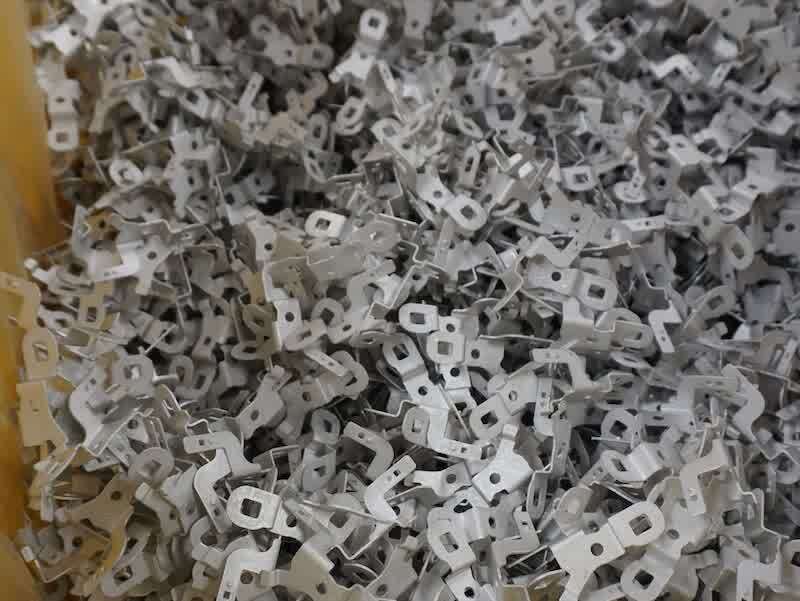 Matte tin plated parts.Over the years, Varland has developed one of the region’s most comprehensive portfolios of metal finishing services.
According to Andrea Varland Wilson, who leads the company’s marketing, human resources, and purchasing functions, the company specializes in a wide range of plating processes that include electroless nickel, electrolytic nickel, zinc, zinc nickel, tin, tin zinc, copper, cadmium, and brass.
“And we have our baking operations, too, which is a big component of our infrastructure,” she says.
That broad offering allows Varland to serve customers with vastly different performance requirements.
Some customers need corrosion protection, and others require wear resistance, conductivity, solderability, lubricity, or dimensional restoration. The company’s diverse process capabilities enable engineers and purchasing professionals to work with a single finishing partner across multiple product lines.
 Toby VarlandMore importantly, Varland has developed the technical expertise needed to help customers determine which process is most appropriate for a given application.
“One of the things that we have always prided ourselves on is the people who work for us in sales have a background in plating,” Varland says.
That technical knowledge turns sales conversations into engineering consultations.
“Sometimes it is companies asking us, ‘We’re not quite sure what we need here, so what would you recommend?’” he says. “They say, ‘We need corrosion protection, but do we want zinc or zinc nickel?’”
In many cases, customers arrive with performance goals rather than process specifications. Ånd that’s where Varland’s team helps bridge that gap.
Engineering Every Job
 Unlike captive finishing operations that process the same components day after day, job shops must accommodate an almost endless variety of part geometries, materials, specifications, and production volumes.
That complexity requires significant engineering expertise.
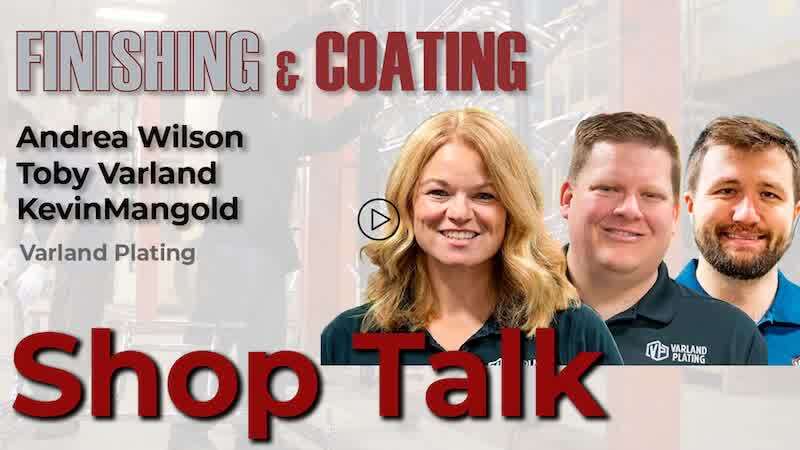
Kevin Mangold, Production Manager, plays a central role in developing plating procedures for incoming work and it usually starts with a sample part.
“We’re making a lot of considerations for the material, part geometry, and the plating type that they’re requesting,” Mangold says.
His team evaluates customer specifications, analyzes component geometry, and determines the best processing approach before production begins.
“We are combing over the specifications to make sure we can process these the way that they’re requesting that we complete them,” Mangold says. “A lot of it’s also just digging through our pretty extensive production history.”
That accumulated knowledge allows the company to leverage decades of experience when developing new plating procedures.
The ability to draw upon historical process data has become increasingly valuable as parts become more complex and customer requirements become more demanding.
Technology as a Competitive Advantage
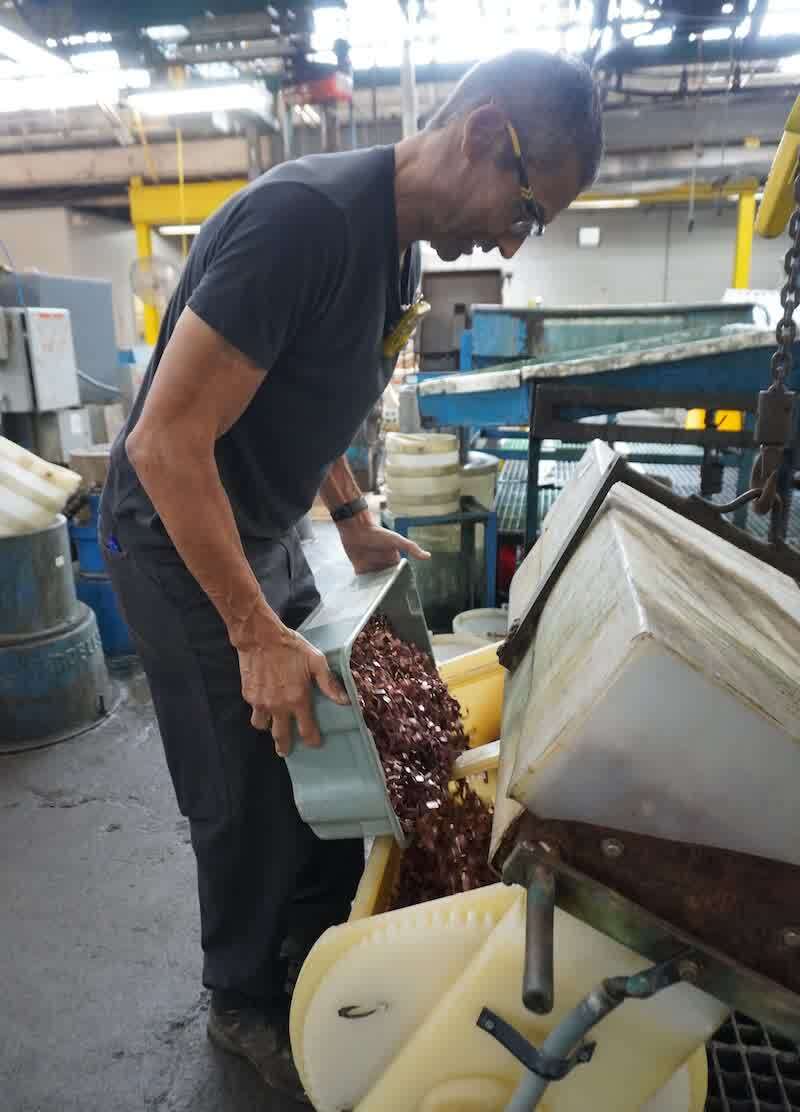 Terry Willis loads parts.One of the most distinctive aspects of Varland Plating is its long-standing commitment to technology. While automation and digitalization have become industry buzzwords in recent years, Varland’s investment in those areas began decades ago.
“It is something where we have been heavily computerized and automated for 40-plus years now,” Varland says.
The company’s technology journey began in the early 1980s when management decided to computerize core business functions. The organization eventually developed its own payroll software, accounting systems, order-entry tools, and enterprise resource planning capabilities.
Rather than purchasing generic software packages and adapting operations to fit them, Varland built systems specifically designed around the unique requirements of a plating job shop.
“Our whole order entry — what is now known as our ERP system — was all written in-house,” Varland says. “It was all completely customized to be exactly what we need to plate parts.”
While portions of the system trace their origins back decades, the technology has continuously evolved.
“It’s running a very modern technology stack,” he says.
More importantly, the platform provides access to historical process information that can be used to support engineering decisions and continuous improvement initiatives.
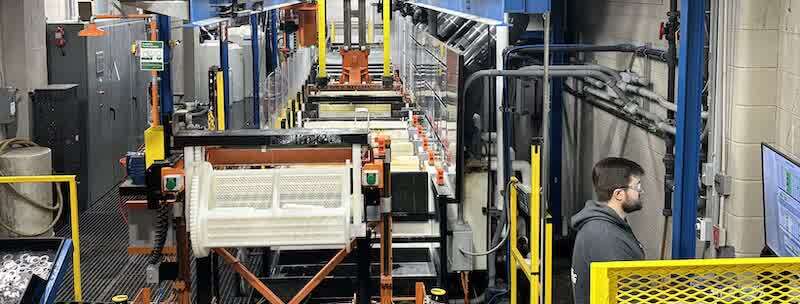
 Andrea WilsonThat same philosophy extends to manufacturing automation. In the late 1980s and early 1990s, Varland transitioned from computerizing the business to automating their factory and plating lines.
Much of that automation was developed internally because job-shop plating requires flexibility; off-the-shelf automation solutions often fail to meet operational requirements.
“We have an internal staff that automates our own plating lines,” he says.
That capability allows the company to make changes quickly, implement process improvements rapidly, and adapt equipment to changing customer needs.
“When production comes up with a wish list idea of, ‘It would be really nice if our plating lines did this,’ we’re able to implement that,” Varland says.
The ability to control both hardware and software development internally has become one of the company’s most important competitive advantages.
Cracking the Code on Automated Electroless Nickel
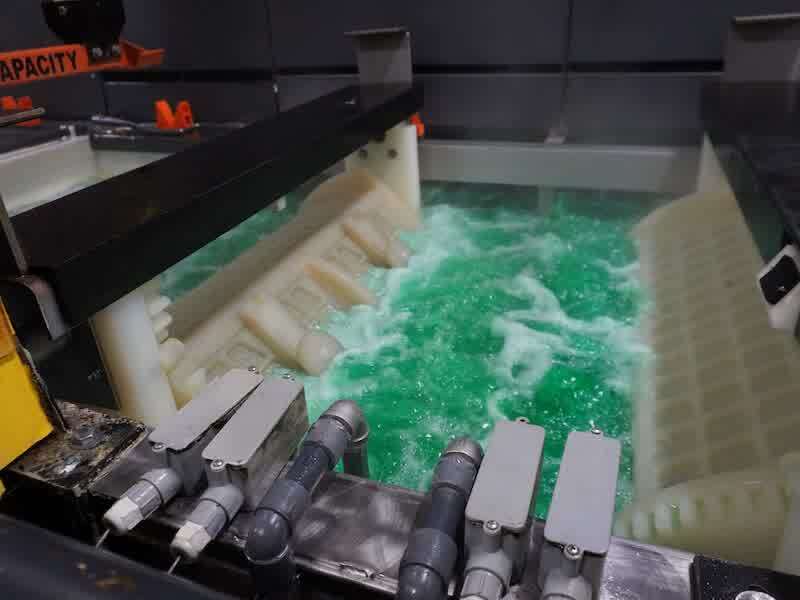 Perhaps no recent project better illustrates Varland’s engineering culture than its automated electroless nickel operation.
Electroless nickel has become increasingly important across multiple industries due to its ability to provide uniform deposition, excellent corrosion resistance, wear protection, and dimensional consistency.
Yet automation of electroless nickel remains challenging. The process requires careful chemistry management, precise control, and operational flexibility that many shops struggle to achieve in an automated environment.
Recognizing growing demand for electroless nickel, company leadership made a strategic decision to invest heavily in automation.
“Our president, Brian Mangold, really felt that EN was a growing process that we wanted to be at the forefront of,” says Toby Varland.
The project required significant financial investment and years of development work. There also weren’t too many case studies to model their in-house project.
“There aren’t many,” Varland says. “It’s rare to have EN automated because it’s a hard process to automate.”
 Kevin MangoldThe company already possessed electroless nickel experience through its manual operation. That existing knowledge provided a strong foundation, but automation presented an entirely different challenge.
“We still have a manual EN capability as well,” he says. “Since we had experience with EN, we weren’t going in blind.”
For a while, however, the prevailing belief was that full automation simply wasn’t practical.
“For years, we thought we couldn’t automate this,” Varland says. “We’d say, ‘It doesn’t work.’”
Eventually, the company decided to tackle the problem. Leveraging its in-house automation expertise, plating knowledge, maintenance capabilities, and software development resources, Varland worked through the technical obstacles.
“It’s been a lot of trial and error. It’s been a lot of work, and it’s been a lot of money, and a significant investment.”
The results have exceeded expectations.
“Done correctly with the right investment, the line has been great,” Varland says. “We have seen returns in our ability to get EN through the building and do it consistently and with the quality we need.”
The automated system now handles virtually all electroless nickel production.
“About 99% of our EN work is automated,” he says. “I can’t remember the last time we used our manual EN tank because the automated line works so well.”
The line has proven capable of processing both large and small production loads while maintaining consistent quality. Equally important, the project generated valuable lessons that are now being applied elsewhere throughout the facility.
“That line has taught us some really good ideas that we’ve put into place on other lines,” Varland says.
Why the Project Succeeded
 Many plating shops have explored automation initiatives only to discover that implementation is far more difficult than anticipated. Varland’s success stemmed from a combination of institutional knowledge and internal capabilities.
“If I were going to answer the question of what’s the secret,” Varland says, “I think part of it is we have such a long history of automating our own lines and understanding how to plate at a high level.”
Rather than relying entirely on outside vendors, the company retained control over development and customization.
While external partners assisted with construction and baseline automation, Varland’s internal team continued refining the system after installation.
“We were able to take it over internally,” Varland says. “We were able to because we have in-house capability, and we were not subject to the limits of what they had done before.”
The approach required patience.
“It’s been a lot of trial and error,” he says. “It’s been a lot of work, and it’s been a lot of money, and a significant investment.”
Yet the outcome demonstrates the value of combining process expertise with automation knowledge. In an era when manufacturers increasingly seek reliable, repeatable, and scalable finishing solutions, Varland’s automated electroless nickel operation represents a significant achievement.
Continuous Improvement Never Stops
 Although the EN project represents a major milestone, company leaders emphasize that innovation remains an ongoing process.
“We are constantly evaluating what we need to change,” says Varland. “We ask, ‘What’s the market telling us we need a year from now?’”
Current initiatives include significant expansion of automated copper-plating capacity.
“We’re in the midst right now of significantly expanding our automated copper plating capacity,” he says. As with the other improvements, the investment is being driven by emerging market opportunities and growing customer demand.
Like many established finishing operations, Varland must also contend with physical space constraints. The company’s Cincinnati facility is essentially landlocked, limiting opportunities for large-scale expansion.
Rather than simply adding new buildings and production lines, management focuses on maximizing existing assets through upgrades, reconfiguration, and process improvements. That approach requires creativity but has helped the company remain agile while continuing to grow.
Quality Through Systems Thinking
 Technology alone does not create quality. At Varland, process discipline and continuous improvement are equally important.
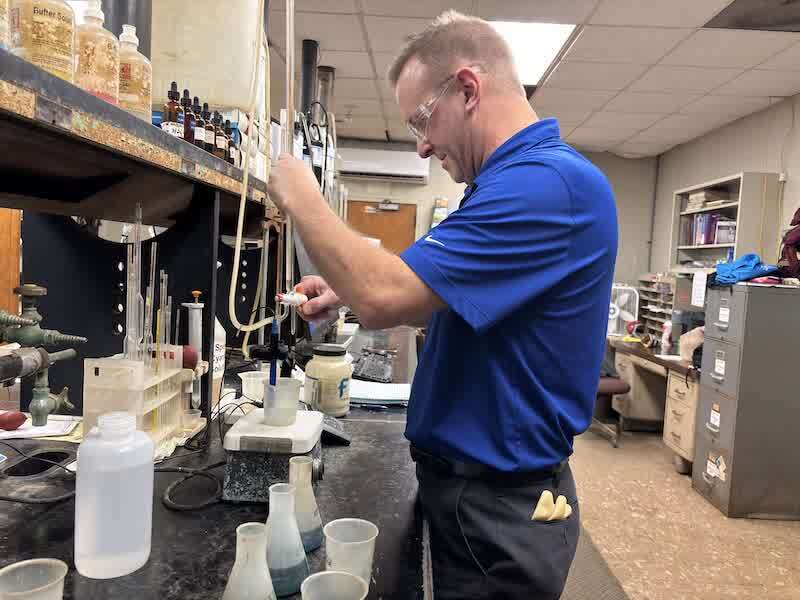
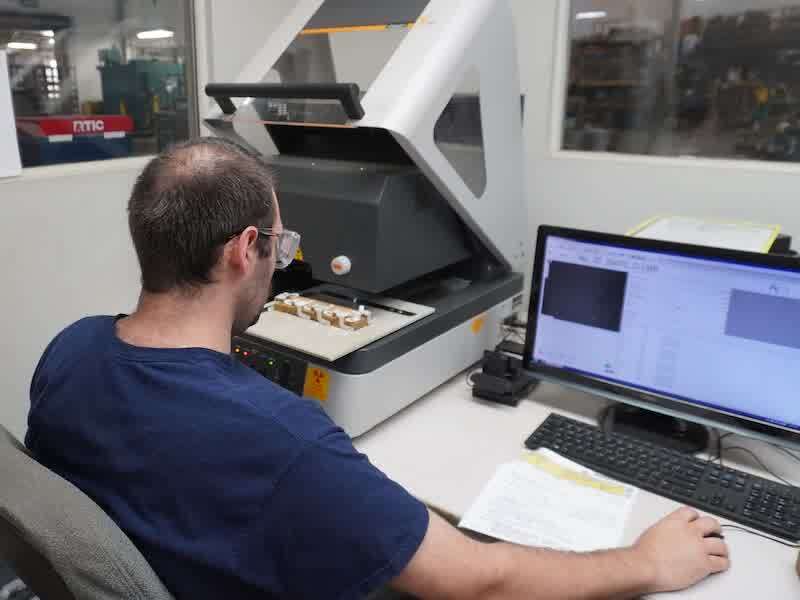
The company has embraced ISO certification not simply as a customer requirement but as a framework for operational excellence.
“When ISO first came about in our company, it was a little over 20 years ago,” Varland says. “There was a little bit of, ‘Man, we have to do this, and this is just a burden.’”
Over time, however, the organization’s perspective changed.
“We’ve really gotten over that initial ‘this stinks’ and embraced ISO,” he says.
Rather than treating audits as compliance exercises, the company uses ISO principles to improve performance.
“If we’re going to do it, we’re not just going to pay lip service to it,” Varland says.
That mindset has strengthened process control, documentation, and systemic thinking throughout the organization.
“I think we can all say that ISO has really made us better,” he says.
The Human Side of Technology
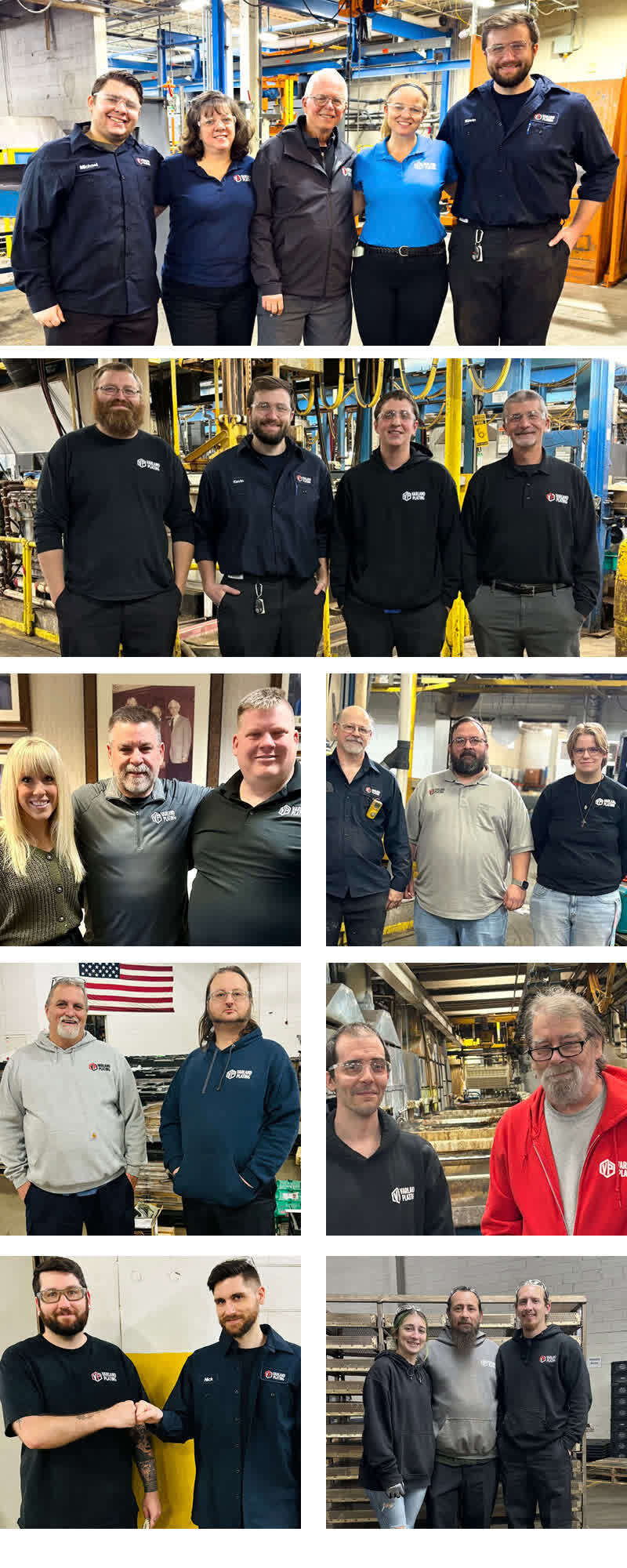 Varland Plating's 80-year history inclues the founding Varland, Loveless, and Roof families, and continues today with numerous decendents now running the Cincinnati operation. In addition, many shifts feature family members, brothers, sisters, parents, and others uncles.Despite all the discussion about automation, software, and process controls, company leaders repeatedly return to a single theme: people.
Technology may create efficiency, but people create culture. The company currently employs more than 60 people and includes multiple generations of both family members and non-family employees.
Toby Varland and Andrea Wilson represent the third generation of family involvement. Kevin Mangold represents the fourth. The company also has numerous second-, third-, and fourth-generation employees whose families have worked at Varland for decades.
That continuity has helped preserve the values established by the founders.
“You have to be able to run the company in such a way that you get good people, and you treat them right,” Varland says.
He points to profit sharing, bonuses, healthcare benefits, and long-term investments in employees as key reasons for the company’s longevity.
“There’s an 80-year legacy of investing in those people and understanding that’s by far our most important asset,” he says.
Wilson believes ownership engagement also plays an important role.
“They support us actively, and they ask us the hard questions,” she says.
The company’s board of directors includes shareholders who bring outside perspectives and challenge management to keep improving.
That governance structure helps prevent complacency while ensuring the business remains focused on long-term success.
Customer Service Still Matters
For all of Varland’s technological sophistication, one of its most notable practices is surprisingly simple: after 80 years, a live person still answers the phone.
“We have a human being answer the phone 24 hours a day,” Varland says.
In an age of automated menus and voicemail systems, the decision reflects the company’s broader philosophy: relationships, accessibility, and integrity all matter.
From the first day on the job, employees are taught that mistakes can happen, but honesty and accountability are non-negotiable.
“The most important thing is to operate with integrity,” Varland says.
That culture extends to customers, employees, suppliers, and business partners alike.
“We’re not competing for the lowest-price jobs,” he says. “If we want to be that high-value partner, that high-value source, the work not only has to be good, but the way we treat people has to be good as well.”
Visit https://varland.com/