
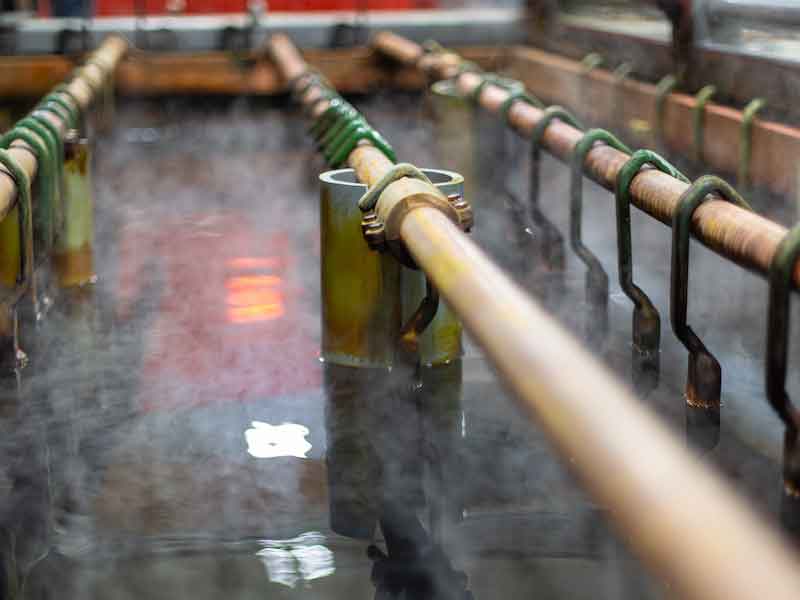
Rhode Island environmental regulators have issued a “Notice of Intent to Enforce” against Electrolizing Inc. following an inspection of the company's Providence chrome plating facility.
The report identified a series of alleged hazardous waste violations involving chromic acid, containment pits and waste-management practices.
The Rhode Island Department of Environmental Management (RIDEM) issued the notice Sept. 25 to Billy Brauer, general manager of Electrolizing Inc. The agency said it has reasonable grounds to believe Electrolizing and property owner B&J Properties violated statutes or regulations under RIDEM's jurisdiction.
The enforcement action provides a detailed look at hazardous waste management challenges at a working chrome plating operation. It could offer lessons for other finishing companies that generate and manage hazardous waste.
Complaints Lead to RIDEM Inspection
The investigation began after RIDEM received two anonymous complaints on Aug. 25 alleging problems with chemical containment at the facility. One alleged that a containment area holding liquids that included chromium compounds, water, alkaline materials, and acids could be leaking into the ground. Another raised concerns about changing liquid levels in a containment area.
RIDEM inspected the facility the following day. According to the agency's enforcement notice, Brauer told inspectors that in July, Tank No. 10 on an aluminum processing line had leaked approximately 100 to 200 gallons of chromic acid into a containment pit beneath the line. The company subsequently took the tank out of service while it awaited a replacement.
The document says Brauer told RIDEM that the liquid level in the containment pit had increased significantly since the tank leak. He believed chromic acid in the pit was mixing with water from sources including condensation, steam leaks, and groundwater entering the pit.
Inspectors reported observing substantial amounts of liquid waste in containment pits underneath several processing areas. In one area, the agency says Billy Brauer indicated that the employee responsible for maintaining liquid accumulation levels had resigned and that monitoring logs could not be found. According to the notice, liquid levels were measured with a stick marked in 6-inch increments.
Tests Find Chromium and Cadmium
Laboratory testing became another significant part of RIDEM's case. According to the notice, Electrolizing Inc. provided RIDEM with an Aug. 17 analytical report from Phoenix Environmental containing results for waste-liquid mixtures sampled from three containment pits underneath separate plating lines. The samples underwent Toxicity Characteristic Leaching Procedure testing.
RIDEM said the sample from the containment pit serving Tanks Nos. 1-6 exceeded the RCRA toxicity thresholds for cadmium, with a reported result of 12.7 mg/L, and chromium, reported at 546,000 mg/L. The pit serving Tanks Nos. 7-9 had reported results of 2.11 mg/L for cadmium and 25,000 mg/L for chromium, also exceeding the applicable toxicity thresholds cited by the agency.
The sample from the containment pit serving Tanks Nos. 10 and 11 exceeded the chromium toxicity threshold with a reported result of 1,070 mg/L and had a reported pH of 2, placing it at the corrosivity regulatory level cited by RIDEM.
Scrubber Leaks and Chromic Acid Also Cited
RIDEM's inspection extended beyond the containment pits. On the facility's mezzanine, inspectors observed an air scrubber connected to Chromic Acid Plating Tanks Nos. 1, 2 and 3. According to the enforcement notice, Brauer said the unit had experienced leaks over the years because of its age. Inspectors observed drip pans, containment trays, cardboard, and absorbent pads beneath the unit.
RIDEM also reported observing chromic acid on the mezzanine floor and alleged there had been no apparent effort to clean up or contain that particular release. Inspectors additionally reported finding two drip pans containing waste chromic acid that were uncovered, unlabeled, and lacked accumulation start dates.
The enforcement notice says Brauer suggested that previous leaks from the scrubber may have allowed chromic acid to enter hollow concrete blocks before eventually migrating through the wall. RIDEM directed the company to conduct analytical soil testing outside the building to determine whether hazardous materials may have reached the environment. 
RIDEM further alleged that Electrolizing Inc. failed to report chromic acid spills that accumulated below the scrubber and seeped through the building wall.
Waste-Management Procedures Under Scrutiny
The enforcement action also focuses heavily on the facility's hazardous waste management systems.
On Sept. 1, Brauer told RIDEM that Electrolizing Inc. did not have a procedure in place to pump out containment pits after hazardous waste was released or spilled into them, according to the notice.
RIDEM subsequently reviewed the company's hazardous waste contingency plan and personnel training program. The agency said its review found that both documents lacked required elements and did not satisfy Rhode Island's hazardous waste rules.
The state also alleged issues involving waste labeling, accumulation dates and spill records. A separate ecoRI News report says the notice identified 13 hazardous waste regulatory violations, including allegations involving labeling, recordkeeping, waste storage, and spill reporting.
Company Required to Respond
The Sept. 25 letter requires Electrolizing Inc. to submit a written response within 10 days stating its intentions to comply with RIDEM's required actions within the specified timeframes.
Importantly, the document is a Notice of Intent to Enforce, representing RIDEM's initial enforcement response to the alleged violations rather than a final adjudication of those allegations.
RIDEM also notified the company that it intends to assess administrative monetary penalties and said noncompliance in these matters could carry maximum penalties of up to $25,000 per violation, per day. The agency said the notice does not prevent it from subsequently issuing a Notice of Violation assessing administrative penalties.
Electrolizing Inc., an Armoloy company, specializes in precision surface treatments and offers processes including thin dense chrome, biocompatible chromium and several nickel coatings. Its company website says the Providence operation traces its work in surface treatment to 1945.