



For many finishers, growth means adding processes.
 Alan JerseyA zinc line leads to electroless nickel. Powder coating leads to liquid coating. Anodizing leads to passivation, conversion coatings, or another complementary finishing technology. As customers seek fewer suppliers and more capabilities, the temptation to become a one-stop finishing source can be considerable.
At Jersey Chrome Plating in Pittsburgh, Pennsylvania, the strategy has largely been the opposite.
For more than seven decades at its current location, the company has concentrated overwhelmingly on one demanding specialty: industrial hard chrome plating.
Today, fourth-generation owner and President Alan Jersey sees no compelling reason to abandon an approach that has worked for his family for decades.
“For the time being anyhow, we’re content to just master chrome plating and to try to be the best,” Jersey says. “Not the biggest. I don’t care about being the biggest, but I want us to be the best at chrome plating.”
This deceptively simple philosophy explains much about the company’s longevity.
Jersey Plating remains a small operation, employing 10 people and combining industrial hard chrome and thin dense chrome capabilities with an extensive precision grinding operation. The company’s size is intentional, its specialization deliberate, and its chrome-plating knowledge built through generations of experience.
“I worked with my dad on my summer breaks in high school and college,” Jersey says. “I always enjoyed it. I enjoyed working here on my summer breaks. It was something I looked forward to.”
And while Jersey is now the fourth generation overseeing the business, his path to its presidency wasn’t necessarily predetermined.
It took him away from Pittsburgh, into the U.S. Marine Corps and eventually back onto the shop floor, where he spent years learning the trade before taking responsibility for a company whose roots stretch back to his great-grandfather.
A Chrome Plating History That Began in the 1920s
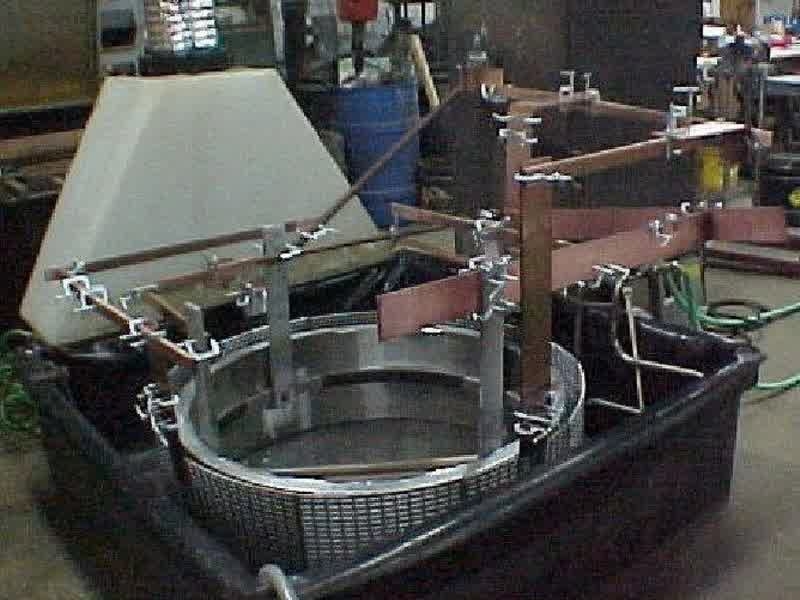 Jersey Plating combines industrial hard chrome and thin dense chrome capabilities with an extensive precision grinding operation.The Jersey family’s history in the finishing industry predates the current company.
Jersey says his great-grandfather began chrome plating in Beaver County, about an hour outside Pittsburgh, during the 1920s. The Great Depression eventually forced him to close the plating operation, although he continued operating other businesses, including, according to Jersey, a gas station and restaurant.
His great-grandfather had several sons, including Jersey’s grandfather. Like millions of men of their generation, the brothers served during World War II. When they returned, the eldest son put the family’s knowledge of chrome plating back to work.
In 1949, Jersey Chrome Plating Company opened at its current Pittsburgh location.
“We’ve been here ever since,” Jersey says.
His great-uncle served as the first president of the Pittsburgh operation. Ownership eventually passed to Jersey’s grandfather around 1960, then to his father in 1980.
His father would oversee the company for more than 40 years, remaining at the helm until he died in 2021. That means much of Jersey Plating's history isn't simply family history told through photographs, memorabilia, and stories passed between generations. It exists inside the same facility where the company has operated since 1949.
Alan grew up about 15 minutes away. Like many children raised around family manufacturing businesses, he grew up with the shop as a familiar part of his life long before it became his career.
“I worked with my dad on my summer breaks in high school and college,” Jersey says. “I always enjoyed it. I enjoyed working here on my summer breaks. It was something I looked forward to.”
But joining the company permanently was not always the plan.
The Long Way Back to the Family Business
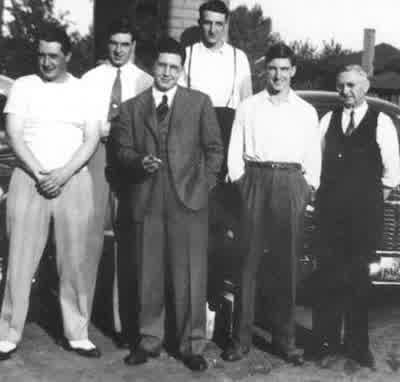 Founder Gaylord A. Jersey, a metallurgical engineer, had been involved in chrome plating since the 1920s and was recognized as a renowned authority in the industry.After college, Jersey chose a dramatically different career. He joined the Marine Corps and became an infantry officer, ultimately serving approximately six years and rising to the rank of captain. For a time, he seriously considered making the military his career.
Then his priorities began to change.
“After a few years of doing that, once I had my first child, I thought maybe being in the Marine Corps in the infantry wasn’t the most family-friendly line of work to be in,” Jersey says.
The family business was never far from his thoughts.
“It’s always been in the back of my mind,” he says. “I’ve always been drawn to it. So even while serving in the Marine Corps, I felt the pull to come back here and get back into the family business, and I’m glad I did.”
He returned to Jersey Plating full time in 2014. What happened next matters for understanding how Jersey eventually became the owner. He didn’t immediately move into the front office. He went to the shop floor. And he stayed there.
Learning Hard Chrome From the Shop Floor Up
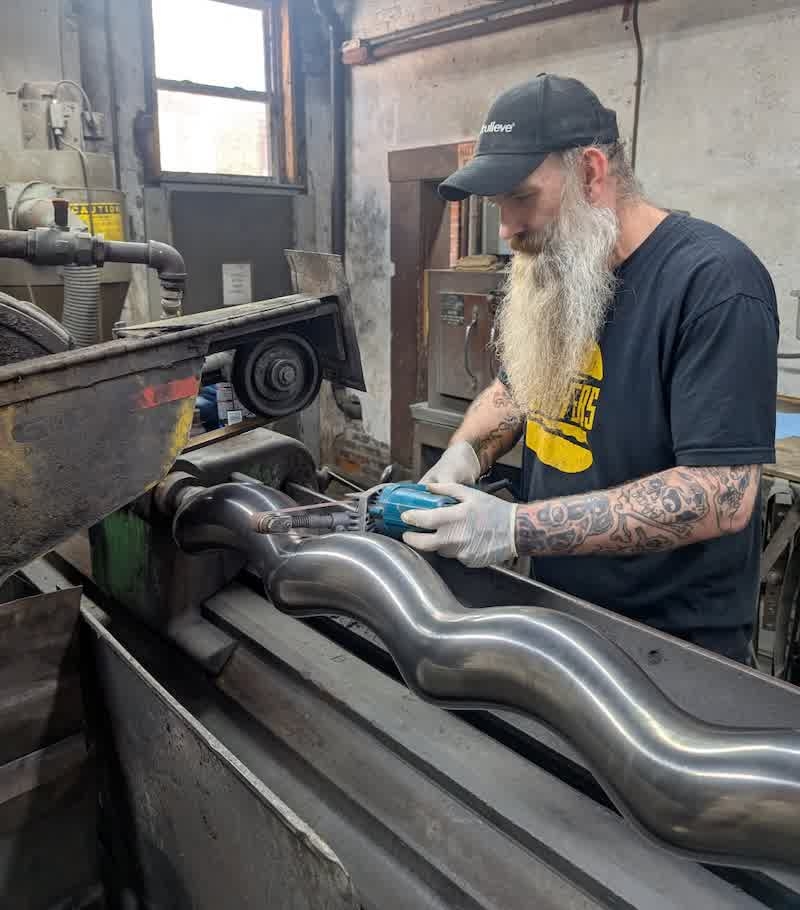 For years after coming back to the company, Jersey says he worked almost exclusively in production.
“Before 2020, 2021, I worked exclusively on the shop floor,” he says. “Fifty, 60, 70 hours a week exclusively on the shop floor, just mastering everything myself.”
For a company of Jersey Plating’s size and specialization, Jersey says there wasn’t really an alternative.
“A business our size and as specialized as it is, that was necessary,” he says. “So I just really poured myself into the trade and just mastered it as best I could, and really got a good understanding of it.”
After several years, Jersey essentially became the shop foreman under his father, taking on increasing responsibility for day-to-day production. He officially became his father’s business partner in 2020. When his father died in 2021, Alan assumed full control.
The transition was emotionally and professionally different from what happens at many multigenerational businesses. The former owner didn't stay nearby as an adviser who could be called when an unfamiliar problem surfaced.
Jersey had to rely on the knowledge he had already acquired. Fortunately, that preparation had been extensive.
“By the time it was time for me to sit in the big chair, from that aspect I was certainly ready,” Jersey says. “I’d already been running the shop. But you’re right, it is different once the buck stops with you.”
Leadership Lessons From the Marine Corps
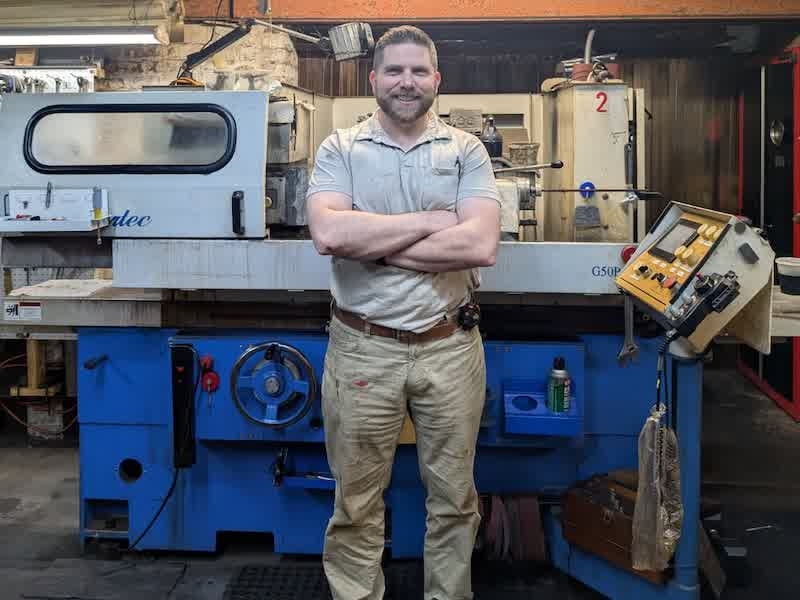 Alan Jersey spent six years in leadership training and experience as a Marine Corps officer.Jersey also brought something previous generations of his family had not necessarily possessed: six years of leadership training and experience as a Marine Corps officer.
He had served as a platoon commander and company executive officer before leaving the service as a captain.
The environments are very different, but Jersey says the lessons he learned about responsibility, leadership, and management translated well to operating a manufacturing company.
“Joining the Marine Corps was one of the best things I ever did,” he says. “I really did enjoy my service a lot.”
Becoming an officer meant extensive preparation.
“To be a Marine Corps officer, you spend your first year in training, learning not just tactics and that sort of thing, but also leadership and management,” Jersey says.
“With a heavy buildup, you often have to grind after plating in order to achieve your tolerance.”
That experience proved valuable when everything at Jersey Plating ultimately became his responsibility.
“When it was time for me to fill the big seat, I certainly did not feel overwhelmed or intimidated,” Jersey says.
Technical competence mattered, but so did the ability to make decisions and own them. For a 10-person plating company, there aren’t layers of management separating the president from what is happening at a tank, grinder, or piece of equipment. Problems can’t simply be passed to another department.
The owner has to understand the operation.
Why Hard Chrome Remains the Specialty
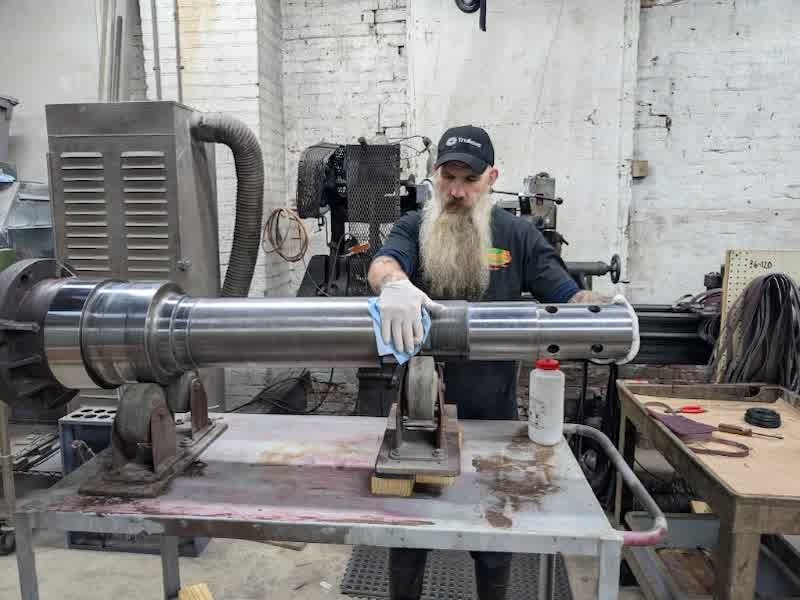 Jersey Plating’s core business is industrial hard chrome plating, including thin dense chrome, rather than the decorative chrome work consumers often associate with the word “chrome.”
“We do industrial chrome plating and precision grinding,” Jersey says. “We don’t offer decorative chrome plating, although we certainly get a lot of phone calls for it.”
Precision grinding has become essential to the company's service. Hard chrome can involve substantial deposits, and those heavy buildups may need to be ground after plating to achieve the required dimensions.
Jersey says the company can apply chrome deposits ranging from less than one ten-thousandth of an inch to as much as 0.060 inch radial thickness. Heavy deposits create challenges familiar to experienced hard chrome platers.
“Just the nature of hard chrome is, you have your high current density areas and low current density areas just like any other type of plating,” Jersey says. “With a heavy buildup, you often have to grind after plating in order to achieve your tolerance.”
That relationship between depositing the chrome and producing the finished dimension is one reason grinding has become such an important part of Jersey Plating.
“When it comes to hard chrome, precision grinding goes hand in hand with it,” Jersey says.
Bringing Plating and Grinding Together
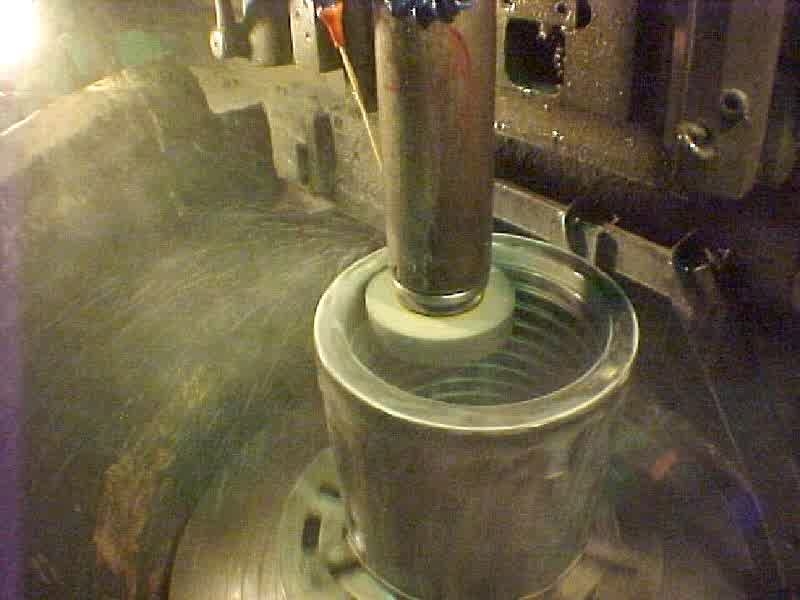 Jersey Plating began adding grinding capabilities shortly after Alan’s father took over in 1980.
Jersey believes his father purchased his first grinder around 1981. The company expanded its grinding department from there. More than four decades later, grinding is a major component of the business.
“It makes us, really, a one-stop shop when it comes to chrome plating and grinding,” Jersey says.
Bringing the operations together offers benefits beyond convenience.
A part requiring heavy chrome buildup may need substantial post-plate grinding. If different suppliers perform the two processes, the work must travel between facilities, and dimensional requirements must be communicated across companies.
At Jersey Plating, those operations remain under one roof.
“It saves our customers the trouble of sending things to multiple sources,” Jersey says. “We can do it all here.”
Another benefit comes when something goes wrong.
“If there’s a mistake made, if there’s a tight tolerance where the grinder takes it undersize, we can fix it all in-house,” Jersey says. “There’s no shipping costs involved in that.”
The plating and grinding departments therefore work as complementary parts of the same process rather than independent services.
Grinding Capacity Built Around Chrome
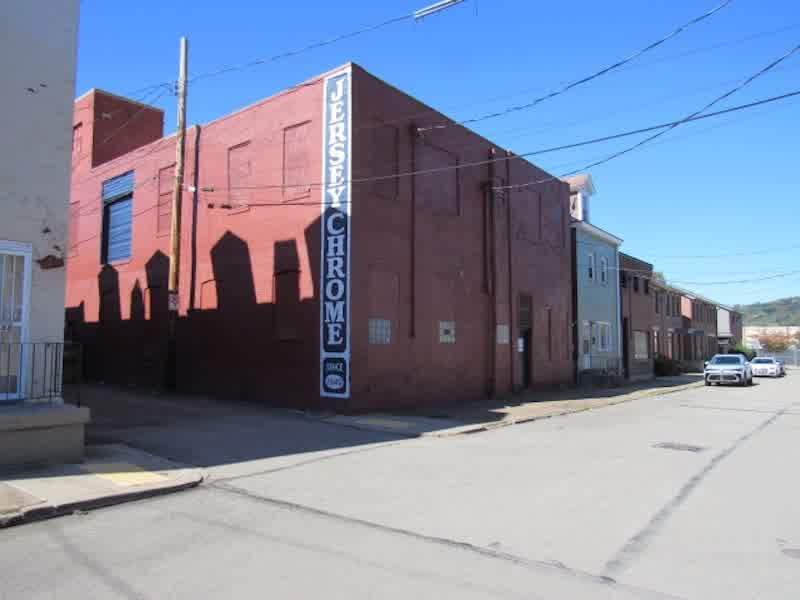 In 1949, Jersey Chrome Plating Company opened at its current Pittsburgh location.The company’s grinding capabilities have expanded significantly since the first machine arrived in the early 1980s.
Jersey Plating operates OD and ID grinding equipment as well as vertical universal grinders. It also has CNC and NC grinding equipment that Jersey says is particularly useful for higher-volume work.
“The CNC and the NC machines really come in handy,” he says. “It’s semi-automated, and it’s a big time saver, and it’s easy to hit tight tolerances with those machines.”
Vertical grinding adds versatility for parts whose configurations may not lend themselves to conventional OD or ID grinding.
“Oddly shaped items can be ground on a vertical grinder,” Jersey says. “So there’s a lot that we can grind.”
The company’s largest OD grinder can accommodate work up to 126 inches long and 19 inches in outside diameter. While the company occasionally receives requests outside its grinding envelope, Jersey says its current equipment gives the shop considerable capacity for the work it encounters.
Those capabilities also reinforce a strategy that has worked for Jersey Plating for decades: rather than continually adding unrelated coating technologies, the company has invested in services that directly strengthen its hard chrome business.
Every Hard Chrome Job Can Be Different
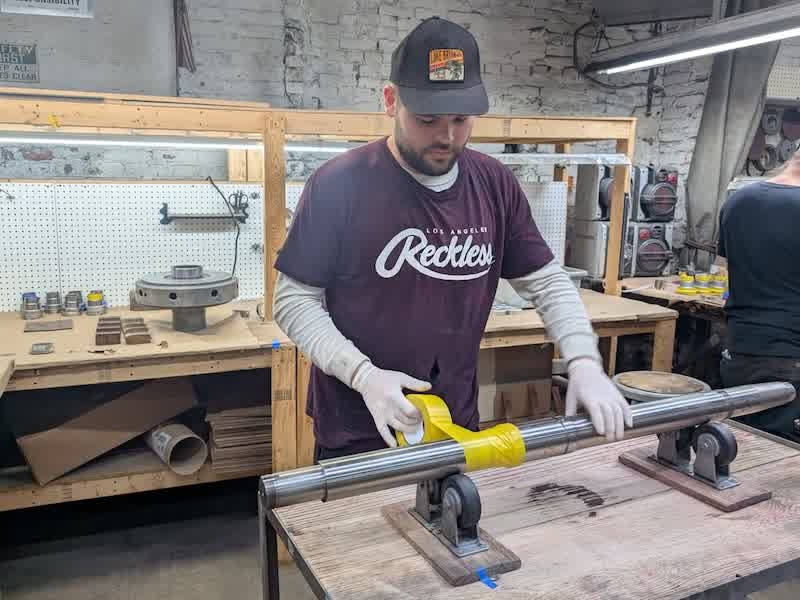 Ask Jersey about one of the greatest challenges in hard chrome plating, and the answer quickly comes back to people.
At its largest, Jersey says, the company had approximately 20 employees during the 1980s and 1990s. His father deliberately reduced that number.
Why intentionally become smaller? Control.
“I think the biggest we’ve ever been was around 20 employees in the ‘80s and ‘90s,” Jersey says. “My father, at the time, deliberately just downsized it to keep better quality control.”
For a specialized operation, fewer people made it easier to monitor work and maintain consistency.
“Hard chrome plating is so technical,” Jersey says. “It can be tough if you’ve got a lot of people running around who don’t know what they’re doing.”
That puts enormous importance on training.
Unlike high-volume finishing operations in which similar components travel through standardized processes repeatedly, Jersey says hard chrome frequently demands a different approach from one part to another.
“One job can vary so much from the next,” he says. “Every plating setup is pretty much custom.”
He emphasizes the distinction plainly.
“We’re not just clipping parts on a rack and putting them in a tank,” Jersey says. “Each setup really is custom.”
Capturing the Tribal Knowledge
That customization presents one of manufacturing’s oldest challenges: how do you preserve knowledge that traditionally resides in the heads of experienced employees?
Jersey readily acknowledges that hard chrome carries a substantial amount of what manufacturers often call tribal knowledge.
“There is a lot of tribal knowledge,” he says.
The company works to capture as much of that knowledge as possible.
“We record as much as we can, and we have work instructions,” Jersey says. “I generate work instructions for every job to try to make everything as easy to understand as possible.”
“Through his tutelage I’ve learned how to repair pretty much everything in here myself if I have to, and just learned a lot of mechanical knowledge from him and from my father before he passed.”
But documentation can only go so far in a process involving different component geometries, plating setups, current density considerations, buildup requirements, and final dimensions. That makes developing skilled employees one of the owner’s most important responsibilities.
“Training is one of the most important aspects of the business,” Jersey says.
In a company that has spent generations accumulating process knowledge, transferring that expertise is every bit as important as maintaining rectifiers, tanks or grinders.
Learning to Maintain the Shop, Too
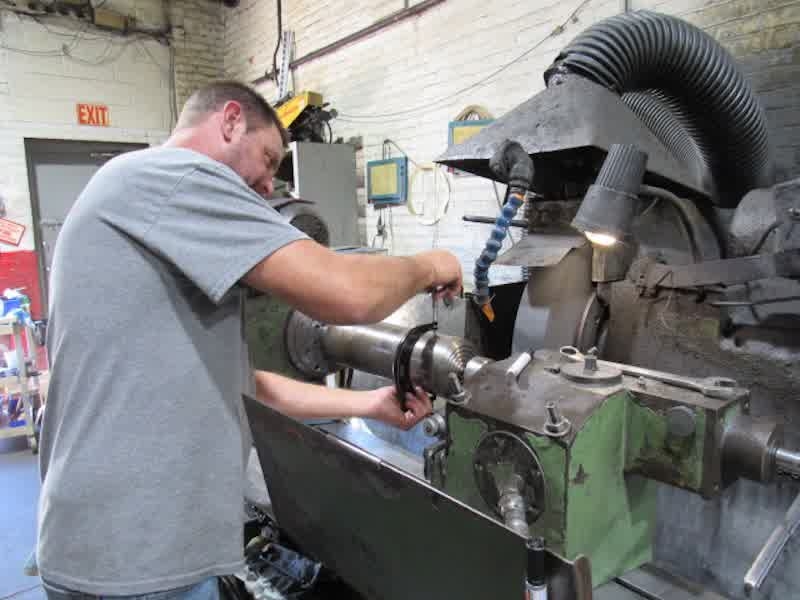 Jersey has also become increasingly self-sufficient with the equipment that keeps the business operating.
He credits a longtime electrician who has serviced the plant and become an important mentor. Jersey says the relationship has helped him acquire knowledge that goes considerably beyond plating.
“He’s been doing the electrical and repairs around here for a long time,” Jersey says. “As far as just mechanical things and electrical things, he’s an absolute expert.”
Working alongside him, Jersey learned to handle many repairs himself.
“Through his tutelage I’ve learned how to repair pretty much everything in here myself if I have to, and just learned a lot of mechanical knowledge from him and from my father before he passed,” Jersey says.
For a small specialty finishing company, that versatility can be invaluable. The person running the business isn’t separated from the equipment or process.
Jersey’s education as an owner has come from multiple places: his father, years spent plating and grinding, his Marine Corps experience, and people with specialized technical knowledge who have been around the facility for years.
Resisting the Urge to Diversify
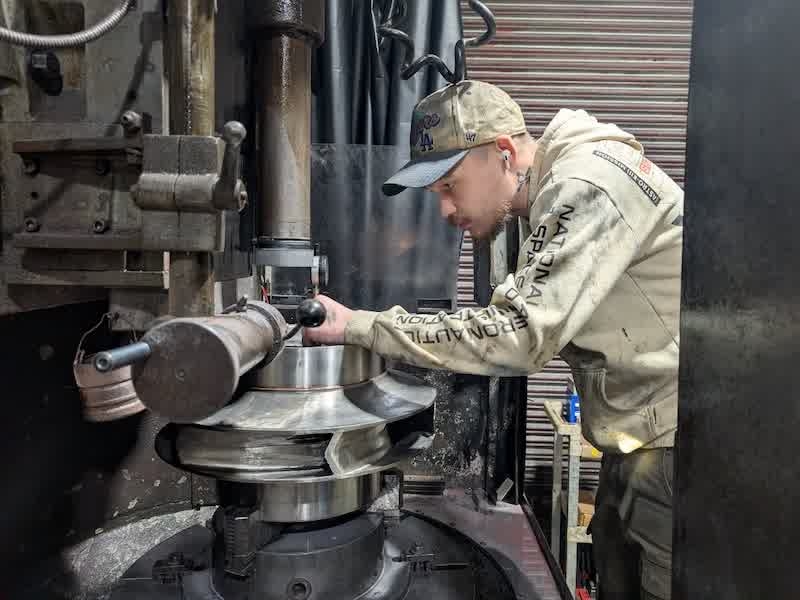 Perhaps the most interesting part of Jersey Plating’s story is what the company has not done. Over many decades, it hasn’t transformed itself into a broad finishing house offering a long menu of processes.
Jersey says his father considered other technologies at various times, including decorative chrome and nickel plating, but never completed the expansion. Alan has considered diversification as well.
Other plating technologies could eventually be possibilities, as could spray coating processes. But for now, Jersey sees little reason to add another coating to offer something new.
The existing operation stays busy.
“For the time being, we have plenty of demand, and we stay busy,” Jersey says. “We pretty much occupy all of our tank space every day for the most part.”
“Not the biggest,” he says. “I want us to be the best at chrome plating.”
That makes the strategic calculation different. Adding a coating technology would mean new equipment, new process controls and, critically, another body of technical knowledge that the company would have to master.
Jersey would rather deepen the expertise that already distinguishes the business.
“We’re content to be the master of one trade instead of a jack-of-all-trades kind of thing where we’re doing all these different coatings,” he says.
This philosophy runs counter to the traditional assumption that a manufacturer must continually add services to grow. At Jersey Plating, specialization itself is the strategy.
Not the Biggest, but the Best
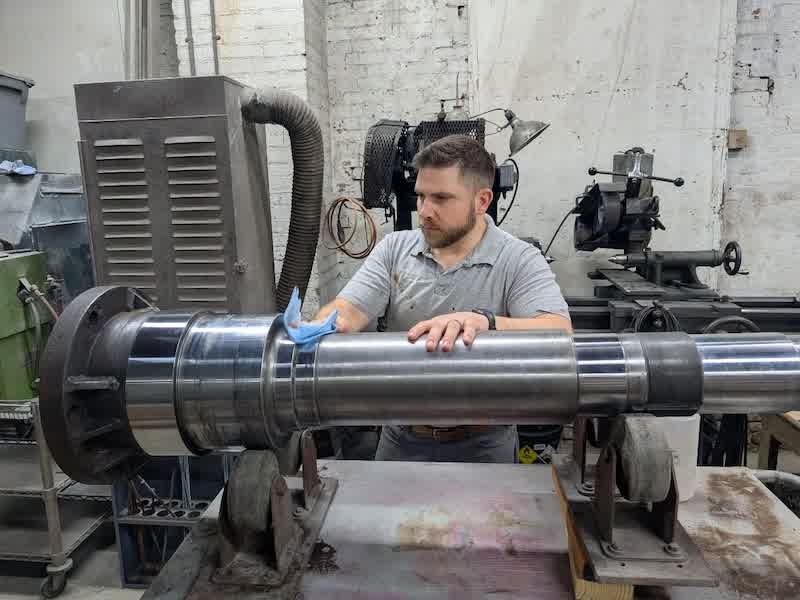 In an industry where finishing companies are continually confronting demands for capital equipment, skilled employees, automation, and new technologies, Jersey Plating offers another model for longevity.
Its history has not depended on becoming a large company. It hasn’t depended on adding every finishing process customers might request.
And despite being part of a family legacy, Alan Jersey didn’t inherit his technical knowledge along with the president’s title. He spent years earning it on the shop floor.
That combination of generational knowledge and hands-on experience has carried the business from a family plating operation whose origins reach to the 1920s through the creation of Jersey Chrome Plating Company in 1949, his grandfather’s ownership, more than four decades under his father, and now into a fourth generation.
The machinery has evolved. Grinding became increasingly important. CNC and NC equipment added a measure of automation. Work instructions increasingly capture knowledge that may once have been communicated almost entirely from one experienced plater to another.
But the central business remains remarkably recognizable.
Hard chrome goes on parts. Precision grinding brings them to dimension. Experienced people learn how to handle jobs that may be different every time they come through the door.
More than seven decades after the Pittsburgh operation began, Jersey believes there is still plenty of opportunity in simply doing that work exceptionally well.
The company has survived depressions in its family’s earlier plating history, a world war between generations, changes in ownership, advancing technology and the transfer of knowledge from fathers to sons. Its current president left Pittsburgh for a completely different life, became a Marine Corps officer, and still ultimately found himself drawn back to the plating tanks he had worked around as a young man.
Now Jersey is responsible for carrying that knowledge into another generation.
There may eventually be another coating process at Jersey Plating. There may be additional equipment or technology. Jersey isn’t ruling out those possibilities.
But he isn’t chasing them, either. For now, there are plating tanks to keep full, employees to train, grinders to operate, equipment to maintain and difficult hard chrome jobs to get right.
After four generations, the business strategy can be summed up in the same straightforward way Jersey describes the company’s ambitions:
“Not the biggest,” he says. “I want us to be the best at chrome plating.”
Visit https://jerseychrome.com