

Chemical Agent Resistant Coating (CARC) is a specialized organic polyurethane coating system specified by the U.S. Department of Defense.
 Brian AsikIt is used on tactical military equipment, including combat vehicles, aircraft components, ordnance (military weapons and ammunition), and support systems. CARC is not simply a paint choice; it is a performance requirement governed by military specifications, designed to meet the operational demands of hostile environments.
One of CARC’s defining characteristics is its resistance to chemical warfare agents. The coating’s formulation enables effective decontamination of contaminated surfaces without absorbing or retaining hazardous agents, which is critical to maintaining equipment readiness and protecting personnel.
In addition, CARC coatings are engineered to reduce infrared reflectivity, helping minimize thermal signatures and improving survivability in the field. These functional requirements make CARC significantly more complex than conventional industrial coatings.
Masking a Critical Part of the Process
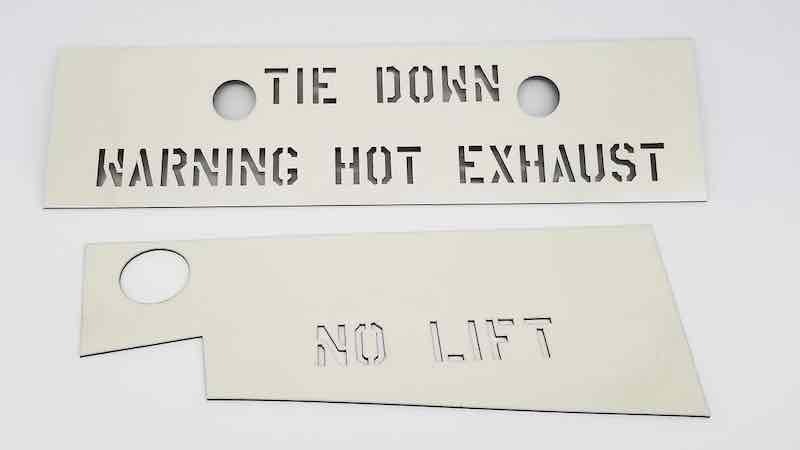 CARC is typically applied as a wet spray system and cured at relatively low oven temperatures compared to other high-performance coatings. Because it is often applied to large, complex assemblies with extensive surface area, masking becomes a critical part of the finishing process.
Traditional masking methods—such as single-use polyester tape or paper—can be time-consuming, material-intensive, and costly, particularly in high-volume or repeat production environments.
To address these challenges, magnetic masking is frequently used during CARC applications on ferrous metal components. Reusable magnetic masks can be cut to shape using dieless knife-cutting systems, such as Atom Flash technology, enabling accurate coverage without the lead times associated with hard tooling.
Providing Consistent Edge Definition
Constructed from thick magnetic material laminated with vinyl, these masks provide consistent edge definition, withstand repeated use, and are easily applied and removed between coating cycles.
For defense contract manufacturers, reusable magnetic masking can streamline CARC finishing operations by reducing material waste, minimizing setup time, and improving process consistency. As CARC requirements continue to play a critical role in military manufacturing, efficient, repeatable solutions remain essential to meeting both performance and cost objectives.
Brian Asik is the senior vice president of Custom Fabricating & Supplies and directs sales, product development, and manufacturing operations. Visit www.customfabricate.com for more information.