

In many industries, competitors guard their processes, their customers, and their knowledge with a fierce sense of protection.
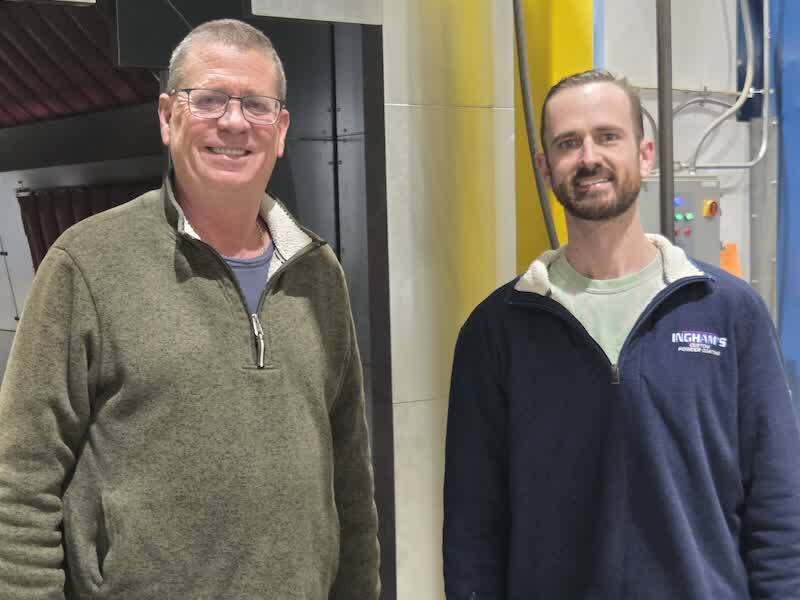 Ingham's Powder Coating owners Kyle Ingham and Kody Ingham.The finishing industry can certainly be competitive, but every once in a while, a company stands out for taking a different approach—one rooted in collaboration rather than isolation.
For Kyle Ingham, owner of Ingham Powder Coating in Pennsylvania, cooperation with other finishing shops has been a cornerstone of his company’s success. Over the past three decades, that mindset has helped him build relationships with competitors, vendors, and customers that ultimately shaped the growth of his business.
“We probably have about 15 competitors within 50 miles of us,” Ingham says. “And I can walk into pretty much all their shops except for two. If I run out of powder, they’ll loan me powder. I’ve loaned them plenty of powder over the years.”
That type of industry camaraderie may sound unusual, but for Ingham, it has always been the norm.
“It’s really nice to have that kind of relationship with your competitors,” he explains. “There’s a lot of respect between the two.”
That respect has translated into real-world cooperation, particularly when large projects require more capacity than a single shop can provide.
“We had a large job come in that was over 15,000 pieces,” Ingham recalls. “Right away, I called one of the other shops, and they ended up being awarded that job. And there have been times where they had work that was too large for their facility, so we ran it through ours.”
For Ingham, collaboration isn’t just a nice sentiment—it’s a strategic advantage.
And in one critical moment, it helped keep multiple shops running.
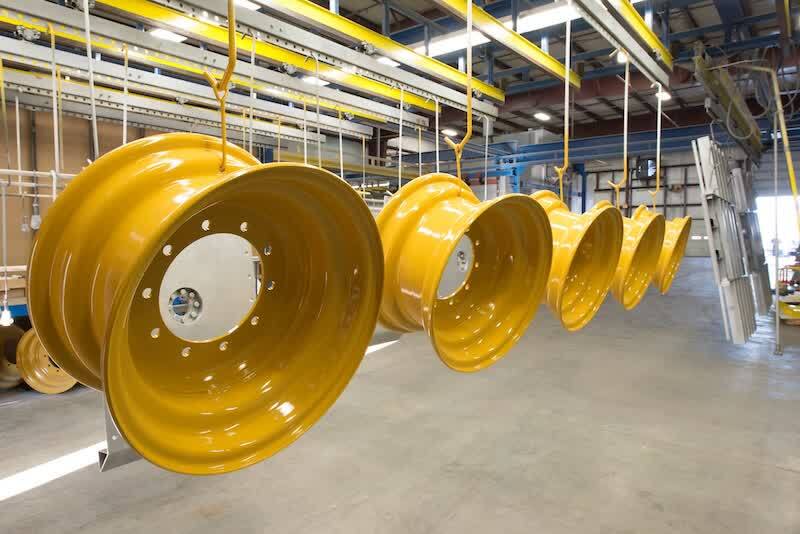 Ingham was in the tire recycling business before starting the powder coating part.
From Truck Tires to Powder Coating
 Ingham Powder Coating operates two facilities in Pennsylvania.The story of Ingham Powder Coating didn’t start with powder coating at all; it started with truck tires. Thirty-three years ago, Ingham was in the tire recycling business, buying used truck tires from dealerships and reselling them to retreaders.
“I was buying truck tires from dealerships and grading them and reselling them for retreading,” he says.
At the time, he was working with a large trucking company—then known as Yellow Freight—that offered him an unexpected opportunity.
“They had five container loads of truck rims they wanted to sell,” Ingham says. “So I thought I’d buy them and sell them and make myself some money.”
There was just one problem: he realized that nobody wants to buy a truck rim that wasn’t reconditioned white. And that realization pushed him toward finishing.
At first, he considered installing a paint line to refurbish the wheels. But as he researched the options, another emerging technology caught his attention.
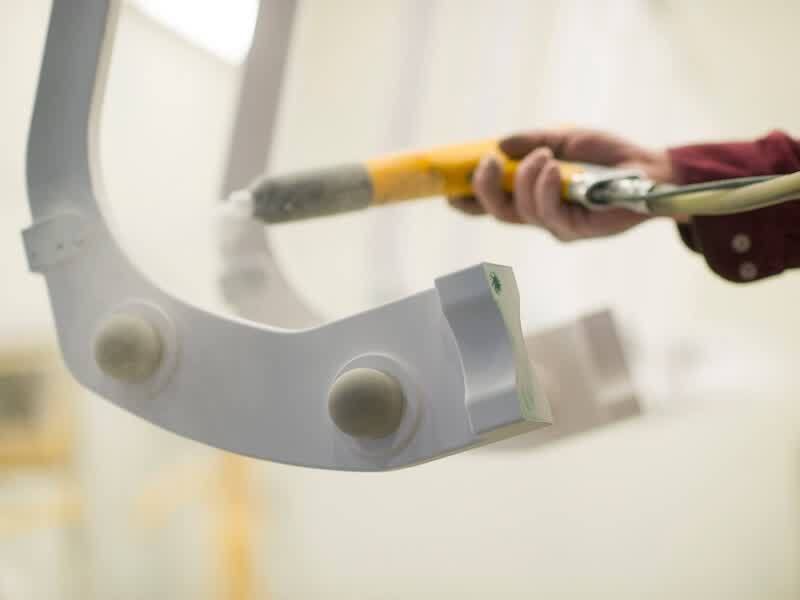
“Powder coating was just catching on,” Ingham says. “So we decided to make the investment and start powder coating the wheels.”
“We were undersized here,” Ingham says. “When I bought the building 14 years ago, I walked in and thought, ‘This is awesome. I’m never going to fill this up.’”
What began as a niche operation quickly expanded. They did wheels only until somebody brought in some lawn furniture; then they did some motorcycle parts, and then custom car wheels.
More than three decades later, powder coating has become the core of the business.
“Thirty-three years later, all we’re doing is powder coating,” Ingham says with a laugh. “And no tires.”
Growing a Two-Location Operation
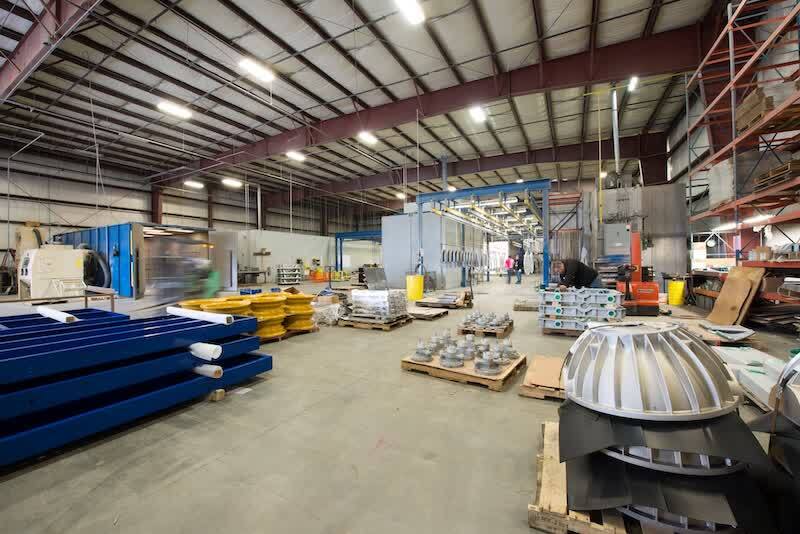 Ingham Powder Coating expanded in 2024.Today, Ingham Powder Coating operates two facilities in Pennsylvania. The original shop began as a modest 10,000-square-foot operation in Stevens, Pennsylvania.
“That shop has now been built out to about 14,000 square feet,” Ingham says. “It’s as big as it can get.”
About 13 years ago, Ingham expanded by purchasing a second location—a 17,000-square-foot facility. In 2024, he began a major expansion of that building, spending the entire year adding to it, taking it from 17,000 square feet to about 34,000 square feet.
The project required years of planning and patience.
“It had been on the drawing board for about five years,” Ingham says. “But between ordering the equipment and dealing with township regulations, it took about a year just to get the approvals.”
Construction finally began in early 2025, and it took about a month to complete. The new space allowed Ingham to install a fully automated coating line and significantly increase production capacity.
“We still do a lot of custom car parts and motorcycle parts,” Ingham says. “We’ve got customers that we’ve had for 25 or 30 years.”
But expanding the facility wasn’t simply about chasing growth.
“We were undersized here,” Ingham says. “When I bought the building 14 years ago, I walked in and thought, ‘This is awesome. I’m never going to fill this up.’”
It didn’t take long for reality to prove otherwise.
“About three years later, I started saying, ‘Wait a minute—we need more space,’” he says.
Blasting, Coating, and Everything in Between
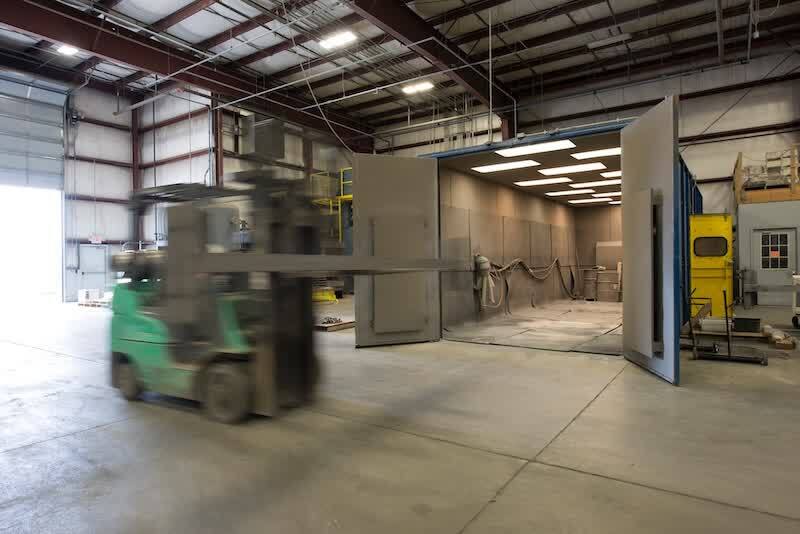 Like many successful job shops, Ingham Powder Coating prides itself on versatility.
“We’re a job shop,” Ingham says. “We basically do anything that comes in the door.”
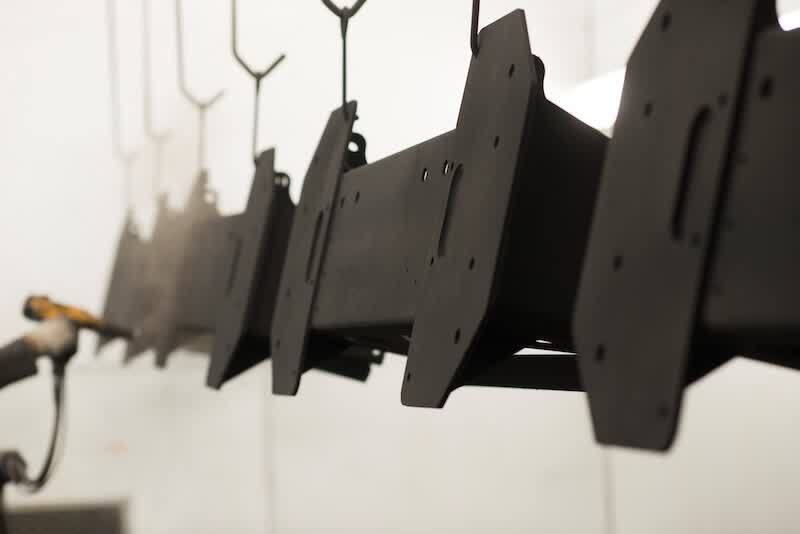
The company offers a wide range of surface preparation and finishing services, including extensive blasting capabilities.
Among the equipment in the shop:
- A Viking eight-head steel conveyor blast unit
- A 60-inch table blast system
- A pass-through automated sandblaster
- Two large blast rooms measuring 20×20 and 20×30
“We shoot stainless steel in one and aluminum oxide in the other,” Ingham says.
The company also performs aluminum profiling for improved coating adhesion.
“We run aluminum parts through the automated belt sandblaster to profile them,” he explains.
Across both facilities, the company employs 28 people, each playing a role in keeping production moving.
“We’ve got a really good team,” Ingham says.
Serving Unique Markets
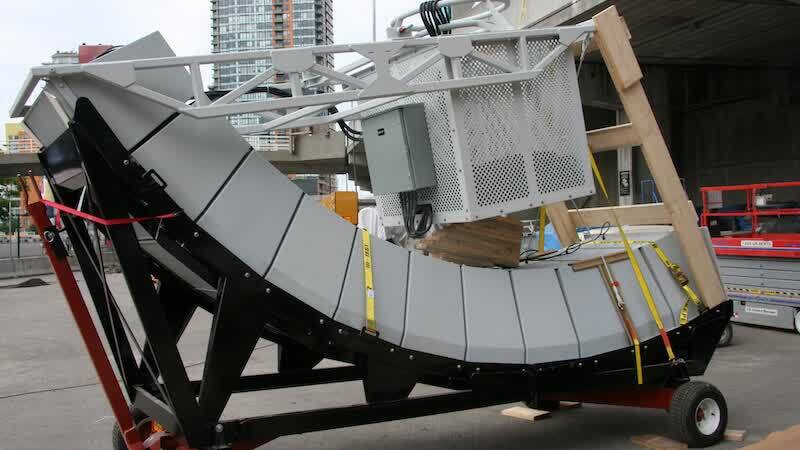 Ingham coats many stages and sets for touring shows, including this one at Vancouver Olympic Stadium.One of Ingham Powder Coating’s distinguishing characteristics is its diverse range of markets.
While the main facility focuses on larger production work, the original shop handles specialty projects and retail customers.
“We still do a lot of custom car parts and motorcycle parts,” Ingham says. “We’ve got customers that we’ve had for 25 or 30 years.”
That location also handles some unusual projects tied to the entertainment industry. They coat many stages and sets for touring shows, as several major production companies operate nearby, including firms that support large concert tours.
“When bands like Bruce Springsteen go out on tour, those stages move from city to city all summer long,” Ingham says. “We’re coating components that end up going into arenas across the country.”
The company also supports permanent installations.
“For example, when they’re doing something like reconditioning Beaver Stadium or updating a venue,” he explains.
These projects add another layer of variety to the shop’s workflow.
Learning the Craft
 When Ingham first entered the powder coating business, formal training resources were limited.
“There weren’t many schools teaching powder coating,” he says.
Instead, he learned through relationships with suppliers and industry peers.
One of his earliest mentors was a representative from Tiger Drylac, a powder supplier.
“He really took the time to show me what I needed to know,” Ingham says.
Another surprising teacher was a competitor. Nelson Zimmerman from nearby Keystone Coating took Ingham in and showed him some things he might never have learned about powder coating — and about working with customers — that he would never have learned on his own, or it would have taken him years.
“I was able to go into his plant and spend time learning powder coating,” Ingham says
That experience left a lasting impression.
“The highest compliment I ever got—other than from my father—was when Nelson came to see my new plant,” Ingham says. “As he was leaving, he said, ‘Kyle, you really did a nice job setting up this plant.’”
For Ingham, that validation meant a lot.
“I have tremendous respect for him,” he says.
Cooperation in a Crisis
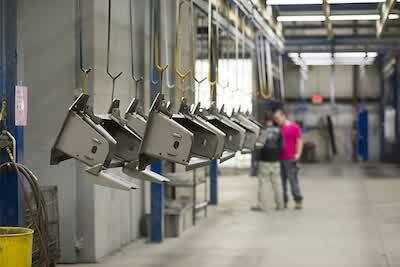 The benefits of cooperation among finishing shops became especially clear during the COVID-19 pandemic. When demand surged for hospital beds needed by the Centers for Disease Control and Prevention (CDC), Ingham’s shop received a large contract.
But fulfilling it alone would have been impossible.
“It was way too many beds for me to put through my facility in the time they needed,” he says.
Instead, Ingham coordinated production among multiple coating companies.
“I worked with Keystone and two other vendors,” he says. “I was the coordinator between the three shops.”
The project wasn’t especially profitable, but it provided something more important.
“It didn’t pay well at all,” Ingham says. “But it got everybody back to work.”
With many manufacturing customers temporarily shut down, the project helped bring employees back from layoffs.
“We were able to bring our people back and get everybody working again,” he says.
For Ingham, it was another reminder that cooperation often benefits everyone involved.
Investing in Digital Operations
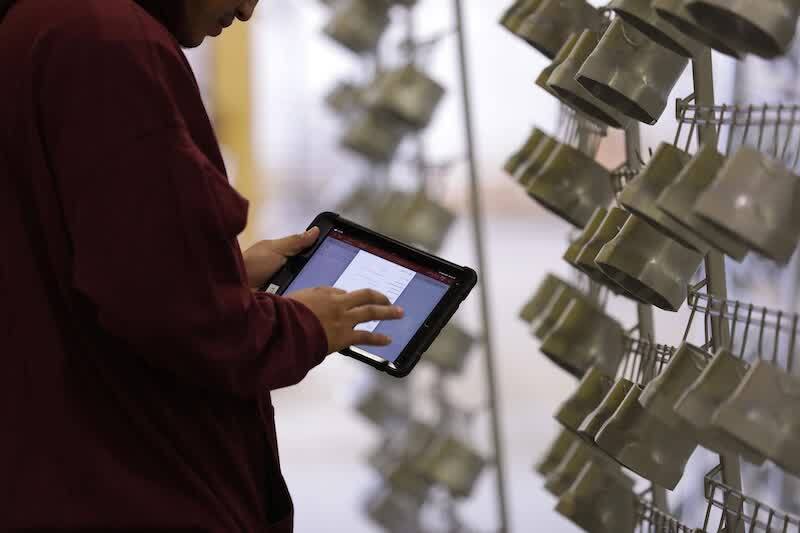 Ingham Powder Coating adopted a production management system from Steelhead Technologies to handle its growth.As the company expanded, Ingham realized that improving operational visibility would be just as important as adding physical capacity.
That realization led to the adoption of a production management system from Steelhead Technologies.
“We’re running the Steelhead program for all our work orders in the shop,” Ingham says.
The platform allows the company to track jobs digitally from intake to completion.
“By the first of April, we should have everything set up with QR codes so we can just scan skids coming in and out,” he says.
The system has already transformed how the company manages workflow.
“If I’m out making sales calls and someone asks me about a project, I can go into my phone or my iPad and tell them exactly where it is in the shop,” Ingham says.
“We can run the dry-off oven hotter or cooler, or start cooler and finish hotter,” he says. “It’s a really versatile system.”
That real-time visibility helps the company manage one of the biggest challenges job shops face: rush work.
“We get a lot of rush jobs because fabricators can’t get their projects done on time,” he explains.
Using the Steelhead system, Ingham can quickly determine whether accommodating a rush order is realistic.
“Our rule now is that unless we’re three days ahead in our production schedule, we don’t take rush jobs anymore,” he says.
A New Infrared Oven Changes the Game
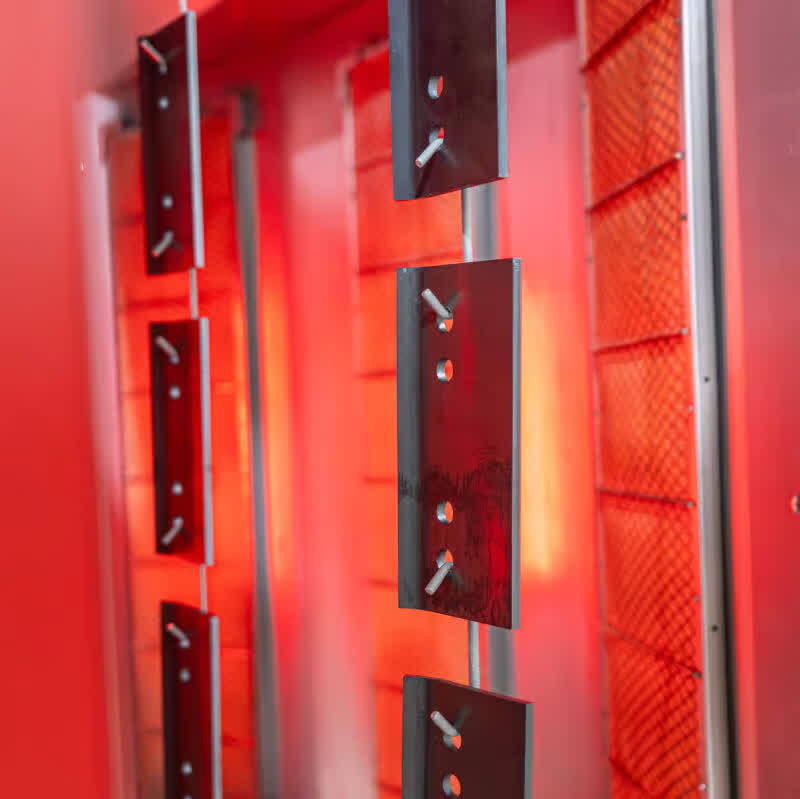 The centerpiece of Ingham Powder Coating’s recent expansion is a new infrared curing oven from WolfRayet. Unlike conventional convection ovens, the IR system allows precise control over heat delivery throughout the curing cycle.
“It’s a whole new learning curve,” Ingham says.
Traditional curing ovens operate much like a kitchen appliance, Ingham says. With a regular convection oven, he says it’s like putting a turkey in the oven, then taking it out after 45 minutes.
Infrared curing is far more flexible.
“With the IR oven, we can control each bank inside the oven,” Ingham says. “If we want to heat something slowly and then put a lot of heat into it for curing, we can do that.”
That flexibility is particularly valuable for challenging substrates. For example, if they have parts with chromate zinc coatings that might outgas, Ingham says his staff can blast them with heat to drive out those gases before curing.
The system also improves the drying stage following the wash process.
“We can run the dry-off oven hotter or cooler, or start cooler and finish hotter,” he says. “It’s a really versatile system.”
Solving Complex Coating Challenges
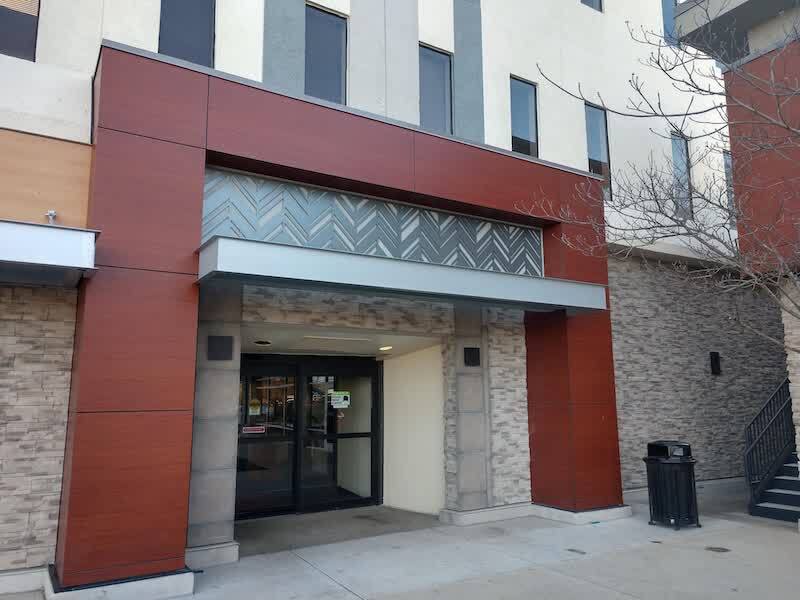 Ingham Powder Coating also specializes in unique architectural coatings.One of the most interesting applications of the new IR oven involves parts produced for a large marine customer. These components include thick aluminum castings that present curing challenges.
“The main sphere in the center is about two-inch-thick aluminum castings,” Ingham explains.
Initially, the company wasn’t sure whether the new oven could cure powder effectively on such massive components. But one employee took on the challenge.
“Chris Booth, who’s been with me about 10 years, worked closely with WolfRayet to figure it out,” Ingham says.
Together, they developed a unique two-stage coating process.
“We run the parts through a preheat, then coat them lightly and run them through the cure oven,” he says. “Then we bring them back around, apply the full coat, and cure them again.”
The result is a fully cured coating capable of surviving an unusual downstream process.
“All the machining is done after powder coating,” Ingham explains.
Previously, machining sometimes caused edge adhesion issues.
“With the new oven we’ve been able to dial that in,” he says. “We just got approval to run all their product through that line.”
A Relationship That Made the Purchase Easy
 Marhya OsheaskiThe decision to invest in the WolfRayet oven wasn’t just about technology. It was also about relationships.
Ingham had already built a professional connection with Marhya Osheaski, who is now president at WolfRayet. They had met through PCI events when she was working with IFS Coatings. When Osheaski later joined WolfRayet, that familiarity helped build trust during the equipment evaluation process.
“It made everything about purchasing the machine so much easier,” Ingham says. “I had already spent time with her and built that relationship.”
For Ingham, that trust was critical when making a large capital investment.
“I’ve bought equipment in the past where once you buy it, they don’t really care about you anymore,” he says.
“We’re seeing a significant shift toward infrared technology across the industry, driven by the need for greater efficiency and flexibility.”
But his previous interactions with Osheaski reassured him that it wouldn’t happen.
“With Marhya, I knew I wasn’t going to be hung out to dry after the purchase,” he says.
Osheaski says her relationship with Ingham goes back several years, and from the start it’s been built on trust and mutual respect
“He’s always collaborative and willing to push for better solutions, which made this an ideal partnership,” she says. “When he said he wanted to work with us, I was genuinely excited and honored. Just as important was earning that same trust from his team—they’re engaged, knowledgeable, and take real ownership. That alignment across the organization is what made it possible to implement and optimize the system quickly and successfully.”
Not a Plug-and-Play Project
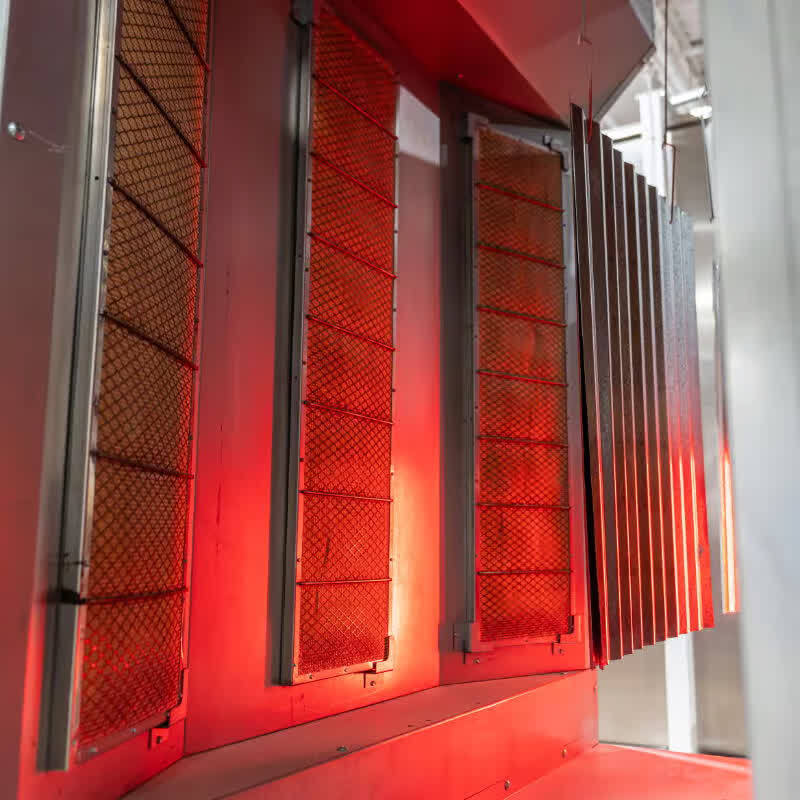 WolfRayet ovens reduce energy costs by up to 50% and deliver superior powder coating finishes.Osheaski says this wasn’t a simple ‘plug-and-play’ project; instead, it was a true collaboration from day one. She says WolfRayet spent a lot of time understanding Ingham’s part mix, production goals, and the physical constraints, which were all essentially the realities of his facility.
“The goal wasn’t just to install a WolfRayet oven,” she says. “It was to deliver a system that would solve real challenges and support his next phase of growth. That took thoughtful design, testing, and a lot of back-and-forth to get it right. That’s really what you’re getting when you work with us.”
With WolfRayet ovens, Osheaski says, control is everything. Rather than a one-size-fits-all heat profile, they design systems with multiple independently controlled zones, so operators can tailor how heat is applied based on the part.
Whether it’s a gradual ramp or more aggressive heating, that flexibility—paired with WolfRayet’s reflective design and high-efficiency emitters—delivers consistent, efficient energy use across the entire part. The company works with its clients to engineer curing solutions that really deliver.
“Now I’ve got managers running production while I focus on sales and the bigger picture.”
“We’re seeing a significant shift toward infrared technology across the industry, driven by the need for greater efficiency and flexibility,” Osheaski says. “With WolfRayet ovens, IR allows manufacturers to reduce cycle times, improve consistency, and operate within tighter footprints. But beyond that, it opens the door to new possibilities—whether it’s handling complex geometries, managing outgassing, or processing new materials. It’s not just an incremental improvement; it’s changing how people think about heat in the finishing process.”
At the same time, the technology is only part of the equation. What really makes the difference is the team behind it.
“Working together with our customers is what we thrive on and when you have a customer like Kyle—engaged, collaborative, and willing to push boundaries—that’s when you start to see what these systems are truly capable of,” she says.
Leadership Through Delegation
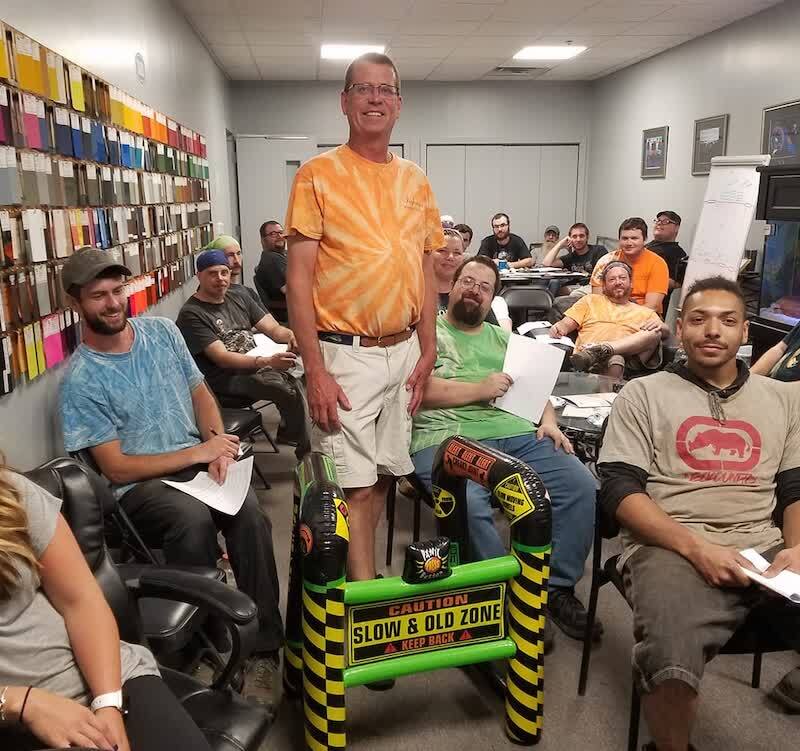 Kyle Ingham gets a gift from his team.As Ingham Powder Coating grew, Ingham had to learn another key leadership skill: letting go.
“One of the biggest lessons I learned was that just because I own the place doesn’t mean I have to do everything,” he says.
Working with a business coach helped him develop stronger management practices. Ingham says he used to work 100 hours a week in the shop.
Over time, he built a leadership team capable of managing day-to-day operations. That includes Kody Ingham, the General Manager and Kyle’s son, production assistant Dana Barrett who has been with them for nine years, Chris Booth, a 10-year employee who is the new line technician, and Brittany Potrovich, who has been with the company for seven years and is Ingham’s assistant/customer assistant and runs the office account receivables.
“Now I’ve got managers running production while I focus on sales and the bigger picture,” he says, which has helped the company scale more effectively.
Another factor in the company’s longevity has been its approach to workforce management. Ingham emphasizes flexibility whenever possible.
“We try to work with people’s schedules,” he says.
“I’m not that smart. But I know the smartest people in my industry.”
Some employees work part-time around family responsibilities. They have several parents who come in after the kids go to school and leave before they get home.
Others coordinate their schedules around a spouse’s work hours.
“It helps them avoid daycare costs and still earn some income,” Ingham says.
The arrangement benefits both sides.
“They can do things like masking and plugging parts that help keep production moving,” he says.
In return, employees gain work-life balance.
Looking Toward the Future
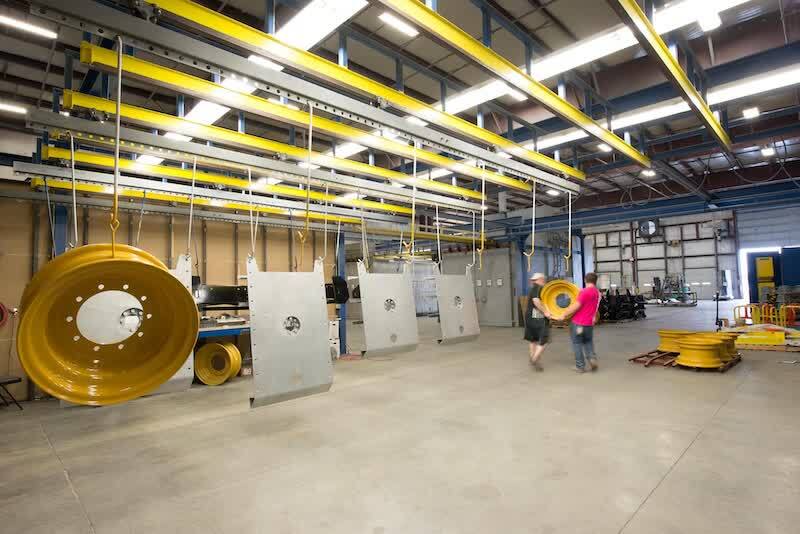 After completing a major expansion and installing advanced equipment, Ingham Powder Coating is entering a new phase of growth.
The new automated line has already attracted additional work from one of the company’s largest customers, which has moved a large portion of its work to Ingham due to the new capacity.
That increased demand could eventually require additional staffing.
“At some point we’ll probably look at adding a second shift,” he says.
The new IR oven also opens the door to new materials. Although the company currently focuses on metal substrates, future opportunities could include coating wood products such as MDF.
“Our speaker cabinet customer is very interested in that,” Ingham says.
But he’s in no rush.
“Until 2027, we’re not even looking at that,” he says. “We’ve got to get our feet wet with this technology first.”
After more than three decades in business, Ingham believes relationships remain the most important factor in long-term success.
That includes relationships with customers, vendors, competitors, and employees.
“I’m not that smart,” he says with a smile. “But I know the smartest people in my industry.”