
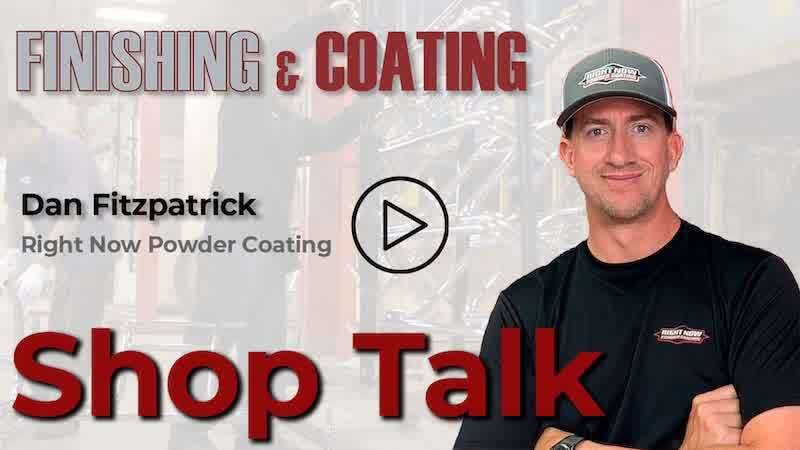

In an industry where many shop owners still guard their processes like state secrets, Dan Fitzpatrick has taken the opposite approach.
 Dan FitzpatrickThe president of Right Now Powder Coating in Collins, Iowa, has built an audience of more than 21,000 YouTube subscribers by doing something relatively uncommon in the finishing industry: openly documenting the realities of running a powder coating business.
From troubleshooting pretreatment issues and discussing equipment setups to sharing the emotional highs and lows of production problems, Fitzpatrick has developed a following among powder coaters who see themselves in the challenges he discusses on camera. What began as a hobbyist sharing information has evolved into one of the more recognizable educational channels in the powder coating community.
“We’ve had people mail us parts who have watched our channel,” Fitzpatrick says. “But the channel’s really just for powder coaters. It’s not really for customers. We’re just trying to teach people.”
That willingness to pull back the curtain has become central to both Fitzpatrick’s identity and the growth of his company. The same openness that helped him build an online audience also helped establish trust with customers, suppliers, and now equipment buyers across the United States.
Today, Right Now Powder Coating operates out of two buildings in the small town of Collins, Iowa, running both conveyorized and batch powder coating operations. Fitzpatrick has also expanded into equipment distribution, becoming the U.S. distributor for Electron powder coating systems manufactured in Turkey.
For a company that started with a homemade oven and a hobbyist powder coating gun, the journey has been remarkably fast.
From Wheel Repair to Powder Coating
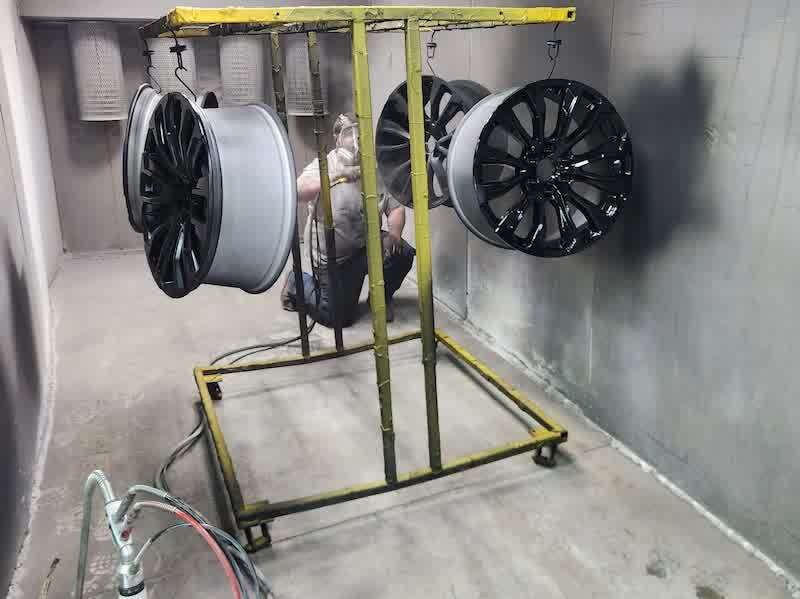 The original business model centered on repairing cosmetic wheel damage for automotive dealerships.Long before he was selling powder coating equipment or building a social media audience, Fitzpatrick was repairing damaged automotive wheels.
The original business model centered on repairing cosmetic wheel damage for automotive dealerships. Fitzpatrick and his team operated a mobile trailer setup, traveling to dealerships and repairing curb rash and other wheel defects on used vehicles.
“We would go out to the dealerships, look at all the wheels, and then take them back,” Fitzpatrick says. “We’d actually dismount the wheel off the car, break the tire down, sand out the damage, repair it, paint it, cure it real fast with an infrared light, and then put it back on the car.”
The business worked well, but dealership demand eventually shifted toward gloss-black wheels and other custom finishes. That change pushed Fitzpatrick toward powder coating.
“I had been powder coating a little bit at home in my free time as a hobby,” he says. “I was like, ‘Man, this is the right way to do this, to do it properly.’”
Like many small-shop entrepreneurs, Fitzpatrick started with limited resources and a willingness to figure things out as he went. He built his own oven, bought a KCI powder coating gun, and just got to work spraying in the middle of his small garage.
At the time, powder coating was simply intended as an expansion of the wheel repair operation. But demand quickly accelerated.
“I’ve been to the Powder Coating Institute class, PCI 101, which was just everything right over my head,” Fitzpatrick says. “When they were talking about pretreatment and chemicals and all that stuff, I was like, ‘Man, I am lost.’”
“It blew up the business really because no one had really gone to the point where a lot of powder coating shops don’t do wheels because they don’t have the tire machine and the balancer and all that,” Fitzpatrick says.
Right Now Powder Coating also differentiated itself through convenience. The company offered pickup and delivery services for dealerships, giving customers a simple solution while allowing dealerships to mark up the work profitably.
“We had a set fee,” he says. “The dealerships could mark these up as much as they wanted.”
As business grew, Fitzpatrick moved beyond the small startup setup and invested in a dedicated facility and more professional equipment. He ended up buying a building, upgrading his equipment, and getting a more professional setup.
By 2018, the company had transitioned fully into powder coating operations. Then, in 2020, Fitzpatrick made another major decision: exiting the wheel repair side altogether.
“The car market was just so busy,” he says. “They weren’t investing in repairing the vehicles, so we transitioned to only powder coating.”
Learning the Industry the Hard Way
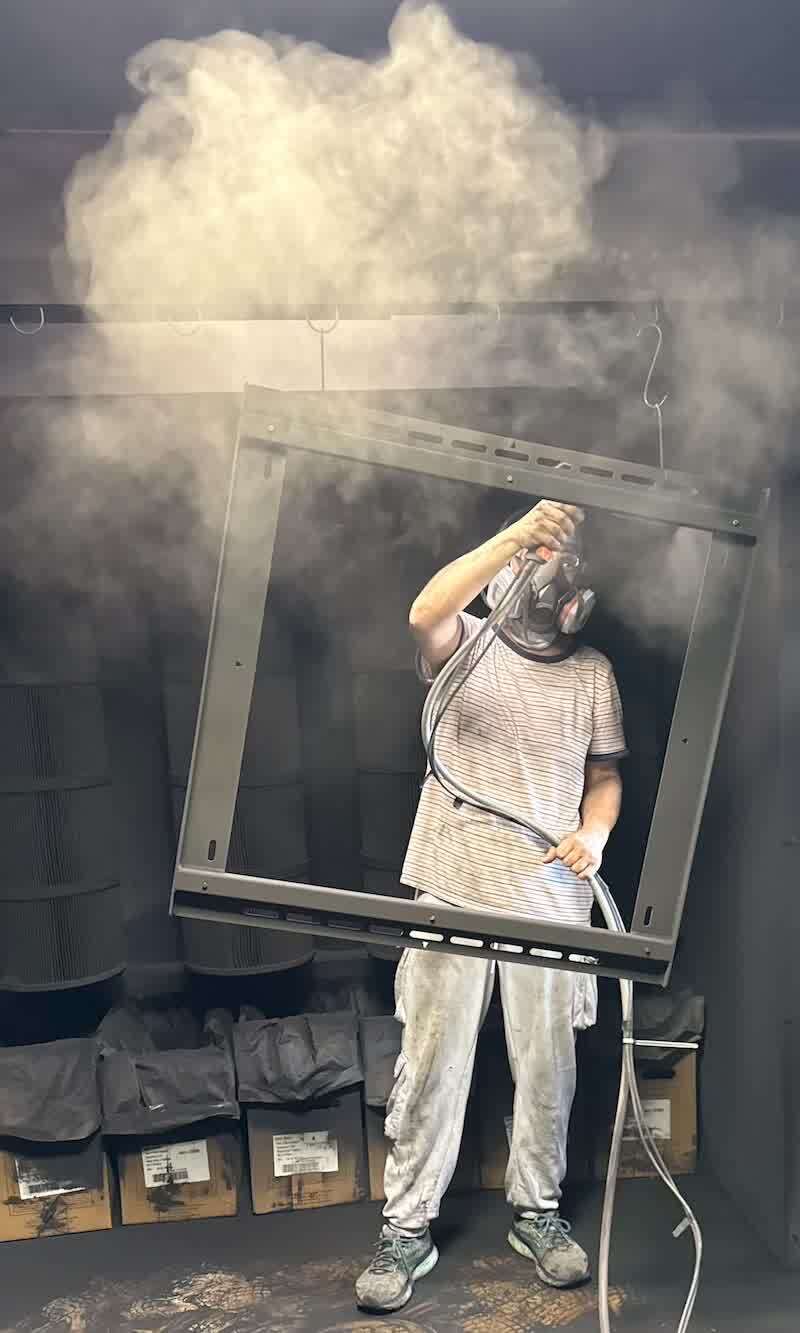 Unlike many finishing industry veterans who spent years working inside established coating operations, Fitzpatrick entered the industry with almost no formal powder coating background.
“I was that guy with the Eastwood gun and the old household stove in the garage at home,” Fitzpatrick says. “I was doing little parts for my cars and stuff like that.”
Once he committed to building a business around powder coating, however, he realized how steep the learning curve truly was. He then dove headfirst into learning everything about the industry.
One of the turning points came when he attended Powder Coating Institute training.
“I’ve been to the Powder Coating Institute class, PCI 101, which was just everything right over my head,” Fitzpatrick says. “When they were talking about pretreatment and chemicals and all that stuff, I was like, ‘Man, I am lost.’”
That experience reinforced an important reality about powder coating: successful coating operations are built on process discipline, not simply spraying powder.
“It definitely opened my eyes to, man, I have to really study this and figure out how this all works,” he says.
Like many coaters, Fitzpatrick quickly learned that pretreatment often determines success or failure.
Initially, the company relied heavily on stripping and blasting operations.
“We stripped everything and then sandblasted it,” he says. “That’s how we were getting the wheels done.”
But as the business matured, Fitzpatrick realized he needed deeper knowledge about chemical pretreatment systems and process control. He started talking to his vendors — “I don’t think enough powder coaters talk to them and utilize their expertise,” he says — and that vendor collaboration became an important part of the company’s evolution.
“We rely heavily on our paint suppliers for powder issues, and we rely heavily on our chemical suppliers to make sure we’re pretreating the correct way,” Fitzpatrick says. “You can go sideways pretty quick with the chemicals if you don’t know what you’re doing.”
He believes many smaller shops fail to fully utilize supplier expertise.
“They’re there to help you,” he says. “They’re there to teach you, and it’s what they specialize in.”
Scaling Up With Conveyorized Operations
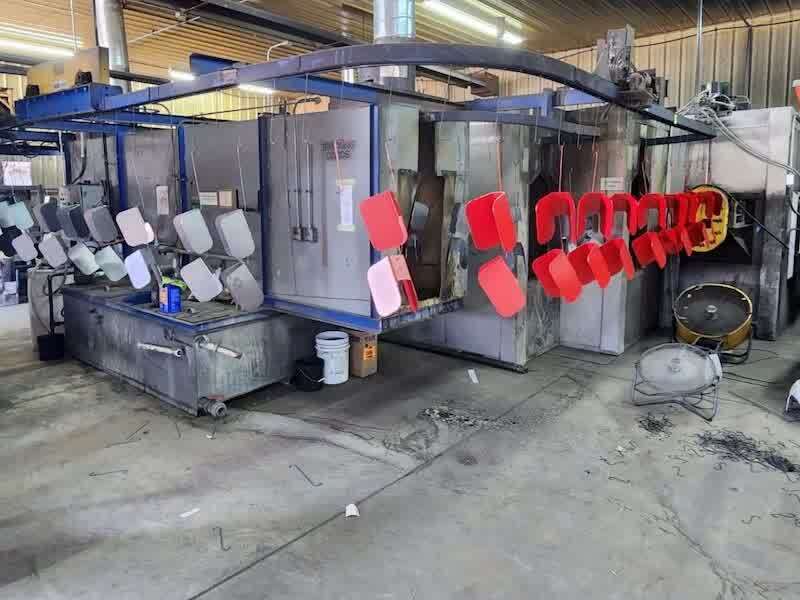 The conveyor line was originally designed by an equipment builder located about 45 minutes north of Collins.As Right Now Powder Coating continued to grow, Fitzpatrick faced a challenge familiar to many custom coaters: labor-intensive batch operations were becoming increasingly difficult to scale.
The company eventually purchased a used conveyor system from Nebraska. It took them over a year to put the thing together.”
Reassembling the system proved challenging.
“We had to weld everything, all the framing back together, and I’d never put anything together like that,” he says.
The conveyor line was originally designed by an equipment builder located about 45 minutes north of Collins. Fitzpatrick eventually brought him in to help finish the project, and he did all the electrical and got the control panels running.
The investment represented another major leap for the company.
“When we went from wheels to only powder coating, that was a big jump,” he says. “And then getting that system, the margins grew, and we could reinvest more money back into the business.”
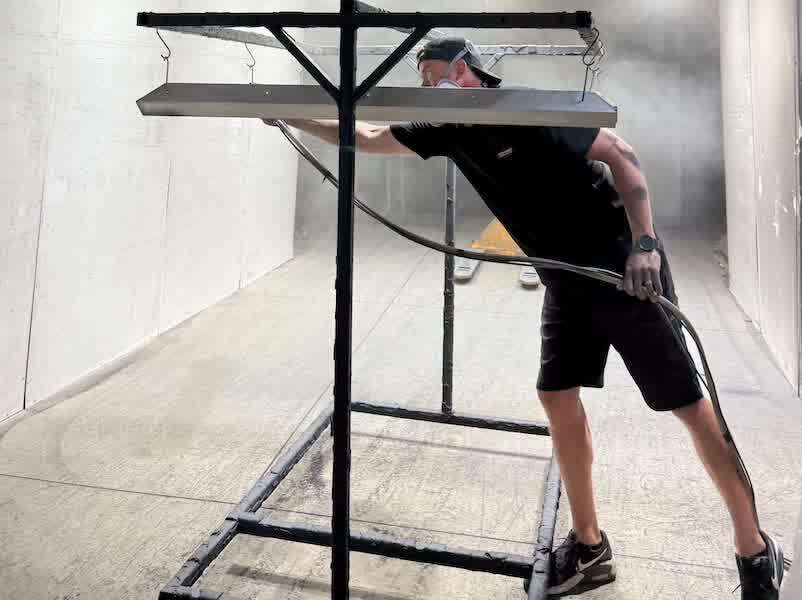
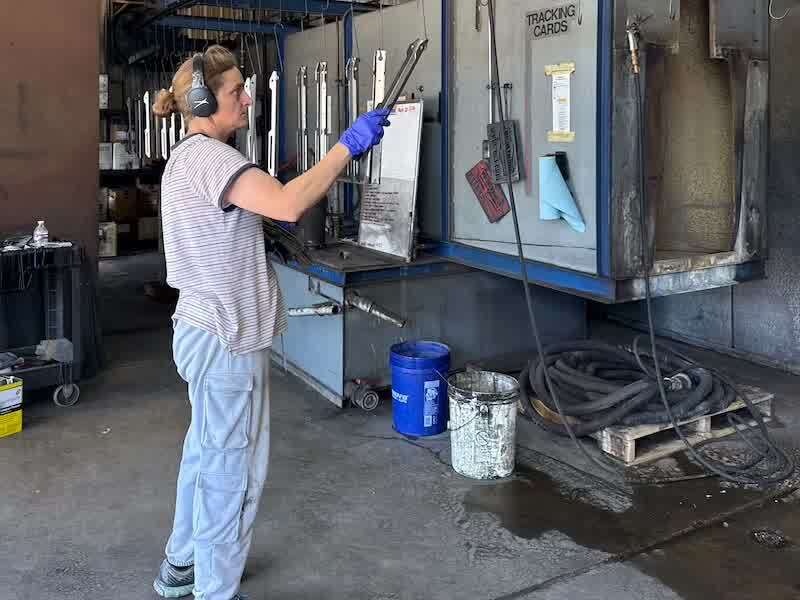
Today, Right Now Powder Coating operates two separate buildings. One houses a conveyorized powder coating system with a two-stage washer, while the second handles batch work using a 20-foot oven.
“I can’t tell you how many times I’ve heard, ‘Your videos got me into powder coating, and now I have a business,’” Fitzpatrick says. “That’s what really makes it worth it. You’re actually helping people.”
The company recently purchased additional Electron Powder Coating equipment and is preparing for the arrival of a new booth system.
“We’re really excited to get it in there and keep expanding,” Fitzpatrick says.
Despite the growth, Fitzpatrick remains realistic about where the company stands relative to larger industrial finishers.
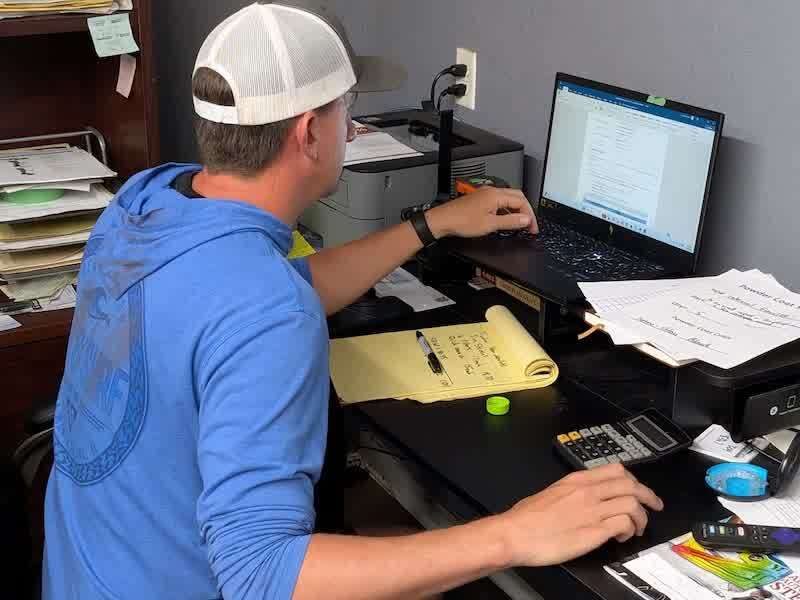
“We’re still in our infancy and crawling,” he says. “We’re nowhere near some of these big companies that have quality teams that inspect everything. I’m still the quality guy. We’re still putting together our operating procedures.”
Building a Community Through YouTube
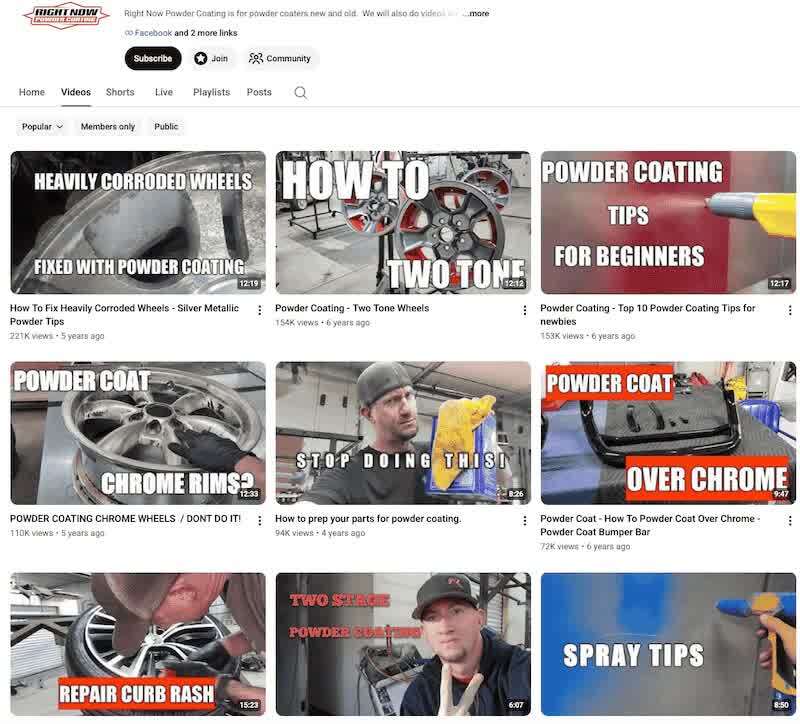 Fitzpatrick has over at 21,000 subscribers to his YouTube channel and its growing.For many people in the powder coating industry, Fitzpatrick’s YouTube channel may actually be more recognizable than the company itself.
The channel emerged not from a marketing strategy, but from frustration.
“My YouTube channel started because I couldn’t find any information on how to process parts, how to do things properly,” Fitzpatrick says. “I was like, ‘Man, I’m going to start sharing this.’”
At the time, educational powder coating content online was limited. Fitzpatrick saw an opportunity to document his learning experiences and help others avoid similar mistakes.
The response surprised him.
“We’re at 21,000 subscribers now, which I’m just shocked there are that many people that want to learn about powder coating,” he says.
The channel has become especially popular among startup powder coaters and small-shop owners trying to grow their operations.
“I can’t tell you how many times I’ve heard, ‘Your videos got me into powder coating, and now I have a business,’” Fitzpatrick says. “That’s what really makes it worth it. You’re actually helping people.”
Unlike heavily polished corporate content, Fitzpatrick’s videos intentionally present the realities of shop life.
“We try to share the real side of what it’s like to go through the powder coating process,” he says. “It’s a struggle. You don’t want to share your mistakes and what you did wrong, but we’ve done specific videos just on that, just so people know that they’re not alone.”
He frequently compares powder coating to an emotional rollercoaster.
“One day, you’re going to be like, ‘Man, I’m awesome at this. I got it,’” he says. “But then the next day, you’re just going to have everything go wrong.”
“I tried it, and I’m like, ‘This thing works really well,’” Fitzpatrick says.
That message resonates with other coaters navigating the same challenges.
The videos also reveal Fitzpatrick’s broader philosophy about industry collaboration. While some finishers remain highly secretive, he believes more communication benefits the industry as a whole.
“We’ve got a handful of local people around us that we actually share work with,” he says.
If Right Now Powder Coating cannot handle certain projects efficiently, Fitzpatrick often outsources work to trusted local coaters who specialize in those applications.
“We like to work with powder coaters,” he says.
Likewise, other shops sometimes send production work his way when they need conveyorized processing capacity.
“I think powder coaters definitely need to communicate more with each other and share more of those trade secrets,” Fitzpatrick says.
Entering the Equipment Business
 Fitzpatrick’s YouTube presence eventually led to another business opportunity entirely: equipment distribution.
That relationship began when Electron, a Turkish powder coating equipment manufacturer, reached out to him before entering the U.S. market.
“They sent me one of their Electron guns to try,” Fitzpatrick says.
At the time, he strongly preferred Gema equipment and had even sold Gema systems previously while working with a distributor.
“I was a big Gema guy,” he says. “I was sold on Gema, best in the country.”
Still, he agreed to test the Electron gun.
“I tried it, and I’m like, ‘This thing works really well,’” Fitzpatrick says.
After several months of testing, Fitzpatrick attended Fabtech in Atlanta alongside Electron representatives and engineers. He soon signed up to be their U.S. distributor.
That partnership launched what is now a rapidly growing equipment division, and he says they have sold hundreds of guns. The business has expanded beyond application guns into complete powder coating systems, including conveyorized lines, including one that just got installed in Michigan.
Fitzpatrick believes Electron’s vertically integrated manufacturing model provides an important advantage.
“Electron makes all the components — the oven, the washer, the guns, everything,” he says. “You have one team for your whole plant.”
By contrast, many U.S. systems require buyers to coordinate among multiple vendors.
“It’s really good-quality equipment, and it’s at a way more economical price,” Fitzpatrick says. “I will never badmouth Gema; they make awesome guns.”
“We’re direct from the manufacturer, so there’s one step in the sale,” he says. “It cuts out a lot of middlemen and makes it much more efficient.”
Instead, he sees Electron occupying a strong value position for smaller and mid-sized coaters looking to upgrade professionally.
The equipment business has also provided Fitzpatrick with broader exposure to powder coating operations throughout North America. That includes everything from world-class manufacturers with strict quality and safety protocols to smaller operations still developing formal systems.
“I’ve seen it all,” Fitzpatrick says.
Those experiences have influenced how he approaches his own company’s development.
Manufacturing Momentum and Future Growth
 Fitzpatrick believes broader manufacturing trends are creating positive momentum for the finishing industry.
“I think manufacturing’s been a little slow for the last couple of years,” he says. “But it seems like it’s coming back up because we’ve been getting a lot more requests for equipment quotes.”
That optimism is fueling continued investment in both sides of the business.
Right Now Powder Coating recently hired a marketing manager to help expand the company’s reach and strengthen its educational content creation efforts.
“We’re hoping to get back to doing a lot more of that educational content,” Fitzpatrick says.
At the same time, the company is evaluating future facility expansion opportunities.
The current operation is constrained by space limitations in Collins, Iowa, a town Fitzpatrick describes as having only about 400 residents.
“We are maxed out,” he says. “We have no more room to grow.”
His long-term vision includes consolidating operations into a larger facility with expanded automation and pretreatment capabilities.
“I would like to bring in a complete line from Electron,” Fitzpatrick says.
The goal would be to install a larger, more advanced conveyorized system capable of handling a broader range of industrial work.
“Our conveyor system is very small,” he says. “It does limit who we can work with.”
He would also like to move beyond the current two-stage washer configuration toward a more sophisticated multistage pretreatment setup commonly used by larger industrial finishers.
“With powder finishing equipment, it’s just a matter of time,” Fitzpatrick says. “There’s a lot of trust we’re trying to build.”
“If I could advise people who want to do this, I would go work for one,” he says when discussing powder coating businesses. “Go to a big company and work for them.”
The company has already navigated major challenges related to U.S. certifications, electrical compatibility, and support infrastructure for imported equipment.
Now the focus is on demonstrating reliability and long-term support.
“Our main thing right now is just proving that the equipment’s good, reliable, and solid,” Fitzpatrick says. Because the company sells nationally, customer support logistics can become complicated.
“If I’m in Iowa and we sell a system in California or New York, that type of thing,” he says.
Still, Fitzpatrick believes the direct-to-manufacturer model gives the company an important competitive advantage.
“We’re direct from the manufacturer, so there’s one step in the sale,” he says. “It cuts out a lot of middlemen and makes it much more efficient.”
Still Learning, Still Building
 “I’ve got a lot of energy, and my brain never stops,” Fitzpatrick says.Despite operating multiple businesses and building a sizable online following, Fitzpatrick still describes himself as someone learning the industry in real time.
That humility may be one reason his message resonates with so many powder coaters.
“If I could advise people who want to do this, I would go work for one,” he says when discussing powder coating businesses. “Go to a big company and work for them.”
He openly acknowledges the advantages of formal industry training and structured operational experience — opportunities he largely skipped by jumping directly into ownership.
Yet that unconventional path may also explain why so many people connect with his story.
Fitzpatrick represents a growing segment of entrepreneurial coaters who entered the industry from outside traditional manufacturing backgrounds, learned through experimentation, and built businesses through persistence, adaptability, and relentless curiosity.
In the process, he has transformed Right Now Powder Coating from a wheel repair side business into a growing industrial coating company while simultaneously helping introduce a new equipment brand into the U.S. market.
Perhaps most notably, he has done much of it publicly, documenting the process for thousands of other coaters navigating similar journeys.
For Fitzpatrick, the combination of powder coating, content creation, and equipment sales ultimately comes down to one thing: momentum.
“I’ve got a lot of energy, and my brain never stops,” he says. “If I’m slow, I’m bored.”