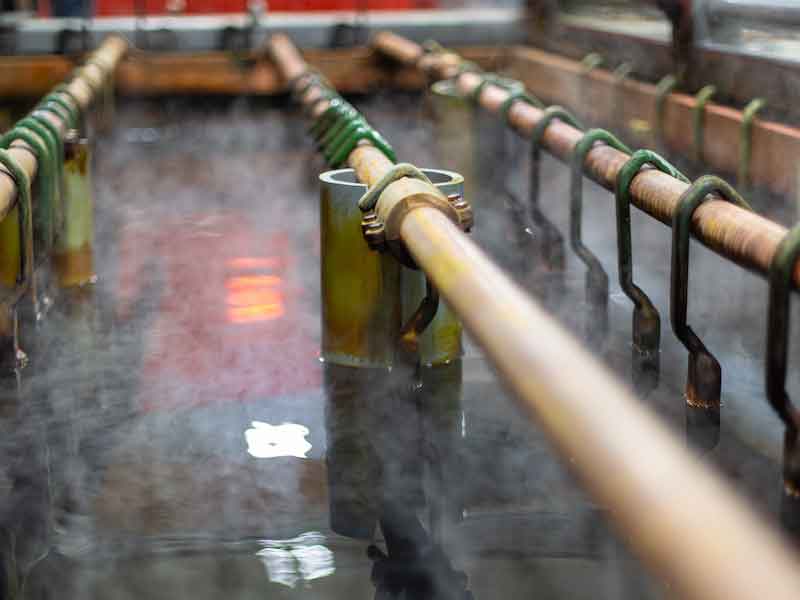



Pretreatment determines whether a coating will thrive for years or fail prematurely, a reality that Gary Raihl has spent decades reinforcing.
 Gary RaihlRaihl, the business development manager at Hubbard-Hall, has pressed home that subject throughout his career in the chemicals and powder coating industries. Having recently joined the 175-year-old specialty chemical manufacturer, Raihl brings extensive industry experience and a practical philosophy: successful pretreatment is not about guesswork—it’s about building a process step by step.
From evaluating equipment and tank construction to balancing time, temperature, and chemistry, Raihl emphasizes that every detail matters when designing a pretreatment system that delivers consistent, long-term performance.
“At the end of the day, you're trying to get to a point where you're providing the most astute process to maximize the performance results,” Raihl explains.
In a conversation with FinishingandCoating.com, Raihl outlined a comprehensive approach to evaluating and building pretreatment systems—one grounded in decades of experience working alongside operators, engineers, and finishing suppliers across the industry.
A Career Built in Powder and Chemicals
Raihl’s path to Hubbard-Hall began many years ago in the powder coating sector, where he first developed his appreciation for the chemistry behind surface finishing. He worked for 10 years at the old Morton Powder Coatings before several companies acquired it.
During that decade, Raihl worked primarily in sales while gaining a deeper understanding of coating processes and pretreatment requirements. That experience eventually led him into the broader chemical industry.
“I transitioned over into chemicals and was part of the new Nalco Chemical development when Calgon, Texo, and Chemical Technologies all combined into Nalco,” he says. “From then on, I’ve been a chemical guy.”
“It's a step-by-step process working with the operators, the people on the floor, the engineering department—you name it.”
Over the years, Raihl worked with multiple companies across the finishing sector, developing relationships and expanding his expertise in process chemistry.
“I’ve worked with numerous companies within the industry, and it's been a great experience. I’ve learned a lot, met a lot of great people, and have enjoyed everything to this day,” he says.
When the opportunity to join Hubbard-Hall emerged, the decision was influenced not only by the company’s long-standing reputation but also by trusted industry advice.
“One of my mentors is Sergio Mancini, who is well respected in the Powder Coating Institute,” Raihl explains. “Sergio’s since retired, but he’s one of the people I consulted when I was considering the move to Hubbard-Hall, and he had nothing but great things to say about them.”
The recommendation reinforced Raihl’s confidence in joining the organization.
“Situations arise that made it very easy for me to make the decision to transition to Hubbard-Hall,” he says. “I’m very happy to be here and looking forward to the future.”
The First Step: Evaluating the Pretreatment Line
For Raihl, building a reliable pretreatment system always begins with understanding the equipment already in place.
“The number of stages is probably going to be the most critical thing,” he explains.
In a typical conveyorized spray system, a finishing line may include anywhere from three to eight stages. Those stages determine what chemistry can be used and how effectively contaminants can be removed before coating.
“You’re going to have basically anywhere from three to maybe seven or eight stages,” Raihl says. “Based on that, you're going to decide about what type of chemistry is going to work and be most suitable for what they're trying to accomplish.”
But Raihl stresses that evaluating equipment alone is not enough. Understanding the existing process—and how well it performs—is equally important.
“It goes back to significant meetings with key personnel, making sure you select the right process and move forward from there.”
“You're also looking at the process they're currently using now to be sure you have something that's going to be able to improve that process based on whatever competitor's products they're using,” he says.
Pretreatment improvements rarely happen in isolation. Instead, they require collaboration across the facility.
“It's a step-by-step process working with the operators, the people on the floor, the engineering department—you name it,” Raihl says.
Understanding the Customer’s End Goals
 One of the most critical steps in any pretreatment assessment is understanding what the customer ultimately needs to achieve.
Finishing shops operate under a wide range of performance standards depending on their industries. Some may require moderate corrosion protection, while others must meet extremely demanding specifications.
“It's probably the most important part of the process—making sure you identify what your customer's end goal is,” Raihl explains.
Those goals often involve specific performance standards such as corrosion resistance testing, industry certifications, or OEM approvals.
“Where it's going next as far as salt spray requirements, any type of Caterpillar approvals or anything you're working with from a standpoint of approval process—you need to know that up front,” he says.
Once those requirements are established, the pretreatment design can begin.
“It goes back to significant meetings with key personnel, making sure you select the right process and move forward from there,” Raihl adds.
Tank Construction: A Critical but Overlooked Factor
While chemistry and process flow often receive the most attention, Raihl points out that tank construction is another factor that can dramatically influence pretreatment performance.
“Tank composition is so important,” he says.
Pretreatment tanks are commonly constructed from materials such as mild steel, stainless steel, or plastic. The chemical compatibility of those materials must be carefully considered before introducing new chemistry.
“Based on the length of the tanks themselves and how long they've been in the area, you're looking for products that are not going to attack the tank,” Raihl explains.
“If you don't get 90 to 120 seconds and you're only getting 60 seconds, the components change.”
Using the wrong chemistry can lead to catastrophic equipment failures months down the road.
“You cannot afford to take a chance with an acidic product going in, and you're going to eat that tank,” he says.
One of the biggest mistakes chemical suppliers can make is recommending a process based solely on what works best for them.
“A lot of pretreatment suppliers and chemical suppliers will come in and try to fixate on what they know works best for their own process,” Raihl says. “It really doesn't matter. It has to conform to the structure of those tanks.”
And in some cases, the damage may not be immediately obvious.
“You may not see the damage initially, and three, four, or five months later, all of a sudden you've got a leak,” Raihl says. “Nine times out of ten, it's from your chemistry.”
The Chemistry Triangle: Time, Temperature, and Concentration
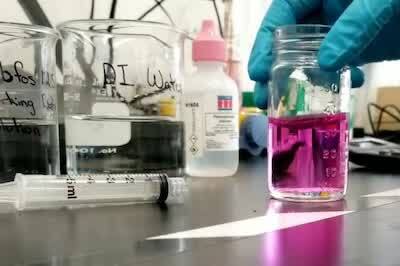 In pretreatment chemistry, Raihl emphasizes a concept that every finishing operator should understand: the relationship between time, temperature, and concentration.
“There are three components to a good pretreatment process—or a good chemical use—and you're going to have time, temperature, and concentration,” he explains.
These three factors form the core operating parameters for any pretreatment stage.
Time refers to how long the part remains exposed to the chemistry. In a conveyorized spray system, that exposure time is determined by conveyor speed and stage length.
“You may have a five-stage system running six feet per minute,” Raihl says. “Typically, for a cleaner stage, you need to be in there for 90 to 120 seconds.”
If the time requirement cannot be met, adjustments must be made elsewhere.
“If you don't get 90 to 120 seconds and you're only getting 60 seconds, the components change,” Raihl explains.
That’s where the flexibility of the chemistry triangle comes into play.
“In a best-case scenario, time, temperature, and concentration mean you can run it optimally,” Raihl says. “But when you can't, you're going to adjust one or the other to sacrifice what you've lost.”
For example:
- Lower temperatures may require higher chemical concentrations.
- Reduced process time may require higher temperatures.
- Equipment limitations may require adjustments to both.
“If you're losing temperature, you're going to run at a higher concentration. If you're losing time, you're going to turn up the heat. You're going to do some things here where you have to get creative,” Raihl says.
Achieving the right balance often requires hands-on experience.
“That truly comes with trial and error and running the system with the operators,” he adds.
The First Sign of Trouble: Water Break
Even with the right parameters in place, Raihl says there is a simple visual indicator that finishing operators should always watch for.
“The first thing everyone ever looks for is water break free substrate,” he explains.
A properly cleaned surface will allow water to sheet evenly across the metal surface. If contaminants remain, the water will bead up instead.
“If it comes down the line and all of a sudden you see a little bit of beading up on that metal, and you're not getting consistent flow where it's sheeting, you've got an issue,” Raihl says.
That small visual cue often provides the earliest warning of a problem within the pretreatment process.
Validating the Process Through Testing
Once a pretreatment system is designed and implemented, validation testing becomes the next critical step.
“For the most part, you're still going back to the testing process,” Raihl explains.
Laboratory and field testing help ensure the chemistry performs as expected under real-world conditions.
“You're going to be doing a lot of lab work, a lot of testing for salt spray,” he says.
These corrosion resistance tests simulate harsh environmental exposure and help determine whether a coating system meets required performance standards.
“Typically, you're looking at anywhere from three to seven hundred hours of salt spray,” Raihl says.
For aluminum architectural applications, testing requirements can be even more demanding. For aluminum, for example, some shops may have AAMA requirements, and those could be anywhere up to 6,000 hours, he says.
Close collaboration with coating manufacturers also plays an important role.
“You want a great relationship with companies like Sherwin-Williams, IFS, and TIGER Drylac so they can work with you and do the required performance testing as well,” Raihl says.
Ultimately, successful validation includes both in-house testing and independent verification.
“You want to be able to do it in an in-home process as well as have it verified by your finishing partner,” he says.
The Importance of Process Control Logs
Another cornerstone of pretreatment management is consistent process monitoring.
Raihl stresses that process control logs are essential tools for maintaining quality and troubleshooting issues.
“It's a reference sheet more than anything else,” he explains.
Each stage of the pretreatment line should have documented control parameters, including pH, chemical concentrations, and operating temperature.
“You're going to basically have the operator test for your pH in the system, your concentration of the chemical, again your time, and things like that,” Raihl says.
These logs serve two primary purposes. First, they ensure accountability among operators.
“We want the accountability of the customer,” Raihl says.
Second, they create a valuable record that can be reviewed when problems arise.
“If there are any issues, we can refer back to a day here or there that they were out of spec,” he explains.
That documentation allows the chemical supplier, finishing company, and customer to work together in identifying the root cause of failures.
Training Operators for Long-Term Success
While chemistry and equipment are essential, Raihl believes the most important element in any pretreatment process is the people operating it.
“Once a transition is made over to our chemistry, it's our responsibility to make sure the customer can run their process efficiently,” he says.
That does not mean the chemical supplier should run the line indefinitely.
“We're not there to run their process for them. We're there to train their people so they have accountability over their system,” Raihl explains.
Operator training begins during the initial startup process and continues over several months.
“We may charge a tank and do the initial titrations, document everything on the process control sheet,” he says.
Afterward, Raihl typically returns to the facility on a regular schedule to reinforce the training.
“For the first month, you may come in once a week and work with the operator to be sure they're understanding it,” he says, adding that eventually those visits become less frequent as operators gain confidence. “The goal would be to do once every month, depending on the size of the customer, and review the processes they're performing.”
Because titrations rely on color changes, consistency among operators can sometimes be challenging.
“Titrations are dependent on the operator's eyes, and everyone has a different color change,” he notes, adding that addressing that challenge, standard operating procedures often include visual guides. “We'll have a color change sheet to help them get to where they need to be.”
Ultimately, the goal of training is simple.
“You train them so they own their system and have the accountability on them to make sure they've got a quality performing process,” he explains.
Starting Up a New Pretreatment System
When a facility decides to switch chemistries or implement a new pretreatment process, the startup procedure becomes a critical milestone. Raihl says preparation and testing provide the confidence needed for a successful transition.
“The confidence comes from the testing you've done up front,” he says, and the startup itself typically begins with cleaning out the existing system.
“You're going to have to de-scale the tanks and get the old chemistry out from the competitor that was in there,” Raihl says, a process that may take several hours depending on the size and condition of the system. “That may take up to six hours, maybe twelve hours with everything.”
Once the system is cleaned, the new chemistry can be introduced.
“We're going to fill the tank halfway, add the chemical, and then fill it the rest of the way,” Raihl says, and circulation and heating begin while the system stabilizes. “You'll sit there, wait for it to circulate, do your testing, do your titrations, and work with the operators to be sure they're comfortable with it.”
The final step is ensuring operators understand how to maintain the system independently.
“The goal is that when they have to recharge a tank the next time, they can do it without you,” Raihl says.
The Biggest Mistake in Pretreatment Design
After decades in the industry, Raihl says the most common problem he sees in pretreatment systems is surprisingly simple: communication. In many cases, equipment manufacturers, chemical suppliers, and finishing companies operate independently during system design.
“A classic example would be a new system startup where they bought the equipment and never worked with the chemical company to identify which stage should have heat,” Raihl says. That oversight can lead to costly modifications later. “They have the opportunity to design the system perfectly if they work with a chemical company and the finishing company.”
Instead, Raihl advocates for a collaborative approach that brings all stakeholders together early in the process.
“Make sure everyone's on the same page, because at the end of the day this is a team approach,” he says, and the goal is not just better coatings—but better business results for the customer. “We're all in here to help the customer get the best results we possibly can and save them as much money as we possibly can.”
Pretreatment: The Foundation of Performance
For Raihl and the team at Hubbard-Hall, pretreatment will always remain the starting point for coating success.
When properly designed, monitored, and maintained, it creates the foundation that allows coatings to deliver their full performance potential.
And while finishing technology continues to evolve, Raihl believes the fundamentals of pretreatment will always remain the same.
“Time, temperature, and concentration are probably the three biggest words in chemistry from a standpoint of performance,” he says.
By combining those principles with careful equipment evaluation, consistent testing, and strong operator training, finishing operations can build pretreatment systems that deliver reliability for years to come.
As Raihl puts it, the goal is simple but powerful.
“You're trying to provide the most astute process to maximize the performance results,” he says.
Visit https://www.hubbardhall.com.