



James DeDeus, President of JMD Industries in New Hampshire, says he didn’t need much time to decide whether acquiring Massachusetts’ Patriot Coatings made sense.
 James DeDeusIn fact, after a few days of working with Roy Rector, President of Patriot Coating, DeDeus’s electroplating operation decided to acquire Patriot Coating's liquid and powder coating operations.
“Within about 24 to 48 hours, we had mapped out what the acquisition would look like,” DeDeus says. “We handed it over to attorneys, and it took them six months to do what we did in 24 hours.”
That contrast—fast operational clarity paired with deliberate, sometimes frustrating formality—perfectly captures how JMD Industries has evolved under DeDeus’s leadership. The vision comes quickly, the execution is disciplined, and the growth, while ambitious, is grounded in process control, people development, and a deep understanding of what modern finishing customers demand.
The Patriot Coatings acquisition, finalized at the end of 2025, represents the most significant expansion in JMD Industries’ nearly 50-year history. But to understand why DeDeus was able to move decisively—and confidently—requires looking back at how the company transformed from a restoration-focused plating shop into a multi-process, aerospace-accredited finishing organization serving customers across all 50 states.
A Deal Driven by Capacity, People, and Timing
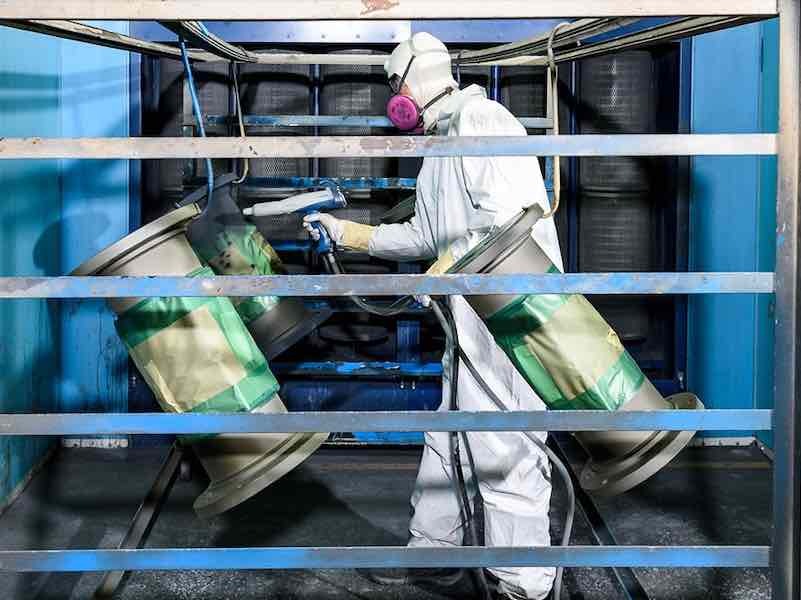 The Patriot Coatings acquisition, finalized at the end of 2025, represents the most significant expansion in JMD Industries’ nearly 50-year history.DeDeus wasn’t shopping for an acquisition when Patriot Coatings entered the picture. The opportunity came through shared customers, who were concerned about Patriot’s future as its owner, Roy, prepared for retirement without a formal succession plan.
“They came to us to see if we’d be interested in taking on some of the work,” DeDeus says. “One of them asked if we’d at least look at Patriot as a potential acquisition.”
Initially, DeDeus assumed it would follow the same pattern as previous deals—shut down the facility and absorb the work into JMD’s Hudson, New Hampshire operation. That assumption lasted less than five minutes once inside the Patriots’ building.
“It became immediately clear that he had way more capacity than we do in the finishes he offers,” DeDeus says. “It would have been irresponsible to think we could absorb that work fast enough.”
Patriot Coatings’ Hudson, Massachusetts facility—about an hour from JMD—offers nearly double the coating capacity JMD currently maintains, particularly in liquid and powder coating. More importantly, it came with something increasingly rare in today’s finishing landscape: a fully trained, deeply skilled workforce.
“My parents allowed me to crawl, walk, and run. No pressure. I spent time on the lines, in the lab, in production, and in quality. That technical foundation still matters today.”
“He has about 60-something employees, and they’re all self-grown,” DeDeus says. “He doesn’t hire experienced people. He trains them. And they’re excellent painters, powder coaters, and silk screeners. That caught our attention immediately.”
The handshake came quickly. Keeping the Patriot name, the facility, and the employees was non-negotiable. The paperwork, however, took the better part of two seasons.
“Truthfully, this should have been done last summer,” DeDeus says. “But here we are.”
From Chrome Bumpers to Controlled Processes
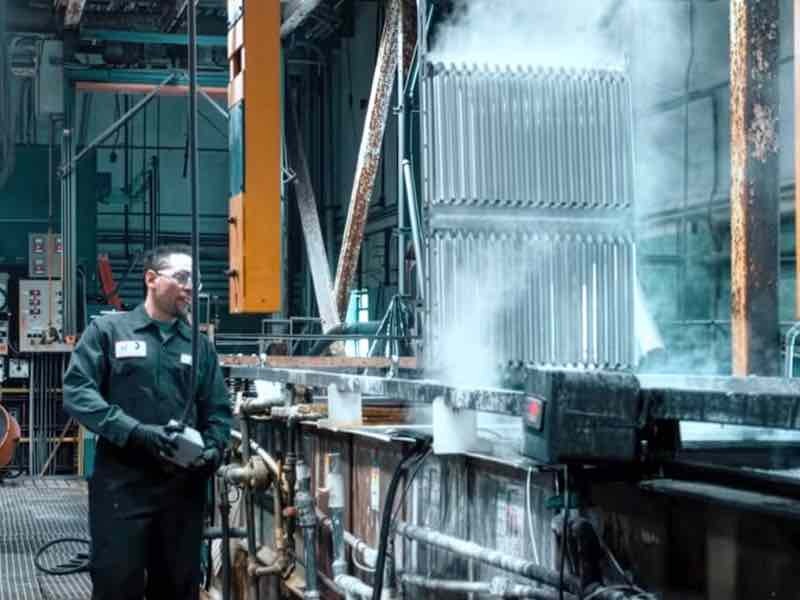 In its early years, the business focused heavily on restoration work, such as chrome plating automotive parts.JMD Industries’ roots trace back to 1977, when the company was founded in Lawrence, Massachusetts, by DeDeus’s parents. In its early years, the business focused heavily on restoration work, such as chrome plating automotive parts, refinishing antiques, and serving anyone who walked through the door.
That began to change in the mid-1980s when Digital Equipment Corporation approached the company about adding zinc plating. The move shifted JMD from restoration to commercial and industrial finishing—a transition that continued as the company consolidated operations in Hudson, New Hampshire, in the early 1990s.
By the time James DeDeus graduated from the University of New Hampshire in 1997 and joined the business full-time, buffing wheels and polishing compounds had been discontinued. Zinc plating, chromating, anodizing, and chemical film processes had taken their place.
“My parents allowed me to crawl, walk, and run,” DeDeus says. “No pressure. I spent time on the lines, in the lab, in production, and in quality. That technical foundation still matters today.”
That hands-on background would later become essential—not just for processing decisions, but for understanding what it truly takes to run a profitable, scalable finishing operation.
Learning the Business Side of Finishing
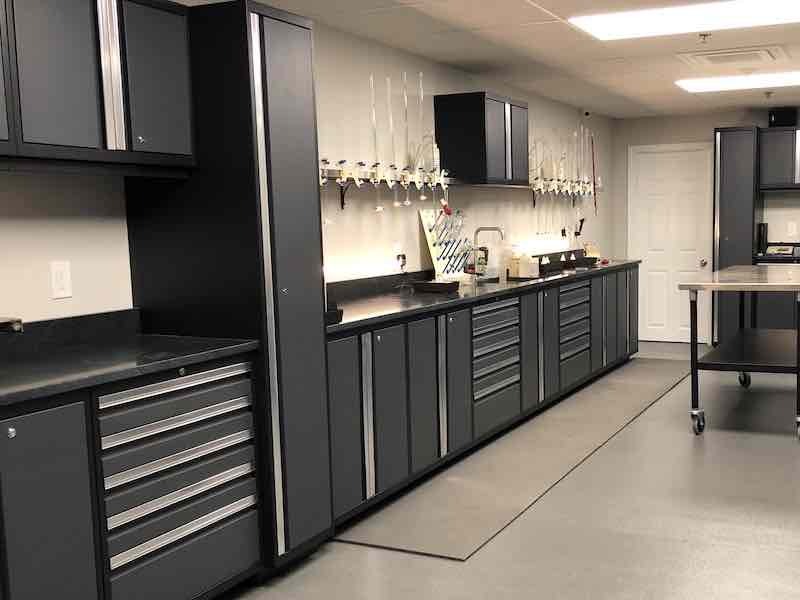 The new lab at JMD headquarters.Technical knowledge, DeDeus acknowledges, is only half the battle.
“Understanding what’s going on in the tanks is very different from understanding a P&L,” he says. “Labor is our highest cost. It can make or break your month, quarter, or year.”
As JMD expanded—adding a second Hudson, NH, facility in 2011 and steadily increasing headcount—DeDeus had to step away from daily floor activity and assume a more outward-facing leadership role. Today, he is both the operational anchor and the public face of JMD Industries and Patriot Coatings.
“I’d much rather be boots on the ground,” he says. “But that’s not my job anymore.”
Instead, DeDeus focused on building a management structure that could support growth without relying on a single decision-maker. Notably, many of JMD’s key leaders did not come from the plating function.
“We brought in people with strong quality and manufacturing backgrounds,” he explains. ISO, AS9100, aerospace, contract manufacturing. They applied that knowledge here—and it made us better.”
NADCAP as a Turning Point
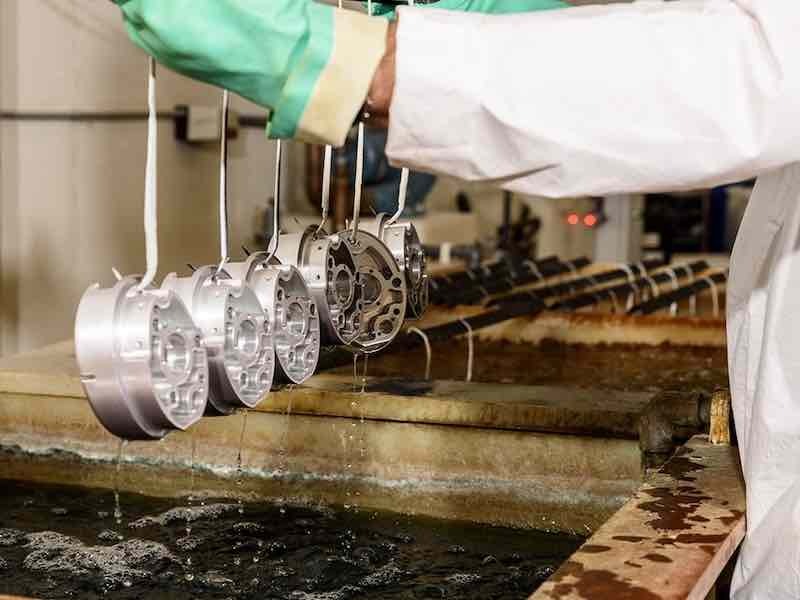 One of the most consequential decisions in JMD’s evolution came around 2018, when the company committed to pursuing NADCAP accreditation.
“It was really about diversifying our markets,” DeDeus says. “We had aerospace and defense customers, but without NADCAP, growth was limited.”
With Raytheon, BAE Systems, and Lockheed Martin all maintaining a strong New England presence, the opportunity was clear—but so was the investment. JMD renovated its chem film and anodize lines, upgraded its laboratory capabilities, and spent years developing procedures and training personnel.
The payoff went beyond aerospace.
“We’re a better company because of it,” DeDeus says. “Better lab, better procedures, better data. When something goes wrong, we can actually understand why.”
Speed as a Competitive Advantage
If accreditation created control, customer demand created speed.
Working closely with Rapid Group—now part of Protolabs—JMD developed systems capable of turning multi-day finishing jobs into same-day or even same-hour deliveries.
“Fifteen years ago, I would have said it was impossible,” DeDeus admits. “Now it’s normal.”
Pre-arrival purchase orders, contract review before parts hit the dock, and carved-out expedite capacity across shifts allow JMD to handle dozens of rush jobs per day. Today, expedited options are often included automatically in quotes.
“Customers expect it,” DeDeus says. “So we built systems to support it.”
One Vendor, Many Processes
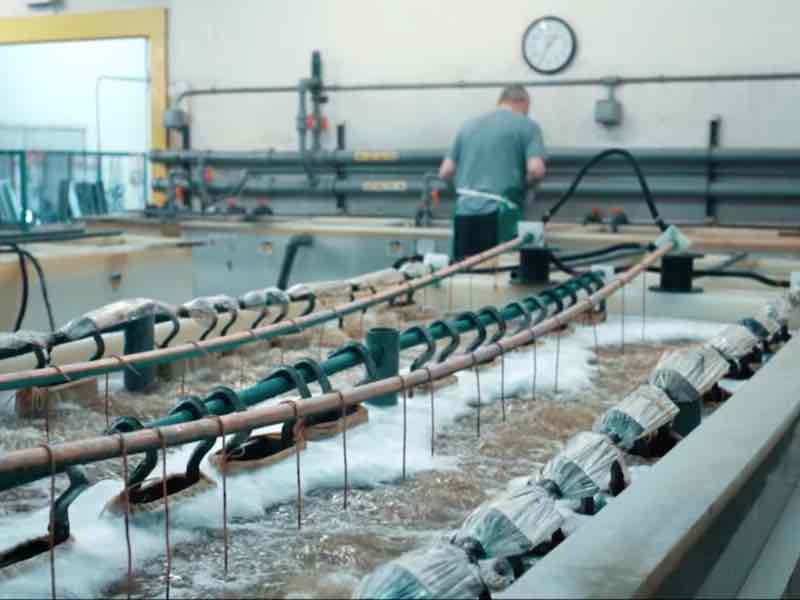 JMD has plans for additional square footage, more automation, and expanded NADCAP processes.JMD’s ability to combine plating, anodizing, chem film, liquid paint, powder coating, masking, silk screening, and part marking under one roof has become a powerful differentiator—one that Patriot Coatings further amplifies.
“It’s easier for customers to issue one purchase order instead of five,” DeDeus explains.
The company also balances manual hand lines with large automated hoist lines, allowing it to serve both high-volume and quick-turn, low-volume work without sacrificing efficiency.
“That flexibility matters,” he says. “Capacity doesn’t always look the same.”
Today, JMD employs roughly 120 people in New Hampshire. Patriot adds another 60 to 70 employees in Massachusetts, bringing the combined organization to 200 employees.
The immediate focus is integration—modernizing Patriot’s systems, updating technology, and redistributing responsibilities as Rector transitions into retirement.
“We’re being transparent with employees and customers. If something doesn’t feel right, I want to know. Not knowing is the biggest problem.”
“He can paint parts like nobody else,” DeDeus says. “Where we’ll add value is on the systems side—efficiency, technology, data.”
Beyond Patriot, DeDeus sees continued consolidation across the finishing industry—and he’s not opposed to it.
“There’s a five-year plan,” he says. “Additional square footage, more automation, expanded NADCAP processes. We’re always looking.”
But growth, he emphasizes, only works when communication is clear.
“We’re being transparent with employees and customers,” DeDeus says. “If something doesn’t feel right, I want to know. Not knowing is the biggest problem.”
It’s that mindset—decisive yet methodical, technical yet strategic—that enabled a 48-hour agreement to become a defining moment for JMD Industries. The lawyers may have taken six months, but the vision was already in place.
Visit https://jmd.industries and https://www.patriotcoating.com.