

Human capital. Headcount. Workforce. Talent. Every one of these terms makes my stomach turn, because not a single one of them sounds like a person.
 Sandee KaplanIf you have been in the manufacturing industries for any length of time, you already know that finding good people is not a new problem. It has always taken some effort to staff a finishing operation. The work is physical, the environment is demanding, and it’s not exactly what high school guidance counselors are putting on their list of recommended career paths. But what is happening right now feels different from the usual hiring headaches.
The pipeline is not just slow. It feels like it has stopped altogether.
The Challenge of Replacing Staff
The people who built their careers in this industry — the ones who knew kV settings and cure stats by heart, the pretreatment chemistry without looking it up, who could troubleshoot a tank by the color of the solution or the way the parts were coming out — those people are retiring. Some of them already have. And the system that was supposed to be producing the next generation of finishing professionals — the trade schools, the vocational programs, the apprenticeships — is not keeping pace. So, you are left wondering what’s next on your own floor, looking around at your most experienced people, and calculating how many years you have left before that knowledge walks out the door with them.
This is a real problem, and it deserves to be taken seriously. But I also want to talk about something that does not get enough airtime in these conversations: the talent already standing in your building.
There is a tendency in this industry, and in manufacturing in general, to treat workforce development as a recruiting problem. You need people, so you go find people. You post a job, sort through dozens or hundreds of applications, hire someone, train them enough to be functional, and then hope they stick around. When they do not, you start the whole cycle over again. It is exhausting and expensive, and most owners are tired of it. I know how intense this process was for me, personally. We didn’t have an HR department- I was the HR department. The investment you are making in that revolving door is real time and money. It isn't producing much return.
Getting Creative with Recruiting
 Let's talk about how most shops are going about recruiting, because the approach itself is part of the problem. Posting a job on a board and waiting is not a strategy; it’s a wish. The shops that are finding good people right now are getting creative about where they look and who they consider. They’re talking to community colleges and workforce development programs. They’re looking at people coming out of unrelated trades who have the mechanical aptitude and the work ethic, and betting on teachability over experience. They are asking their best employees if they know anyone, because good people tend to know other good people. The candidate who does not check every box on your list but shows up hungry and ready to learn is very often worth more in the long run than the experienced hire who has already decided how things ought to be done.
I know this because I lived it. For 25 years, I ran my own shop, and I made the same mistake plenty of times before I finally started asking a different question. Instead of asking how I find better people, I started asking what it would take to make them stay.
The answer was not complicated. It just seemed expensive in the short term, and I had to be willing to think beyond it to see it clearly.
What I built, over time, was a benefits structure that treated my production team like the professionals they were. That meant real health insurance, not the bare minimum I could get away with offering, but coverage that actually helped someone when they needed it. It meant a 401 (k) with a matching contribution generous enough that people noticed and talked about it (we offered a 5% match). It meant profit sharing, so that when the shop did well, the people who made it do well felt it tangibly (these are both massive tax advantages to the company as well, which made this much more palatable, but we will get into that in another article). It meant recognition that went beyond pizza parties or a plaque on a wall — acknowledging people by name, in front of their peers, for the work they were putting in every day.
These aren’t new concepts. But in a finishing shop environment, where the industry standard has historically been to pay someone an hourly wage and call it a day, it was different enough to matter.
Build a Pathway for People to Grow
I also built a clear pathway for people to grow. We needed help with this part, so we hired a consultant. He taught us to communicate goals directly and made sure everyone knew what hitting those goals would mean for them personally. I am talking about sitting down with someone and saying, “Here is where you are, here is where you could go, here is what that looks like in your paycheck and your responsibilities and your future in this building”. When people can see the road ahead, they are much less likely to look for another road.
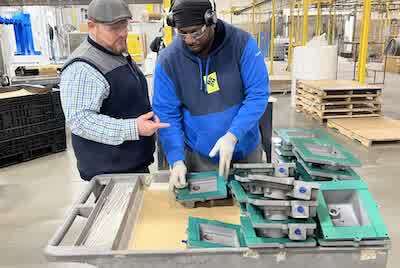
Part of building that road was cross-training, and I cannot stress this enough. It’s monumental. Training someone to do their job is the minimum. Cross-training them across multiple processes is where you start building something that protects your operation. When your people understand more than one corner of your shop, they are more valuable to you, and they know it. They are harder to replace, more engaged in the overall outcome, and far more likely to stay because they can see themselves growing rather than just repeating the same task indefinitely. Cross-training also does something that no org chart can do on its own — it keeps your operation from being held hostage by the absence of any single person. When knowledge lives in more than one set of hands, your shop does not grind to a halt every time someone calls in sick or takes a vacation.
This is what retention produces. It is not just stability in your headcount report. They aren’t “heads to count”. Your team is made up of real people, each with their own personal issues that they’re battling at home.
The people on your floor know things you do not. They are the ones running the process every single day, and that puts them closer to the inefficiencies, the workarounds, and the opportunities for improvement than anyone sitting in an office ever will be. When you create an environment where people feel safe and encouraged to bring those observations forward, you are not just building morale — you are tapping into one of the most underutilized resources in your entire operation. Some of the best process improvements did not come from a capital investment. They came from someone on the line who finally felt like their opinion was worth sharing. Empowering your team to speak up about what they see is not a soft management concept; it is just smart business, and it costs you nothing but the willingness to listen and give their ideas the merit they deserve.
Developing Floor Leaders
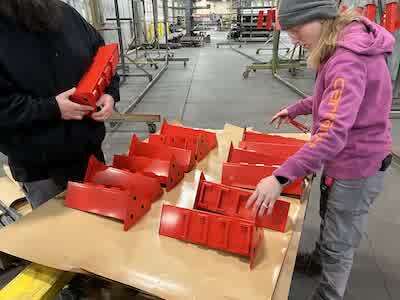 For me, it did not happen overnight. There was no single moment when I looked around and thought, “We have arrived.” It was more gradual than that. Even though we weathered substantial ebbs, our team enjoyed showing up. They were showing aptitude for roles I had not yet defined because they were invested enough to figure out what the shop needed and stay a couple of steps ahead. Line operators were becoming leads. People who had never managed anyone were learning how to bring a new hire along. I provided consistent encouragement that they were great at their jobs, and it engendered trust. When mistakes were made, they were confident enough in our relationship to know they could come to me and we would figure it out together. The tribal knowledge I had been so worried about losing was being passed on because people who felt valued were willing to share what they knew. Best of all, I had the opportunity to learn how to let go. They had my back, and they knew I had theirs.
This is what retention produces. It is not just stability in your headcount report. They aren’t “heads to count”. Your team is made up of real people, each with their own personal issues that they’re battling at home. These are people with names, with families, with rents and mortgages and sick kids and something to prove; they drop it all and show up for you for eight to ten hours every single day to be a part of something important and create something beautiful together. This mindset is the compounding of skill, loyalty, and tribal knowledge that you simply cannot buy on the open labor market, no matter what you are willing to pay a recruiter.
So, before you post another job listing, look at the people already on your floor. Ask yourself what you know about their goals, their financial situation, and their sense of whether this place is worth building a career in. Ask yourself whether what you are offering them is competitive enough to make them choose you over the next opportunity that comes along.
I think it is easy to read this and assume that investing in your people is a feel-good strategy that works in good times but gets cut when margins get tight. I would argue the opposite. The cost of losing an experienced employee and replacing them, when you factor in recruiting, onboarding, lost productivity, and the time your best people spend bringing someone new up to speed, is significant. Studies have put that number anywhere from half to twice an employee's annual salary, depending on the role. In a finishing operation where process knowledge is everything, I would lean toward the higher end of that estimate. The benefits package that feels expensive in February looks very different when you compare it against what it would have cost you to replace the person it helped retain.
An Asset Worth Developing
There is also something to be said for what this kind of investment communicates to your team beyond the dollars. People are perceptive. They know when an owner sees them as a cost to manage rather than an asset worth developing. The culture of a shop reflects the beliefs of the person running it, and your team picks up on that faster than you might think. When you consider them more than a number, with an actual name and a solid place on the team, when you show up with a real benefits package, with profit-sharing that actually pays out, with goals that are communicated clearly and rewarded consistently, you are telling your people something important. You are telling them that their future and your future are connected, and that you are not just asking them to show up for a paycheck, you are inviting them to build something with you.
That invitation changes the relationship, and changed relationships change the floor. Automation and robotics will eventually change some of this. The technology is improving, and the costs are slowly coming down. There will come a point where some of what your most skilled people do today will be done differently. But that day is not today, and it is probably not tomorrow either. Right now, in the operation you are running this week, the most valuable thing you have is an experienced person who knows how to do the job and still wants to come in and do it. Protecting that is not a soft human resources concept. It is one of the hardest and most important business decisions you will make.
So, before you post another job listing, look at the people already on your floor. Ask yourself what you know about their goals, their financial situation, and their sense of whether this place is worth building a career in. Ask yourself whether what you are offering them is competitive enough to make them choose you over the next opportunity that comes along. And then ask yourself what it would cost you if they left. Many owners won’t step up until their lead already has one foot out the door, and at that point, it’s already too late. Matching salaries or benefits packages isn’t going to keep them at that juncture; they’ve already made an excruciating emotional decision to move on, and the late offer coming in leaves a bad taste in their mouth, which will sour that member should s/he decide to stay for a little while longer. It’s cheap, and it rarely works out long-term because you’ve laid the groundwork for the new opinion they have about you.
Giving Staff a Real Reason to Stay
I already know what it cost me when I didn't ask those questions. Once I started, everything changed. Not because I found better people. Because I finally gave the good people, I already had a real reason to stay.
So, let me leave you with this: if your most experienced person walked out the door tomorrow and did not come back, would the people you have left know enough to keep things running, and would they have enough of a reason to stay and try?
If you are sitting with that question and are not sure where to start, that is exactly the kind of conversation we have every day. We work with finishing operations of all sizes to build workforce strategies that turn good intentions into real results — from benefits structuring and goal-setting frameworks to cross-training programs that stick. If any of this resonates with where your shop is right now, we would be glad to talk.
Sandee Kaplan is an Operations Leader and a former owner of a manufacturing and finishing business. Visit https://k2operations.com or email her at Sandee@K2Operations.com.